Beef Wellington is not just a dish; it’s an experience, an adventure wrapped in flaky pastry and succulent beef. My first encounter with this culinary marvel was during a festive family gathering where the aroma of roasting meat filled the air, mingling with laughter and stories. As a kid, I often found myself captivated by the kitchen where magic unfolded, and that day was no different. When my aunt unveiled a golden-brown Beef Wellington, I was enchanted. The way the crust shimmered and the layers of mushroom duxelles and tender beef peeked through was nothing short of mesmerizing. That moment solidified my love for cooking and ignited a desire to master this elegant dish.

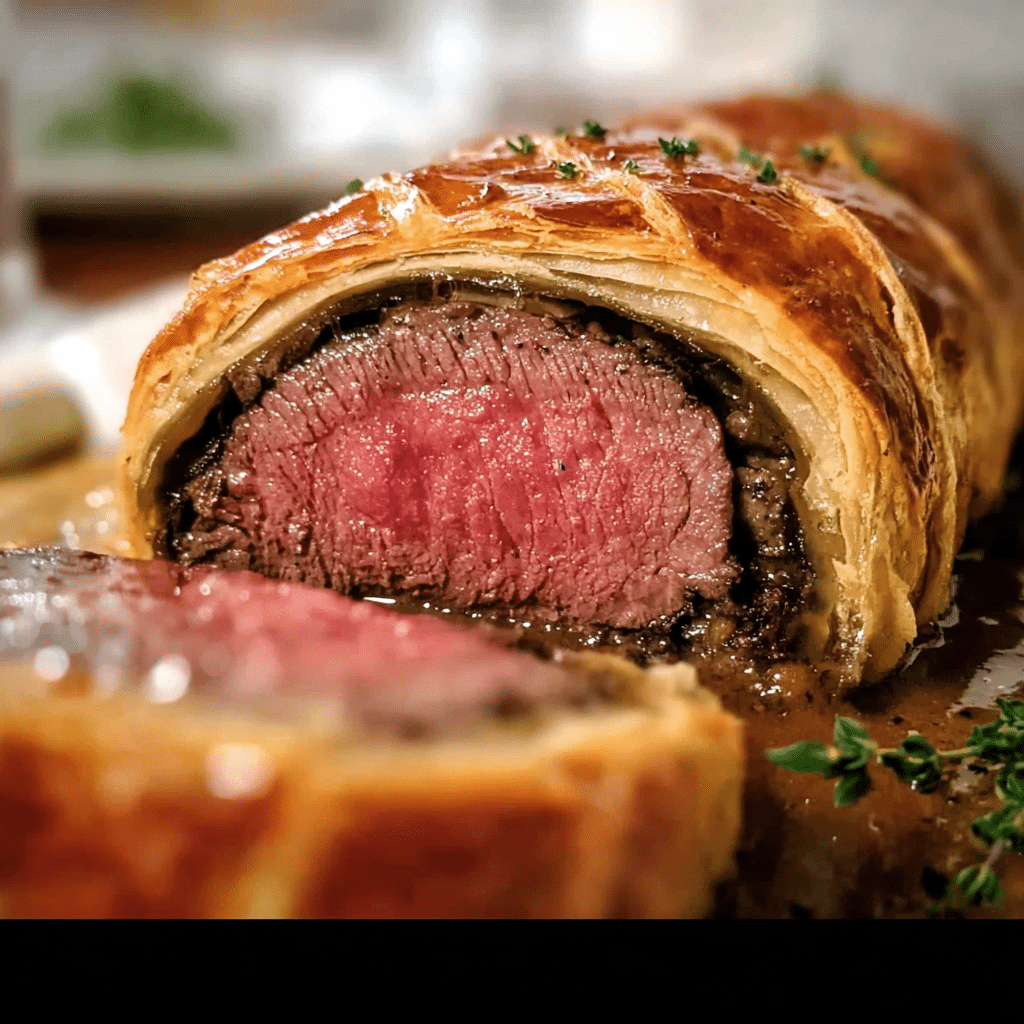
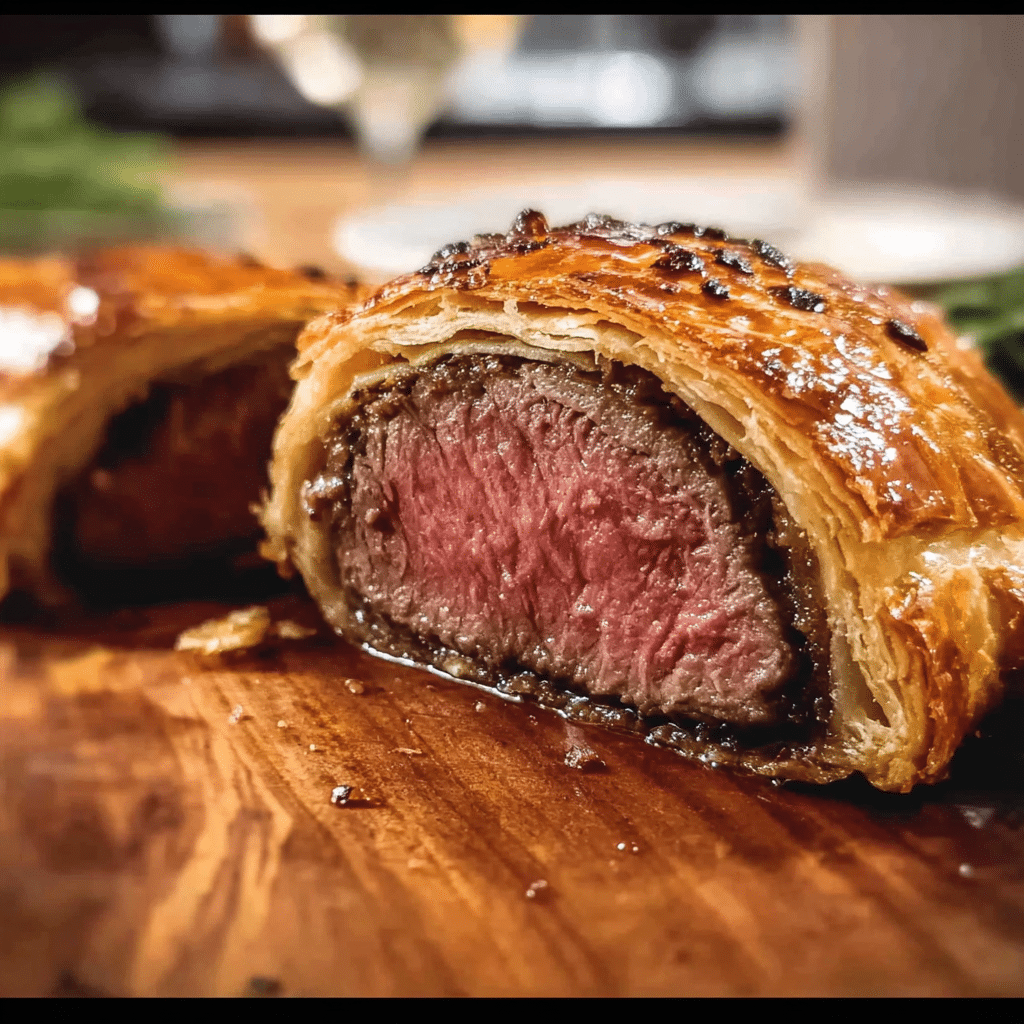
Beef Wellington
Ingredients
- 1 pound thick beef tenderloin
- Kosher salt and freshly ground black pepper
- 2 tablespoons extra virgin olive oil
- 2 tablespoons yellow mustard (like Coleman’s Original English Mustard)
- 1 pound mushrooms (see recipe note)
- 4 thin slices ham (Parma ham if you can get it) or prosciutto
- 1 (7 to 8 1/2-ounce sheet) puff pastry, thawed (see recipe note)
- 2 large egg yolks, beaten
- Flaky salt, for sprinkling on top
Instructions
-
Preheat the oven:
Allow the oven to preheat to 400°F as you assemble the Wellington.
-
Sear the beef:
Season the beef generously with salt and pepper. Heat 2 tablespoons of oil in a large pan on high heat. Sear the beef in the pan on all sides until well browned, about 2 to 3 minutes per side. (Hint: do not move the beef until it has had a chance to brown.)
-
Brush the beef with mustard:
Remove the beef from the pan and let cool. Once cooled, brush the beef on all sides with mustard.
-
Prepare the mushrooms:
Chop the mushrooms and put them into a food processor. Pulse until very finely chopped.
Heat the sauté pan on medium-high heat. Transfer the mushroom mixture into the pan and cook, allowing the mushrooms to release their moisture, 10 to 15 minutes.
When the moisture released by the mushrooms has all boiled away, remove the mushrooms from the pan and set aside to cool.
-
Wrap the beef in mushroom paste and ham:
Roll out a large piece of plastic wrap. Lay out the slices of ham on the plastic wrap so that they overlap and are large enough to wrap around and encapsulate the beef. Spread the mushroom mixture over the ham.
-
Place the beef in the middle and roll the mushroom and ham over the beef, using the plastic wrap so that you do this tightly.
Wrap up the beef into a tight barrel shape, twisting the ends of the plastic wrap to secure. Refrigerate for 20 minutes.
-
Roll out the puff pastry and wrap the beef:
On a lightly floured surface, roll out the puff pastry sheet to a size that will wrap around the beef.
Unwrap the beef from the plastic wrap and place in the middle of the pastry dough. Brush the edges of the pastry with the beaten egg yolks.
-
Brush with the egg wash and score:
Place the pastry-wrapped beef on a baking pan. Brush the exposed surface again with beaten eggs.
- Score the top of the pastry with a sharp knife, not going all the way through the pastry. Sprinkle the top with coarse salt.
-
Bake in the oven:
Bake at 400°F for 25 to 35 minutes. The pastry should be nicely golden when done. To ensure that your roast is medium rare, test with an instant read meat thermometer. Pull out at 125 to 130°F for medium rare.
The Story Behind This Recipe
Beef Wellington has a rich history that dates back to the early 19th century, with its origins often linked to the Duke of Wellington, Arthur Wellesley. This dish was a tribute to his victory at the Battle of Waterloo in 1815, symbolizing British culinary triumph. While the exact origins are a subject of debate, what remains clear is that Beef Wellington embodies a sense of celebration and festivity.
What makes Beef Wellington particularly special is its complexity. Unlike typical weeknight dinners that rely on straightforward recipes, Beef Wellington is a labor of love. The process involves searing a beef tenderloin, preparing a flavorful mushroom duxelles, and enveloping it all in a delicate puff pastry. This dish stands apart from others not only in its preparation but also in its presentation—each slice reveals a stunning cross-section of textures and flavors.
For busy families, the allure of Beef Wellington may seem daunting. However, it’s a fantastic solution for special occasions or festive dinners. With some pre-planning, the components can be prepared ahead of time, allowing for a quick assembly before baking. Imagine the delight of serving something that looks intricate while being manageable in a time-crunched environment. My family has often come together to help prepare this dish, turning an arduous task into a joyful family affair.
As the seasons change, so does the appeal of Beef Wellington. It feels particularly inviting during the cooler months when comfort food is at the forefront of everyone’s cravings. The warmth of the beef and the buttery, flaky pastry brings a sense of coziness that is perfect for holiday gatherings or cozy dinners. Each bite feels like a hug from the inside, a reminder of home and family.
Beef Wellington is more than just a recipe; it’s steeped in emotion. Each time I prepare it, memories of that first encounter flood back—the laughter, the love, the warmth of family. It’s a dish that connects generations, a reminder of the joy of sharing a meal. As you delve deeper into this guide, you will learn not only the steps to create your own Beef Wellington but also the stories and traditions that come with it. Together, we’ll uncover tips, tricks, and variations that will make this dish a staple in your kitchen.
Why You’ll Love This Dish
One of the most exciting aspects of Beef Wellington is its versatility. Although the classic recipe is revered, there is room for creativity. Whether you choose to add a touch of truffle oil to the mushroom mixture or experiment with different herb blends, each variation can breathe new life into this traditional dish. Furthermore, the sense of accomplishment that comes from serving a perfectly cooked Beef Wellington is unparalleled. Picture your family’s faces lighting up as you carve into the golden crust, revealing the expertly cooked beef nestled within.
In this guide, you can expect detailed instructions, personal anecdotes, and insights into the cultural significance of Beef Wellington. You will discover how to navigate the challenges that may arise during preparation and learn tips to ensure your dish is a resounding success. So roll up your sleeves and get ready to embark on a culinary journey that is as rewarding as it is delicious!
The Rich History and Cultural Significance of beef wellington
The rich history of Beef Wellington is a tapestry woven with tales of victory, celebration, and culinary evolution. Its origins, often attributed to the Duke of Wellington, give it a noble stature in the pantheon of classic British cuisine. However, the true story of this dish is more nuanced and layered, much like the delicious pastry that encases it. The dish is believed to have evolved from the French dish filet de bœuf en croûte, which was imported and adapted by British chefs. Over time, it became a staple of celebratory meals, often gracing the tables of special occasions and holiday feasts.
Origins and History
The first known recipe for Beef Wellington appeared in the 1930s, but its roots can be traced back much earlier. The concept of encasing meat in pastry is not unique to Britain; many cultures have their versions, such as Italian beef braciole or Russian beef stroganoff in pastry. Yet, it’s the British interpretation that has captured the hearts of many. The dish signifies a bridging of culinary traditions, showcasing how flavors and techniques can transcend borders.
As time passed, Beef Wellington evolved. The original recipes often included foie gras or pâté, which have since become optional ingredients. Today, many cooks opt for mushroom duxelles, which provide a umami-rich layer without overwhelming the dish’s core flavors. This transition reflects modern tastes and dietary preferences while still honoring the dish’s history.
Cultural Significance
Beef Wellington holds a prominent place in British culture, often served during significant celebrations, such as Christmas and New Year’s Eve. It epitomizes a communal dining experience, where families and friends gather around the table to share a meal that is both hearty and elegant. The act of carving the Beef Wellington becomes a ceremonial moment, inviting everyone to partake in the feast. It’s also a dish that showcases culinary skill, making it a favorite among aspiring chefs and home cooks alike.
In terms of cultural significance, notable chefs have played a role in elevating Beef Wellington to its current status. Gordon Ramsay, for example, has famously included it in his television shows, turning it into a culinary challenge that tests the mettle of contestants. His approach emphasizes the importance of precision and technique, ensuring that the dish remains a benchmark for quality in fine dining.
Nutritional Benefits
While Beef Wellington may seem like an indulgence, it does offer several nutritional benefits. The primary ingredient, beef, is a rich source of protein, iron, and essential vitamins. The mushrooms in the duxelles add fiber and important nutrients, while the pastry, though calorie-dense, can be made with whole grains for a healthier twist. Moreover, serving Beef Wellington with seasonal vegetables not only enhances the meal’s flavor but also provides a well-rounded dietary profile.
It’s important to note that, like many traditional dishes, Beef Wellington can be modified to suit various dietary preferences. For example, vegetarian versions can replace the beef with hearty vegetables or plant-based proteins, ensuring that everyone at the table can indulge in the flavors and textures that make Beef Wellington so beloved. This adaptability speaks to the dish’s enduring appeal, allowing it to continue captivating palates across generations.
As we explore more about Beef Wellington in this article, you will gain insight into its storied past, its place in contemporary dining, and the ways you can bring this classic dish into your own home. Whether you’re preparing it for a special occasion or simply wanting to impress your family, the journey of making Beef Wellington is as rewarding as the final dish itself.
Essential Ingredients for Perfect beef wellington
When it comes to creating the perfect beef wellington, the quality of your ingredients is paramount. Each component plays a crucial role in the final dish, contributing to the flavor, texture, and overall presentation. Let’s break down the essential ingredients you’ll need, along with tips on how to choose the best options, their significance in the recipe, and how to make any necessary substitutions.
Essential Ingredients
- 1 pound thick beef tenderloin: The star of the dish, the beef tenderloin should be thick, well-marbled, and of the highest quality. Look for cuts that are bright red and have a good amount of fat for flavor.
- Kosher salt and freshly ground black pepper: Essential for seasoning, these staple ingredients enhance the natural flavors of the beef. Use kosher salt for its coarse texture, which allows for even seasoning.
- 2 tablespoons extra virgin olive oil: This oil adds richness and is used for searing the beef. Choose a high-quality, flavorful olive oil for the best results.
- 2 tablespoons yellow mustard (like Coleman’s Original English Mustard): This ingredient adds a tangy punch that complements the beef. It’s essential for flavor contrast and helps to create a barrier that prevents the pastry from getting soggy.
- 1 pound mushrooms: Finely chopped mushrooms, typically cremini or button, are sautéed to create a duxelles, which adds umami flavor and moisture control. Look for mushrooms that are firm and free from blemishes.
- 4 thin slices ham (Parma ham if you can get it) or prosciutto: These cured meats provide a savory layer that enhances the dish’s complexity. If using prosciutto, ensure it’s thinly sliced for even layering.
- 1 (7 to 8 1/2-ounce) sheet puff pastry, thawed: The pastry is what gives the beef wellington its signature flaky crust. Make sure to choose a high-quality puff pastry that is well-rolled and has visible layers.
- 2 large egg yolks, beaten: Used to brush the pastry, egg yolks give the crust a beautiful golden color and a glossy finish.
- Flaky salt, for sprinkling on top: A finishing touch that adds texture and enhances flavor. Consider using sea salt for a more gourmet touch.
Shopping Tips
When shopping for these ingredients, freshness and quality should be your top priorities. For the beef, consider visiting a reputable butcher who can provide you with the best cuts. If you’re unsure about the quality, don’t hesitate to ask for recommendations or inquire about the sourcing of their meat. For the mushrooms, try to buy them the same day you plan to use them, as they can spoil quickly. If possible, shop at local farmers’ markets for seasonal produce, as this not only supports local farmers but also ensures you’re getting the freshest ingredients.
As for puff pastry, many grocery stores carry reliable brands in the freezer section. Be sure to allow it to thaw in the refrigerator overnight for the best results. For egg yolks, look for organic or free-range options when possible, as they often yield richer colors and flavors. Finally, keep an eye out for good-quality olive oil; it’s worth investing in a bottle that you’ll use for not just this dish but many others.
Substitutions and Alternatives
If you have dietary restrictions or simply prefer alternatives, here are some suggestions:
- Beef Tenderloin: If beef isn’t your preference, consider using pork tenderloin or even a hearty mushroom for a vegetarian version.
- Mushrooms: While mushrooms are crucial for the traditional beef wellington, you can substitute them with finely chopped spinach or a mix of other vegetables if needed.
- Prosciutto: For a vegetarian option, you can use thinly sliced roasted vegetables or omit this layer altogether.
- Puff Pastry: If you’re gluten-free, look for gluten-free pastry options, or make your own from almond flour or other gluten-free flours.
- Egg Yolk: For an egg-free wash, consider using almond milk or soy milk brushed over the pastry before baking.
Additionally, consider organic versus conventional ingredients. Organic meat and produce are often more flavorful and free from pesticides and hormones. This is particularly important for dishes like beef wellington where the ingredients shine through. However, organic options can be pricier, so weigh your budget against your health priorities.
Finally, storage tips are also essential. Store beef in the coldest part of your refrigerator to preserve its freshness, and keep mushrooms in a paper bag rather than plastic to avoid moisture buildup. Puff pastry should be kept in the freezer until you’re ready to use it. With the right ingredients and careful selection, you’ll be well on your way to creating a stunning beef wellington that will impress your family and friends!
Detailed Step-by-Step beef wellington Cooking Instructions
Now that you’ve gathered all the essential ingredients for your beef wellington, it’s time to dive into the cooking process. This beautiful dish may seem intimidating, but with the right techniques and a step-by-step approach, you’ll find that it’s not only achievable but also incredibly rewarding. Here’s how to make a delicious beef wellington that will wow your guests.
Preparation Steps
- Prepare the Beef: Start by taking your 1 pound thick beef tenderloin out of the refrigerator and allowing it to come to room temperature for about 30 minutes. This helps it cook evenly. Season generously with kosher salt and freshly ground black pepper on all sides. In a hot skillet, add 2 tablespoons of extra virgin olive oil. Once the oil is shimmering, sear the beef for about 2-3 minutes on each side until it’s deeply browned. This step is crucial for developing flavor. Once done, remove it from the heat and let it rest.
- Make the Duxelles: In the same skillet, add your finely chopped 1 pound of mushrooms. Cook over medium-high heat, allowing the moisture to evaporate, which should take about 10 minutes. Stir occasionally to prevent sticking. Once the mushrooms are dry, season with salt and pepper, and add a tablespoon of yellow mustard to enhance the flavor. Allow the mixture to cool completely. This step is vital as it prevents the pastry from getting soggy.
- Prepare the Ham Layer: Lay out 4 thin slices of ham or prosciutto on a sheet of plastic wrap, slightly overlapping them. Spread the cooled mushroom mixture evenly over the ham, pressing it down gently. This layer not only adds flavor but also acts as a barrier to keep moisture from the beef and duxelles from seeping into the pastry.
- Wrap the Beef: Place the seared beef tenderloin in the center of the ham and mushroom layer. Using the plastic wrap, carefully roll the ham and mushroom around the beef, wrapping it tightly. Twist the ends of the plastic wrap to secure the roll. Chill in the refrigerator for 15-20 minutes, allowing it to firm up.
Cooking Process
- Prepare the Puff Pastry: While the beef chills, roll out your thawed sheet of puff pastry on a lightly floured surface. You want it to be large enough to envelop the beef completely. The pastry should be about 1/8 inch thick. If it tears, don’t worry; you can patch it with scraps of dough.
- Assemble the Wellington: Unwrap the beef from the plastic wrap and place it in the center of the puff pastry. Brush the edges of the pastry with the beaten egg yolks. Fold the pastry over the beef, sealing all edges well to prevent any leaks during baking. Trim any excess pastry and make a decorative pattern on top if desired. Brush the entire pastry with the remaining egg yolk and sprinkle flaky salt on top.
- Chill Again: Once assembled, place the wrapped beef wellington on a baking sheet lined with parchment paper. Chill it in the refrigerator for an additional 15-20 minutes. This helps the pastry maintain its shape while baking.
Final Assembly
- Bake the Wellington: Preheat your oven to 400°F (200°C). Once ready, place the baking sheet in the oven and bake for about 30 minutes, or until the pastry is golden brown and the internal temperature of the beef reaches 125°F (52°C) for medium-rare. Use a meat thermometer for accuracy to avoid overcooking!
- Rest the Wellington: Once out of the oven, let the beef wellington rest for at least 10-15 minutes before slicing. This allows the juices to redistribute, ensuring a moist and flavorful dish.
- Slice and Serve: Using a sharp knife, slice the wellington into thick pieces, showcasing the beautiful layers of beef, ham, mushrooms, and pastry. Serve with your favorite sides, such as roasted vegetables or creamy mashed potatoes, and enjoy the accolades!
Common mistakes to avoid include not allowing the beef to rest after searing or skipping the chilling steps, which can lead to a soggy pastry. Remember, patience is key in this process, and following these steps will ensure that your beef wellington turns out beautifully every time. With practice, you’ll master the art of this classic dish, impressing friends and family with your culinary skills.
Professional Tips and Techniques for beef wellington
Beef Wellington is a showstopper dish that impresses guests and elevates any dining experience. It’s a classic, yet a complex dish that requires a blend of techniques and a good understanding of flavors. In this section, we’re diving deep into professional tips and techniques that will help you master the art of Beef Wellington, troubleshoot common issues, and present your dish beautifully.
Professional Techniques
To create the perfect Beef Wellington, understanding the fundamentals is essential. The key components include beef tenderloin, a mushroom duxelles, prosciutto, and puff pastry. Each element must be prepared with precision. Start with the beef tenderloin; it should be seared to develop a rich crust. Use high heat and a hot skillet to achieve this. Season generously with salt and pepper, and remember to let the meat rest after searing—this enhances the flavor and juiciness.
Next comes the mushroom duxelles, which is a finely chopped mixture of mushrooms sautéed with onions and herbs. This step is crucial because it adds moisture and depth of flavor, preventing the pastry from becoming soggy. Cook the mushrooms down until they lose most of their moisture, then mix in a touch of cream for richness. An insider secret? Use a food processor to finely chop the mushrooms quickly, but be careful not to puree them.
Wrapping the beef with prosciutto not only adds flavor but also acts as a moisture barrier, keeping the pastry from getting wet. Make sure to overlap the slices so that it fully encases the beef. Finally, when it comes to the puff pastry, use high-quality store-bought pastry or make your own if you feel adventurous. Roll it out on a lightly floured surface to avoid sticking, and don’t forget to chill it before wrapping the beef. This prevents the pastry from shrinking during baking.
Troubleshooting Guide
Even the best chefs encounter hiccups. One common problem with Beef Wellington is a soggy bottom. To prevent this, you can brush the pastry with a thin layer of Dijon mustard after wrapping the beef and before adding the mushroom duxelles. Additionally, ensure that your mushrooms are sautéed thoroughly to evaporate excess moisture.
Another issue might be uneven cooking of the beef. Use a meat thermometer to check the internal temperature; 125°F (52°C) for medium-rare is ideal. If your Beef Wellington is browning too quickly, cover it loosely with foil to slow the cooking process without sacrificing that golden crust.
For those looking to scale the recipe up or down, keep in mind that the cooking time may vary. A larger Wellington will need more time in the oven, while smaller portions may cook faster. Always use visual cues and the meat thermometer to guide you.
Presentation Tips
The final presentation of your Beef Wellington is just as important as the cooking process. Once it’s out of the oven, let it rest for at least 10-15 minutes before slicing. This allows the juices to redistribute, ensuring each slice is perfectly juicy. To achieve beautiful, even slices, use a sharp knife and cut through the pastry gently to avoid squashing the filling.
For plating, consider serving with a rich red wine reduction sauce, which can be made with the pan drippings from your beef, some red wine, and a bit of stock. Drizzle this sauce on the plate for an elegant touch. Accompany your Beef Wellington with seasonal vegetables like roasted carrots or Brussels sprouts, adding a pop of color and nutrition to your plate.
Lastly, don’t forget about beverage pairings! A full-bodied red wine, such as a Cabernet Sauvignon or a Malbec, complements the richness of the beef beautifully. For something lighter, a Pinot Noir works well too, providing a balance to the dish’s robust flavors.
With these professional tips and techniques, your Beef Wellington will not only be delicious but also a feast for the eyes. Whether you’re preparing it for a special occasion or simply a weekend dinner, these insights will help you elevate your culinary game and impress your guests.
Creative Variations and Adaptations of beef wellington
While the classic Beef Wellington is a timeless dish, there’s no reason to stick to tradition when it comes to creativity in the kitchen. In this section, we’ll explore various adaptations and twists that can cater to different tastes, dietary needs, and seasonal ingredients. Get ready to embark on a flavorful journey that takes the concept of Beef Wellington to new heights!
Seasonal Variations
One of the joys of cooking is using seasonal ingredients to elevate your dishes. For a spring-inspired Beef Wellington, consider incorporating fresh herbs like parsley and tarragon into your mushroom duxelles. You can also add a layer of asparagus or spinach to the filling for a pop of color and freshness. In the fall, why not swap out the mushrooms for a mixture of wild mushrooms and roasted butternut squash? This not only adds a lovely sweetness but also a beautiful autumnal flavor profile.
During the winter months, you might want to experiment with additional spices such as nutmeg or cinnamon in the mushroom mixture, giving the dish a warm, comforting aroma. You could also add a layer of cranberry sauce for a touch of tartness that complements the rich beef beautifully. Seasonal variations can transform your Beef Wellington into a dish that reflects the time of year and the bounty of what’s available.
Dietary Adaptations
In our increasingly health-conscious world, dietary restrictions are common, but that doesn’t mean you have to sacrifice flavor. For those on a keto diet, you can substitute the traditional puff pastry with a low-carb alternative made from almond flour or cauliflower. This will create a delicious yet guilt-free version of Beef Wellington.
For our vegan friends, you can replace the beef with a hearty mushroom or lentil filling. A mix of chopped walnuts, mushrooms, and lentils can create a satisfying texture, and wrapping it in vegan pastry will ensure that everyone can enjoy a slice. To provide the richness typically offered by beef, consider adding a vegan cream cheese or cashew cream layer to the filling.
Gluten-free adaptations are also simple. Use gluten-free puff pastry available in many grocery stores or make your own using gluten-free flour blends. It’s all about being creative while keeping the essence of the dish intact. As an added bonus, be mindful of spice levels; adjust the seasonings to suit your palate, ensuring the dish retains its appeal to all diners.
Creative Twists
If you’re feeling adventurous, why not explore international flavors? A Mediterranean-inspired Beef Wellington could incorporate sun-dried tomatoes and feta cheese in the mushroom mixture, bringing a tangy twist that transports you straight to the coast of Greece. Alternatively, an Asian fusion version might replace the traditional duxelles with a mixture of shiitake mushrooms, ginger, and green onions, wrapped in a puff pastry brushed with sesame oil for an aromatic finish.
When it comes to cooking methods, the oven isn’t your only option. If you own a slow cooker, you can prepare a shredded beef version by cooking the beef low and slow until tender, then serving it in a pastry shell. This method not only simplifies the cooking process but also brings out rich flavors that can be truly delightful.
And let’s not forget about using leftovers! If you find yourself with extra Beef Wellington, consider transforming it into a savory breakfast dish. Slice the leftover Wellington and pan-fry it until crispy, then serve it with eggs for a gourmet brunch experience. Or, chop it up and incorporate it into a hearty stew or pasta dish, ensuring that no delicious morsel goes to waste.
In conclusion, the beauty of Beef Wellington lies not only in its classic preparation but also in its versatility. By exploring seasonal ingredients, making dietary adaptations, and adding creative twists, you can make this dish your own, surprising and delighting your guests with every bite.
Storage, Reheating, and Meal Prep for beef wellington
When it comes to preparing a show-stopping dish like beef wellington, the question of storage can be as crucial as the cooking itself. After all, you want to ensure that your culinary masterpiece remains delicious and safe to eat over time. Whether you’ve prepared a whole beef wellington for a festive gathering or have leftover slices that you want to enjoy later, knowing how to store, reheat, and even meal prep this dish is essential.
Short-term Storage
To store your beef wellington in the short term, the best practice is to let it cool to room temperature after cooking. This prevents condensation from forming inside the storage container, which could make the pastry soggy. Once cooled, wrap the beef wellington tightly in plastic wrap or aluminum foil. If you have individual slices, it’s best to wrap each slice separately to maintain their crispiness.
For refrigerator storage, place the wrapped beef wellington in an airtight container. This will help to keep out moisture and odors from other foods. Typically, you can keep your beef wellington in the refrigerator for about 3-4 days. However, always check for any signs of spoilage before consuming. The golden-brown pastry should still look appealing, and the beef should not have any off odors.
Freezing and Long-term Storage
If you’ve made a larger batch or have leftovers you won’t be consuming within a few days, freezing is an excellent option. For freezing, it’s vital to prepare the beef wellington correctly to retain its quality. Start by cooling the dish completely, just as you would for short-term storage. After it’s cooled, wrap the beef wellington in plastic wrap, and then wrap it again in aluminum foil for added protection against freezer burn. Alternatively, you can use a vacuum sealer to remove air and seal the beef wellington tightly.
When properly stored, beef wellington can last in the freezer for about 2-3 months. After this period, while it may still be safe to eat, the quality might degrade, resulting in a less appealing texture and flavor. When you are ready to enjoy it again, simply transfer it to the refrigerator to thaw overnight. Avoid thawing at room temperature as this can lead to bacterial growth.
Reheating Best Practices
Reheating beef wellington can be a bit tricky because you want to preserve the flaky pastry while ensuring that the beef is heated through. The best method for reheating is using an oven. Preheat your oven to 350°F (175°C). If you have individual slices, place them on a baking sheet lined with parchment paper. For a whole beef wellington, you can place it directly on the oven rack or in a baking dish.
Cover the beef wellington loosely with aluminum foil to prevent the pastry from over-browning and to help retain moisture. Heat for about 15-20 minutes for slices, and 25-35 minutes for a whole beef wellington, checking periodically to ensure it’s heated through. The internal temperature should reach at least 165°F (74°C) for safe consumption. If you want to crisp the pastry a little more, remove the foil in the last few minutes of reheating.
Another option is to use an air fryer for reheating, as it can help restore some of the original crispiness. Set your air fryer to 300°F (150°C) and heat for about 10-15 minutes, checking for doneness.
When planning for meal prep, consider making the beef wellington ahead of time. You can assemble the dish, wrap it tightly, and store it in the refrigerator for a day before baking. This allows the flavors to meld beautifully. Just remember to extend the cooking time slightly if it’s coming straight from the fridge.
Food safety is a paramount concern when storing and reheating beef wellington. Always use clean utensils and containers to prevent cross-contamination. Be vigilant about the storage times and temperatures to ensure that your dish is safe to enjoy. Remember, if it looks or smells off, it’s better to err on the side of caution and discard it.
In summary, with proper storage techniques, beef wellington can be enjoyed well beyond the first serving. Whether you are planning for a large gathering or simply want to indulge in a comforting meal over several days, following these guidelines will help you savor every bite of this exquisite dish.
Nutritional Benefits and Health Information
When it comes to understanding the nutritional profile of beef wellington, many people are pleasantly surprised by its rich and diverse array of ingredients. This classic dish, known for its elegant presentation and complex flavors, is not just a feast for the eyes but also packs a nutritional punch. Let’s dive into the details of its nutritional benefits and how it fits into various dietary lifestyles.
Nutritional Profile
The primary ingredients in beef wellington comprise beef tenderloin, puff pastry, mushrooms, and often a layer of pâté or duxelles. A typical serving of beef wellington can range from 400 to 600 calories, depending on the size of the portion and the specific recipe used. The macronutrient breakdown generally includes:
- Protein: Approximately 30-40 grams, primarily from the beef.
- Carbohydrates: Around 30-40 grams, mostly from the puff pastry.
- Fats: Roughly 20-30 grams, with a mix of saturated and unsaturated fats from the beef and butter in the pastry.
This combination makes beef wellington a hearty meal, satisfying both hunger and flavor cravings. However, it’s essential to enjoy it in moderation due to its higher caloric density.
Health Benefits
The health benefits of beef wellington can be attributed largely to its nutrient-rich ingredients. Beef tenderloin is an excellent source of high-quality protein, essential for muscle repair and growth. It’s also rich in iron, which is vital for transporting oxygen in the blood, and zinc, which plays a crucial role in immune function.
Mushrooms, often used in the duxelles, add depth of flavor while providing a variety of vitamins and minerals. They’re a great source of B vitamins, which are important for energy metabolism, and they also contain antioxidants that can contribute to overall health. Additionally, mushrooms are low in calories, making them a smart addition to many meals.
While the puff pastry does add calories and carbs, it also contributes to the overall enjoyment of the dish. The key is to balance your meal with vegetables or a light salad on the side, which can enhance nutrition without adding too many calories.
Dietary Considerations
When cooking or serving beef wellington, it’s essential to consider dietary restrictions and allergen information. The dish is not suitable for individuals who are gluten intolerant or have celiac disease, as traditional puff pastry is made with wheat flour. However, gluten-free alternatives are available that can be used to create a similar dish.
For those avoiding red meat, you can experiment with alternatives such as chicken or mushroom as the primary filling, adjusting the recipe to maintain the essence of beef wellington while catering to different dietary preferences.
Regarding calorie content and macronutrient distribution, it’s worth noting that beef wellington is a richer dish, making it more suitable for special occasions or as an indulgent treat rather than a daily meal. However, with mindful modifications, such as using leaner cuts of beef or reducing the amount of pastry, it can fit into various diet plans.
For those who are health-conscious but still want to enjoy beef wellington, consider these healthy modification suggestions:
- Use a whole grain or spelt flour for the pastry to increase fiber content.
- Incorporate more vegetables into the filling to enhance nutritional value.
- Opt for low-fat pâté or omit it altogether for a lighter version.
In comparison to similar dishes, like pot pie or beef stroganoff, beef wellington stands out not just for its visual appeal but also for its unique combination of flavors and textures. While other dishes may offer comfort and warmth, beef wellington provides a gourmet experience that can elevate any dining occasion.
In conclusion, beef wellington is not only a culinary delight but also a dish that can be enjoyed while being mindful of nutrition and dietary needs. Whether you choose to indulge or make healthier versions, its rich history and delicious flavors are sure to leave a lasting impression.
Conclusion: Mastering the Perfect beef wellington
Creating the perfect beef wellington is more than just following a recipe—it’s about understanding the techniques, ingredients, and cultural significance behind this beloved dish. Throughout this comprehensive guide, we’ve explored everything from the historical origins to modern variations, ensuring you have all the knowledge needed to make this recipe your own.
Whether you’re a beginner cook or an experienced chef, the techniques and tips we’ve shared will help you create a beef wellington that’s not only delicious but also meaningful. Remember that cooking is a journey of discovery, and each time you make this dish, you’ll learn something new.
We encourage you to experiment with the variations we’ve discussed, adapt the recipe to your dietary needs, and most importantly, share it with the people you love. Food has the incredible power to bring people together, and Beef Wellington is the perfect dish to create lasting memories around your dinner table.
Don’t forget to share your cooking adventures with us on social media, and feel free to ask questions in the comments below. Happy cooking!
Share this recipe and let us know how it turned out! Tag us on social media for a chance to be featured.