cajun chicken sausage is more than just a dish; it’s a celebration of flavors, culture, and family traditions. My journey into the world of Cajun cuisine began on a balmy summer evening when I stumbled upon a small food festival in my hometown. The air was thick with the aroma of spices, smoked meats, and something that made my mouth water: Cajun chicken sausage gumbo. As I stood in line, the vibrant colors of the festival and the lively sounds of jazz music wrapped around me, pulling me closer to the source of that enticing smell. I had never tasted anything like it before, and little did I know that this moment would ignite a passion for cooking and sharing Cajun recipes with my family and friends.
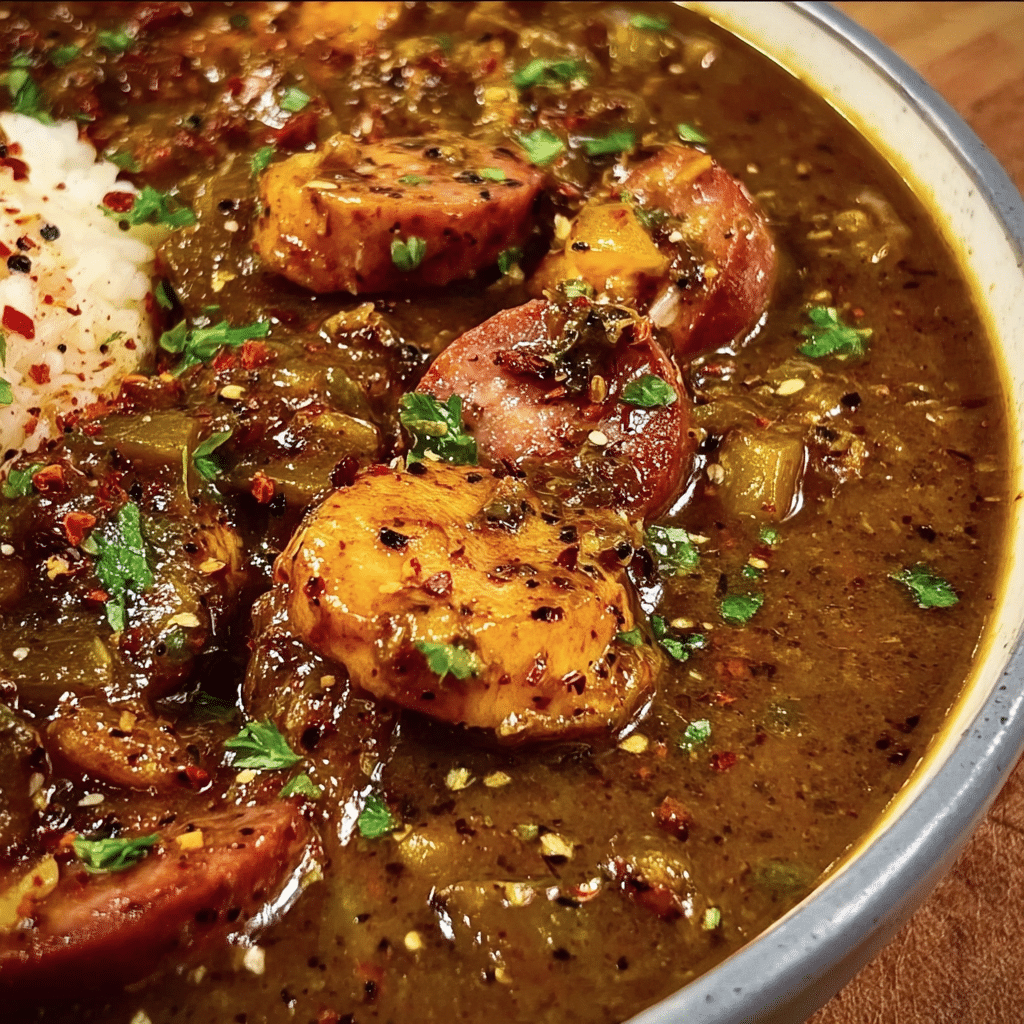
The first spoonful of that thick, savory gumbo was an explosion of flavors—smoky sausage, tender chicken, and a medley of vegetables, all swimming in a rich, dark roux. It was love at first taste, and I quickly learned that Cajun chicken sausage gumbo was not just a meal; it was a communal experience, often served during family gatherings and celebrations. The dish is deeply rooted in the culture of Louisiana, reflecting a blend of French, African, Spanish, and Native American influences. Each ingredient tells a story, and each recipe carries the weight of history and tradition.
The Story Behind This Recipe
What makes Cajun chicken sausage gumbo so special is its versatility and adaptability. It’s a dish born from necessity, showcasing how humble ingredients can come together to create something extraordinary. Traditionally, gumbo was a way for families to use leftover meats and vegetables, ensuring that nothing went to waste. In our busy lives today, this recipe offers a quick yet satisfying solution for families who want a hearty meal without spending hours in the kitchen. The ease of preparation, combined with the ability to customize it according to what you have on hand, makes it a go-to for many households.
As a busy mom, I appreciate how Cajun chicken sausage gumbo can be made in under an hour while still delivering that homemade goodness. With just a few simple steps—browning the sausage, sautéing the vegetables, and adding the broth and spices—you can have a pot of gumbo bubbling away on the stove, filling your home with warmth and comfort. It’s perfect for those hectic weeknights when you want to gather around the table with your loved ones and share a meal that nourishes both the body and the soul.
Seasonally, this dish shines brightly in the fall and winter months when the days get shorter, and the temperatures drop. It’s the kind of meal that warms you from the inside out, making it ideal for family gatherings during holidays or chilly evenings. However, I have found that it’s also a fantastic summer dish; after all, who doesn’t enjoy a hearty bowl of gumbo while reminiscing about summer vacations spent in the bayou? The emotional connection to this dish runs deep, as it invokes memories of laughter, shared stories, and the simple joys of life.
In this guide, you’ll learn everything you need to know about making the perfect Cajun chicken sausage gumbo—from selecting the right ingredients to mastering the art of creating a rich roux. I’ll share tips and tricks I’ve picked up along the way, along with variations that you can try to make this dish your own. Whether you’re a seasoned chef or a novice in the kitchen, I promise you will find joy in bringing this flavorful dish to your table.
The Rich History and Cultural Significance of cajun chicken sausage
The rich history and cultural significance of Cajun chicken sausage gumbo run deep, intertwined with the unique tapestry of Louisiana’s heritage. Originating from the Acadians, French settlers who arrived in Louisiana in the 18th century, Cajun cuisine is a vibrant blend of French, African, Spanish, and Native American influences. As these diverse cultures coalesced, they brought with them culinary traditions that would evolve into the distinctive flavors of Cajun cooking. Cajun chicken sausage, in particular, showcases the ingenuity of using readily available ingredients, making it a staple in the homes of many Louisiana families.
Origins and History
The term “gumbo” is believed to derive from the West African word for okra, a key ingredient in many traditional gumbo recipes. However, gumbo has transcended its origins, with various interpretations and adaptations appearing throughout the region. The addition of chicken and sausage to the mix speaks to the resourcefulness of the Cajun people who often relied on what they had at hand. In the early days, sausage was typically made from pork, but over time, as the culinary landscape evolved, chicken sausage emerged as a popular alternative, providing a lighter option without sacrificing flavor.
Regional variations of gumbo abound, with each family passing down their unique recipes through generations. From the New Orleans-style gumbo, which often includes seafood, to the heartier, meat-focused versions found in rural communities, the essence of gumbo remains the same: a comforting, satisfying dish meant to bring people together. Today, Cajun chicken sausage gumbo has found its way into restaurants across the country, but nothing compares to the homemade versions that evoke the true spirit of Cajun cooking.
Cultural Significance
In Louisiana, food is more than just sustenance; it’s a pivotal part of the culture and community. Cajun chicken sausage gumbo is often served during significant occasions, such as Mardi Gras, family reunions, and holidays. It symbolizes hospitality and togetherness, inviting friends and family to gather around the table and share stories over a steaming bowl. Celebrations like the annual Gumbo Festival in Louisiana highlight this dish’s importance, showcasing the variations and techniques that define Cajun cooking while fostering a sense of community.
Famous chefs and restaurants have elevated gumbo to an art form, but the heart of Cajun chicken sausage gumbo lies in its humble roots. Many home cooks pride themselves on their family recipes, each with its secret ingredient or technique that makes it unique. This is where the emotional connection to the dish deepens, as it becomes a vessel for memories and traditions passed down through generations.
Nutritional Benefits
Beyond its cultural significance, Cajun chicken sausage gumbo offers nutritional benefits that make it a wholesome choice for family meals. The dish is typically packed with vegetables like bell peppers, onions, and celery, providing essential vitamins and minerals. The inclusion of chicken, especially lean cuts, adds protein, while the spices and herbs contribute to its robust flavor without the need for excessive salt or fat.
Moreover, using chicken sausage can significantly reduce the overall fat content compared to traditional pork sausage, making it a healthier option for those looking to maintain a balanced diet. By incorporating brown rice or whole grains as a base, you can further enhance the nutritional profile of the dish. The balance of flavors, textures, and nutrients in Cajun chicken sausage gumbo makes it not only a satisfying meal but also a nourishing one.
In conclusion, Cajun chicken sausage gumbo is a dish that embodies the spirit of Louisiana and its rich culinary history. It serves as a reminder of the creativity born from necessity and the joy of sharing food with loved ones. As you explore this guide, you’ll not only learn how to prepare this beloved dish but also gain an appreciation for the stories and traditions that make it truly special.
Essential Ingredients for Perfect cajun chicken sausage
Essential Ingredients for Perfect Cajun Chicken Sausage
Creating a mouthwatering Cajun Chicken and Sausage Gumbo requires an array of thoughtfully selected ingredients that come together to form a symphony of flavors. Each component plays a crucial role, and sourcing quality ingredients can elevate your dish from good to unforgettable. Below, I’ll outline the essential ingredients you’ll need, their significance, and some handy tips for selecting and using them.
Essential Ingredients
- Chicken: 1 pound (preferably boneless, skinless thighs for rich flavor)
- Beef: 1/2 pound (chopped brisket or stew meat adds depth)
- Pork: 1/2 pound (andouille sausage is traditional for that Cajun kick)
- Seafood: 1/2 pound (shrimp or crab can be added for a coastal twist)
- Pasta: 1 cup (optional; some prefer a touch of orzo or fettuccine for texture)
- Fruits: 1-2 cups (such as okra or tomatoes; fresh or canned)
- Vegetables: 1 cup (onion, bell pepper, and celery for the ‘holy trinity’)
Cajun Chicken And Sausage Gumbo
Ingredients
- 1 cup vegetable oil
- 1 cup all-purpose flour
- 1 pound andouille or smoked sausage, sliced ¼-inch thick
- 2 celery ribs, chopped
- 1 large green bell pepper, chopped
- 1 large onion, chopped
- 4 cloves garlic, minced
- salt and pepper to taste
- 1 pinch Creole seasoning, or to taste
- 6 cups chicken broth
- 1 bay leaf
- 1 rotisserie chicken, boned and shredded
Instructions
- 1 cup vegetable oil
- 1 cup all-purpose flour
- 1 pound andouille or smoked sausage, sliced ¼-inch thick
- 2 celery ribs, chopped
- 1 large green bell pepper, chopped
- 1 large onion, chopped
- 4 cloves garlic, minced
- salt and pepper to taste
- 1 pinch Creole seasoning, or to taste
- 6 cups chicken broth
- 1 bay leaf
- 1 rotisserie chicken, boned and shredded
Let’s explore each of these ingredients in detail:
The Role of Each Ingredient
When crafting your Cajun Chicken and Sausage Gumbo, each ingredient contributes not just flavor but also texture and heartiness to the dish. The chicken provides a tender protein base, while the beef adds richness. Pork, particularly in the form of andouille sausage, brings a spicy, smoky flavor that is characteristic of Cajun cuisine. Seafood, like shrimp or crab, adds a delightful brininess that rounds out the dish beautifully.
Vegetables are crucial in any gumbo, with the combination of onion, bell pepper, and celery—often referred to as the ‘holy trinity’—creating a flavorful foundation. Fruits like okra not only enhance the dish’s flavor but also serve as a natural thickening agent, while tomatoes add acidity and sweetness. Pasta is not traditional in every gumbo, but it can provide an interesting texture if you choose to include it.
Shopping Tips
When shopping, always opt for fresh, high-quality ingredients. Look for chicken thighs that are moist and free from blemishes. When selecting beef, choose cuts with good marbling, which indicates tenderness. For pork, andouille sausage should have a distinct aroma and a firm texture. If you’re adding seafood, freshness is key; shrimp should smell like the ocean, not fishy.
Seasonal availability is another consideration. Fresh vegetables like bell peppers and okra are best in the summer months, while tomatoes can often be found year-round. If you can, visit local farmers’ markets for the freshest produce. For a budget-friendly option, consider frozen vegetables—they retain their nutritional value and can be just as flavorful when cooked properly.
Substitutions and Alternatives
Not everyone can enjoy the same ingredients, so here are some alternatives. If you’re looking for a healthier option, you can use skinless chicken breasts instead of thighs, though they may not yield the same flavor depth. For a vegetarian version, consider using plant-based sausage or mushrooms for a meaty texture, and vegetable broth instead of chicken broth.
For those with dietary restrictions, gluten-free pasta can be substituted for traditional pasta, and for a lower-carb option, simply omit the pasta altogether. If you’re allergic to seafood, you can easily skip it and add extra chicken or vegetables instead.
Storage Tips
Proper storage can extend the life of your ingredients and keep them fresh. Raw chicken, beef, and pork should be stored in the refrigerator and used within a couple of days, or frozen for longer storage. Seafood is best used fresh but can also be frozen if bought in bulk. Vegetables should be kept in the crisper drawer of your fridge, while dried pasta can be stored in a cool, dry place.
Cost-Saving Tips
To keep your gumbo budget-friendly, buy in bulk where possible and take advantage of sales. Consider using less expensive cuts of meat, as the slow cooking process will tenderize them beautifully. Canned tomatoes and frozen vegetables can also be significantly cheaper than fresh, especially out of season. Finally, don’t forget to check your pantry before shopping; you might already have some of the staples on hand!
In summary, crafting a delectable Cajun Chicken and Sausage Gumbo starts with understanding the importance of each ingredient. By selecting high-quality items, being mindful of seasonal availability, and exploring substitutions, you can create a dish that’s not only flavorful but also fits your dietary needs and budget.
Detailed Step-by-Step cajun chicken sausage Cooking Instructions
Detailed Step-by-Step Cajun Chicken Sausage Cooking Instructions
Cooking Cajun Chicken and Sausage Gumbo may seem daunting at first, but with the right techniques and a bit of patience, you can create a dish that warms the soul and tantalizes the taste buds. Below, I’ll walk you through each step of the process, from preparation to final assembly, so you can replicate the magic in your own kitchen.
Preparation Steps
- Gather Your Ingredients: Before you start, ensure you have all your ingredients ready and within reach. This practice, known as mise en place, is crucial in cooking. It allows you to focus on the cooking process without interruptions.
- Chop Your Vegetables: Dice the onion, bell pepper, and celery into uniform pieces. This is not just for aesthetics; uniform sizes ensure even cooking. Aim for small, 1/4-inch cubes.
- Prep the Proteins: Cut the chicken into bite-sized pieces and slice the andouille sausage. If you’re using beef, chop it into 1-inch cubes. If shrimp is part of your recipe, peel and devein them at this stage.
- Measure Your Spices: In a small bowl, combine your spices (typically Cajun seasoning, bay leaf, thyme, and a pinch of cayenne). Having them pre-measured will streamline the process and help avoid over-seasoning.
Cooking Process
- Heat the Pot: In a large pot or Dutch oven, heat a tablespoon of oil over medium heat. This will allow you to sauté the vegetables and proteins effectively.
- Sauté the Holy Trinity: Add your chopped onion, bell pepper, and celery to the pot. Sauté for about 5-7 minutes until they become tender and fragrant. Stir occasionally to prevent sticking.
- Add the Chicken: Once the vegetables have softened, add the chicken pieces. Cook for about 5-6 minutes until they are browned on all sides.
- Include the Sausage: Next, stir in the sliced andouille sausage. Let it cook for another 3-4 minutes, allowing the flavors to meld.
- Incorporate the Beef: Add the beef cubes and cook for 5-7 minutes, browning them well. Remember, browning adds flavor!
- Stir in the Spices: Sprinkle your pre-measured spices into the pot. Stir well to coat the proteins and vegetables, allowing the spices to toast slightly for about a minute.
- Add Liquid: Pour in enough chicken broth to cover the ingredients. Typically, 4-6 cups will do, depending on how thick you prefer your gumbo.
- Bring to a Simmer: Increase the heat to bring the mixture to a gentle boil, then reduce to low. Let it simmer uncovered for about 30 minutes. This will help develop the flavors.
- Add Okra and Seafood: If you’re using okra, add it to the pot in the last 10 minutes of cooking along with the seafood, if included. This ensures they don’t overcook and become mushy.
- Taste and Adjust: Before serving, taste your gumbo. Adjust seasoning with salt, pepper, or additional Cajun seasoning if necessary.
Final Assembly
- Prepare the Pasta: If you opted to include pasta, cook it separately according to package instructions. Drain and set aside while you finish the gumbo.
- Serve: Ladle the gumbo into bowls over a scoop of pasta, if using. Garnish with fresh parsley or green onions for a pop of color and added freshness.
- Enjoy! Gather around the table with friends or family, and don’t forget to serve with crusty bread or over rice to soak up every last drop of the flavorful broth.
Throughout this process, remember that patience is key. Gumbo is a dish that benefits from time and love, allowing the flavors to deepen and meld. If you find yourself with leftovers, they often taste even better the next day, as the flavors continue to develop. So don’t hesitate to make a larger batch! Cooking Cajun Chicken and Sausage Gumbo is as much about the experience as it is about the end result. Gather your loved ones, share stories, and savor each bite of this delightful dish.
Professional Tips and Techniques for cajun chicken sausage
When it comes to cooking Cajun Chicken and Sausage Gumbo, mastering the art of this flavorful dish is essential. Whether you are a novice in the kitchen or a seasoned chef, understanding some professional tips and techniques can elevate your gumbo game to new heights. The rich history of gumbo, tracing back to the culinary traditions of Louisiana, calls for a blend of flavors, techniques, and a sprinkle of personal touch. So let’s dive into some insider secrets that will help you prepare the best Cajun chicken sausage gumbo you’ve ever tasted.
Professional Techniques
One of the keys to a successful Cajun chicken sausage gumbo lies in the roux. The roux is a mixture of flour and fat, cooked together until it reaches a deep, nutty brown color. This process can take anywhere from 30 minutes to an hour, depending on how dark you want your roux. Patience is crucial here! If you rush it, you might end up with a burnt flavor instead of the rich, complex taste you’re aiming for. Stir continuously to avoid scorching, and consider using a heavy-bottomed pot to distribute heat evenly.
Another professional technique is to develop layers of flavor. Start by sautéing your onions, bell peppers, and celery – the holy trinity of Cajun cooking – until they’re soft and fragrant. Adding garlic and spices at this stage can really amp up the flavor profile. Don’t shy away from using quality Cajun spices; they are the lifeblood of your gumbo. A good Cajun seasoning mix will often include paprika, cayenne, garlic powder, and thyme, so make sure to use a blend that resonates with your taste.
For the chicken, consider using bone-in pieces. They add a depth of flavor that boneless cuts often lack. If you’re using sausage, a smoked sausage like andouille brings a delightful smokiness that pairs beautifully with the spices. Brown the sausage in the pot before adding the other ingredients to kickstart that delicious flavor base.
Troubleshooting Guide
Even the best cooks face challenges in the kitchen, and making Cajun chicken sausage gumbo is no exception. One common issue is ending up with a watery gumbo. This can happen if you add too much liquid or if the roux isn’t cooked properly. To troubleshoot, allow your gumbo to simmer longer to reduce excess liquid and concentrate the flavors. If it’s still too thin, you can always create a slurry of cornstarch and water, adding it gradually until you achieve the desired thickness.
Another problem might be balancing the spice level. If your gumbo turns out too spicy, consider adding a dollop of sour cream or yogurt to mellow the heat. Conversely, if it’s too bland, don’t hesitate to sprinkle in more seasoning or hot sauce to kick it up a notch. Remember to taste as you go!
Presentation Tips
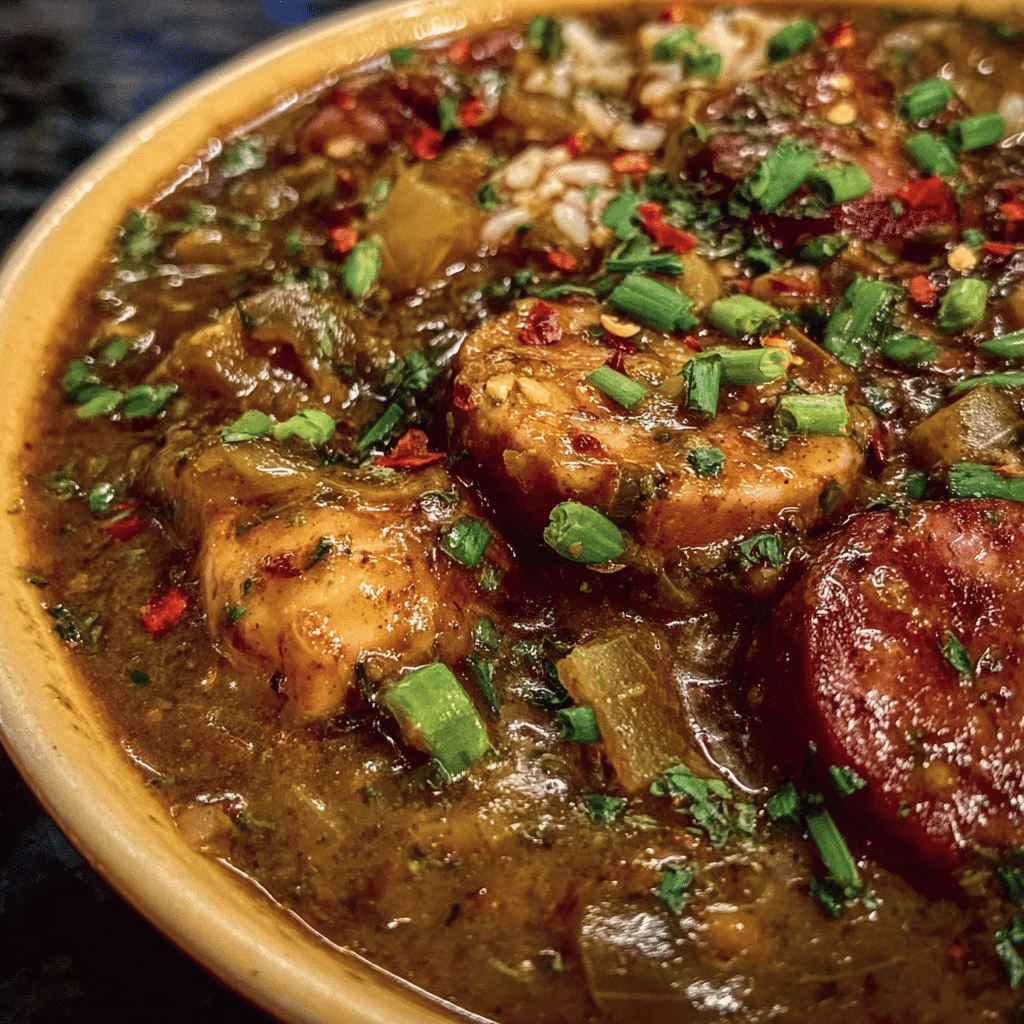
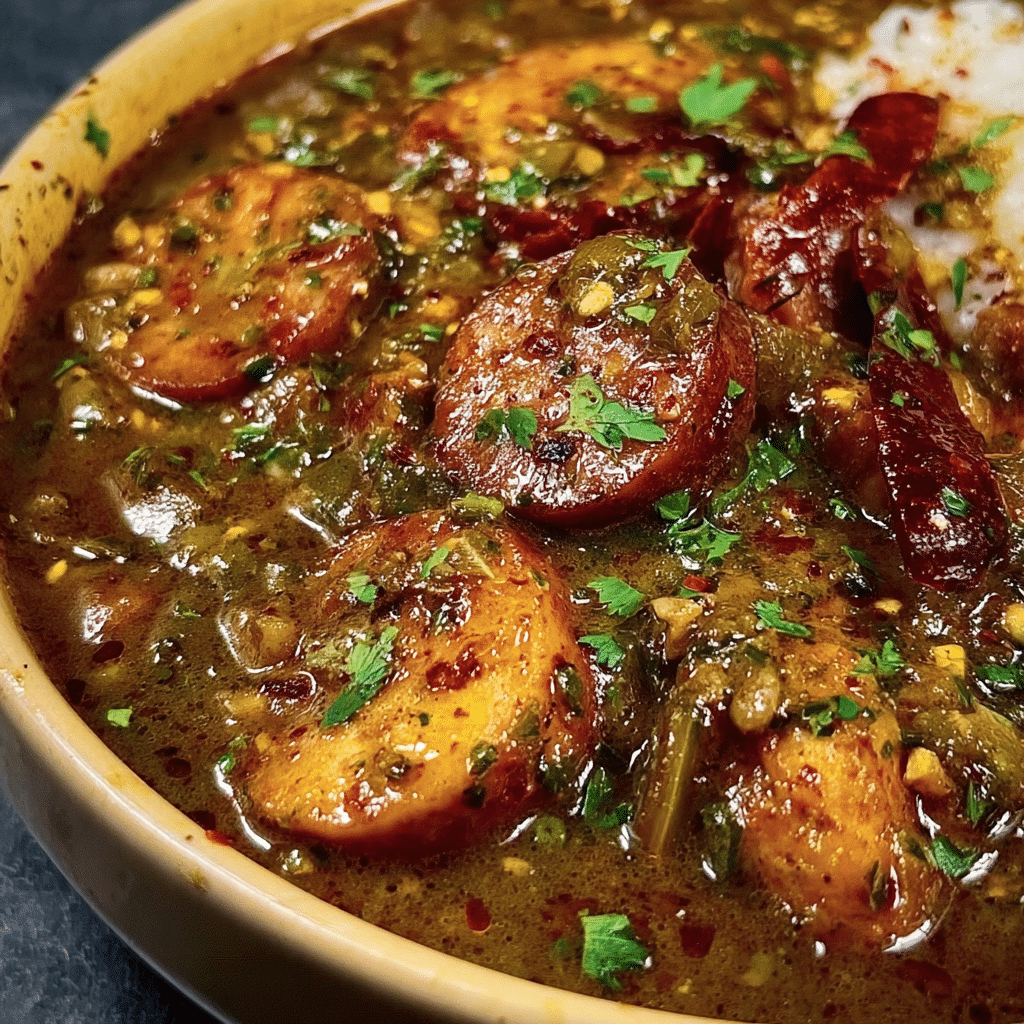
Now that you’ve mastered the cooking techniques, let’s talk about how to present your Cajun chicken sausage gumbo. A beautiful dish is not only about taste but also about how it looks on the table. Serve your gumbo in a deep bowl, allowing the vibrant colors of the ingredients to shine. A sprinkle of fresh chopped parsley or green onions on top adds a burst of color and freshness.
Consider serving your gumbo with a side of fluffy white rice, which can be placed in the center of the bowl. This not only absorbs the flavors of the gumbo but also adds texture. For an extra touch, a few slices of crusty French bread or cornbread on the side can elevate the meal, providing a perfect vessel for scooping up the rich, savory broth.
Finally, when it comes to drink pairings, a chilled white wine, such as Sauvignon Blanc or a light-bodied red, like Pinot Noir, can complement the spices beautifully. Alternatively, a refreshing Southern-style sweet tea can also be the perfect companion to your hearty bowl of gumbo.
Now that you’re equipped with these professional tips and techniques, you’re ready to unleash your creativity in the kitchen. Whether you’re cooking for a cozy family dinner or hosting a lively gathering, your Cajun chicken sausage gumbo is sure to impress!
Creative Variations and Adaptations of cajun chicken sausage
Cajun Chicken and Sausage Gumbo is a dish that thrives on creativity and adaptability. While the traditional recipe is beloved, there are countless variations and adaptations that can cater to different tastes, dietary preferences, and seasonal ingredients. Let’s explore some exciting ways to put a unique spin on this classic dish!
Seasonal Variations
One of the best parts about cooking Cajun chicken sausage gumbo is its flexibility with ingredients. You can easily make seasonal adaptations based on what’s fresh and available. In spring, consider incorporating fresh asparagus and peas for a vibrant touch. Summer might call for the addition of juicy tomatoes and sweet corn, adding a burst of sweetness and color to your gumbo. In the fall, root vegetables like sweet potatoes or butternut squash can lend a comforting sweetness, while winter can be the time for hearty greens, such as kale or collard greens.
Don’t forget about seafood! In coastal areas, you can easily swap out the chicken for shrimp, crab, or even fish, creating a delightful seafood gumbo that showcases the flavors of the ocean. Just remember to add seafood towards the end of the cooking process to prevent overcooking.
Dietary Adaptations
As dietary preferences shift, so does the versatility of Cajun chicken sausage gumbo. For those following a keto lifestyle, you can easily modify the recipe by eliminating the rice and thickening the broth with additional vegetables or a keto-friendly thickener. Use cauliflower rice as a substitute to maintain that satisfying texture without the carbs.
For vegans, creating a plant-based version of gumbo is entirely feasible. Substitute the chicken with hearty vegetables like eggplant and mushrooms for umami flavor, and use vegan sausage or beans for protein. A rich vegetable broth can replace the chicken broth, and the roux can be made with plant-based fats such as olive oil or coconut oil.
If gluten is a concern, simply substitute the all-purpose flour in the roux with a gluten-free flour blend or cornstarch for thickening. This way, you can enjoy a delicious bowl of gumbo without worry.
Creative Twists
Let’s not forget about international fusion variations that can bring exciting new flavors to your gumbo. For example, consider infusing your dish with Asian flavors by adding ginger, soy sauce, and bok choy, creating a gumbo with a stir-fry twist. Alternatively, a Mexican-inspired gumbo could incorporate black beans, corn, and a touch of lime, served with tortilla strips on top.
Experimenting with different cooking methods can also lead to delightful results. While traditional gumbo is often made on the stovetop, you can adapt the recipe for a slow cooker or Instant Pot. This not only allows for easy meal prep but also enhances the flavors as they meld together over time. If you prefer a quicker method, a pressure cooker can dramatically reduce cooking time while still delivering that signature depth of flavor.
Lastly, let’s talk about leftovers! If you find yourself with extra gumbo, don’t let it go to waste. Transform it into a gumbo-stuffed bell pepper or use it as a base for a hearty soup. You can even pour it over a baked potato for a comforting meal the next day.
With these creative variations and adaptations, your Cajun chicken sausage gumbo can be endlessly enjoyable. The beauty of this dish lies in its ability to accommodate personal tastes and seasonal ingredients while still honoring its rich heritage. So don your apron and let your culinary creativity flow!
Storage, Reheating, and Meal Prep for cajun chicken sausage
When it comes to enjoying a hearty bowl of Cajun Chicken and Sausage Gumbo, knowing how to properly store it can extend its lifespan and maintain its delicious flavors. Whether you’re planning to eat it in a few days or save some for later, the right storage techniques will make all the difference. Let’s dive into the essential aspects of storage, reheating, and meal prep for your Cajun chicken sausage gumbo.
Short-term Storage
After you’ve lovingly crafted your Cajun chicken sausage gumbo, it’s likely you’ll have some leftovers. The first step in short-term storage is to let the gumbo cool to room temperature. This is crucial as placing hot food directly into the refrigerator can raise the internal temperature and put other stored foods at risk.
For short-term storage, you can use airtight containers, which are ideal for keeping your gumbo fresh in the refrigerator for up to 3-4 days. Glass containers are a great option as they don’t retain odors and are easy to clean. If you prefer plastic, ensure it’s BPA-free. Portioning your gumbo into smaller containers is also a smart move; not only does this allow for quicker cooling, but it also makes reheating easier when you’re ready for a meal.
Freezing and Long-term Storage
If you find yourself with a larger batch of Cajun chicken sausage gumbo or simply want to prepare in advance, freezing is an excellent option. Gumbo, with its rich flavors and hearty ingredients, freezes surprisingly well. However, there are some strategies to keep in mind to maintain its quality.
Start by allowing your gumbo to cool completely before transferring it to freezer-safe containers or heavy-duty freezer bags. If using bags, lay them flat in the freezer for space-saving storage, and ensure you remove as much air as possible to prevent freezer burn. Typically, gumbo can last in the freezer for up to 4-6 months. However, for the best flavor and texture, try to consume it within the first three months.
When you’re ready to enjoy your gumbo again, simply thaw it in the refrigerator overnight or use the defrost setting on your microwave. It’s best to reheat it gently on the stove over low heat, stirring occasionally, to prevent any scorching. If the gumbo appears too thick after thawing, you can add a splash of chicken broth or water to regain its desired consistency.
Reheating Best Practices
Reheating Cajun chicken sausage gumbo can be a delightful experience, especially when done right. The goal is to maintain the flavorful essence of the dish without compromising its texture. The stovetop method is highly recommended as it allows for even heating. Pour your gumbo into a saucepan, and heat it over medium-low heat, stirring regularly until it’s warmed through.
If you’re pressed for time, the microwave is also an option, but be aware that it can heat unevenly. To microwave your gumbo, place it in a microwave-safe bowl, cover it loosely with a lid or microwave-safe wrap, and heat in intervals of 1-2 minutes, stirring in between. This helps ensure that the gumbo heats evenly and that you avoid hot spots.
Meal prep can be a lifesaver during busy weeks, especially with a dish as versatile as Cajun chicken sausage gumbo. Consider dedicating a day to batch cooking. Prepare a large pot of gumbo, then divide it into portions for quick meals throughout the week. Not only does this save time, but it also allows you to control your portions and avoid the temptation of takeout.
When prepping meals, consider the variety of sides that can accompany your gumbo. From fluffy rice to crusty French bread, having these ready to go can make your meal feel complete and satisfying.
Lastly, food safety is of utmost importance. Always check for any signs of spoilage such as off smells or discoloration. When in doubt, throw it out! The shelf life of your Cajun chicken sausage gumbo is typically a few days in the fridge and months in the freezer when stored properly. Keep an eye on dates, and don’t forget to label your containers with the date they were made or frozen.
In summary, with the right storage techniques, you can enjoy your Cajun chicken sausage gumbo at its best, whether you’re diving into it right away or saving it for another day. Embrace the process of storing and reheating with confidence, and you’ll find that each bowl of gumbo can be as delightful as the first.
Nutritional Benefits and Health Information
As you savor each spoonful of Cajun Chicken and Sausage Gumbo, it’s worth considering the nutritional benefits packed into this flavorful dish. With a medley of ingredients that contribute to both taste and health, let’s explore the nutritional profile, health benefits, and dietary considerations of this beloved Cajun classic.
Nutritional Profile
The nutritional content of Cajun chicken sausage gumbo varies based on the specific ingredients and proportions used, but generally, a typical serving can provide a robust mix of macronutrients. A standard bowl of gumbo, which might include chicken, sausage, vegetables, and rice, can range from 300 to 500 calories depending on the serving size and the richness of the broth.
In terms of macronutrients, you can expect the following distribution: approximately 15-20 grams of protein, 10-20 grams of fat, and 30-50 grams of carbohydrates per serving. The chicken and sausage contribute a significant amount of protein, which is essential for muscle repair and overall body function.
Cajun chicken sausage gumbo is also a source of dietary fiber, particularly when incorporating vegetables such as okra, bell peppers, and onions. These ingredients add bulk to the dish and help promote healthy digestion.
Health Benefits
The health benefits of Cajun chicken sausage gumbo are largely tied to its core ingredients. Firstly, chicken is a lean source of protein, which is vital for building and repairing tissues. The use of sausage can add additional flavors and can vary widely in fat content, depending on whether you opt for turkey sausage, pork sausage, or a smoked variety.
Vegetables play a critical role in this dish, providing essential vitamins and minerals. For instance, bell peppers are rich in vitamin C, while okra is a great source of antioxidants and dietary fiber. The spices used to season gumbo, such as cayenne pepper and paprika, not only enhance the flavor but also have anti-inflammatory properties.
Furthermore, the inclusion of rice as a carbohydrate source provides energy and can help to balance the dish. Whole grain rice varieties can add even more fiber and nutrients, making the dish more filling and beneficial.
Dietary Considerations
When it comes to dietary considerations, Cajun chicken sausage gumbo can fit into various eating plans, but it’s essential to be mindful of specific ingredients. For those watching their sodium intake, traditional sausage can be high in salt, so consider using lower-sodium options or limiting the amount added during cooking. Additionally, if you’re gluten-sensitive, ensure that your broth and any additional seasonings are gluten-free.
For those looking to reduce calories or fat, there are several adjustments you can make. Opting for skinless chicken breast and turkey sausage can significantly lower the fat content while still providing plenty of flavors. You can also increase the vegetable content to add volume without adding many calories.
Moreover, if you’re on a low-carb diet, you might consider serving your gumbo over cauliflower rice instead of traditional rice. This swap can drastically reduce the carbohydrate count while still delivering a satisfying meal.
In summary, Cajun chicken sausage gumbo not only tantalizes the taste buds but also provides a variety of nutritional benefits. Whether you’re enjoying it as a comforting weeknight meal or serving it at a gathering, knowing its healthful properties can make each bowl even more enjoyable. Embrace the flavors and warmth of this classic dish, knowing it nourishes both body and soul.
Conclusion: Mastering the Perfect cajun chicken sausage
Creating the perfect cajun chicken sausage is more than just following a recipe—it’s about understanding the techniques, ingredients, and cultural significance behind this beloved dish. Throughout this comprehensive guide, we’ve explored everything from the historical origins to modern variations, ensuring you have all the knowledge needed to make this recipe your own.
Whether you’re a beginner cook or an experienced chef, the techniques and tips we’ve shared will help you create a cajun chicken sausage that’s not only delicious but also meaningful. Remember that cooking is a journey of discovery, and each time you make this dish, you’ll learn something new.
We encourage you to experiment with the variations we’ve discussed, adapt the recipe to your dietary needs, and most importantly, share it with the people you love. Food has the incredible power to bring people together, and Cajun Chicken and Sausage Gumbo is the perfect dish to create lasting memories around your dinner table.
Don’t forget to share your cooking adventures with us on social media, and feel free to ask questions in the comments below. Happy cooking!
Share this recipe and let us know how it turned out! Tag us on social media for a chance to be featured.