Chinese beef broccoli is a beloved dish that combines tender slices of beef with vibrant green broccoli in a savory sauce. My first encounter with this dish was during a family gathering at a local Chinese restaurant. I remember sitting at a round table, the lazy Susan twirling slowly, showcasing colorful plates filled with various dishes. When the plate of beef and broccoli arrived, I was immediately drawn to the rich aroma wafting from it. As I took my first bite, the tender beef mingled perfectly with the crisp broccoli, and the sauce was a delightful blend of sweet and savory. It was a moment that ignited my love for this dish, and since then, I’ve made it countless times in my own kitchen.
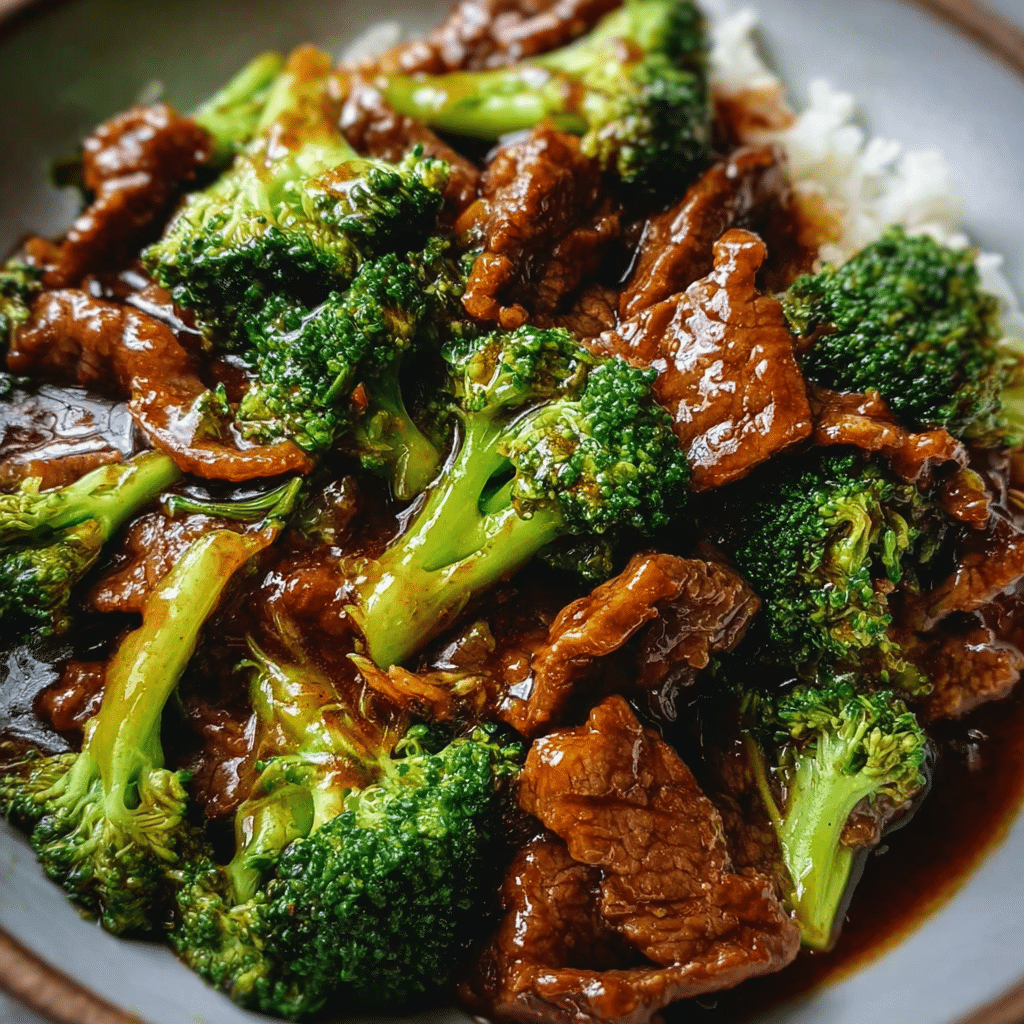
The origins of Chinese beef broccoli can be traced back to the broader tradition of Chinese cuisine, which emphasizes balance in flavors, textures, and colors. This dish is a classic representation of the stir-fry technique that is a staple in Chinese cooking. Stir-frying allows for quick cooking, which preserves the nutrients of the vegetables while enhancing their flavors. The use of fresh ingredients like broccoli not only adds color but also packs a nutritional punch, making it a favorite among health-conscious diners.
The Story Behind This Recipe
Chinese beef broccoli has a special place in my heart, not just because of its delicious taste but also due to the shared moments it has created with my loved ones. I can still recall the time I decided to try making it myself for a dinner party. I was nervous, wanting to impress my friends and family with my culinary skills. I scoured various recipes, merging ideas from different sources until I settled on my version of Chinese beef broccoli. The thrill of cooking the beef to the perfect doneness and ensuring the broccoli retained its bright green color was exhilarating. When I finally served it, the smiles on my guests’ faces and their compliments made all the effort worthwhile. This dish has since become a staple in my home, often requested for family dinners.
What makes this recipe truly special is its adaptability. For busy families, it’s a lifesaver. The quick cooking time means you can whip it up in under 30 minutes, making it perfect for weeknight dinners when time is of the essence. Plus, the ingredients are generally easy to find, even in local grocery stores. You can easily modify the recipe to suit your dietary needs—whether by using chicken, tofu, or even a medley of vegetables instead of beef. This versatility ensures that everyone can enjoy it, regardless of their preferences.
Seasonal relevance also plays a role in the dish’s appeal. Broccoli is available year-round, but it shines particularly well in spring when it’s at its freshest and most flavorful. I love making Chinese beef broccoli as the days grow longer and warmer, often serving it alongside a side of jasmine rice to soak up the savory sauce. The vibrant colors of the dish remind me of the renewal that comes with spring, making it a perfect choice during this season.
For me, Chinese beef broccoli symbolizes comfort and connection. It’s not just food; it’s a vessel for memories and family gatherings. Each time I prepare it, I’m reminded of those joyous occasions spent laughing and sharing stories around the dinner table. As you read this guide, I hope you’ll discover not just how to make this wonderful dish but also the love and tradition that can be infused into every bite.
In this article, you will learn about the rich history behind Chinese beef broccoli, its cultural significance, and a step-by-step guide on how to prepare it at home. You’ll also find tips to make the dish your own, ensuring it becomes a cherished part of your culinary repertoire. So, let’s dive into the fascinating world of this timeless dish!
The Rich History and Cultural Significance of chinese beef broccoli
The history of Chinese beef broccoli is a fascinating journey that reflects the evolution of Chinese cuisine as it spread across the globe. While the dish itself is often associated with American Chinese restaurants, its roots lie deep in the culinary traditions of China, where stir-frying is a practical and efficient cooking method. The technique of stir-frying dates back to the Han Dynasty (206 BCE – 220 CE), highlighting the Chinese affinity for quick cooking methods that maintain the integrity of fresh ingredients.
Origins and History
Broccoli, as we know it, is not native to China but was introduced from Italy in the 19th century. The Chinese quickly adopted this nutritious green vegetable, incorporating it into their dishes. Chinese beef broccoli is believed to have originated in the 20th century, particularly in the United States, where Chinese immigrants began adapting traditional recipes to suit American tastes. This adaptation led to the creation of a dish that combines the best of both worlds: the technique of stir-frying and the flavors of soy sauce, garlic, and ginger.
Historically, beef was considered a luxury ingredient in Chinese cuisine, often reserved for special occasions. The use of beef in stir-fry dishes like Chinese beef broccoli reflects a shift in the culinary landscape as beef became more accessible to the average family. The dish’s rise in popularity can be linked to the increasing presence of Chinese restaurants across America, particularly in urban areas where diverse populations came together to share their culinary legacies.
Cultural Significance
Today, Chinese beef broccoli is a staple in many Chinese-American restaurants and is often enjoyed as a comfort food by families across the U.S. Its cultural significance lies in its ability to bridge the gap between traditional Chinese cooking and contemporary American tastes. The dish is frequently served during family gatherings and celebrations, symbolizing togetherness and the blending of cultures.
In Chinese culture, food is an essential part of social interactions. Dishes like Chinese beef broccoli are not just meals; they are an experience shared among friends and family. The colorful presentation, the balance of flavors, and the nutrition packed into each bite all contribute to its status as a beloved dish. It’s common to see it served during festive occasions, as its vibrant colors and wholesome ingredients embody the spirit of celebration.
Nutritional Benefits
Aside from its delicious taste, Chinese beef broccoli is celebrated for its nutritional benefits. Broccoli is rich in vitamins C and K, as well as fiber, making it an excellent choice for anyone looking to improve their health. The beef provides a good source of protein, iron, and essential nutrients. When combined, these ingredients create a balanced meal that supports overall well-being.
Additionally, the use of fresh ingredients and the quick cooking method helps retain the nutrients, making it a healthier option compared to many takeout meals. The sauce, typically made from soy sauce, oyster sauce, and a hint of sesame oil, adds flavor without overwhelming the dish with unnecessary calories. For those who are conscious of their diet, Chinese beef broccoli can be easily adapted to include leaner cuts of beef or alternative proteins like chicken or tofu, making it a versatile option for any household.
In summary, the rich history and cultural significance of Chinese beef broccoli highlight its evolution from traditional Chinese cuisine to a popular dish in American households. Its nutritional benefits, combined with the joy it brings to the dinner table, ensure that this dish will remain a cherished choice for generations to come.
Essential Ingredients for Perfect chinese beef broccoli
When it comes to preparing chinese beef broccoli, the importance of quality, fresh ingredients cannot be overstated. Each component plays a vital role in crafting the perfect dish that not only tantalizes the taste buds but also brings a sense of comfort and satisfaction. Let’s dive into the essential ingredients that make up this classic recipe, their significance, and tips for selecting the best options available.
Essential Ingredients
- 2 tbsp cornstarch cornflour: This ingredient acts as a thickening agent for our sauce, providing that velvety texture that clings beautifully to the beef and broccoli. It’s essential for creating a glossy finish that makes the dish visually appealing.
- 1/4 cup water: Water is necessary for diluting the cornstarch and ensuring the sauce is not too thick. It helps in balancing the flavors and giving the dish the right consistency.
- 1 tsp sugar: A hint of sweetness enhances the savory elements of the dish and balances the saltiness of the soy sauces.
- 1 tbsp dark soy sauce: Dark soy sauce adds depth of flavor and a rich color to your chinese beef broccoli. It is thicker and sweeter than light soy sauce.
- 1 1/2 tbsp light soy sauce: This sauce provides the essential saltiness and umami flavor. It’s lighter in color and flavor compared to dark soy sauce, making it a perfect counterpart.
- 1 tbsp Chinese cooking wine (Shaoxing wine): This wine is vital for marinating the beef, adding a complex flavor profile that enhances the overall taste of the dish.
- 1/8 tsp Chinese five spice powder: A unique blend of spices, this ingredient adds aromatic complexity and a hint of warmth that elevates the dish.
- 1 tsp sesame oil (optional): This oil provides a nutty flavor and richness to the dish. It is often used as a finishing oil, adding a wonderful aroma.
- 1/8 tsp black pepper: A pinch of black pepper adds a subtle heat that complements the savory flavors.
- 2 tbsp oil: For stir-frying, a high smoke point oil like vegetable or canola oil works best to ensure the beef sears properly without burning.
- 12 oz (360g) beef fillet (flank or rump): The star of the dish, using a tender cut of beef is crucial. Flank steak or rump steak, when sliced thinly against the grain, will provide the best texture.
- 1 garlic clove (finely chopped): Garlic infuses the dish with flavor and aroma, a staple in many Chinese recipes.
- 1 tsp fresh ginger (finely chopped): Ginger adds a warm, zesty flavor that complements the beef and broccoli beautifully.
- 4-5 cups broccoli florets (1 head, cooked): Fresh broccoli not only adds vibrant color but also a nutritious crunch. It’s important to cook the broccoli just right—bright green and tender-crisp.
- 1 cup water: Used for steaming the broccoli, it ensures the florets are cooked perfectly without becoming mushy.
- Sesame seeds (optional for serving): A sprinkle of sesame seeds adds a lovely crunch and visual appeal to the finished dish.
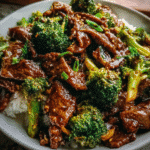
Chinese Beef and Broccoli
Ingredients
Sauce
- 2 tbsp cornstarch / cornflour
- 1/4 cup water
- 1 tsp sugar
- 1 tbsp dark soy sauce
- 1 1/2 tbsp light soy sauce
- 1 tbsp Chinese cooking wine (Shaoxing wine)
- 1/8 tsp Chinese five spice powder
- 1 tsp sesame oil (optional)
- 1/8 tsp tsp black pepper
Stir Fry
- 2 tbsp oil
- 12 oz / 360g beef fillet, flank or rump (Note 4 for tenderising option)
- 1 garlic clove, finely chopped
- 1 tsp fresh ginger, finely chopped
- 4 – 5 cups broccoli florets (1 head), cooked (Note 5)
- 1 cup water
Serving:
- Sesame seeds (optional)
Instructions
- Place cornflour and water in bowl then mix. Add remaining Sauce ingredients.
- Slice the beef into 1/4″ / 0.5cm thick slices. Place the beef and 2 tbsp of the Sauce into a bowl and set aside.
- Heat oil in a skillet over high heat. Add beef and spread out, leave for 1 minute until browned.
- Stir beef for 10 seconds, then add garlic and ginger. Stir for another 30 seconds or until beef is no longer pink.
- Pour Sauce and water into the skillet and quickly mix.
- When the sauce starts bubbling, add broccoli. Stir to coat the broccoli in Sauce, then let it simmer for 1 minute or until Sauce is thickened.
- Remove from heat immediately and serve over rice. Sprinkle with sesame seeds if desired.
Shopping Tips
When shopping for ingredients to make chinese beef broccoli, quality is key. For the best experience, choose fresh vegetables and high-quality meat. Look for broccoli that is bright green and firm, avoiding any yellowing or wilting. For the beef, it’s best to select cuts that are well-marbled, ensuring tenderness and flavor. When it comes to sauces, opt for brands that use natural ingredients without excessive preservatives.
Substitutions and Alternatives
Dietary restrictions are common, and knowing how to substitute ingredients is essential. If you’re looking for a gluten-free option, you can replace soy sauce with tamari. For vegans, swap out beef for tofu or seitan, adjusting cooking times accordingly. If you’re avoiding sugar, consider using a natural sweetener like agave syrup or a sugar alternative. Additionally, you can use frozen broccoli if fresh isn’t available, but be mindful of the cooking time as it may require less than fresh.
Storage of ingredients is also crucial; store cornstarch in a cool, dry place, and keep your soy sauces in the pantry or refrigerator, depending on the brand. Fresh ginger and garlic can be kept in a dry place for a few weeks, but for longer storage, consider freezing them. Always check for the best-by dates on packaged goods to ensure freshness.
As you prepare to cook chinese beef broccoli, remember that the quality of your ingredients directly impacts the final dish. Investing time in selecting the right components not only enhances flavor but also makes the cooking experience more enjoyable and rewarding.
Detailed Step-by-Step chinese beef broccoli Cooking Instructions
Making chinese beef broccoli is a delightful culinary adventure that can be achieved in just 30 minutes with the right preparation and techniques. Here’s a detailed, step-by-step guide to help you navigate this delicious process, ensuring each bite is packed with flavor.
Preparation Steps
- Gather all your ingredients: Before you start cooking, it’s essential to have all your ingredients measured and ready to go. This practice, known as mise en place, helps streamline the cooking process and prevents any last-minute scrambling.
- Slice the beef: Using a sharp knife, slice the beef fillet into thin strips, about 1/4 inch thick. This not only ensures even cooking but also allows for maximum tenderness and flavor absorption. Remember to slice against the grain for the best texture.
- Marinate the beef: In a bowl, combine the sliced beef with 1 tablespoon of light soy sauce, 1 tablespoon of Shaoxing wine, and a pinch of black pepper. Let it marinate for at least 15 minutes, allowing the flavors to penetrate the meat.
- Prepare the sauce: In another bowl, mix the cornstarch with 1/4 cup of water, sugar, dark soy sauce, light soy sauce, Chinese cooking wine, five spice powder, and sesame oil. Stir until smooth, ensuring there are no lumps. Set this aside; this will be your sauce.
- Chop the vegetables: While the beef marinates, finely chop the garlic and ginger. Cut the broccoli into florets, ensuring they are uniform in size for even cooking.
Cooking Process
- Heat the oil: In a large wok or frying pan, heat 2 tablespoons of oil over medium-high heat. Make sure the oil is hot before adding the beef; this will help achieve that perfect sear.
- Cook the beef: Once the oil is shimmering, add the marinated beef strips in a single layer. Allow them to sear without stirring for about 1-2 minutes until browned. Flip and sear the other side for an additional minute. Remove the beef from the pan and set it aside.
- Add aromatics: In the same pan, add the chopped garlic and ginger. Stir-fry for about 30 seconds until fragrant, being careful not to burn them.
- Cook the broccoli: Add the broccoli florets to the pan, along with 1 cup of water. Cover and steam for about 3-4 minutes until the broccoli is bright green and tender-crisp. If you prefer your broccoli softer, add a minute or two more.
- Combine everything: Return the beef to the pan. Pour the prepared sauce over the beef and broccoli, stirring continuously. The sauce will thicken as it heats, coating the beef and broccoli in a glossy finish.
Final Assembly
- Check the seasoning: Before serving, taste your chinese beef broccoli and adjust the seasoning if necessary. You can add a dash more soy sauce or a sprinkle of salt based on your preference.
- Serve hot: Transfer the dish to a serving platter or individual plates. For added flair, sprinkle sesame seeds on top for a lovely crunch and nutty flavor.
- Pair with rice: This dish is traditionally served over steamed jasmine or white rice. The rice balances the savory flavors and absorbs the delightful sauce.
- Enjoy your creation: Take a moment to appreciate your hard work! Share it with family or friends and savor each bite of your homemade chinese beef broccoli.
Throughout this process, be mindful of timing and multitasking. Preparing the sauce while the beef marinates can save valuable minutes. Using high heat ensures a quick cook time, preserving the tenderness of the beef and the vibrant color of the broccoli. Remember, practice makes perfect, and with each attempt at making chinese beef broccoli, you’ll refine your skills and create a dish that’s truly your own.
Professional Tips and Techniques for chinese beef broccoli
If you’re looking to elevate your homemade Chinese beef broccoli to restaurant-quality perfection, you’ve come to the right place! This beloved dish is a staple in Chinese cuisine, and mastering it involves understanding some professional tips and techniques that can make all the difference. Whether you’re a novice in the kitchen or a seasoned cook, these insights will guide you through the process of creating a delicious and visually appealing meal that will impress your family and friends.
Professional Techniques
One of the most crucial aspects of making Chinese beef broccoli is the marinating process. Marinating the beef not only tenderizes it but also infuses it with flavor. A classic marinade typically includes soy sauce, cornstarch, sesame oil, and a pinch of sugar. The cornstarch helps to create a velvety texture once the beef is stir-fried. Aim to marinate the beef for at least 30 minutes, but if you can manage a few hours or even overnight, you’ll achieve even better results.
When it comes to cooking the beef, quick and high-heat cooking is essential. A wok is an excellent tool for this, but if you don’t have one, a heavy skillet will do just fine. Make sure your wok or skillet is preheated before adding the beef. This allows for a good sear, locking in the juices and flavor. You want the beef to be cooked just until it’s browned and still tender, which typically takes just a few minutes. Overcooking can lead to chewy, dry beef, which is a common pitfall.
Next, let’s talk about the broccoli! It’s important to blanch the broccoli before adding it to the stir-fry. This step not only brightens the color but also keeps the vegetable crisp and vibrant. Simply boil the broccoli florets in salted water for about 2-3 minutes, then transfer them to an ice bath to stop the cooking process. This will ensure that your Chinese beef broccoli has that perfect crunch when you serve it.
Troubleshooting Guide
Even with the best intentions, sometimes things go awry in the kitchen. One common issue is the beef becoming tough or chewy. If this happens, it’s often due to overcooking or using the wrong cut of meat. For stir-frying, cuts like flank steak or sirloin are ideal as they remain tender when cooked quickly. If you’ve used a tougher cut, consider slicing it against the grain to help break down the muscle fibers.
Another frequent problem is the sauce turning out too thick or too thin. To achieve the perfect consistency, you can adjust the cornstarch slurry you add to the sauce. If it’s too thick, whisk in a bit of water or broth until you reach your desired consistency. Conversely, if it’s too thin, mix a little more cornstarch with water and add it gradually until thickened. Remember to let it simmer for a moment to activate the cornstarch.
Presentation Tips
Presentation is key when it comes to serving your Chinese beef broccoli. A well-plated dish not only looks appetizing but also enhances the dining experience. Start by arranging the beef and broccoli artfully on a large platter. You might want to place the broccoli in the center, allowing the beef to cascade around it. This creates a vibrant green contrast against the rich brown of the beef.
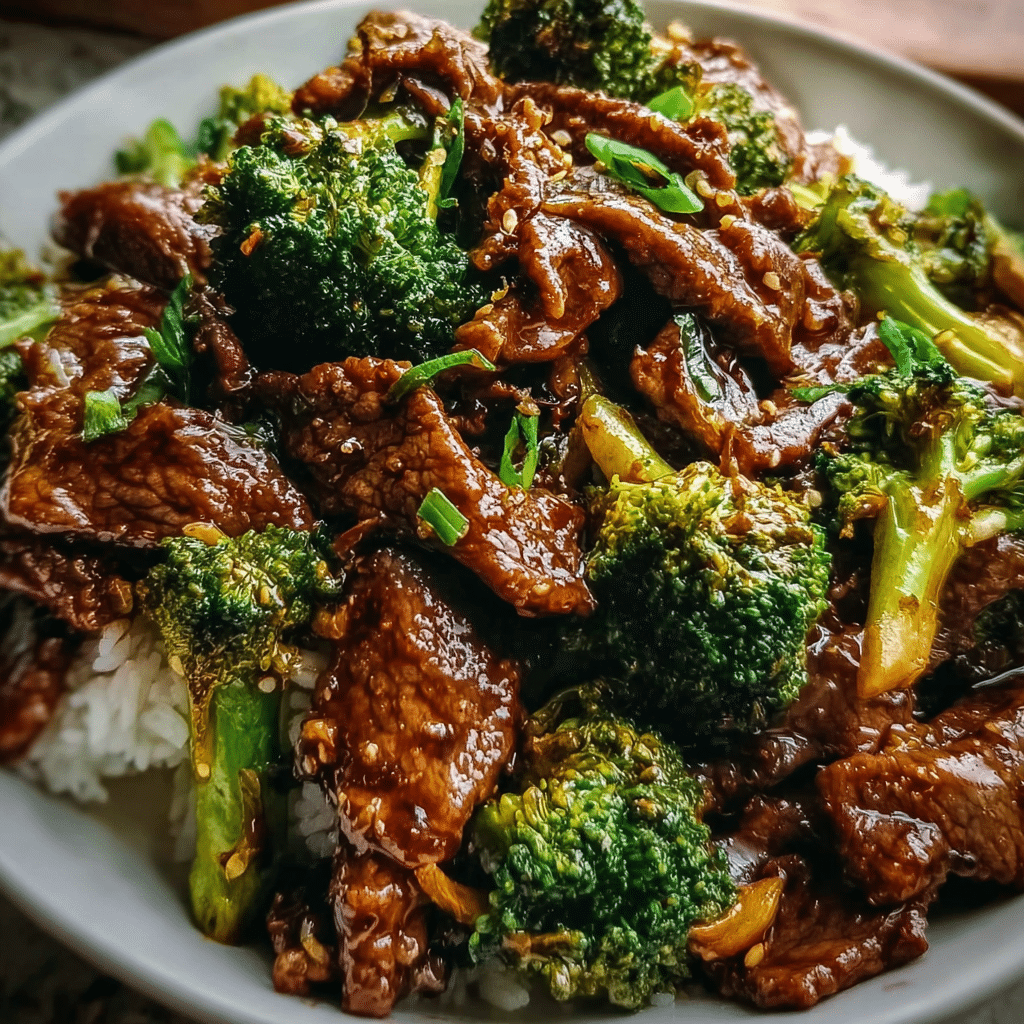
Garnishing with sesame seeds or sliced green onions can add a pop of color and an extra layer of flavor. A drizzle of sesame oil just before serving can also elevate the dish’s aroma and taste. If you want to take it a step further, consider serving your stir-fry over a bed of fluffy jasmine rice or alongside steamed dumplings to create a complete meal.
Finally, when it comes to beverage pairings, a crisp white wine, like a Sauvignon Blanc, or a light-bodied red, such as Pinot Noir, can complement the savory flavors of your Chinese beef broccoli beautifully. For a non-alcoholic option, try serving it with iced green tea, which can cleanse the palate and enhance the overall dining experience.
With these tips and techniques in your culinary arsenal, you’re well on your way to mastering Chinese beef broccoli. Remember to be patient and enjoy the cooking process, and soon enough, you’ll be whipping up this classic dish like a pro!
Creative Variations and Adaptations of chinese beef broccoli
While traditional Chinese beef broccoli is a delightful dish in its own right, there are countless ways to get creative with it! Whether you’re looking to incorporate seasonal ingredients, cater to dietary preferences, or experiment with cooking methods, this section will explore various adaptations that will keep your meals exciting and flavorful.
Seasonal Variations
One of the joys of cooking is adapting recipes to the seasons. In the spring, for instance, consider adding tender snap peas or asparagus to your Chinese beef broccoli. These vegetables not only provide a vibrant color contrast but also a delightful crunch. In the summer, you can swap the broccoli for fresh bok choy, which has a milder flavor and adds an interesting texture to your dish.
As autumn approaches, incorporating roasted butternut squash or Brussels sprouts can add a unique twist. Simply roast the vegetables beforehand to bring out their natural sweetness before adding them to the stir-fry. Finally, during the winter months, using hearty vegetables like kale or even cauliflower can provide a satisfying depth to your meal.
Dietary Adaptations
Adapting Chinese beef broccoli for dietary needs is easier than you might think! For those following a keto diet, you can replace the cornstarch with a low-carb thickener like xanthan gum or simply skip it entirely for a lighter sauce. You can also use a lean cut of beef, like top sirloin, to keep the dish healthy without sacrificing flavor.
If you’re cooking for vegans, consider substituting the beef with marinated tofu or seitan. Both options can absorb the flavors of the marinade beautifully, and when stir-fried, they provide a satisfying protein source. For gluten-free adaptations, ensure that you use tamari instead of soy sauce and check your other ingredients for gluten content.
Creative Twists
For those who enjoy international flavors, you can put a fun twist on your Chinese beef broccoli by incorporating spices from other cuisines. For example, adding a dash of curry powder or garam masala can transform the dish into a delightful Indo-Chinese fusion. Alternatively, you can experiment with a Thai flair by including Thai basil and a splash of coconut milk in your sauce.
If you’re in the mood for a different cooking method, try using a slow cooker for a hands-off approach. Simply toss your marinated beef and broccoli into the slow cooker with your sauce and let it cook on low for several hours. The result is tender, flavorful meat that’s ready to be served over rice or noodles.
Another creative way to use leftovers is by transforming them into a filling for spring rolls or lettuce wraps. Simply take your leftover Chinese beef broccoli, add some fresh herbs and crunchy vegetables, and wrap them up for a delicious snack or appetizer. The possibilities are endless!
In conclusion, the beauty of Chinese beef broccoli lies not only in its classic preparation but also in its versatility. By experimenting with seasonal ingredients, dietary modifications, and creative twists, you can make this dish your own time and time again. So don’t be afraid to get creative, and enjoy the journey of discovering new flavors and techniques!
Storage, Reheating, and Meal Prep for chinese beef broccoli
When it comes to enjoying your homemade chinese beef broccoli, understanding how to store, reheat, and meal prep this dish can significantly enhance your culinary experience. Being an avid home cook, I always find myself preparing a hefty batch of this delightful dish, not only because of its rich flavors but also due to its versatility. Let’s delve into the nitty-gritty of storage, reheating, and meal prep strategies that keep your chinese beef broccoli tasting as fresh as it did when it first graced your dinner table.
Short-term Storage
After whipping up a delicious batch of chinese beef broccoli, you’ll want to ensure it stays fresh in your refrigerator. The best practice is to store it in an airtight container. I recommend using glass containers with tight-fitting lids, as they don’t absorb odors and can be reheated directly in the microwave. Make sure to let your dish cool to room temperature before sealing it up; this prevents condensation, which can lead to sogginess.
In the refrigerator, your chinese beef broccoli can last for about 3 to 4 days. If you’re like me and love to meal prep, portioning the dish into smaller containers can make it easier to grab and go. Just remember to label each container with the date you made it. That way, you can easily keep track of how long it’s been sitting in the fridge.
Freezing and Long-term Storage
If you find yourself with leftovers that you won’t be able to consume within a few days, freezing is a fantastic option. When freezing chinese beef broccoli, it’s crucial to pack it properly to avoid freezer burn. I suggest using zip-top freezer bags or vacuum-sealed containers when storing your dish. Before sealing, try to remove as much air as possible to maintain the quality of your food.
For best results, freeze your chinese beef broccoli within 2 hours of cooking. It can last in the freezer for about 2 to 3 months. When you’re ready to enjoy it again, simply transfer the container to the refrigerator the night before to thaw, or you can use the defrost setting on your microwave for a quicker option. However, I always recommend planning ahead for the best flavor and texture.
Reheating Best Practices
Reheating is where many people go wrong and end up with a soggy mess. To maintain the integrity of your chinese beef broccoli, the best method is to use a skillet over medium heat. Add a splash of water or broth, cover it with a lid, and stir occasionally until heated through. This technique helps to steam the dish, keeping it moist without losing its original flavor or texture.
If you’re in a hurry, microwaving is still an option. Just place your chinese beef broccoli in a microwave-safe dish, add a few tablespoons of water, and cover it with a microwave-safe lid or plate. Heat it in short bursts, stirring in between, until heated to your liking. This method also helps to prevent drying out.
When it comes to meal prep, I often find it beneficial to prepare the beef and broccoli separately. The broccoli can be quickly blanched and then stored, while the beef can be marinated and cooked fresh. This allows you to mix and match throughout the week, keeping your meals exciting. Plus, it saves time during busy weekdays, as I can simply grab the prepped ingredients and put them together in just a few minutes.
Food safety is paramount; always make sure that your chinese beef broccoli is heated to an internal temperature of 165°F (74°C) when reheating. This ensures that any lingering bacteria are killed off, keeping your meals safe to eat. Remember to never leave your dish out at room temperature for more than two hours, as this can lead to foodborne illnesses.
In terms of shelf life, cooked beef can typically last up to 4 days in the fridge, while broccoli is best consumed within 3 days for optimal freshness. By keeping track of these timelines, you can ensure that your homemade chinese beef broccoli remains delicious and safe to eat.
To wrap it all up, proper storage and reheating practices can make a world of difference in how you enjoy your chinese beef broccoli. With thoughtful planning and a few easy tricks, you can savor this dish throughout the week without losing its delightful flavors and textures.
Nutritional Benefits and Health Information
As someone who loves to indulge in a hearty plate of chinese beef broccoli, I’ve often wondered not just how delicious it is, but also how nutritious it can be. The health benefits of this dish are numerous, making it a fantastic option for those looking to balance flavor with nutrition. Let’s explore the nutritional benefits and health information surrounding this beloved dish.
Nutritional Profile
The key ingredients in chinese beef broccoli include beef, broccoli, soy sauce, garlic, and ginger, each contributing its unique nutritional benefits. A typical serving of this dish (about 1 cup) contains around 350-400 calories, depending on the amount of oil and sauces used in preparation. Here’s a breakdown of the macronutrients:
- Protein: Approximately 25-30 grams, primarily from the beef, making it a great source of lean protein.
- Carbohydrates: About 15-20 grams, mainly from any rice or noodles served alongside it.
- Fat: Roughly 10-15 grams, depending on the amount of oil used for cooking.
Broccoli, the star veggie of this dish, is low in calories and high in fiber, which is crucial for digestive health. It’s packed with Vitamin C, Vitamin K, Vitamin A, and folate. In fact, one cup of cooked broccoli contains over 100% of your daily Vitamin C requirement! This makes chinese beef broccoli not only a delicious meal but also a powerhouse of nutrients.
Health Benefits
Beyond the immediate nutritional profile, the ingredients of chinese beef broccoli provide several health benefits. For instance, beef is a great source of iron, which is vital for transporting oxygen in the blood. It also contains zinc, which supports immune function. The garlic and ginger in the sauce aren’t just for flavor; they offer anti-inflammatory and antioxidant benefits, which can help improve overall health and fight disease.
Broccoli is particularly noted for its cancer-fighting properties, as it contains sulforaphane, a compound that has been shown to reduce the risk of certain cancers. Plus, the high fiber content of broccoli aids in maintaining a healthy digestive system, while also contributing to a feeling of fullness, which can help with weight management.
Dietary Considerations
When considering chinese beef broccoli in terms of dietary needs, it’s essential to note that it can be tailored to various diets. For those on a low-carb or ketogenic diet, you can easily skip the rice and enjoy the dish with just the beef and broccoli, keeping the carbohydrate content low.
If you’re vegetarian or vegan, swapping out the beef for tofu or tempeh can create a delicious plant-based version without sacrificing the essence of the dish. Just be sure to adjust the cooking time accordingly. Additionally, if you’re gluten-sensitive, you can use tamari instead of regular soy sauce to keep the flavor intact while avoiding gluten.
Calorie-conscious eaters can also modify the recipe by reducing the amount of oil used in cooking or by opting for lean cuts of beef. The beauty of chinese beef broccoli is its versatility; it easily accommodates modifications while still delivering a satisfying meal.
In comparison to other popular takeout dishes, chinese beef broccoli stands out as a healthier option. Dishes like General Tso’s chicken or sweet and sour pork tend to be higher in sugar and calories. In contrast, the savory and slightly salty nature of chinese beef broccoli provides a fulfilling experience without the heaviness often associated with other Chinese takeout meals.
In summary, indulging in chinese beef broccoli not only satisfies your taste buds but also nourishes your body. With its rich nutritional profile, health benefits, and adaptability for various dietary needs, this dish is a wonderful addition to any meal plan. So the next time you sit down to enjoy a plate, you can feel good knowing that you’re treating yourself to something wholesome and delightful!
Frequently Asked Questions About Chinese Beef Broccoli
Chinese beef and broccoli recipe
A classic Chinese beef and broccoli recipe typically involves marinating thinly sliced beef in a mixture of soy sauce, garlic, and ginger for enhanced flavor. The broccoli is usually blanched to retain its vibrant color and crunch. Stir-fry the marinated beef in a hot wok until it’s browned, then add the broccoli and a savory brown sauce made from oyster sauce and cornstarch to thicken. Serve it over steamed rice or noodles for a complete meal. For best results, use flank steak or sirloin, as they are tender cuts that absorb flavors well.
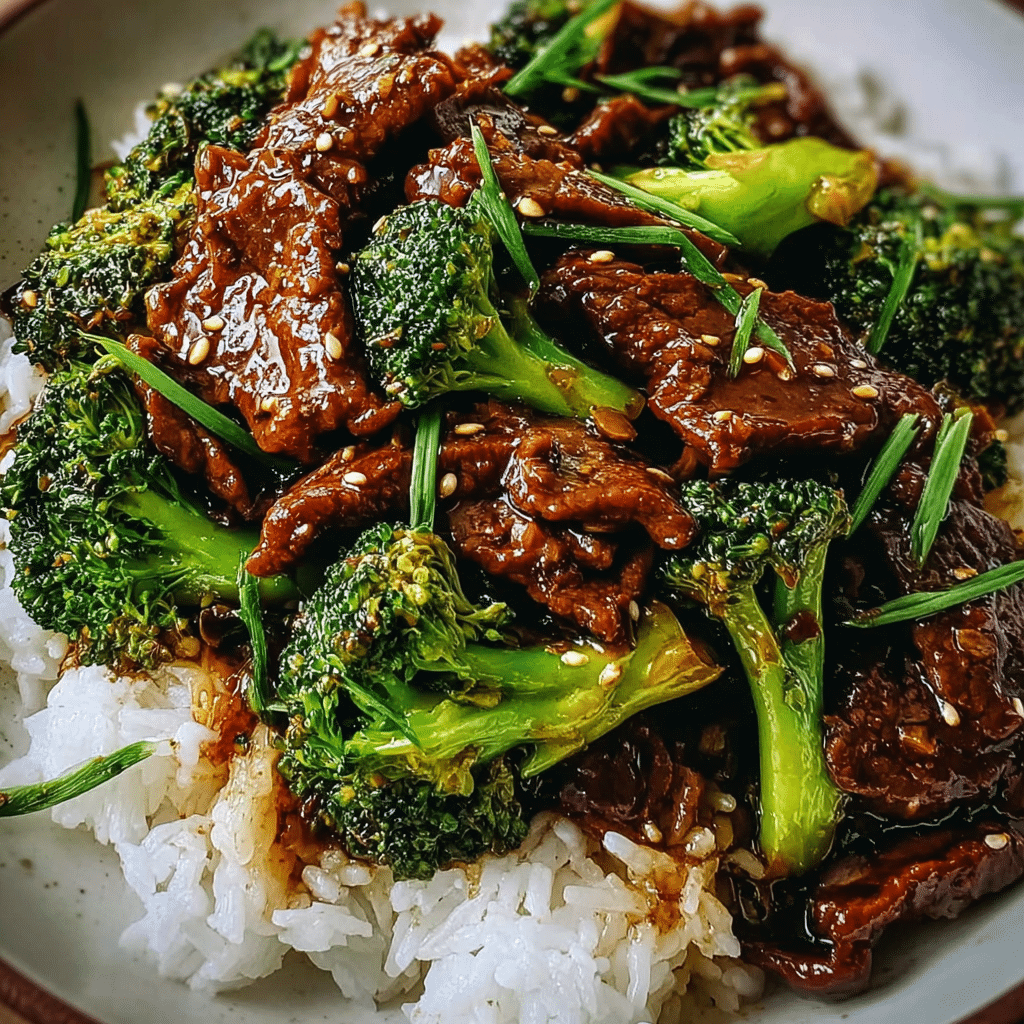
Easy Chinese beef and broccoli recipe
For an easy Chinese beef and broccoli recipe, start with pre-cut beef strips to save time on preparation. You can use frozen broccoli florets to skip the washing and chopping. A simple marinade of soy sauce, garlic powder, and a dash of sesame oil can be whisked together in a bowl before adding the beef. Stir-fry everything in a hot pan with a little vegetable oil, and add store-bought stir-fry sauce for a quick flavor boost. This streamlined approach allows you to enjoy a delicious meal in under 30 minutes!
Chinese beef and broccoli ingredients
The essential ingredients for Chinese beef and broccoli include flank steak or sirloin, fresh broccoli florets, soy sauce, garlic, and ginger. For the brown sauce, you’ll need oyster sauce, cornstarch, and a bit of water to create a thickening agent. Optional ingredients such as sesame oil, rice wine, and chili flakes can elevate the dish further. Make sure to have some vegetable oil on hand for stir-frying, and consider serving it with steamed rice or noodles to round out the meal.
Chinese beef and broccoli stew
Chinese beef and broccoli stew is a heartier variation of the traditional stir-fry, where beef is simmered with broccoli and other vegetables in a flavorful broth. To make this dish, first, brown the beef in a pot, then add garlic, ginger, and sliced onions for depth of flavor. Pour in beef broth and let it simmer until the beef is tender, then add broccoli in the last 10 minutes of cooking to keep it bright and crisp. This can be served over rice or with crusty bread, making it a comforting dish for any occasion.
Chinese beef and broccoli taste
The taste of Chinese beef and broccoli is a delightful balance of savory and slightly sweet flavors, thanks to the combination of soy sauce and oyster sauce. The tender beef pairs perfectly with the fresh, crisp broccoli, creating a satisfying texture contrast. Garlic and ginger add aromatic notes that elevate the dish to a new level. Overall, it’s a flavorful meal that offers a satisfying umami experience, perfect for those who enjoy Asian cuisine.
Chinese beef and broccoli calories
The calorie content of Chinese beef and broccoli can vary based on the specific ingredients and portions used. On average, a serving of beef and broccoli stir-fry can range between 250 to 400 calories per serving, depending on the amount of oil, sauce, and rice added to the dish. To make a lighter version, consider using lean cuts of beef, reducing the amount of oil, and serving it with a smaller portion of rice. Tracking the ingredients and portion sizes can help you manage the calorie count effectively.
Chinese beef and broccoli near me
To find Chinese beef and broccoli near you, consider using online maps or food delivery apps that list local Chinese restaurants. Look for eateries that have good reviews for their stir-fry dishes, as this is a common preparation method. Many restaurants also offer takeout, which is a great option if you’re looking for a quick meal. Additionally, don’t hesitate to ask friends or family for recommendations; personal experiences often lead to discovering hidden gems in your area!
Chinese beef and broccoli brown sauce recipe
To make a delicious brown sauce for Chinese beef and broccoli, combine 1/4 cup of soy sauce, 2 tablespoons of oyster sauce, 1 tablespoon of cornstarch, and 1/2 cup of water in a bowl. Whisk the mixture until the cornstarch is dissolved, then set it aside. In a hot wok, stir-fry the beef until browned, then add the sauce and cook until it thickens and coats the beef and broccoli. For extra flavor, consider adding minced garlic and ginger to the sauce for a fragrant finish!