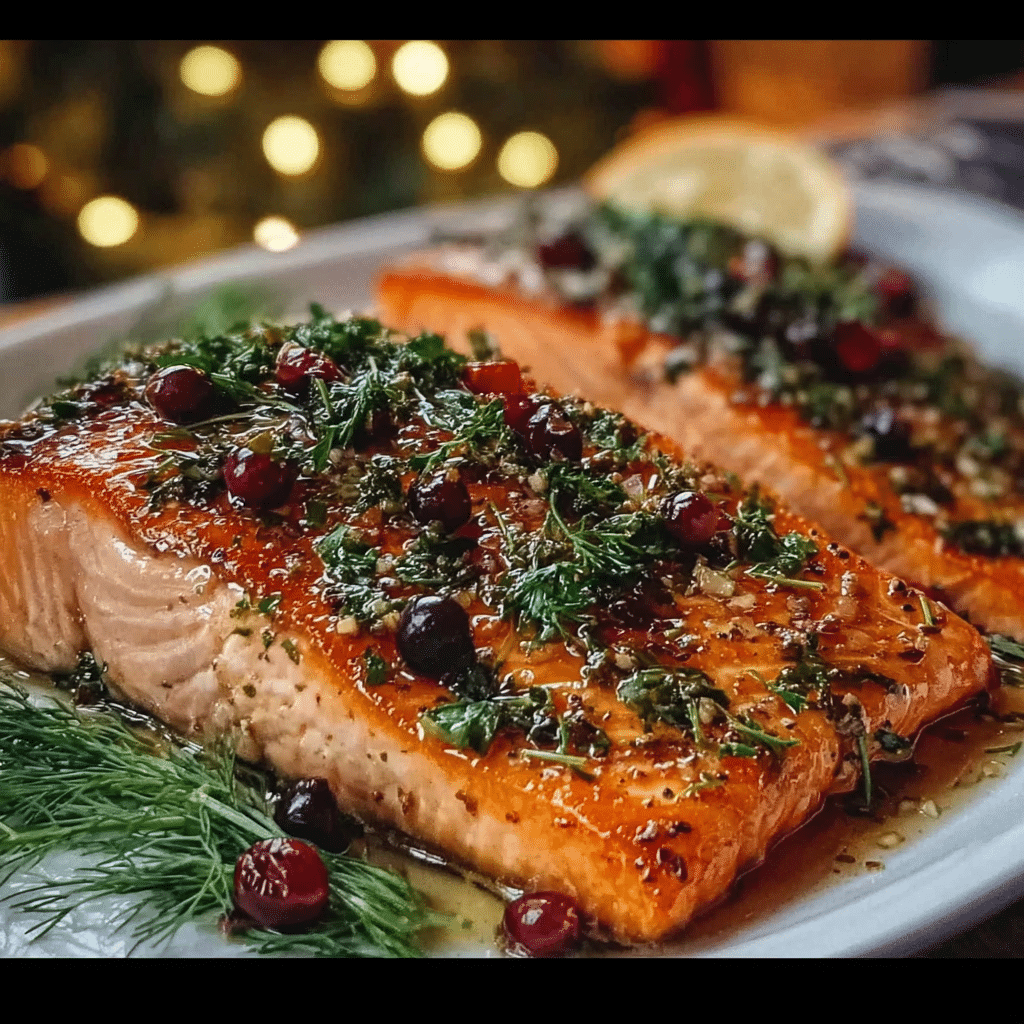
Christmas salmon has become a cherished dish in my household, especially during the holiday season. I still remember the first time I decided to try my hand at making it. It was a chilly December evening, and the scent of pine was in the air. I was flipping through a well-worn cookbook that belonged to my grandmother, searching for something special to serve at our family Christmas dinner. As I stumbled upon a recipe for christmas salmon, I was intrigued; it promised a delightful blend of flavors that perfectly encapsulated the spirit of the season. That year, I made my first attempt at this dish, and it was a hit! My family couldn’t stop raving about it, and from that moment, it became a staple on our holiday table.
The Story Behind This Recipe
As I poured over the ingredients, I realized that this was not just a recipe but a celebration of flavors and traditions. The christmas salmon I prepared that evening was glazed with a sweet and tangy mixture of brown sugar, soy sauce, and Dijon mustard. As it baked in the oven, the aroma filled our home, inviting family members to gather in the kitchen. I remember how my cousins, young and old, flocked to the table as I pulled the dish out of the oven, the skin perfectly crisp and the fish flaky and tender. That first bite was magical, bursting with flavor and warmth, and I knew that I had created a new family tradition.
What makes christmas salmon so special is not just the dish itself, but the memories that are created around it. In many cultures, fish is a symbol of abundance and prosperity, making it an ideal choice for festive occasions like Christmas. This recipe is often passed down through generations, each family adding their own twist, which adds to its charm. It’s a dish that can be dressed up for an elegant dinner or simplified for a casual family gathering, making it perfect for busy families looking for quick dinner solutions. The simplicity of preparing christmas salmon allows you to dedicate more time to your loved ones during the holiday rush.
Why You’ll Love This Dish
The seasonal relevance of christmas salmon cannot be overstated. With salmon being at its peak during the winter months, it’s a natural choice for holiday gatherings. The rich, fatty fish pairs beautifully with seasonal ingredients like citrus, herbs, and spices. You can serve it alongside roasted vegetables or a festive salad, making your holiday table colorful and inviting. The emotional connection to this dish runs deep in my family, as it represents love, togetherness, and the spirit of giving. Each time I prepare christmas salmon, I am reminded of my grandmother’s laughter and stories shared over dinner.
In this guide, you will learn not only how to prepare christmas salmon but also the various ways you can customize it to suit your family’s tastes. From different marinades to cooking techniques, I will share my insights and tips that I’ve gathered over the years. You will discover the nutritional benefits of this dish, its rich history, and how it has become a beloved tradition in homes across the globe. So, let’s dive into the world of christmas salmon and uncover the magic it brings to our holiday celebrations!
The Rich History and Cultural Significance of christmas salmon
The history of christmas salmon is as rich and varied as the cultures it comes from. Salmon has been a staple food for centuries, particularly in coastal regions where the fish is abundant. The origins of this dish can be traced back to ancient traditions where fish was often served during feasts and celebrations. In many cultures, serving fish during the holiday season is seen as a way to ensure prosperity and good fortune in the coming year. This practice has evolved into the modern-day christmas salmon recipe that we cherish today.
Origins and History
Historically, salmon has been revered not only for its delicious taste but also for its health benefits. The indigenous peoples of the Pacific Northwest, for instance, relied heavily on salmon as a primary source of sustenance. They developed various methods of preserving and preparing the fish, such as smoking and curing, which have influenced modern recipes. As European settlers arrived, they brought with them their own culinary traditions, leading to a fusion of flavors and cooking techniques that shaped the way we enjoy christmas salmon today.
In Scandinavia, for example, gravlax – a cured salmon dish seasoned with sugar, salt, and dill – is commonly served during the holiday season. This method of preparation highlights the cultural significance of salmon, where it is not only a dish but a celebration of community and family gatherings. In contrast, North American traditions have leaned towards baked or glazed salmon, often featuring sweet and savory marinades that enhance the fish’s natural flavor and make it suitable for festive occasions.
Cultural Significance
Christmas salmon holds a special place in various holiday traditions. In many households, it’s not just a meal; it’s a centerpiece that fosters conversation and connection. The act of preparing and sharing this dish brings families together, encouraging them to slow down and appreciate the moment. Each bite can evoke memories of past celebrations, making it a dish that transcends generations.
Moreover, famous chefs have embraced christmas salmon in their restaurants, showcasing it with innovative twists that continue to inspire home cooks. Chefs like Thomas Keller and Bobby Flay have put their spin on salmon dishes, elevating the fish to gourmet status while still retaining its accessibility for home cooks. Their recipes often incorporate seasonal ingredients, making christmas salmon not just a holiday dish but a year-round delight.
Nutritional Benefits
Beyond its deliciousness, christmas salmon is packed with nutritional benefits that make it an excellent choice for health-conscious families. Salmon is rich in omega-3 fatty acids, which are essential for heart health and brain function. It is also an excellent source of protein, vitamins, and minerals, making it a wholesome option for dinner. Incorporating christmas salmon into your holiday meal not only delights the palate but also supports your family’s health.
This dish is incredibly versatile, allowing for various preparations that can cater to different dietary needs. Whether you prefer your salmon baked, grilled, or smoked, there’s a way to enjoy christmas salmon that fits your lifestyle. Its adaptability means that it can be easily included in a range of diets, from paleo to gluten-free, making it a perfect addition to any festive table.
In conclusion, the rich history and cultural significance of christmas salmon make it a dish that resonates deeply with many families. It is not just about the food; it’s about the memories, the traditions, and the love that goes into preparing it. As you explore this delightful dish, I hope you find joy in making it a part of your holiday celebrations, just as I have in mine.
Essential Ingredients for Perfect christmas salmon
When it comes to preparing a stunning Christmas salmon, the right ingredients can make all the difference. Not only do they contribute to the flavor, but they also create an unforgettable experience for you and your loved ones. Below is a detailed list of essential ingredients that will elevate your holiday feast.
Essential Ingredients
- Salmon: 1.2 – 1.5 kg / 2.4 – 3lb salmon side (skin on, bones removed, Note 1)
- Salt: 2 1/4 tsp cooking/kosher salt (Note 2)
- Black Pepper: 1 tsp black pepper
- Honey Butter Glaze:
- 150g / 5oz unsalted butter
- 1/2 cup honey
- 3 garlic cloves, finely minced (garlic press or knife)
- Creamy Dill Sauce:
- 1 1/2 cups full-fat sour cream (low fat is too watery)
- 1/2 cup fresh dill, finely chopped (lightly packed cup)
- 1/2 eschallot (French onion), finely grated
- 1 1/2 tbsp lemon zest
- 1/2 tsp cooking/kosher salt (Note 2)
- Holiday Tapenade:
- 1 cup dried cranberries
- 1 cup orange juice
- 1 cup slivered almonds, toasted (Note 3)
- 1/3 cup parsley, roughly chopped
- 1/4 tsp each salt and pepper
- 1 tbsp extra virgin olive oil
- Finishing:
- 1 pomegranate, only the seeds
- 1/4 cup parsley, roughly chopped
- 3 tbsp lemon juice
- 2 lemons, extra, cut into 6 pieces each (for serving, don’t skip this)
Christmas Salmon
Ingredients
Salmon:
- 1.2 – 1.5 kg / 2.4 – 3lb salmon side (skin on, bones removed)
- 2 1/4 tsp salt , cooking/kosher
- 1 tsp black pepper
Honey Butter Glaze:
- 150g / 5oz butter , unsalted
- 1/2 cup honey
- 3 garlic cloves , finely minced (garlic press or knife)
Creamy Dill Sauce:
- 1 1/2 cups sour cream , full fat (low fat is too watery)
- 1/2 cup fresh dill , finely chopped (lightly packed cup)
- 1/2 eschallot (French onion) , finely grated
- 1 1/2 tbsp lemon zest
- 1/2 tsp salt , cooking/kosher
Holiday “Tapenade”:
- 1 cup dried cranberries
- 1 cup orange juice
- 1 cup slivered almonds , toasted
- 1/3 cup parsley , roughly chopped
- 1/4 tsp each salt and pepper
- 1 tbsp extra virgin olive oil
Finishing:
- 1 pomegranate , only the seeds
- 1/4 cup parsley , roughly chopped
- 3 tbsp lemon juice
- 2 lemons, extra , cut in 6 pieces each (for serving, don’t skip this)
Instructions
- Creamy Dill Sauce
- Mix ingredients in a bowl until smooth. Keep refrigerated until required.
Holiday Tapenade
- Plump cranberries: Heat orange juice in a saucepan over high heat until hot. Turn stove off, add cranberries, cover. Stand 15 minutes, then drain in a colander (discard liquid). Cool.
- Mix: Mix cranberries, toasted almonds (see Note 3), parsley, salt and olive oil in bowl. Use at room temp.
Cooking salmon
- Preheat oven to 180°C/350°F (all oven types).
- Prepare salmon: Place a large sheet of foil on a tray (double layer for safety is recommended), then top with baking/parchment paper. Place salmon on paper, then fold up the foil sides a bit to cup them so glaze won’t run onto tray.
- Glaze: Place ingredients in a saucepan over medium high heat. Once it started foaming, turn down to medium, let it foam for 2 minutes then remove and pour straight over the salmon.
- Season: Sprinkle salmon with salt and pepper, putting most of the salt on the thicker part of the salmon.
- Wrap: Cover salmon with a smaller piece of paper, then foil. Fold and seal up sides to enclose salmon in a parcel – it doesn’t need to be 100% tightly sealed.
- Bake 15 minutes. Remove salmon from oven.
- Uncover / fold excess paper – Remove paper and foil and paper cover. Fold/scrunch paper and foil sides down to expose salmon surface. Tucking paper down also ensures it won’t catch fire when broiling.
- Grill/broil to brown: Switch oven to grill/broiler on high. Place salmon on middle shelf in the oven and broil 7 to 10 minutes until you get caramelisation mostly on the edges, a bit on top. Don’t put it too close to the heat element otherwise paper might catch on fire! Check to ensure salmon is cooked – either pry open in middle to check or use a probe to check internal temperatures (Note 4).
- Transfer to plate: Use foil overhang to transfer salmon onto serving platter straight away (otherwise it keeps cooking). Slide the foil then paper out from under the salmon, allowing juices to pool on platter (it’s gold stuff!).
- Cool: Loosely cover with foil, then leave to cool for at least 15 minutes, up to 1 hour or longer (for room temp serving – Note 6 for serving notes).
Assembly and serving
- Dollop then thickly spread with Creamy Dill Sauce (~0.8cm / 1/3″ thick layer).
- Pile over Holiday Tapenade, scatter generously with pomegranate seeds, and then remaining parsley. Squeeze over lemon juice.
- Serving: Serve with extra lemon wedges so people can add more to taste. Cut into pieces – I use a cake cutter for serving. Encourage people to slop up some of the honey-butter sauce that will be mixed with semi melted Creamy Dill Sauce – it’s so good! This dish is best served slightly warm, not piping hot, also excellent at room temp.
Each of these ingredients plays a vital role in bringing your Christmas salmon to life. The star of the show, of course, is the salmon itself. When selecting salmon, look for a vibrant color and firm texture. Fresh salmon should smell like the sea, not fishy. Whether you choose Atlantic or Pacific salmon, ensure it’s sustainably sourced. Not only is this better for the ocean, but it also often means higher quality fish.
Salt and black pepper are fundamental. Salt enhances the flavors of the salmon, while black pepper adds a subtle warmth. In my kitchen, I always opt for kosher salt as it’s easier to pinch and measure, plus it dissolves beautifully into the proteins.
Shopping Tips
Now, let’s talk about the honey butter glaze. This mixture of unsalted butter, honey, and garlic is what makes the salmon truly special. The butter adds richness, while honey provides a delightful sweetness that balances the savory elements of the dish. When selecting butter, I recommend going for high-quality European-style butter which typically has a higher butterfat content, resulting in a creamier glaze.
For the garlic, fresh is always best. Look for firm cloves without any sprouting, as these will have the best flavor. You can also use pre-minced garlic, but fresh garlic will always yield a more vibrant taste in your Christmas salmon.
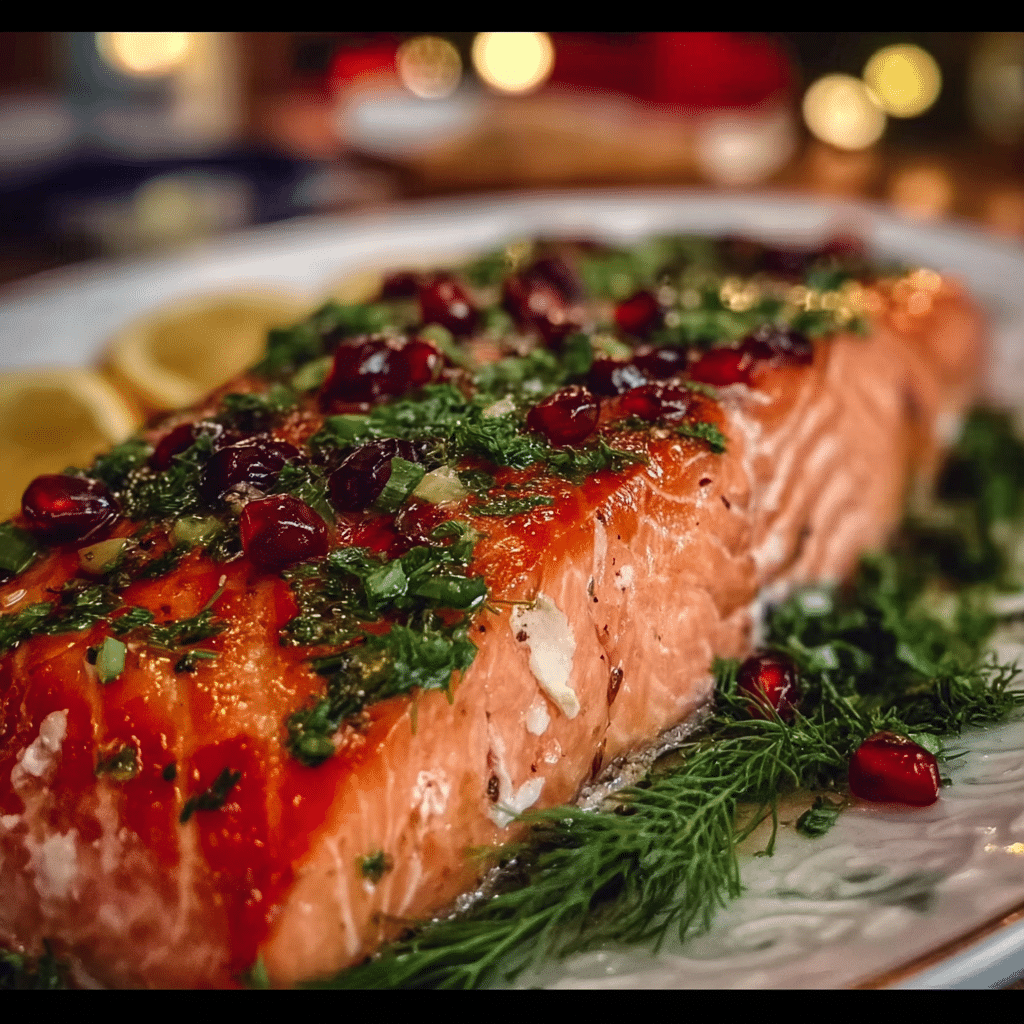
The creamy dill sauce is a refreshing complement to the richness of the salmon. Full-fat sour cream is essential here; low-fat varieties can lack the body needed to create a luxurious sauce. When picking dill, select bright green and fragrant sprigs. This herb has a lovely, slightly sweet flavor that pairs beautifully with salmon.
The holiday tapenade adds a burst of festive flavor with dried cranberries, orange juice, slivered almonds, and parsley. When choosing dried cranberries, opt for unsweetened varieties if possible, as they will provide a tartness that works well with the other ingredients. Toasting the almonds brings out their nutty flavor, so don’t skip this step!
Substitutions and Alternatives
Let’s not forget about the finishing touches. The pomegranate seeds provide a lovely crunch and a pop of color, making your Christmas salmon visually stunning. If pomegranates are out of season, you can substitute with fresh blueberries or even diced apples for a similar crunch. Fresh parsley adds brightness, and the extra lemons for serving will elevate the dish with a fresh squeeze right before serving.
If you’re looking for dietary substitutions, for the creamy dill sauce, you can use Greek yogurt instead of sour cream for a tangy twist. For a vegan version, try using cashew cream or a silken tofu base as a substitute. The honey in the glaze can be swapped for maple syrup if you’re aiming for a vegan dish as well.
Storage is also a key consideration. Fresh salmon should be cooked or frozen within two days of purchase. If you find yourself with leftovers, store them in an airtight container in the fridge for up to three days. The creamy dill sauce can be made ahead of time and stored in the refrigerator for up to a week.
In terms of cost-saving tips, consider purchasing salmon in bulk or looking for sales around the holiday season. You can also buy frozen fish; it’s often just as fresh as what you find in the store. Just ensure it’s thawed properly before cooking to maintain the best texture.
When you gather all these ingredients for your Christmas salmon, you’re not just preparing a meal; you’re creating a feast filled with flavor and festive spirit. Each component contributes to a dish that brings joy and warmth during the holiday season, making it a centerpiece of celebration.
Detailed Step-by-Step christmas salmon Cooking Instructions
Cooking a show-stopping Christmas salmon is easier than you might think, especially with a detailed step-by-step guide. This dish not only impresses your guests but also fills your home with delightful aromas that signal the holiday spirit. Let’s dive into the preparation and cooking process that will result in a perfectly cooked salmon!
Preparation Steps
- Prep the Salmon: Begin by placing your salmon skin-side down on a large cutting board. Using a sharp knife, carefully remove any bones with a pair of tweezers or pliers. This step is crucial for ensuring a pleasant eating experience. Next, pat the salmon dry with paper towels to remove excess moisture; this helps in achieving a crispy skin later on.
- Season the Fish: Generously season the salmon with salt and black pepper. Make sure to rub the seasonings evenly across the surface of the fish. This is where the flavor begins, and a good rule of thumb is to season as you go.
- Make the Honey Butter Glaze: In a small saucepan, melt the unsalted butter over low heat. Once melted, add the honey and minced garlic. Stir continuously until the mixture is well combined and fragrant. Be cautious not to let the garlic burn, as it can turn bitter. Set this glaze aside for later.
- Prepare the Creamy Dill Sauce: In a medium mixing bowl, combine the full-fat sour cream, finely chopped fresh dill, grated eschallot, lemon zest, and salt. Mix well until all ingredients are fully incorporated. This sauce can be made a day in advance to allow the flavors to meld.
- Make the Holiday Tapenade: In another bowl, mix together the dried cranberries, orange juice, slivered almonds, chopped parsley, salt, and pepper. Allow this tapenade to sit for about 15 minutes, as this will help the cranberries absorb some of the orange juice and plump up nicely.
Cooking Process
- Preheat the Oven: Preheat your oven to 200°C (400°F). This is the ideal temperature for roasting salmon, allowing it to cook through while developing a nice crust.
- Prepare the Baking Dish: Line a large baking sheet with parchment paper or aluminum foil for easy cleanup. Place the seasoned salmon on the prepared baking sheet, skin-side down.
- Brush with Glaze: Using a brush or a spoon, generously coat the salmon with the honey butter glaze. Make sure to cover the entire surface to ensure maximum flavor and moisture.
- Roast the Salmon: Place the salmon in the preheated oven and roast for about 20-25 minutes. The cooking time may vary depending on the thickness of the salmon. A good visual cue is that the salmon should be opaque and easily flake with a fork when done. You can also use a food thermometer to check that the internal temperature reaches 63°C (145°F).
- Prepare for Serving: While the salmon is roasting, prepare your garnishes. Seed the pomegranate and chop the extra parsley. Slice two lemons into wedges for serving. These fresh elements will elevate your dish when you’re ready to present it.
Final Assembly
- Check the Salmon: Once the salmon has finished roasting, remove it from the oven. Let it rest for about 5 minutes; this allows the juices to redistribute, ensuring moist and flavorful fish.
- Plate the Salmon: Carefully transfer the roasted salmon to a large serving platter. Drizzle any remaining honey butter glaze over the top for an extra touch of flavor.
- Add the Tapenade: Spoon the holiday tapenade over the salmon. The vibrant colors and flavors of the cranberries and almonds will create a festive look and taste.
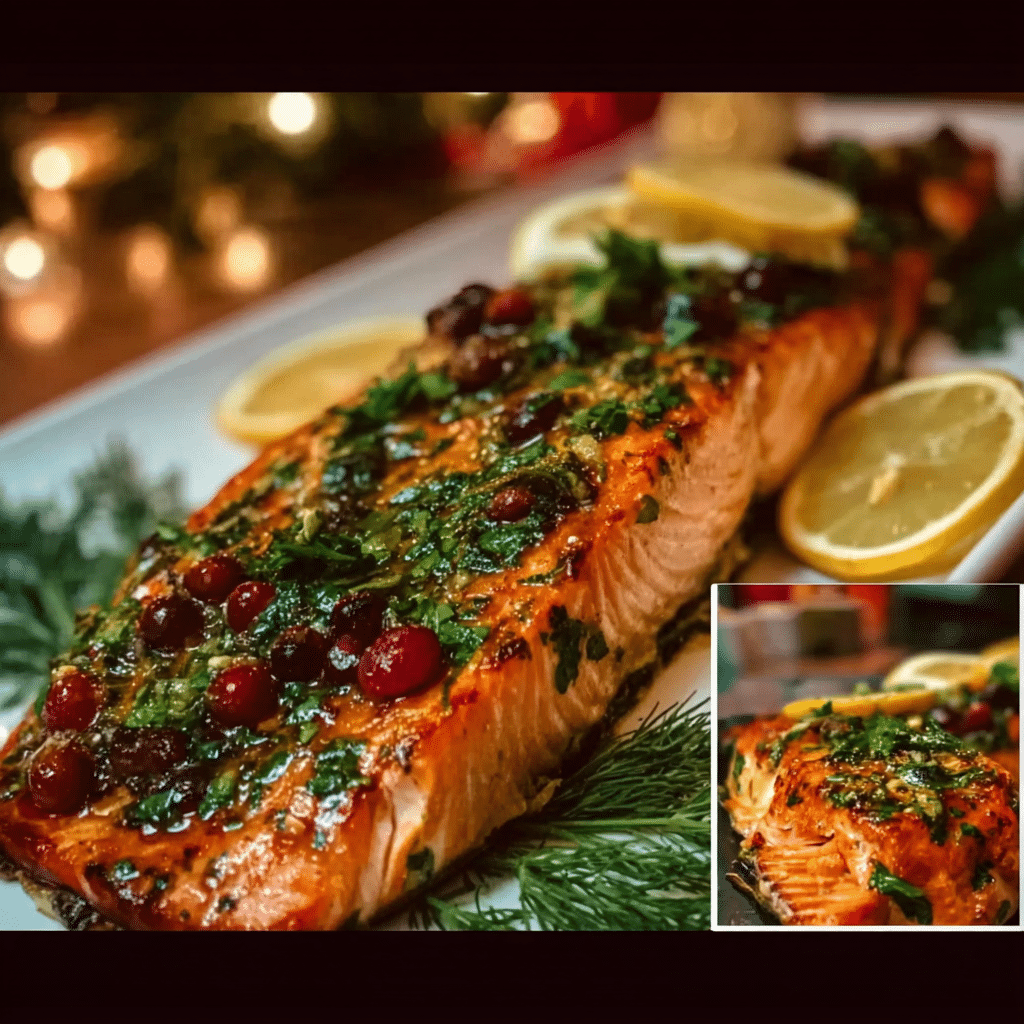
- Garnish: Sprinkle the pomegranate seeds and chopped parsley over the top for a beautiful finish. The bright red seeds are just the pop of color this dish needs, making it truly festive.
- Serve: Serve the salmon hot with lemon wedges on the side. A squeeze of fresh lemon juice over the top just before eating brightens the flavors and adds a delightful zing.
With these detailed instructions, you can confidently prepare a Christmas salmon that will be the star of your holiday table. The combination of sweet honey, savory garlic, and fresh dill, paired with the vibrant holiday tapenade, creates a harmonious balance of flavors that will impress everyone at your gathering. Remember, cooking is as much about the experience as it is about the food, so enjoy the process, and happy holidays!
Professional Tips and Techniques for christmas salmon
When it comes to preparing Christmas Salmon, the goal is to create a dish that not only looks stunning but also tantalizes the taste buds and warms the heart. As someone who has spent countless holiday seasons experimenting with various recipes, I can tell you that mastering the art of cooking salmon for Christmas is about a blend of technique, creativity, and a pinch of love. Here are some professional tips and techniques that will elevate your Christmas Salmon game to extraordinary heights.
Professional Techniques
First things first, the type of salmon you choose can significantly impact your dish. Whether you opt for wild-caught or farmed salmon, each type brings its own unique flavor and texture. My personal favorite is the rich and buttery king salmon, which melts in your mouth and pairs beautifully with festive flavors.
One of the most effective cooking techniques for Christmas Salmon is poaching. This gentle cooking method infuses the fish with moisture and flavor, ensuring that it remains tender and flaky. To poach salmon, simply simmer it in a mixture of water, white wine, and aromatic herbs. I like to add slices of lemon and fresh dill for that quintessential holiday touch. Remember, the key to poaching is to keep the temperature low—just below boiling—so that the salmon cooks evenly without drying out.
If you’re feeling a little more adventurous, consider trying the sous-vide method. This technique involves sealing the salmon in a vacuum-sealed bag and cooking it in a water bath at a precise temperature. Not only does sous-vide cooking yield perfectly cooked salmon, but it also allows you to infuse flavors directly into the fish, such as garlic, ginger, or even a splash of soy sauce. It’s like giving your Christmas Salmon a spa treatment!
Troubleshooting Guide
Even the best chefs encounter hiccups in the kitchen, so it’s important to have a troubleshooting guide at your disposal. One common issue with cooking salmon is overcooking. If you find your Christmas Salmon is turning out dry, try reducing the cooking time or lowering the heat. A good rule of thumb is to cook the salmon for about 10 minutes per inch of thickness at 350°F (175°C).
Another challenge is ensuring the skin is crispy if you’re pan-searing. To achieve that perfect crunch, make sure the skin is thoroughly dried before hitting the pan and use a generous amount of oil. Start with the skin side down in a hot skillet, pressing down gently to ensure even contact with the heat. This technique not only enhances flavor but also adds a delightful texture to your Christmas Salmon.
Presentation Tips
Let’s not forget about the importance of presentation. After all, we eat with our eyes first! When plating your Christmas Salmon, consider using a large white plate to let the vibrant colors of the salmon and accompanying sides shine. A sprinkle of fresh herbs or edible flowers can add a festive touch. I often pair my salmon with a bright green asparagus or a rich cranberry sauce, which not only adds flavor but also creates a stunning visual contrast.
Don’t overlook the power of garnishes—lemon wedges, dill sprigs, and even a drizzle of balsamic reduction can elevate the dish. A well-presented plate of Christmas Salmon will impress your guests and create a memorable dining experience.
Lastly, let’s talk about beverage pairings. A crisp white wine, such as a Sauvignon Blanc or a light Pinot Noir, can complement the flavors of the salmon beautifully. If you prefer non-alcoholic options, a sparkling water infused with citrus or a festive cranberry mocktail can bring a refreshing balance to your meal.
In conclusion, preparing Christmas Salmon is not just about following a recipe; it’s about embracing the process and enjoying the journey. With these professional tips and techniques, you’ll be well on your way to creating a stunning centerpiece for your holiday table. Remember, cooking is an art, and every brushstroke counts. So gather your ingredients, put on your favorite holiday tunes, and let the magic of the season inspire your culinary adventures.
Creative Variations and Adaptations of christmas salmon
One of the most delightful aspects of making Christmas Salmon is the endless possibilities for creativity and adaptation. Over the years, I’ve embraced the spirit of experimentation, and I’ve come to discover that there are numerous ways to put a personal stamp on this classic dish. Let’s dive into some exciting variations and adaptations that will make your Christmas Salmon truly unique!
Seasonal Variations
When it comes to seasonal ingredient swaps, think about what’s fresh and available during the holiday season. For instance, citrus fruits like blood oranges and grapefruits can add a vibrant twist to your salmon dish. You can create a citrus glaze by combining freshly squeezed juice with honey, soy sauce, and ginger. This glaze not only enhances the flavor of the salmon but also gives it a beautiful, caramelized finish.
Another fantastic seasonal ingredient to incorporate is pomegranate. Imagine a Christmas Salmon dish topped with a pomegranate salsa—the sweet and tart bursts of flavor perfectly complement the richness of the fish. Simply mix pomegranate seeds with diced red onion, cilantro, a squeeze of lime, and a pinch of salt for a refreshing topping that screams holiday cheer!
Dietary Adaptations
In our increasingly diverse culinary landscape, it’s essential to consider dietary modifications when preparing meals for family and friends. For those following a keto diet, consider a herb-crusted salmon topped with crushed nuts instead of breadcrumbs. This not only keeps the dish low-carb but also adds a delightful crunch. You can blend almonds or walnuts with parsley, garlic, and olive oil for a flavorful crust that will leave your guests raving.
If you’re catering to vegan or vegetarian friends, why not create a plant-based version of Christmas Salmon using marinated tofu or tempeh? By using a similar marinade as you would for salmon—think soy sauce, maple syrup, and lemon juice—you can achieve a surprisingly similar flavor profile. Roast or grill the tofu until it’s crispy, and serve it alongside traditional sides like roasted vegetables or quinoa salad.
Creative Twists
The beauty of Christmas Salmon lies in its versatility. Exploring international fusion variations can lead to exciting new flavors. For example, why not try a Mediterranean-inspired salmon dish with a topping of feta cheese, olives, and sun-dried tomatoes? This combination not only adds an exciting twist but also brings the warmth of the Mediterranean to your holiday table.
If you’re looking for a warming dish, consider a slow cooker recipe for Christmas Salmon. Simply layer your salmon with seasonal vegetables like carrots and potatoes, add your favorite seasonings, and let the slow cooker do the work. This method infuses the salmon with rich flavors while keeping it moist and tender, making it an effortless option for busy holiday gatherings.
Let’s not forget about leftovers! After the holiday feast, I love transforming leftover Christmas Salmon into a luxurious salmon chowder. Simply flake the leftover fish into a pot with sautéed onions, garlic, potatoes, and cream for a comforting dish that keeps on giving. This way, you can enjoy the flavors of Christmas long after the festivities have ended.
In conclusion, the variations and adaptations of Christmas Salmon are limited only by your imagination. From seasonal ingredient swaps to dietary adaptations and creative twists, there’s a world of flavor waiting to be explored. So unleash your culinary creativity, and make this Christmas a celebration of deliciousness that reflects your unique style and tastes!
Storage, Reheating, and Meal Prep for christmas salmon
When it comes to preparing a delightful christmas salmon dish, proper storage is crucial to ensure the freshness and quality of the fish, especially when you’re planning to serve it as a centerpiece on your festive table. In this section, we will delve into the best practices for storing, reheating, and meal prepping your christmas salmon to ensure it remains delicious and safe to eat.
Short-term Storage
After cooking your christmas salmon, it’s important to store it properly to maintain its flavor and texture. If you plan to enjoy your salmon within a few days, refrigeration is the best option. Start by allowing the salmon to cool down to room temperature, but make sure to do this within two hours of cooking to avoid any bacterial growth. Once cooled, place the salmon in an airtight container. This will prevent the fish from absorbing any unwanted odors from the refrigerator and will keep it moist.
For optimal freshness, it’s best to consume refrigerated salmon within 3 to 4 days. If you’re like me, who often prepares meals in advance for busy holiday weeks, you may find that breaking the salmon down into individual portions can be quite helpful. This not only speeds up the reheating process but also helps with portion control. You can use small glass containers or even freezer-safe bags to store the portions along with any accompanying sauces or sides.
Freezing and Long-term Storage
If you know that you won’t be able to eat the leftover christmas salmon within the week, freezing is your best bet. Salmon can be frozen for up to three months without a significant loss in quality. To freeze, wrap each portion tightly in plastic wrap or aluminum foil before placing it in a freezer-safe bag or container. Be sure to remove as much air as possible to prevent freezer burn, which can affect the taste and texture of the fish.
Label each package with the date and type of dish so you can easily identify it later. When you’re ready to enjoy your frozen christmas salmon, simply move it from the freezer to the refrigerator for a day or two to thaw. This slow thawing method helps preserve the fish’s texture and flavor, making the eventual meal much more enjoyable.
Reheating Best Practices
Reheating your christmas salmon properly is vital to retaining its flaky texture and rich flavor. The best method for reheating salmon is in the oven. Preheat your oven to 275°F (135°C) and place the salmon on a baking sheet. Cover it with foil to prevent it from drying out and heat for about 15 minutes or until warmed through. This gentle reheating method preserves moisture and ensures that your salmon remains succulent.
Alternatively, if you’re short on time, you can reheat salmon in the microwave. Place the salmon on a microwave-safe plate, cover it with a damp paper towel, and heat in short intervals of 30 seconds. Be cautious, as microwaving can easily dry out the fish if left too long. Always check for doneness by ensuring the internal temperature reaches 145°F (63°C).
Meal prepping with christmas salmon is a breeze when you follow these storage and reheating guidelines. Batch cooking salmon and portioning it out for the week can provide you with quick, healthy meals that are perfect for busy holiday schedules. Pair your reheated salmon with a fresh salad or steamed vegetables for a balanced meal that’s as satisfying as it is nutritious.
Finally, when it comes to food safety, always adhere to the “two-hour rule” when leaving cooked salmon out at room temperature. In addition, keep your refrigerator at or below 40°F (4°C) and your freezer at 0°F (-18°C) to ensure the longevity of your meals. By following these simple guidelines, you can ensure that your christmas salmon remains a highlight of your holiday dining, bringing joy to your table time and again.
Nutritional Benefits and Health Information
When you think of a festive meal, the focus often turns to indulgence, but incorporating a dish like christmas salmon can also provide a wealth of nutritional benefits. Salmon is not only a delicious centerpiece for your holiday celebrations but also a powerhouse of nutrients that can contribute to a healthy and balanced diet. In this section, we will explore the nutritional profile of salmon, its health benefits, and how it fits into various diet plans.
Nutritional Profile
Salmon is renowned for its high-quality protein content and is packed with essential vitamins and minerals. A standard serving of cooked salmon (about 3.5 ounces or 100 grams) contains approximately 206 calories, 22 grams of protein, and 13 grams of fat, of which a significant portion is heart-healthy omega-3 fatty acids. Omega-3s are crucial for brain function and cardiovascular health, making salmon an excellent choice for maintaining overall wellness.
In addition to protein and healthy fats, salmon is rich in vitamins B12 and D, as well as selenium. Vitamin B12 is vital for nerve function and the production of DNA and red blood cells, while vitamin D plays a crucial role in calcium absorption and bone health. Selenium is a powerful antioxidant that helps protect your cells from damage. All these nutrients work synergistically to promote a healthy body, making christmas salmon a festive yet health-conscious choice for your holiday meals.
Health Benefits
The health benefits of incorporating salmon into your diet are numerous. Regular consumption of salmon has been linked to a lower risk of heart disease due to its high levels of omega-3 fatty acids. These fatty acids can help reduce inflammation, lower blood pressure, and improve cholesterol levels, contributing to a healthier heart.
Moreover, salmon is also beneficial for brain health. The omega-3s found in salmon are essential for cognitive function and are thought to reduce the risk of age-related cognitive decline. This makes christmas salmon not only a delicious option for your holiday table but also a wise choice for maintaining mental clarity during the often-busy festive season.
Dietary Considerations
When considering dietary restrictions, it’s important to note that salmon is considered a safe option for most individuals. It is naturally gluten-free, making it suitable for those with gluten sensitivities or celiac disease. However, those with fish allergies should avoid salmon altogether. Additionally, if you are following a ketogenic or paleo diet, salmon fits perfectly as it is low in carbohydrates and high in healthy fats.
For those who are calorie-conscious, the relatively low-calorie content of salmon allows for a satisfying meal without the guilt. If you’re trying to manage your weight, consider pairing the christmas salmon with non-starchy vegetables to create a well-rounded meal that is both filling and nutritious.
Healthy modifications are also easy to implement. If you’re looking to cut back on calories, you can opt for baking or grilling your salmon rather than frying it. Using herbs and spices instead of heavy sauces can also enhance flavor without adding unnecessary calories. Consider a light lemon-dill sauce or a simple herb crust to elevate your christmas salmon while keeping it healthy.
In comparison to other festive dishes, salmon stands out as a lean protein source that can be prepared in a variety of ways, from roasting to poaching. This versatility makes it a fantastic alternative to traditional holiday meats like turkey or ham, allowing you to offer a unique and healthful option at your holiday gatherings.
In summary, christmas salmon is not just a delicious holiday dish; it is a nutritional powerhouse that provides numerous health benefits while fitting into a variety of dietary lifestyles. Whether you’re enjoying it as a main course or utilizing it in meal prep for the busy days ahead, salmon is a choice that can bring both joy and health to your festive celebrations.
Frequently Asked Questions About Christmas Salmon
What are some popular Christmas salmon recipes?
Popular Christmas salmon recipes often highlight the festive flavors of the season, incorporating ingredients like dill, lemon, and honey. One classic option is honey-glazed salmon, where the fish is marinated in a mixture of honey, soy sauce, and garlic before baking. Another festive choice is salmon en croûte, which features salmon fillets wrapped in puff pastry and baked until golden. For a more adventurous twist, consider a cedar plank salmon, which infuses the fish with a smoky flavor that pairs beautifully with holiday sides.
What are some good side dishes to serve with Christmas salmon?
When serving Christmas salmon, consider side dishes that complement its rich flavors and enhance the festive atmosphere. Classic pairings include roasted vegetables, such as Brussels sprouts or carrots, which add a touch of sweetness and color to the plate. For a starch option, creamy mashed potatoes or herbed rice pilaf provide a comforting base. Additionally, a fresh spinach salad with cranberries and walnuts can add a refreshing contrast to the meal, balancing the richness of the salmon.
Can you suggest an easy Christmas salmon recipe?
An easy Christmas salmon recipe that’s sure to impress is lemon-garlic baked salmon. Simply preheat your oven to 375°F (190°C), place salmon fillets on a lined baking sheet, and drizzle them with olive oil, lemon juice, minced garlic, salt, and pepper. Bake for about 15-20 minutes until the salmon is flaky and cooked through. To elevate the dish, consider garnishing with fresh dill or parsley just before serving. This recipe is not only simple but also allows for quick cleanup, making it perfect for holiday gatherings.
What are some delicious Christmas baked salmon recipes?
Christmas baked salmon recipes can vary widely, but one standout option is a Dijon mustard and herb-crusted salmon. To prepare, mix Dijon mustard with breadcrumbs, fresh herbs like dill and parsley, and a touch of olive oil. Spread this mixture over the salmon fillets and bake at 400°F (200°C) for about 20 minutes. Another great recipe involves baking salmon with a maple-soy glaze, which caramelizes beautifully during cooking, creating a sweet and savory dish that pairs well with holiday sides like sweet potatoes.
What is Christmas salmon Wellington?
Christmas salmon Wellington is a festive twist on the traditional beef Wellington, featuring salmon wrapped in puff pastry. To make it, you first sauté a mixture of spinach, cream cheese, and herbs to create a flavorful filling. Lay the salmon fillet on a sheet of puff pastry, spread the filling on top, then wrap the pastry around the fish and seal. Bake until golden brown, and serve sliced to reveal the beautiful layers. This dish not only looks stunning but also delivers a delightful combination of textures and flavors for your holiday table.
What are some side of salmon recipes from Jamie Oliver?
Jamie Oliver often emphasizes fresh, simple ingredients in his side of salmon recipes. One popular option is his “Salmon with a Herb Crust,” where the fish is coated with a zesty mixture of parsley, dill, and lemon zest before baking. Another favorite is his “Salmon Traybake,” which involves roasting the salmon with seasonal vegetables like cherry tomatoes and asparagus, drizzled with olive oil and balsamic vinegar. These recipes not only showcase the salmon but also make use of vibrant, healthy ingredients that are perfect for a festive meal.
What is Christmas tree salmon?
Christmas tree salmon is a fun and festive presentation style for salmon, often served during holiday gatherings. To create this dish, shape the salmon fillets into a tree shape on a platter, using smaller pieces to form branches. You can garnish the “tree” with edible decorations like pomegranate seeds to resemble ornaments and fresh herbs for a touch of color. This eye-catching presentation not only delights guests but also makes for a memorable centerpiece that aligns beautifully with the holiday theme.
What are some other festive fish recipes for Christmas?
In addition to salmon, there are several other festive fish recipes perfect for Christmas. One popular choice is roasted cod with a lemon-caper sauce, which offers a light and tangy flavor that pairs well with rich holiday sides. Another option is a spicy baked tilapia topped with a tomato and olive salsa, which adds a vibrant twist to your holiday table. For a traditional touch, consider serving a whole roasted trout stuffed with herbs and lemon, which can be a stunning focal point for your feast.