French onion beef is not just a dish; it’s a delightful experience that captures the heart and soul of comfort food. I remember the first time I stumbled upon this incredible recipe; I was flipping through an old family cookbook, a treasure passed down from my grandmother. The pages were yellowed, and the edges were frayed, filled with handwritten notes and splatters from years of cooking. As I read through the ingredients, my mouth watered at the thought of caramelized onions, savory beef, and gooey melted cheese all nestled in a soft bun. It felt like a warm hug on a chilly evening, and I knew I had to give it a try.
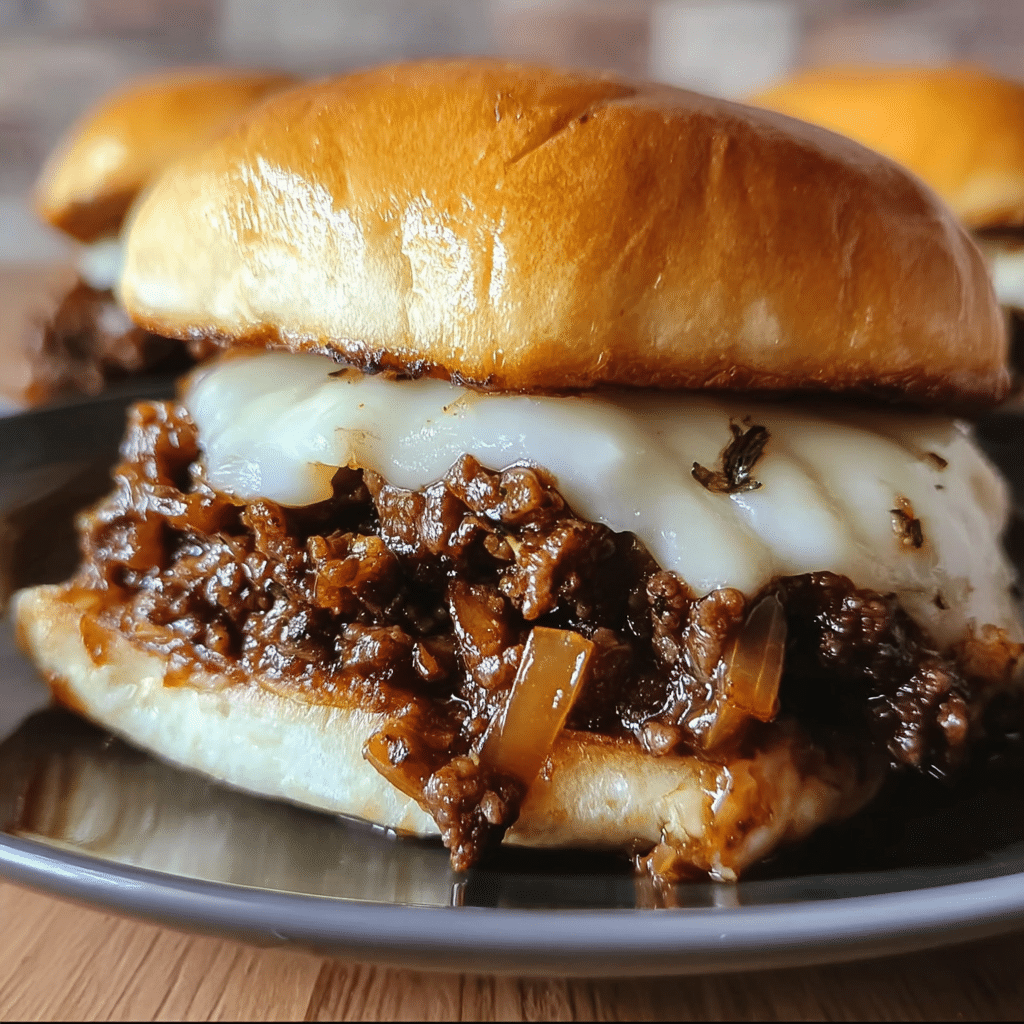
Growing up, my family had a tradition of gathering around the dinner table every Sunday. My grandmother would often whip up her famous French onion soup, which had an unmatchable depth of flavor. It was during one of these family dinners that I realized how deeply food is intertwined with our memories and experiences. The aroma of sautéing onions and simmering beef brought back those nostalgic moments of laughter and connection, making me appreciate how a simple meal could evoke such powerful emotions. This recipe for French onion beef Sloppy Joes became my way of honoring those cherished memories while introducing a modern twist.
The Story Behind This Recipe
French onion beef is a unique fusion of two beloved dishes: the classic French onion soup and the ever-popular Sloppy Joe. The combination of these two icons creates a comforting meal that is not only delicious but also practical for busy families. The idea of transforming the rich flavors of French onion soup into a handheld delight was a stroke of genius, making it easy to serve and eat, especially for those on the go.
This recipe stands out from others primarily due to its use of caramelized onions, which are the stars of the show. The slow cooking of onions brings out their natural sweetness, adding layers of flavor that elevate the ground beef. When combined with melted cheese—be it Gruyère, Swiss, or even a sharp cheddar—the result is a satisfying blend that is nothing short of heavenly. It’s a dish that adapts well to various palates and preferences, making it a versatile option for family dinners or casual gatherings.
What makes French onion beef perfect for busy families is its simplicity and speed of preparation. You can whip it up in under an hour, making it an ideal weeknight meal. With just a few ingredients and minimal cleanup, this recipe ensures that you can spend more time with your loved ones rather than slaving away in the kitchen. Pair it with a side salad or some crispy fries, and you have a complete meal that everyone will enjoy.
Seasonally, this dish is particularly relevant during the cooler months when hearty meals are in demand. The warmth of the beef and melting cheese contrasts beautifully with the chilly air, making it a cozy choice for autumn and winter gatherings. However, it is also light enough to enjoy during spring and summer barbecues when served alongside fresh vegetables. The versatility of French onion beef means it can easily transition between seasons and occasions.
Emotionally, this dish connects us to our roots, reminding us of the power of food to bring people together. Whenever I prepare French onion beef, I think of my grandmother and the love she poured into every meal. It’s not just about satisfying hunger; it’s about creating moments, building connections, and sharing experiences around the table. Whether you’re serving it to family or friends, each bite is a reminder of the ties that bind us.
In this guide, you’ll learn everything you need to create your own French onion beef Sloppy Joes, from cooking techniques to the best ingredients to use. We’ll explore tips for perfecting the caramelization of onions, the best cheeses for melting, and how to customize the dish to suit your taste. Get ready to embrace the delightful world of French onion beef, and discover how this simple yet extraordinary recipe can transform your mealtime into an occasion worth celebrating.
The Rich History and Cultural Significance of french onion beef
The rich history and cultural significance of French onion beef can be traced back to the heart of French culinary traditions, notably through the iconic French onion soup. This classic dish, believed to have originated in the 18th century, is a staple of French cuisine, renowned for its deep, savory flavor and comforting nature. It is said that French onion soup was a dish for the working class, utilizing simple ingredients like onions, beef stock, and stale bread, which were readily available. The soup evolved over time, becoming a symbol of French gastronomy and a dish served in the finest of restaurants.
Origins and History
The journey of French onion soup began with the humble onion, a vegetable that has been cultivated for thousands of years. Ancient Egyptians prized onions for their strength and endurance, while Greeks and Romans valued them for their medicinal properties. However, it was in France that onions found their way into a beloved dish, evolving from a rustic soup into a gourmet delight. The classic preparation involves slow-cooking onions until they caramelize, releasing their natural sugars and creating a sweet, rich base. This process is crucial, as it lays the foundation for the soup’s flavor profile.
As time passed, chefs began to experiment with the flavors of French onion soup, culminating in the addition of melted cheese and crusty bread on top, which became a hallmark of the dish. This delicious combination captured the hearts of many and solidified French onion soup’s place in culinary history. As the recipe spread beyond French borders, chefs around the world began to interpret it in various ways, leading to the birth of fusion dishes like French onion beef.
Cultural Significance
French onion beef, while modern in its approach, pays homage to the traditions of classic French cuisine. It is often served at casual gatherings, barbeques, and family dinners, embodying the spirit of sharing and togetherness. The dish’s ability to evoke nostalgia and warmth makes it particularly popular during colder months and festive occasions. Many families have adopted French onion beef as a comforting weeknight meal, creating their own variations and traditions around it.
In the culinary world, famous chefs have taken notice of French onion beef, incorporating it into their menus and elevating it to fine dining status. Restaurants known for their gourmet twists on comfort food often feature this dish, showcasing the versatility of the ingredients and the skills of the chef. The melding of flavors and textures makes French onion beef a favorite among food enthusiasts and critics alike.
Nutritional Benefits
Aside from its comforting qualities, French onion beef also offers several nutritional benefits. Onions, the star ingredient, are packed with vitamins and minerals, including vitamin C, B vitamins, and potassium. They are known for their anti-inflammatory properties and their potential to support heart health. The beef provides protein and essential nutrients like iron, which is vital for energy levels and overall health.
By choosing lean cuts of beef and incorporating plenty of vegetables, you can create a balanced meal that nourishes the body and delights the senses. Additionally, the dish can be easily modified to accommodate various dietary needs, such as using ground turkey or plant-based meat alternatives for a lighter or vegetarian option.
In summary, French onion beef is not just a dish; it’s a celebration of culinary history, culture, and family traditions. It serves as a bridge between classic French flavors and modern convenience, making it a beloved choice for meals that warm the heart and fill the belly. As we delve deeper into the preparation and variations of this delightful dish, you’ll discover how to bring the flavors of French cuisine into your home, creating meals that connect you to the rich tapestry of history and culture that food embodies.
Essential Ingredients for Perfect french onion beef
When it comes to creating the perfect french onion beef dish, the ingredients you choose can make all the difference. Each element plays a vital role in building the flavors and textures that will turn a simple meal into a culinary delight. Below, I’ll outline the essential ingredients you’ll need, giving you insights into their importance, how to select the best quality, and tips for sourcing and storing them.
Essential Ingredients
- 4 sweet onions, sliced: Sweet onions are key for achieving that rich, caramelized flavor that defines French onion dishes. Varieties like Vidalia or Walla Walla are excellent choices. Look for onions that are firm and have a smooth, dry skin. The sweetness of these onions pairs perfectly with the savory notes of beef.
- 3 tablespoons butter: Butter is essential for sautéing onions to perfection. It adds richness and depth to the flavor profile. Choose a high-quality unsalted butter to control the seasoning of your dish. Organic butter is often fresher and more flavorful, but conventional butter works just as well.
- 10 sprigs thyme: Fresh thyme infuses the dish with an earthy aroma that complements the sweet onions and savory beef. When selecting thyme, look for vibrant green leaves without any browning. If you can’t find fresh thyme, dried thyme can be used, although the flavor will be more concentrated, so use about a third of what you would use for fresh.
- butchers twine: While not a food item, butchers twine is useful for tying up the thyme sprigs when infusing the onions. This keeps the flavors concentrated while allowing for easy removal later. You can usually find it in the kitchen supply section of your grocery store.
- 1/2 teaspoon salt: Salt enhances all the flavors in your dish. Use kosher salt for cooking, as it’s easier to control the amount you use. Keep in mind that you can always add more, but you can’t take it out once it’s in!
- 1/4 teaspoon pepper: Freshly cracked black pepper adds a subtle heat and complexity. For the best flavor, use whole peppercorns and grind them just before use.
- 2 pounds ground beef: The star of your french onion beef dish! Choose ground beef with a higher fat content—around 80/20 is ideal. This fat will keep the meat juicy and flavorful. Look for grass-fed options for a richer taste and better nutritional profile.
- 1 cup celery, diced: Celery adds a nice crunch and a hint of earthiness that balances the sweetness of the onions. Choose firm, crisp stalks that are bright green. Celery is usually available year-round, making it an easy ingredient to find.
- 6 ounces tomato paste: Tomato paste adds a depth of flavor and richness to the sloppy joe mixture. Opt for brands that contain no additives or preservatives for the best quality. A small can of tomato paste will go a long way in adding umami to your french onion beef.
- 1/4 cup brown sugar, packed: Brown sugar not only sweetens the dish but also enhances the caramelization of the onions. For a deeper flavor, consider using dark brown sugar. If you’re looking for a substitute, you can use honey or maple syrup, but adjust the quantity to taste.
- 3 tablespoons apple cider vinegar: This ingredient adds acidity to balance the sweetness of the onions and brown sugar. Look for organic, unfiltered apple cider vinegar for a more robust flavor.
- 2 teaspoons salt: For seasoning the meat mixture, this salt enhances the overall flavor profile. Remember to taste as you go!
- 1 teaspoon pepper: Again, freshly ground is best for maximum flavor.
- 10 slices Swiss Cheese: The ultimate topping for your french onion beef sloppy joes! Swiss cheese melts beautifully and adds a nutty flavor. Look for a good quality cheese from the deli section for the best melt. If you prefer a different cheese, Gruyere or provolone can be excellent alternatives.
- 10 hamburger buns: Choose sturdy buns that can hold the hearty filling without falling apart. Brioche or whole wheat buns add a lovely flavor, while gluten-free options are available for those with dietary restrictions.
- 2 tablespoons grapeseed oil: This oil has a high smoke point, making it ideal for sautéing. It also has a neutral flavor, allowing the other ingredients to shine. If you prefer another oil, canola or avocado oil can work as well.
French Onion Beef Sloppy Joes with Melted Cheese
Ingredients
For the thyme-infused caramelized onions:
- 4 sweet onions , sliced
- 3 tablespoons butter
- 10 sprigs thyme
- butchers twine
- ½ teaspoon salt
- ¼ teaspoon pepper
For the homemade sloppy joes:
- 2 pounds ground beef
- 1 cup celery , diced
- 6 ounces tomato paste
- ¼ cup brown sugar , packed
- 3 tablespoons apple cider vinegar
- 2 teaspoons salt
- 1 teaspoon pepper
- 10 slices Swiss Cheese
- 10 hamburger buns
- 2 tablespoons grapeseed oil
Instructions
To make the thyme-infused caramelized onions:
- Melt the butter and oil in a large skillet over medium heat. Add the onion slices. Stir well.
- Make a thyme bundle by wrapping the thyme sprigs with butcher’s twine or wrap them in cheesecloth.
- Add the thyme bundle to the onions. Cook, over medium heat, stirring occasionally until the onions are deeply caramelized and reduced. Remove the thyme and discard. Season with salt and pepper. Stir.
- Keep the onions warm until serving or cover and refrigerate for up to 4 days if making them in advance.
To make the homemade sloppy joes:
- In a large skillet, brown the ground beef and chopped celery.
- Stir in the tomato paste and cook for an additional 2-3 minutes, stirring occasionally.
- Stir in the brown sugar and apple cider vinegar. Season with salt and pepper.
- Cook, stirring occasionally, for an additional 3-4 minutes until the flavors have married and the sloppy joes are heated through.
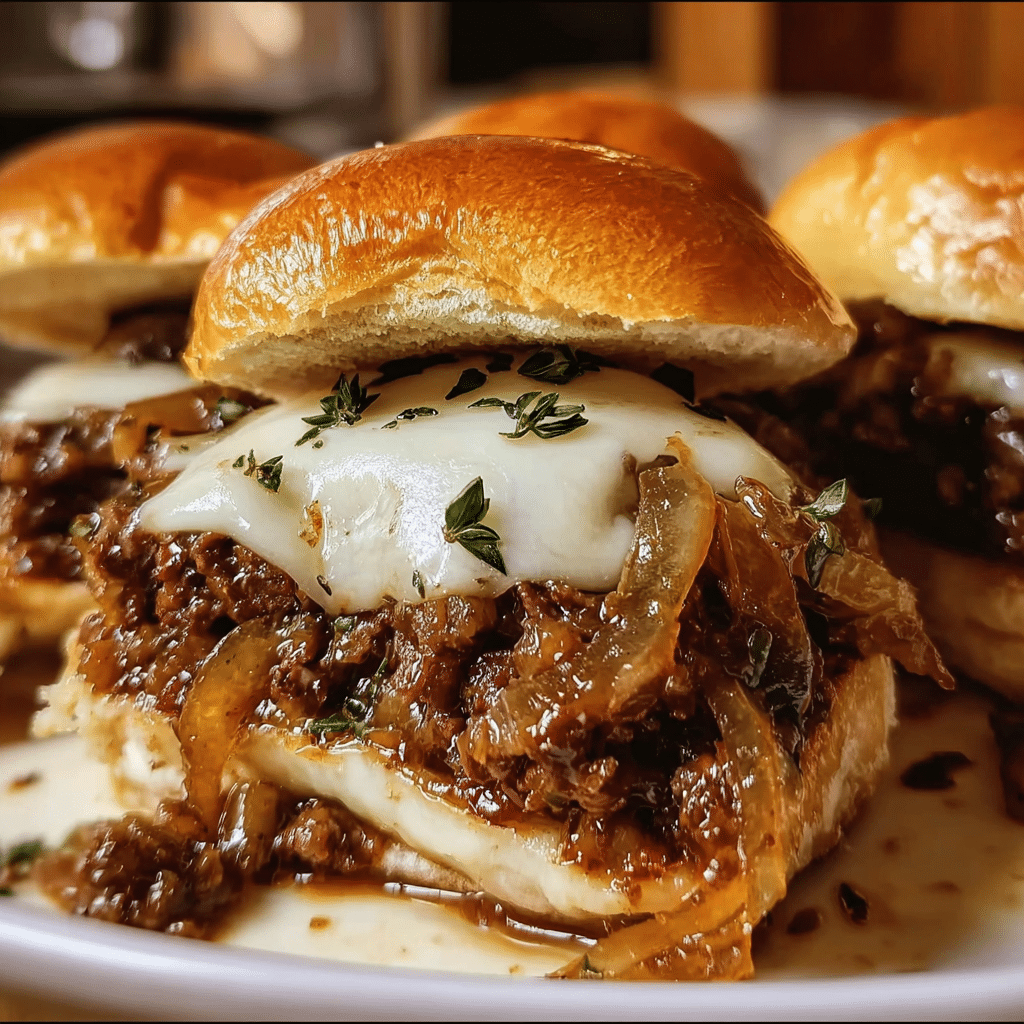
- Serve the sloppy joes on buns and top with slices of Swiss cheese and a helping of thyme-infused caramelized onions.
- Enjoy!
Shopping Tips
When shopping for ingredients, consider local farmers’ markets for fresh produce, especially for the onions and celery. Buying seasonal ingredients not only supports local agriculture but often results in better flavor. For meats, look for local butchers who can provide high-quality ground beef. They may also offer grass-fed options that can elevate your french onion beef dish.
Substitutions and Alternatives
If you have dietary restrictions or preferences, there are plenty of substitutions available. For a vegetarian version, you can replace the ground beef with lentils or a plant-based ground meat alternative. If you’re avoiding gluten, ensure that your buns are gluten-free and check all packaged ingredients for gluten content. Additionally, if you’re looking to lower sugar intake, reduce the amount of brown sugar or substitute it with a sugar alternative that suits your dietary needs.
Understanding the role of each ingredient in your french onion beef dish will not only help you make informed choices but will also enhance your cooking experience. The right ingredients lead to a delicious outcome that you and your loved ones will savor!
Detailed Step-by-Step french onion beef Cooking Instructions
Cooking can often feel overwhelming, especially when you’re trying to balance multiple components. But fear not! The process of making french onion beef sloppy joes is straightforward and incredibly rewarding. Here’s a detailed step-by-step guide to help you navigate through the cooking process with ease.
Preparation Steps
- Mise en Place: Start by gathering all your ingredients. This French term means “everything in its place.” Chop the onions and celery, measure out the tomato paste, brown sugar, and other spices. This not only streamlines your cooking process but also helps prevent any last-minute scrambling.
- Caramelizing the Onions: In a large skillet, heat the butter over medium heat. Once melted, add the sliced sweet onions along with the thyme sprigs tied together with butchers twine. Sprinkle with salt and pepper. Cook the onions slowly, stirring occasionally, for about 30 minutes. You want them to become golden brown and caramelized, not burnt. This process enhances their sweetness and is crucial for a rich flavor.
- Preparing the Ground Beef: In a separate pan, heat 2 tablespoons of grapeseed oil over medium-high heat. Once hot, add the ground beef, breaking it apart with a wooden spoon. Season with salt and pepper. Cook until browned, about 5-7 minutes. Drain any excess fat, if necessary.
- Building the Sloppy Joe Mixture: To the cooked beef, add the diced celery, tomato paste, brown sugar, and apple cider vinegar. Stir well to combine, ensuring the beef is fully coated. Allow it to simmer for about 10 minutes, giving the flavors time to meld.
- Combining Ingredients: Once the onions are caramelized and the beef mixture is ready, remove the thyme sprigs from the onions. Fold the caramelized onions into the beef mixture, stirring gently to incorporate them evenly.
Cooking Process
- Tasting and Adjusting: This is your chance to taste your french onion beef mixture. Adjust the seasoning with more salt, pepper, or brown sugar if desired. The mixture should have a nice balance of sweetness from the onions and brown sugar, with a savory kick from the beef and spices.
- Preparing to Serve: Preheat your broiler if you plan to melt the cheese on top. Prepare your hamburger buns by toasting them lightly in the oven or on a skillet. This adds texture and prevents them from getting soggy once the mixture is added.
- Assembling the Sloppy Joes: For each bun, spoon a generous amount of the french onion beef mixture onto the bottom half. Top with a slice of Swiss cheese. If you’re a cheese lover, don’t hesitate to add more!
- Melting the Cheese: Place the assembled buns under the broiler for 1-2 minutes, or until the cheese is melted and bubbly. Keep a close eye on them to avoid burning!
- Serving: Carefully remove the buns from the oven and place the top half of the bun on each sloppy joe. Serve immediately with a side of crispy fries or a fresh salad. You’ll want to savor every bite!
Final Assembly
As you prepare to serve your french onion beef sloppy joes, take a moment to appreciate the aroma wafting through your kitchen. The sweet, caramelized onions combined with the savory beef and melty cheese create a comforting dish that is perfect for family dinners or casual gatherings. Don’t forget to garnish with some fresh herbs or a dash of hot sauce for an extra kick if you like. Enjoy the journey of cooking, and remember, the most important ingredient in any recipe is love!
Professional Tips and Techniques for french onion beef
When it comes to creating the perfect french onion beef dish, there are a plethora of tips and techniques that can elevate your culinary experience. Whether you’re a novice cook or an experienced chef, having a solid foundation in cooking methods, flavor pairings, and presentation will make all the difference. Let’s dive deep into some professional tips and techniques that will help you create a mouthwatering french onion beef that will impress family and friends alike.
Professional Techniques
To begin mastering the art of french onion beef, it’s essential to understand the importance of caramelization. This is the process of cooking onions slowly over low heat until they turn a beautiful golden brown and develop a rich, sweet flavor. The key is patience—don’t rush. Use a heavy-bottomed pan to ensure even heat distribution, and add a pinch of salt to help draw out the moisture from the onions, which will aid in the caramelization process.
Another professional technique is to use high-quality beef. For a dish like french onion beef, chuck roast or ground beef are excellent choices. The marbling in chuck roast adds flavor and tenderness as it cooks, while ground beef allows for a quick preparation time. If you choose ground beef, consider a mix of lean and fatty cuts to achieve the best flavor and texture.
Incorporating a splash of dry white wine or sherry during the cooking process can also enhance the flavor profile. The acidity from the wine helps to deglaze the pan, lifting all the flavorful bits that cling to the bottom after sautéing your onions and beef. This technique is not only essential for flavor but also adds depth to the overall dish.
Troubleshooting Guide
Even the most seasoned cooks encounter challenges in the kitchen. Common problems when making french onion beef include burning the onions, resulting in a bitter flavor. If this happens, don’t despair! If you catch it early, you can add a bit of water or broth to the pan to lift the burnt bits off the bottom, then continue cooking on lower heat. If the onions are already too dark, consider starting over with a fresh batch to maintain the dish’s integrity.
Another issue can be dryness in the beef. To avoid this, ensure that you do not overcook the meat. Using a meat thermometer to check for doneness can help; for ground beef, you want to reach an internal temperature of 160°F. Adding a bit more broth or even some cream can also help maintain moisture, creating a luscious, saucy mixture.
Presentation Tips
Once you’ve mastered the cooking process, don’t forget about presentation! A visually appealing plate can enhance the dining experience. For your french onion beef, consider serving it in a rustic bread bowl or over a bed of creamy mashed potatoes. The contrast of colors is essential, so consider garnishing with freshly chopped parsley or chives for a pop of color.
Additionally, using a high-quality cheese that melts well, such as Gruyère or Swiss, can add an inviting, gooey layer on top of your dish. When serving, a sprinkle of cracked black pepper or a drizzle of balsamic reduction can elevate the aesthetics even further.
Make-Ahead and Meal Prep Strategies
One of the best aspects of french onion beef is that it can be made ahead of time! You can prepare the beef and onion mixture in advance and refrigerate it for up to three days. When ready to serve, simply reheat it on the stovetop and top it with cheese before broiling it for a few minutes until the cheese is bubbly and golden.
If you’re looking to scale the recipe up or down, it’s quite simple. Just adjust the quantity of beef and onions proportionately, keeping in mind the balance of flavors. Use a large pot if preparing a large batch to ensure even cooking.
Wine and Beverage Pairings
Pairing the right beverage with your french onion beef can enhance the overall dining experience. A robust red wine, such as a Cabernet Sauvignon or a Malbec, complements the rich flavors beautifully. If you prefer beer, a dark lager or a malty stout can also enhance the savory notes of the dish. For a non-alcoholic option, consider a sparkling water with a twist of lemon to cleanse the palate between bites.
In conclusion, mastering french onion beef involves a blend of patience, quality ingredients, and a few professional techniques. By applying these tips, you can create a dish that is not only delicious but also a true reflection of your culinary skills. So grab your apron, and let’s get cooking!
Creative Variations and Adaptations of french onion beef
When it comes to french onion beef, the possibilities are endless. This dish, with its comforting flavors, can be adapted in numerous creative ways to suit various tastes, dietary needs, and seasonal ingredients. Let’s explore some exciting variations and adaptations that you can experiment with in your kitchen.
Seasonal Variations
One of the joys of cooking is adapting recipes to fit the season, and french onion beef is no exception. In the fall, consider incorporating seasonal vegetables such as butternut squash or mushrooms. Sautéing diced butternut squash alongside the onions can add a slight sweetness that balances the savory beef, while mushrooms can add an earthy depth to the dish.
In the winter, incorporating root vegetables like carrots or parsnips can enhance the heartiness of your dish. Simply chop them into small pieces and add them to the pot during the caramelization of the onions. In the spring, fresh herbs like thyme or rosemary can brighten up the flavors, adding a refreshing twist to the classic dish.
Dietary Adaptations
As dietary preferences evolve, it’s essential to provide options for everyone at the table. If you’re looking to create a healthier or alternative version of french onion beef, consider using lean ground turkey or chicken instead of beef. This can significantly reduce the fat content while still delivering a satisfying meal.
For those on a keto diet, swapping out traditional bread for lettuce wraps or serving the beef over cauliflower mash instead of potatoes can provide a delicious low-carb alternative. If you’re catering to a vegan audience, you can use lentils or mushrooms in place of beef. Cooking lentils with the same onion and seasoning will create a hearty, plant-based version that satisfies even the most dedicated meat-eaters.
Creative Twists
For those looking to add an international flair to their french onion beef, consider experimenting with spices and flavor profiles from different cuisines. For instance, adding a hint of Asian flavor by incorporating soy sauce, ginger, and garlic can create a delightful fusion dish. Serving it over steamed rice or in a bao bun can make for an exciting twist.
Alternatively, consider a Tex-Mex variation by adding chipotle peppers and cumin for a smoky flavor. Serve the dish with tortillas or over nachos for a fun, casual meal that’s perfect for gatherings.
Different Cooking Methods
While traditional stovetop cooking is a great way to prepare french onion beef, there are various methods to explore. Using a slow cooker is an excellent option for busy days. Simply add your ingredients and let the slow cooker do the work. The low-and-slow method allows the flavors to meld beautifully, resulting in a rich, savory dish that you can come home to after a long day.
If you’re short on time, consider using an Instant Pot. This method allows you to achieve the same depth of flavor in a fraction of the time. The pressure cooking feature retains moisture, making your beef tender and juicy.
Leftover Transformation Ideas
Don’t let any of your french onion beef go to waste! Leftovers can be creatively repurposed into new meals. Consider making a hearty beef stew by adding additional vegetables and broth, simmering it until everything is tender and flavorful. Alternatively, use the beef to fill baked potatoes or as a topping for homemade pizzas, creating a unique twist on a classic dish.
Another fun idea is to transform your leftovers into a delicious sandwich. Layer the beef on a crusty baguette with melted cheese, and you have a gourmet sandwich that rivals any deli!
In conclusion, the versatility of french onion beef makes it a fantastic dish to experiment with. From seasonal variations to dietary adaptations and creative twists, there’s a world of flavor waiting to be explored. Embrace the journey of cooking and enjoy the delicious results!
Storage, Reheating, and Meal Prep for french onion beef
When it comes to enjoying the delectable flavors of french onion beef sloppy joes, understanding how to properly store, reheat, and even meal prep your dish can significantly enhance your culinary experience. This article will serve as your comprehensive guide to ensuring your french onion beef remains fresh and delicious, whether you’re enjoying it on the day it’s made or weeks later.
Short-term Storage
If you find yourself with leftovers of your french onion beef creation, the first step is to let the mixture cool to room temperature. Once cooled, transfer it into airtight containers. Glass containers are a favorite among many cooks for short-term storage because they don’t retain odors and are microwave safe. Make sure to leave some space at the top of the container for expansion, especially if you’re storing it while it’s still warm.

In terms of refrigerator storage, your french onion beef can safely be kept for up to 3-4 days. To ensure the best quality, try to consume it within this timeframe. If you wanted to take it a step further, consider dividing your leftovers into single-serving containers. This makes it easier to grab a quick meal on those busy nights when cooking just isn’t on the agenda. Plus, portioning can help with mindful eating, allowing you to enjoy your dish without overindulging.
Freezing and Long-term Storage
For those looking to extend the life of their french onion beef, freezing is a fantastic option. This method can preserve the flavors and textures of your dish for up to three months. When freezing, consider using freezer-safe bags or containers, ensuring you remove as much air as possible to prevent freezer burn. A great tip is to freeze your french onion beef in flat layers within a bag, as this helps it freeze faster and allows for easier stacking in your freezer.
Labeling your containers or bags with the date of freezing is crucial. Not only does it help you keep track of how long it’s been in the freezer, but it also adds an element of organization to your meal prep routine. When it’s time to enjoy your frozen french onion beef, simply transfer it to the refrigerator the night before to allow it to thaw gradually. This slow thawing helps maintain the dish’s integrity and flavor.
Reheating Best Practices
When it comes time to reheat your french onion beef, there are a few methods that work wonders. If you’re reheating from the fridge, a microwave is quick and easy. Just place your portion in a microwave-safe dish, cover it with a damp paper towel, and heat for 1-2 minutes, stirring halfway through to ensure even heating. However, for those who prefer a more traditional approach, reheating on the stovetop is ideal. Simply place your french onion beef in a skillet over medium heat, adding a splash of broth or water to keep it moist. Stir occasionally until heated through.
If you’re reheating from frozen, the best practice is to allow it to thaw overnight in the refrigerator before following either of the above methods. This gradual warming helps maintain the dish’s flavors and textures. If you’re short on time, you can also reheat directly from frozen in a skillet or microwave, but be aware that the reheating time will increase.
Food safety is paramount in any cooking endeavor. Always ensure that your french onion beef reaches an internal temperature of 165°F (74°C) when reheating. Using a food thermometer can help you avoid any foodborne illnesses, as it ensures that your meal is heated thoroughly. Additionally, avoid reheating multiple times; it’s best to reheat only the portion you plan to consume.
In summary, storing, freezing, and reheating your french onion beef requires a bit of care, but it’s well worth the effort. By employing these methods, you can enjoy the scrumptious flavors of your favorite dish long after the initial cooking. Whether you’re meal prepping for the week or just trying to make the most of your leftovers, these tips will keep your french onion beef as delicious as the day you made it.
Nutritional Benefits and Health Information
As we dive into the nutritional benefits and health information surrounding french onion beef sloppy joes, it’s essential to recognize that this dish can be more than just a comfort food; it can also be a wholesome meal packed with nutrients. Let’s break down the key ingredients and how they contribute to your overall health.
Nutritional Profile
The primary ingredients in french onion beef typically include ground beef, onions, beef broth, and cheese, all served on a bun. Starting with the star of the dish, ground beef is an excellent source of protein, providing essential amino acids necessary for muscle repair and growth. Depending on the cut of beef you choose, it can also be a source of healthy fats. For instance, opting for lean ground beef can reduce the calorie and fat content without sacrificing flavor.
Onions, another key player in this dish, bring both flavor and nutrition to the table. They are low in calories and high in vitamins C and B6, as well as manganese. Onions also contain antioxidants, which play a significant role in reducing inflammation and oxidative stress in the body. Additionally, they are a great source of dietary fiber, which aids in digestion and promotes a healthy gut.
When it comes to cheese, the type you choose can influence the nutritional content significantly. A slice of gooey melted cheese adds a delightful creaminess to your french onion beef, but it can also increase the calorie and fat content. However, cheese is also a good source of calcium and protein. Opting for lower-fat cheese options or using less cheese can help you enjoy the flavors without overdoing it on calories.
Health Benefits
The health benefits of french onion beef are primarily derived from its wholesome ingredients. The protein from the beef supports muscle health, while the fiber from the onions aids in digestion. Additionally, the inclusion of various spices—often found in sloppy joe recipes—can contribute to various health benefits. For example, spices like garlic and pepper can help boost your immune system.
Moreover, the antioxidants present in onions may play a role in reducing the risk of chronic diseases, such as heart disease and diabetes. By choosing lean meat and incorporating vegetables, you can create a balanced meal that can fit well into many dietary plans.
Dietary Considerations
When preparing french onion beef sloppy joes, it’s essential to consider dietary restrictions and preferences. For those watching their caloric intake, modifying the recipe by using lean ground turkey or chicken can offer a lighter option without sacrificing flavor. For those following a gluten-free diet, consider serving the beef mixture over a bed of lettuce or using gluten-free buns to enjoy the dish without worry. Additionally, for anyone with dairy sensitivities, using dairy-free cheese or omitting cheese altogether will still allow you to savor the essence of french onion beef.
Lastly, if you’re looking for a low-carb alternative, think about using portobello mushrooms as a bun substitute. This not only adds a unique flavor but also decreases the overall carb count of the meal.
In summary, french onion beef sloppy joes are not only a delicious comfort food but also a dish that can be tailored to fit various dietary needs while providing essential nutrients. By understanding the nutritional profile and incorporating healthy modifications, you can enjoy this delightful dish guilt-free. After all, food is not just about taste; it’s about nourishment, enjoyment, and fulfilling your body’s needs. So go ahead, dig into those sloppy joes, knowing you’re making a satisfying choice!
Frequently Asked Questions About French Onion Beef
French onion beef sloppy joes with melted cheese recipe
To create a delicious French onion beef sloppy joes with melted cheese, start by sautéing thinly sliced onions in butter until they caramelize, which can take about 20-25 minutes. In a separate pan, brown your ground beef, then combine it with the caramelized onions. Add a splash of Worcestershire sauce and a can of French onion soup for extra flavor. Serve the mixture on toasted buns and top with a generous amount of melted provolone or Swiss cheese under the broiler for a gooey finish. For a gourmet touch, sprinkle fresh parsley before serving to enhance the presentation.
Irresistible French onion beef sloppy joes
To make irresistible French onion beef sloppy joes, focus on the depth of flavor in your ingredients. Begin by caramelizing onions slowly to bring out their natural sweetness, which pairs perfectly with the savory beef. Incorporate a mix of spices such as garlic powder, thyme, and a dash of black pepper to elevate the flavor profile. Use a high-quality beef broth or homemade stock to add richness to the sauce, and serve on soft, toasted buns to complement the hearty filling. Adding a slice of gooey cheese on top just before serving will make these sloppy joes a crowd-pleaser.
French onion ground beef recipe
A simple yet flavorful French onion ground beef recipe starts with browning the ground beef in a skillet, then removing it to set aside. In the same skillet, add sliced onions and cook until they’re deeply caramelized, about 20 minutes, stirring frequently. Return the beef to the pan, mix in some garlic, and add a can of French onion soup for moisture and flavor. Serve this mixture over mashed potatoes or in a warm baguette for a comforting meal. For added richness, sprinkle some grated Gruyère cheese on top before serving.
Campbell French Onion Soup Hamburger recipe
For a tasty Campbell French Onion Soup Hamburger recipe, start by mixing ground beef with a can of Campbell’s French onion soup and a bit of breadcrumbs to help bind the mixture. Form the mixture into patties and grill or pan-fry them until fully cooked. This creates a juicy burger with the distinct flavor of French onion soup infused throughout. Serve the burgers on toasted buns topped with sautéed onions and melted cheese for an elevated experience. A drizzle of balsamic glaze can add a nice touch of acidity to cut through the richness.
Ground beef and French onion soup Recipes
Ground beef and French onion soup can come together in various recipes, such as casseroles or meatballs. One easy dish involves mixing ground beef with a can of French onion soup, breadcrumbs, and seasonings, then forming them into meatballs and baking until golden brown. Another idea is to create a creamy French onion beef casserole by layering cooked rice, ground beef mixed with French onion soup, and a topping of cheese before baking. These recipes not only provide comfort but also utilize the rich flavors of French onion soup effectively.
French onion beef casserole
A French onion beef casserole is a hearty dish that combines ground beef, caramelized onions, and a creamy sauce. Start by browning the beef and setting it aside while you caramelize the onions until they are soft and golden. Combine both ingredients in a baking dish along with some cooked pasta or rice, and mix in a can of cream of mushroom soup for creaminess. Top with shredded cheese and bake until bubbly for a comforting meal that’s perfect for feeding a crowd. Adding some fresh thyme or parsley before serving can brighten the dish.
Sloppy Joes with beef broth
To make sloppy joes with beef broth, start by browning ground beef in a skillet, then drain excess fat. Incorporate diced onions, bell peppers, and garlic, cooking until softened. For the sauce, mix in ketchup, Worcestershire sauce, and a cup of beef broth to create a flavorful base. Allow the mixture to simmer until it thickens, then spoon it onto toasted buns. For an extra kick, consider adding a bit of hot sauce or smoked paprika to the sauce to enhance the flavors.
French onion beef casserole with rice
A French onion beef casserole with rice is a comforting and satisfying dish. Start by browning your ground beef and then combine it with sautéed onions until they’re caramelized. Mix in cooked rice, a can of French onion soup, and a sprinkle of cheese for creaminess and flavor. Transfer the mixture to a casserole dish, top with additional cheese, and bake until bubbling and golden. For a crunchy topping, consider adding crispy fried onions or breadcrumbs in the last few minutes of baking.