French onion soup is a beloved dish that warms the soul and fills the belly with its rich, savory flavor. My journey with this classic recipe began on a chilly autumn evening when I stumbled into a quaint little bistro in Paris during my travels. The aroma of caramelized onions filled the air, and as I took my first spoonful of the golden broth topped with bubbling cheese, I knew I had discovered something extraordinary. That moment, with the cool breeze outside and the comforting warmth of the soup, ignited a passion within me to recreate that experience at home.
As I began to experiment with recipes, I quickly learned that French onion soup is more than just a dish; it is a celebration of simplicity and depth. The main ingredients—onions, broth, and cheese—come together to create a symphony of flavors that is both comforting and sophisticated. The history of this dish is as rich as its taste, tracing back to the Roman Empire, where onions were a staple food. Over the centuries, it has evolved, with various regions in France adding their own twists, but the essence of French onion soup remains unchanged—a testament to its enduring appeal.
The Story Behind This Recipe
What makes my version of French onion soup special is the blend of traditional techniques with modern shortcuts that cater to busy families. My recipe incorporates slow-cooked caramelized onions, which are the heart of this dish, but I’ve found ways to speed up the process without sacrificing flavor. For instance, using a pressure cooker can significantly cut down the time needed to achieve that perfect onion caramelization while still delivering that deep, sweet flavor.
This recipe is also adaptable, making it ideal for families looking for quick dinner solutions. You can easily prepare the soup in advance and reheat it when ready to serve, which is a lifesaver on those hectic weeknights. Pair it with a simple salad or crusty bread, and you have a delicious meal that feels gourmet but takes minimal effort. It’s also a dish that invites conversation—whether you’re serving it at a family gathering or a casual dinner with friends, French onion soup brings people together.
Seasonal relevance plays a significant role in why I love this dish. As the leaves change and the air turns crisp, the thought of a warm, cheesy bowl of French onion soup is comforting. It’s a dish that embraces the coziness of fall and winter, making it perfect for holiday gatherings or simply a quiet night in. The emotional connection I have with this soup is tied to memories of laughter around the dinner table, the clinking of spoons, and the warm glow of candlelight, all enhanced by the delightful aroma drifting from the kitchen.
In this guide, you will learn how to master the art of making French onion soup at home, from selecting the right onions to achieving the perfect cheese crust. I’ll dive into tips and tricks for ensuring your soup is not just good but exceptional. Whether you’re a seasoned cook or a kitchen novice, by the end of this article, you will feel empowered to create a dish that’s not only delicious but also brings a slice of French culinary tradition into your home.
Why You’ll Love This Dish
French onion soup is more than just a meal; it’s an experience. The combination of sweet, caramelized onions, rich beef broth, and melted cheese creates a flavor profile that is too delicious to resist. It’s a dish that is universally loved, and once you try it, you will understand why it has stood the test of time. So grab your onions, stock up on cheese, and let’s embark on this culinary adventure together!
The Rich History and Cultural Significance of french onion soup
The rich history and cultural significance of French onion soup extend far beyond its delicious flavor. This dish, which has become a staple in French cuisine, has origins that date back to ancient times. Onions, known for their robust flavor and versatility, were cultivated by the Romans and have been a dietary staple ever since. The earliest recorded recipes for onion soup can be traced back to the 18th century, but it is believed that variations of this dish were enjoyed long before that, particularly among the working class who needed inexpensive yet satisfying meals.
Origins and History
French onion soup, as we know it today, was popularized in the 18th century, particularly in the region of Paris. The traditional recipe included caramelized onions, beef broth, and bread, topped with melted cheese. It was a dish that provided warmth and nourishment to the laborers who toiled in the fields and markets. The soup was often served in a simple bowl, but over time, as it gained popularity, it began to be featured in upscale restaurants, showcasing the culinary sophistication of French cuisine.
One of the most famous preparations of French onion soup comes from the legendary restaurant, La Coupole, in Montparnasse, Paris. Known for its art deco interior and an array of classic French dishes, La Coupole’s version has become a benchmark for many chefs around the world. The dish evolved with regional variations, each offering a unique twist while maintaining the foundational elements that make French onion soup so beloved. For instance, some regions incorporate white wine or sherry for added depth, while others may use different types of cheese, such as Gruyère or Comté, to enhance the flavor.
Cultural Significance
French onion soup has transcended its humble beginnings to become a symbol of comfort and culinary artistry. In France, it is often served as a starter in bistros and restaurants, especially during the colder months, making it a popular choice during the winter holidays. It is a dish that evokes nostalgia, reminding many of family gatherings and festive celebrations, where sharing a warm bowl of soup is a cherished tradition.
Moreover, the cultural significance of French onion soup extends beyond its taste; it is a dish that represents the French philosophy of cooking—taking simple, quality ingredients and elevating them through technique and care. This ethos resonates with home cooks and professional chefs alike, inspiring a love for cooking and the joy it brings to the table.
Nutritional Benefits
Beyond the delicious flavor and cultural history, French onion soup also offers nutritional benefits. Onions are packed with vitamins, minerals, and antioxidants, making them a healthy addition to your diet. They are known for their anti-inflammatory properties and can support heart health. When combined with a rich broth, the soup provides hydration and nourishment, while the cheese adds protein and calcium, making it a well-rounded meal.
While it is essential to enjoy French onion soup in moderation due to its richness, it can be a part of a balanced diet when prepared thoughtfully. By using low-sodium broth and opting for less cheese, you can create a lighter version that still maintains the comforting essence of this classic dish. As we delve deeper into the art of making French onion soup, remember that cooking is not just about the ingredients; it’s about the stories, the memories, and the love that goes into every bowl.
Essential Ingredients for Perfect french onion soup
When it comes to creating a comforting dish like French Onion Soup Mac & Cheese, the choice of ingredients is paramount. Each one plays a crucial role in building layers of flavor and texture, ensuring that every bite is a delightful experience. Below, I’ll detail the essential ingredients you’ll need, along with tips on how to choose the best quality and even some alternatives if you’re considering dietary restrictions.
Essential Ingredients
- 3 tablespoons olive oil – Olive oil serves as the foundation for sautéing our onions. It adds a rich, fruity flavor that enhances the sweetness of the caramelized onions. Look for high-quality extra virgin olive oil, as it has a more robust flavor profile.
- 4 large sweet onions, thinly sliced – Sweet onions, like Vidalia or Walla Walla, bring a natural sweetness to the dish. The key to a great French onion soup is to caramelize these onions slowly, allowing their natural sugars to develop fully. When selecting onions, look for firm, heavy bulbs with papery skins, free from soft spots.
- Kosher salt and pepper – Essential for seasoning! Kosher salt helps draw out moisture from the onions during the caramelization process. Freshly cracked pepper adds a hint of spiciness. Always season to taste; it’s an art!
- 1 pound short cut pasta, cooked – Pasta adds a hearty texture to the dish. Short varieties like elbow macaroni or shells are perfect for holding onto the cheesy goodness. Cook the pasta al dente, as it will continue to cook when baked.
- 3 tablespoons unsalted butter – Butter enhances the flavor and helps in the caramelization of the onions. Using unsalted butter allows you to control the salt content of your dish better.
- 1 ¼ cup all-purpose flour – Flour is used to create a roux, which thickens your cheese sauce. It’s vital to cook the flour long enough to remove the raw flavor, but not so much that it browns.
- 2 ½ cups milk – Milk gives creaminess to the cheese sauce. Whole milk is recommended for its richness, but you can use 2% if you prefer a lighter option.
- ¼ teaspoon freshly ground nutmeg – Nutmeg adds a warm, aromatic note that complements the richness of the cheese. Always use freshly grated nutmeg for the best flavor.
- 12 ounces Gruyère cheese, freshly grated – The star of the show! Gruyère is nutty and melts beautifully, making it perfect for this dish. When selecting cheese, opt for a block and grate it fresh for the best texture and flavor.
- 4 ounces Parmesan cheese, freshly grated – Parmesan adds a salty, savory depth. It’s a great complement to Gruyère. Again, fresh is best, so grate your own!
- 1 ⅓ cup seasoned bread crumbs – These will create a crispy topping that contrasts beautifully with the creamy pasta and cheese. You can buy them pre-made or make your own from stale bread seasoned with herbs.
- Fresh thyme for serving – Thyme adds a touch of freshness and aroma that elevates the dish. Use it as a garnish before serving for that extra pop of flavor.
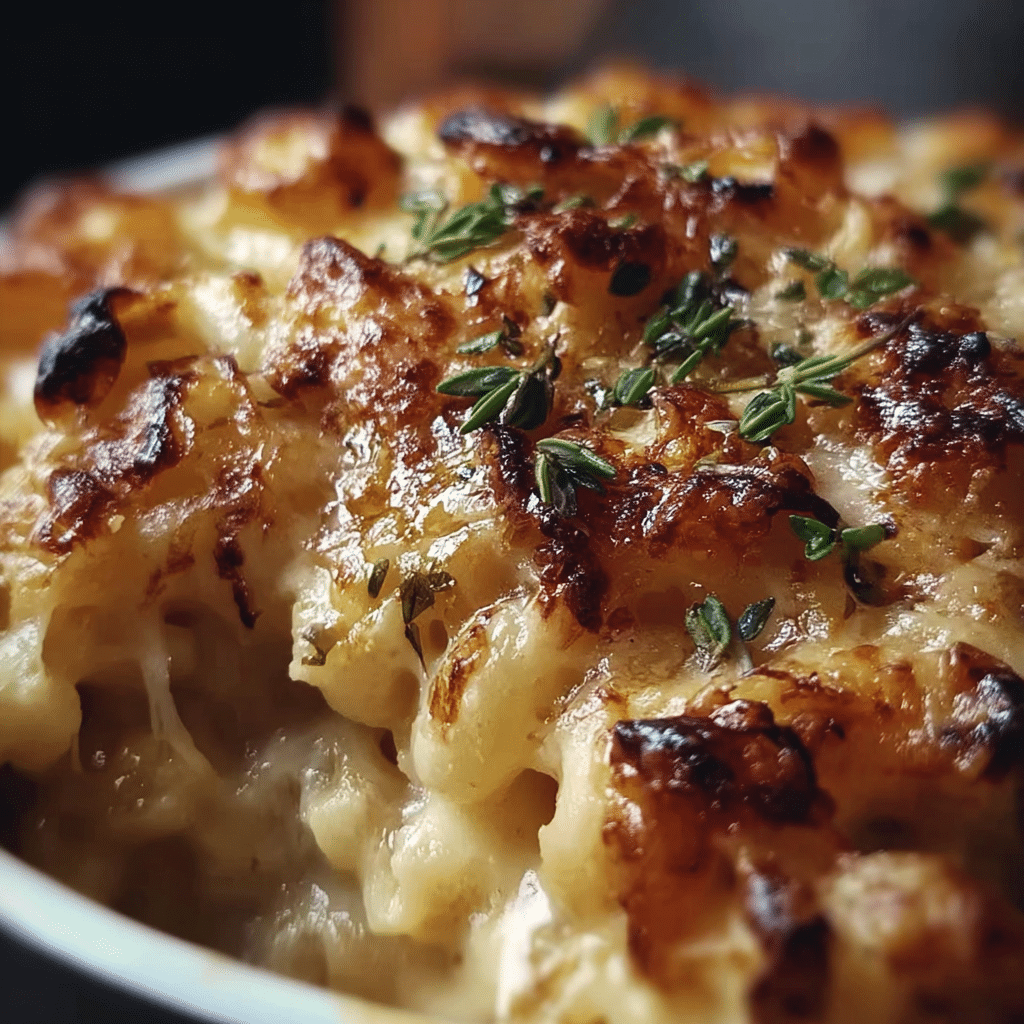
French Onion Soup Mac & Cheese
Ingredients
- 3 tablespoons olive oil
- 4 large sweet onions, thinly sliced
- kosher salt and pepper
- 1 pound short cut pasta, cooked
- 3 tablespoons unsalted butter
- ¼ cup all-purpose flour
- 2 ½ cups milk
- ¼ teaspoon freshly ground nutmeg
- 12 ounces gruyere cheese, freshly grated
- 4 ounces parmesan cheese, freshly grated
- ⅓ cup seasoned bread crumbs
- fresh thyme, for serving
Instructions
- Heat the olive oil in a large oven-safe skillet over medium-heat. Stir in the onions with a big pinch of salt. Cook over medium, stirring often, until the onions soften, about 10 to 15 minutes.
- Decrease the heat to low or medium-low. Cook the onions, stirring often, for about 60 to 90 minutes, until they are golden and caramelly. If at any time the onions start to burn, low the heat or add a few splashes of water to keep them hydrated.
- Preheat the oven to 375 degrees F. Boil the pasta according to the package directions.
- Once the onions are golden and caramelly, transfer them to a plate. (Note: if you’re really in a rush, you can add 1 teaspoon of sugar, honey, maple syrup, etc to speed along the caramelization process. Be sure to stir often and check on the progress!)
- Add the butter to the skillet. Once melted, add in the flour, whisking to create a roux. Cook for 2 to 3 minutes, until it becomes golden in color and starts to smell nutty. Slowly stream in the milk while stirring constantly. The mixture will begin to come together and thicken. Stir in the nutmeg.
- Stir in almost all of the cheese (reserve a bit for topping) until it is melted. Add in ¾ of the caramelized onions. Stir in the pasta. Toss it together over and over until it is combined.
- Top with the remaining cheese on top along with the remaining onions. Sprinkle with the bread crumbs. Bake for 25 to 30 minutes, or until golden and bubbly.
- Remove and sprinkle with fresh thyme. Serve!
Shopping Tips
When shopping for these ingredients, aim for quality over quantity. For the olive oil, try to find brands that are cold-pressed and come in dark bottles, as this helps preserve their flavor. For the onions, your local farmer’s market may have the best selection, especially during peak onion season in late summer to fall.
For the cheeses, consider visiting a local cheese shop where you can sample before you buy. The difference between freshly grated cheese and pre-packaged shredded cheese is significant—not just in flavor, but also in meltability.
Seasoned bread crumbs can often be found in the baking aisle, but making your own can elevate the dish. Just toast some stale bread with herbs and spices, then pulse it in a food processor.
Substitutions and Alternatives
There are various substitutions you can make if you have dietary restrictions. For a gluten-free option, use gluten-free pasta and flour. There are several brands available that mimic the texture of traditional pasta quite well.
If you’re lactose intolerant, consider using lactose-free milk and cheeses. Nutritional yeast can serve as a delicious cheese alternative for a vegan version, while cashew cream can replace the milk for creaminess.
Lastly, if you’re watching your sodium intake, opt for low-sodium versions of broth or cheese. Always remember to taste as you go to adjust seasoning according to your needs.
In conclusion, creating the perfect French Onion Soup Mac & Cheese starts with selecting high-quality ingredients that are in season and fresh. With these tips and tricks, you’re well on your way to a deliciously comforting meal that will impress your family and friends.
Detailed Step-by-Step french onion soup Cooking Instructions
Ready to dive into the cooking process of this delightful French Onion Soup Mac & Cheese? This recipe combines the comforting flavors of traditional French onion soup with the creamy, cheesy goodness of mac and cheese. Let’s walk through the step-by-step instructions to ensure your dish comes out perfectly every time.
Preparation Steps
- Mise en place: Start by gathering all your ingredients and equipment. You’ll need a large pot, a skillet, a whisk, a spatula, a large baking dish, and a stovetop. Having everything prepared will streamline the cooking process.
- Slice the onions: Using a sharp knife, thinly slice your sweet onions. The slices should be uniform to ensure even cooking. I often use a mandolin for this task, which helps speed things up and ensures even thickness.
- Cook the pasta: Boil salted water in a large pot and add in your short cut pasta. Cook it until just al dente, as it will continue to cook in the oven later. Drain and set aside.
- Grate the cheeses: Using a box grater, grate both the Gruyère and Parmesan cheese. This step is crucial because freshly grated cheese melts better than pre-shredded cheese, which often contains anti-caking agents.
Cooking Process
- Caramelize the onions: In a large skillet over medium heat, add the 3 tablespoons of olive oil and 3 tablespoons of unsalted butter. Once melted, add the sliced onions along with a sprinkle of kosher salt. Cook them slowly, stirring frequently, until they become golden brown and caramelized, about 30 minutes. Patience is key here; the flavor development is worth the wait!
- Make the roux: In a separate pot, melt another 3 tablespoons of unsalted butter over medium heat. Once melted, add the all-purpose flour and whisk continuously for about 2-3 minutes until the mixture is slightly golden and bubbly. This creates a roux that will thicken your cheese sauce.
- Add milk and seasonings: Gradually whisk in the 2 ½ cups of milk, ensuring no lumps form. Keep whisking until the mixture thickens, about 5-7 minutes. Stir in the freshly ground nutmeg, and season with kosher salt and pepper to taste.
- Add the cheese: Lower the heat and add the grated Gruyère and Parmesan cheese to the sauce. Stir until fully melted and combined. The cheese sauce should be creamy and luscious—perfect for coating the pasta!
Final Assembly
- Combine pasta and cheese sauce: In a large mixing bowl, combine the cooked pasta with the cheese sauce, mixing until every piece of pasta is coated in that gooey goodness.
- Incorporate caramelized onions: Gently fold in the caramelized onions into the pasta and cheese mixture, ensuring an even distribution of flavor.
- Transfer to baking dish: Pour the mixture into a greased baking dish, spreading it evenly. This step allows for even cooking and browning.
- Add breadcrumb topping: Sprinkle the seasoned breadcrumbs evenly over the top of the pasta mixture. This will create a beautiful, crispy layer once baked.
- Bake: Preheat your oven to 350°F (175°C). Bake the mac and cheese for about 20-25 minutes or until the top is golden brown and bubbly.
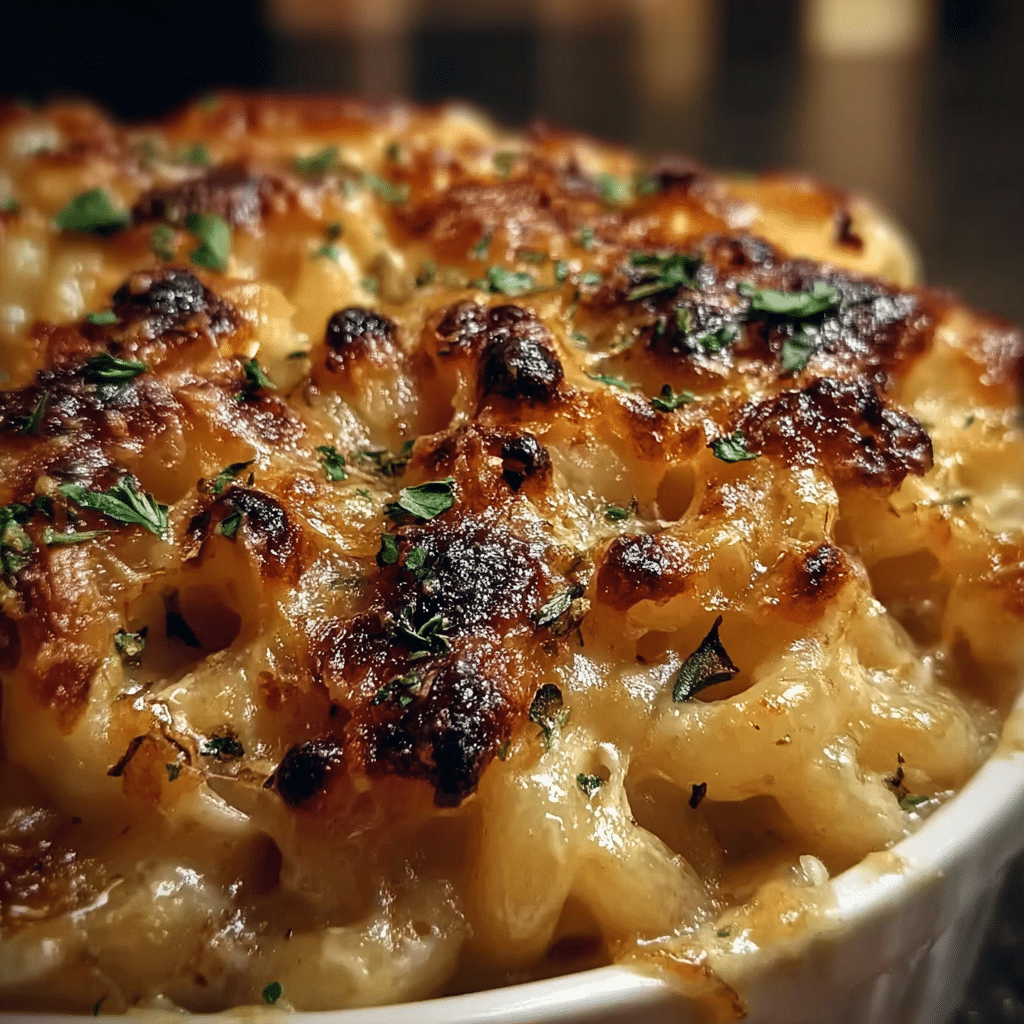
- Garnish and serve: Once out of the oven, let it cool for a few minutes. Garnish with fresh thyme for a pop of color and flavor. Serve warm and enjoy the delicious melding of French onion soup flavors with creamy mac and cheese!
Throughout this cooking process, keep an eye on the onions while caramelizing; the key is to achieve a deep golden-brown color without burning them. If you notice them browning too quickly, lower the heat. A well-executed French Onion Soup Mac & Cheese is not just a meal; it’s a warm hug on a plate, full of rich flavors and textures that will surely impress anyone at your table.

Professional Tips and Techniques for french onion soup
When it comes to perfecting a classic dish like french onion soup, there are a few professional tips and techniques that can elevate your game from home cook to culinary connoisseur. Armed with these insider secrets, you’ll not only impress your dinner guests but also enjoy the process of cooking this beloved dish.
Professional Techniques
The foundation of a great french onion soup lies in the caramelization of the onions. While it may seem straightforward, this step requires patience and precision. Start with a good quality yellow onion—about four large ones should do the trick. Slice them thinly, aiming for evenly-sized pieces to ensure uniform cooking. The key here is to use a heavy-bottomed pot or Dutch oven. This type of cookware retains heat well and promotes even cooking.
Begin by adding a generous amount of butter, around 4 tablespoons, to your pot over medium heat. Once melted, add the onions, stirring to coat them evenly. Don’t rush this step; let the onions cook slowly for about 30-40 minutes, stirring occasionally. You want them to soften and turn a deep golden brown. This process, known as caramelization, brings out the natural sugars in the onions, creating a beautiful depth of flavor in your french onion soup.
For an advanced technique, consider deglazing your pot after the onions are perfectly caramelized. Add a splash of white wine or sherry to lift those flavorful browned bits off the bottom of the pot. This step adds complexity to your soup, enhancing its overall flavor profile. Once the wine has reduced, add your beef stock or a combination of beef and chicken stock for a richer base.
Troubleshooting Guide
Even the best cooks can encounter hurdles while making french onion soup. One common issue is overcooked onions that turn mushy instead of caramelized. If you find that your onions are browning too quickly, simply reduce the heat. It’s better to take your time for a rich flavor than to rush and end up with a burnt taste.
Another problem might be a soup that lacks depth. If your french onion soup tastes flat, consider adjusting the seasoning. A splash of balsamic vinegar can enhance the sweetness of the onions, while fresh herbs like thyme or bay leaves can elevate the flavor even further. Don’t forget to taste as you go!
Presentation Tips
french onion soup. After ladling the soup into oven-safe bowls, top each serving with a generous piece of crusty baguette and a heap of grated Gruyère cheese. Broil them until the cheese is bubbly and golden brown. For an added touch, consider sprinkling some freshly chopped chives or parsley on top. This not only adds color but also freshness to the rich flavors of the soup.
As for wine and beverage pairings, a crisp white wine like Sauvignon Blanc or a light-bodied red, such as Pinot Noir, complements french onion soup beautifully. The acidity in these wines balances the richness of the cheese and broth, making for a delightful dining experience.
Lastly, if you’re preparing this dish ahead of time, you can caramelize the onions a day in advance and store them in the refrigerator. When you’re ready to enjoy your french onion soup, simply reheat the onions, add the stock, and finish with the cheese and bread right before serving. This makes it a perfect dish for hosting or meal prepping!
Creative Variations and Adaptations of french onion soup
French onion soup is a timeless classic, but that doesn’t mean it can’t be tweaked and transformed to fit modern tastes and dietary needs. Below, I’ll share some creative variations and adaptations that keep this dish fresh and exciting.
Seasonal Variations
One of the joys of cooking is adapting recipes to the seasons, and french onion soup is no exception. In spring, consider adding a handful of fresh asparagus or peas to the soup during the last few minutes of cooking. This not only adds a pop of color but also a delightful crunch that contrasts beautifully with the velvety broth.
In fall and winter, you might want to swap out the traditional onions for caramelized shallots or even roasted garlic, lending a sweeter, nuttier flavor. Additionally, consider incorporating seasonal herbs like rosemary or sage to enhance the depth of flavor in your soup.
Dietary Adaptations
With the rise in dietary preferences, adapting french onion soup to meet various needs is easier than ever. For a keto-friendly version, you can replace the traditional bread with a low-carb alternative, such as cauliflower bread or even omit the bread altogether. Instead, top with cheese and broil as usual for that classic gooey experience without the carbs.
If you’re catering to vegan diners, you can easily swap out the beef stock with a high-quality vegetable stock and replace the cheese with a plant-based alternative or nutritional yeast for a cheesy flavor without dairy. Just be sure to caramelize the onions in olive oil rather than butter!
Creative Twists
As a lover of international cuisine, I often find inspiration from different culinary traditions. One of my favorite adaptations of french onion soup is to incorporate Asian ingredients. Imagine a miso-infused broth with the caramelized onions, topped with a layer of melted Gruyère and a sprinkle of sesame seeds. This fusion not only tastes incredible but also introduces a new flavor profile that excites the palate.
For a more Mediterranean twist, you might consider adding a hint of lemon zest and fresh thyme to the soup. The citrus brightness cuts through the richness, providing a refreshing balance to the dish.
As for cooking methods, you can prepare french onion soup in a slow cooker. Simply add your caramelized onions, stock, and herbs, then let it simmer for a few hours. This method allows the flavors to meld beautifully and is perfect for a busy day when you still want a comforting dish waiting for you at dinner time.
And don’t forget about leftovers! If you find yourself with extra soup, consider transforming it into a savory pasta sauce or using it as a base for a risotto. Simply add cooked pasta or arborio rice, along with some additional stock, and let it absorb all those rich flavors. You’ll have a new dish that feels completely different from the original french onion soup.
Through these variations and adaptations, french onion soup proves to be not just a comforting classic, but a versatile canvas for culinary creativity. Whether you’re sticking to tradition or venturing into exciting new flavors, this dish can truly be made your own!
Storage, Reheating, and Meal Prep for french onion soup
When it comes to enjoying a comforting bowl of french onion soup, the last thing you want is to waste any of that deliciousness. Whether you’ve made a big batch for a cozy gathering or just have some leftovers from dinner, understanding how to properly store, reheat, and even meal prep this indulgent dish can make all the difference. Let’s dive deep into the best practices for storing your french onion soup, ensuring that it remains as rich and flavorful as the day it was made.
Short-term Storage
If you find yourself with leftovers after a delightful dinner, the first step is to let your french onion soup cool down to room temperature. This is essential; placing hot food directly into the refrigerator can raise the temperature inside, potentially putting other food at risk. Once cooled, transfer the soup into airtight containers. I often use glass containers as they do not absorb odors and are microwave-safe, making reheating a breeze.
When storing in the refrigerator, aim to consume your french onion soup within 3 to 5 days. It’s always a good idea to label your containers with the date, ensuring you keep track of freshness. If you’re like me, sometimes you forget what’s in the fridge, and a quick glance at the date can save you from opening a container that’s been in there a little too long!
For best results, I recommend portioning the soup into single-serving containers. This not only makes reheating easier but also helps control portion sizes. Plus, who doesn’t love the idea of having a warm bowl of french onion soup ready to go whenever the craving strikes?
Freezing and Long-term Storage
Now, if you want to keep your french onion soup for a longer period, freezing is the way to go. The key to successful freezing is to ensure the soup is completely cooled before transferring it to a freezer-safe container. I personally love using heavy-duty freezer bags, as they take up less space and make it easy to stack in the freezer.
When using freezer bags, be sure to remove as much air as possible before sealing. This prevents freezer burn, which can compromise the quality of your soup. You can also freeze your french onion soup in muffin tins for individual servings. Once frozen, pop the soup out and store the portions in a freezer bag. This way, you can thaw just what you need, whenever you need it.
Generally, french onion soup can last in the freezer for about 2 to 3 months. After that, the flavors may start to diminish, and trust me, you don’t want to lose that delicious oniony goodness!
Reheating Best Practices
Reheating your french onion soup to maintain its quality is crucial. The microwave is a convenient option, but it can lead to uneven heating. Instead, I recommend reheating on the stovetop. Simply pour your soup into a saucepan and heat over medium heat, stirring occasionally until warmed through. This method not only ensures even heating but also allows the flavors to meld together again beautifully.
If you’ve frozen your soup, it’s best to thaw it in the refrigerator overnight before reheating. If you’re in a rush, you can thaw it in a microwave, using the defrost setting. Just be careful not to start cooking it in the microwave; you want to keep that rich, comforting texture intact!
Once your french onion soup is reheated, consider adding a few fresh toppings. A sprinkle of freshly grated cheese or a few croutons can elevate the dish, making it taste freshly made. Trust me, your taste buds will thank you!
As with any food storage, food safety is paramount. Always check for any off smells or changes in appearance before consuming leftovers. If in doubt, it’s better to err on the side of caution and dispose of the soup.
In summary, understanding the ins and outs of storing, freezing, and reheating your french onion soup can lead to an elevated dining experience even days after you first made it. With proper techniques in place, you can enjoy this delicious, comforting dish whenever you want!
Nutritional Benefits and Health Information
As we explore the wonderful dish that is french onion soup, it’s time to take a step back and appreciate not just its rich flavors but also its nutritional profile. While it may seem like a decadent treat, there are actually a number of health benefits packed into this classic French dish. Let’s break it down together.
Nutritional Profile
The primary ingredients of french onion soup are onions, broth, cheese, and bread. Onions are the star of the show, contributing to the soup’s signature flavor. A medium onion, which is about 110 grams, contains roughly 44 calories, 1.2 grams of protein, and 0.1 grams of fat. They are also a great source of vitamin C, vitamin B6, and manganese.
The broth, usually beef or vegetable, adds depth to the flavor profile and provides hydration. A cup of beef broth contains about 15 calories and is low in carbohydrates and fat. The cheese, often Gruyère, is where the richness comes in. One ounce of Gruyère cheese has about 117 calories, 8 grams of fat, and 8 grams of protein. Lastly, the bread, which is typically a French baguette, contributes carbohydrates and fiber but can add significantly to the calorie count depending on the amount used.
Altogether, a typical serving of french onion soup can range from 250 to 400 calories, depending on the ingredients and portion size. This makes it a relatively hearty dish, but when prepared thoughtfully, it can still be enjoyed as part of a balanced diet.
Health Benefits
The health benefits of french onion soup largely stem from its main ingredient: onions. Onions are known for their anti-inflammatory properties and high antioxidant content, particularly quercetin, which can help reduce the risk of chronic diseases. They also support heart health by regulating blood pressure and cholesterol levels.
Moreover, the broth can provide essential minerals and nutrients that support hydration and overall health. If you opt for a vegetable broth, you can boost the nutrient profile even further with additional vegetables, such as carrots and celery, which add vitamins and minerals without significantly increasing caloric content.
In terms of dietary considerations, french onion soup can be made gluten-free by using gluten-free bread and broth. For those who are lactose intolerant, there are dairy-free cheese alternatives that can replicate the gooey, melty texture without the dairy. And for those looking to cut down on calories, using less cheese and opting for whole-grain bread can create a healthier version of this classic dish.
Dietary Considerations
If you’re following a specific diet plan, french onion soup can fit into various eating styles with a few modifications. For example, if you’re on a low-carb diet, consider using a cauliflower mash instead of bread for a creamy texture without the carbs. For a paleo approach, replace the cheese with a nut-based alternative and use homemade broth to avoid additives found in store-bought options.
Comparing french onion soup to similar dishes, such as creamy potato soup or cheddar broccoli soup, it generally comes out as a lighter option. While these creamy soups can be delicious, they often contain higher levels of saturated fat and calories due to the heavy cream or cheese used. In contrast, french onion soup achieves its richness through caramelized onions and broth, making it a more nutrient-dense choice.
In conclusion, while french onion soup is undeniably a rich and comforting dish, it also brings a range of nutritional benefits to the table. By being mindful of ingredient choices and portion sizes, you can enjoy this classic recipe as part of a balanced, health-conscious diet. So next time you savor a bowl of french onion soup, take a moment to appreciate not just the flavors but also the wholesome goodness it offers!
Frequently Asked Questions About French Onion Soup
Old fashioned french onion soup mac and cheese
Old-fashioned French onion soup mac and cheese combines the rich flavors of caramelized onions and gooey cheese, creating a comforting dish. To make this classic version, start by slowly caramelizing onions in butter until they turn golden brown and sweet. Incorporate beef or vegetable broth to mimic the soup base, and use a blend of Gruyère and mozzarella cheeses for that traditional French onion flavor. For added depth, consider adding a splash of white wine or sherry during the onion cooking process. Finally, bake the dish until golden and bubbly, ensuring the cheese forms a delicious crust on top.
French onion soup mac and cheese recipe
A delicious French onion soup mac and cheese recipe starts with the fundamental elements of both dishes. Begin by cooking your pasta al dente, as it will continue to cook in the oven. In a separate pan, sauté sliced onions in butter until caramelized, then deglaze the pan with broth. Combine the pasta with the onion mixture, and fold in a creamy cheese sauce made with heavy cream, Gruyère, and a hint of thyme for herbaceous notes. Pour everything into a baking dish, top with breadcrumbs and more cheese, and bake until golden brown for a comforting meal.
Easy french onion soup mac and cheese
An easy French onion soup mac and cheese can be prepared with minimal fuss while still delivering maximum flavor. Use store-bought caramelized onions to save time, or opt for a quick sauté of sliced onions until they soften and become slightly golden. Prepare a simple cheese sauce by melting butter, whisking in flour, and gradually adding milk until smooth. Stir in shredded cheese, like Swiss or Gruyère, until melted, then mix in the cooked pasta and onions. Bake for 20 minutes for a melty, satisfying dish without too much hassle.
Best french onion soup mac and cheese
The best French onion soup mac and cheese features a perfect balance of flavors and textures. Start by focusing on the onions; slow cook them to achieve deep caramelization, which enhances sweetness and umami. Use a blend of cheeses, such as Gruyère, Parmesan, and sharp cheddar for a complex flavor profile. For an extra touch, incorporate some French onion soup mix into your cheese sauce for added seasoning. Finish with a crispy breadcrumb topping for texture contrast and bake until golden for a dish that impresses.
French onion soup mac and cheese samseats
French onion soup mac and cheese samseats offer a unique twist on traditional recipes by incorporating a delightful blend of flavors. Start by preparing a creamy cheese sauce infused with caramelized onions and a hint of garlic. For texture, add some cooked bacon or pancetta, which complements the richness of the cheese and onions. Choose your favorite pasta shape, like cavatappi or shells, to hold onto the sauce. Bake until bubbly and serve with fresh herbs like parsley or chives for a burst of freshness.
French onion mac and cheese Allrecipes
Allrecipes features an array of French onion mac and cheese recipes that can be tailored to your preferences. These recipes typically highlight caramelized onions, a creamy cheese sauce, and a crunchy topping. For best results, follow the recommended steps for caramelizing onions slowly to develop their natural sweetness. Consider using a combination of cheeses like Gruyère and cheddar for depth and flavor. Always check the reviews for tips on modifications or enhancements from other home cooks.
Easy French onion mac and cheese
For an easy French onion mac and cheese, focus on simplifying the steps without compromising flavor. Start with pre-prepared caramelized onions or quickly sauté fresh onions in butter until soft. Prepare a basic cheese sauce using milk, shredded cheese, and seasonings like thyme and pepper. Combine everything with cooked pasta, and consider adding a little beef broth for that classic French onion soup flavor. Bake for a short period until heated through and the cheese is bubbly for a quick yet delicious meal.
Creamy french onion soup mac and cheese
A creamy French onion soup mac and cheese is all about achieving a smooth, rich texture. Begin by creating a roux with butter and flour, then gradually whisk in heavy cream for an ultra-creamy sauce. Incorporate caramelized onions and a generous amount of Gruyère and cheddar cheese to enhance flavor and creaminess. Adding a splash of sherry or white wine can elevate the taste profile. Bake until the top is golden brown and enjoy the indulgent, creamy goodness of this dish.