Healthy spaghetti squash is a delightful twist on traditional pasta dishes that brings a nutritious element to the table while retaining all the comforting qualities we crave in our meals. I remember the first time I discovered this vibrant vegetable. It was a chilly fall evening, and the local farmers’ market was bursting with seasonal produce. My eyes were immediately drawn to the bright yellow exterior of the spaghetti squash, and I felt a spark of inspiration. I picked it up, wondering how this unusual squash could be transformed into a family-friendly dinner. Little did I know that this simple decision would lead to the creation of a comforting and healthy dish that would become a staple in our household.

I vividly recall my first attempt at cooking healthy spaghetti squash. I roasted it in the oven, drizzled with olive oil, salt, and pepper, and let it bake until tender. When I cut it open and scraped out the flesh, I was amazed to see strands of squash resembling spaghetti. It was as if nature had crafted the perfect low-carb alternative to pasta! I tossed the strands with a light garlic and herb sauce, and my family happily devoured every last bite. That moment ignited my passion for experimenting with healthy recipes, and I quickly realized that healthy spaghetti squash wasn’t just a meal; it was an opportunity to create nutritious dishes that still felt indulgent.
The Story Behind This Recipe
The origins of healthy spaghetti squash can be traced back to the Americas, particularly in regions where squash cultivation flourished. The indigenous people utilized various squash types, which later became staples in many households. Over time, spaghetti squash gained popularity not only for its unique texture but also for its versatility in the kitchen. It has become a beloved alternative to traditional pasta, especially for those seeking lighter meals without sacrificing flavor.
This recipe is special because it marries the wholesome goodness of vegetables with the comforting elements of a gratin. It’s a dish that can easily adapt to different dietary preferences, whether you’re a vegetarian, gluten-free eater, or just someone looking to incorporate more vegetables into your meals. Unlike many other gratin recipes that rely heavily on cream and cheese, healthy spaghetti squash au gratin focuses on a balance of flavors and textures while remaining light and nourishing. It’s the perfect dish for busy families, offering a quick and satisfying dinner solution that can be made in under an hour.
Why You’ll Love This Dish
One of the most appealing aspects of healthy spaghetti squash is its seasonal relevance. As autumn descends and squash varieties become abundant, this dish provides a wonderful way to celebrate the season’s bounty. You can make it for family gatherings, cozy weeknight dinners, or even meal prep for the week ahead. The emotional connection to this dish runs deep; it evokes memories of family dinners where laughter and love filled the air, all while enjoying a hearty yet healthy meal.
In this article, you will learn not only how to prepare healthy spaghetti squash au gratin but also the tips and tricks to elevate this simple recipe into a culinary masterpiece. From selecting the perfect spaghetti squash to mastering the art of layering flavors, my goal is to share insights that will empower you to make this dish your own. So grab your apron and get ready to bring a taste of wholesome goodness to your kitchen!
The Rich History and Cultural Significance of healthy spaghetti squash
The rich history and cultural significance of healthy spaghetti squash are fascinating, and they allow us to appreciate this humble vegetable even more. Spaghetti squash, a variety of winter squash, belongs to the Cucurbita family, which includes pumpkins and zucchini. Its unique name comes from the way the flesh separates into spaghetti-like strands when cooked, making it a popular ingredient for those looking to reduce their carbohydrate intake while still enjoying familiar dishes.
Origins and History
Spaghetti squash is believed to have originated in Central America and the southern regions of the United States. It was cultivated by Native American tribes long before the arrival of European settlers. These early inhabitants recognized the nutritional value of squash and incorporated it into their diets alongside other staples like corn and beans. This age-old method of combining these three crops is known as the “Three Sisters” planting technique, celebrated for its sustainability and health benefits.
As the years progressed, spaghetti squash made its way into the mainstream culinary scene, particularly in the mid-20th century. It began to gain traction as a low-carb alternative to pasta during the diet trends of the 1970s, capturing the attention of health-conscious individuals. Today, spaghetti squash has become a beloved ingredient in many households, particularly among those seeking healthier meal options.
Cultural Significance
Throughout its history, healthy spaghetti squash has been adapted into numerous regional variations and traditional preparations. In some cultures, it is often combined with rich sauces or baked with cheese, highlighting the versatility of this vegetable. In Italy, for example, you may find it used in a manner reminiscent of traditional pasta dishes, such as spaghetti carbonara, while still maintaining its unique identity as a squash.
Healthy spaghetti squash has also made its mark on modern culinary landscapes, with countless chefs and restaurants embracing its potential. Notably, renowned chefs have featured it in their cooking, showcasing its adaptability in various cuisines. From gourmet food trucks to upscale restaurants, healthy spaghetti squash has found a home in diverse culinary settings.
Nutritional Benefits
One of the most compelling reasons to incorporate healthy spaghetti squash into your diet is its impressive nutritional profile. It is low in calories and carbohydrates while being rich in vitamins A and C, fiber, and antioxidants. This makes it an excellent choice for those looking to maintain a balanced diet without compromising flavor. Additionally, its high water content helps keep you hydrated, and its fiber promotes digestive health.
As we continue to navigate a world filled with fast food and processed options, healthy spaghetti squash stands as a beacon of wholesome eating. It reminds us that we can enjoy delicious meals while prioritizing our health and well-being. By embracing the rich history and cultural significance of this vegetable, we can create a deeper connection to our food, allowing us to savor each bite with gratitude and appreciation.
Essential Ingredients for Perfect healthy spaghetti squash
When it comes to crafting the perfect healthy spaghetti squash au gratin, the foundation lies in the ingredients you choose. Each element plays a pivotal role in not only flavor but also texture and nutritional value. In this section, we’ll explore the essential ingredients required for this delightful dish, providing you with detailed insights on their importance, sourcing tips, and even some clever substitutions for dietary needs.
Essential Ingredients
- 1 spaghetti squash halved and seeded – The star of the dish! Spaghetti squash is low in calories but high in fiber, making it a fantastic healthy alternative to traditional pasta. When selecting a spaghetti squash, look for one that is firm, heavy for its size, and has a rich, golden-yellow color. Avoid any with soft spots or blemishes, as these are indicators of spoilage.
- 3 tablespoons light margarine – This ingredient adds a rich, buttery flavor while keeping the dish lighter than traditional butter. When shopping for margarine, opt for brands that are trans-fat free and rich in healthy fats derived from plant sources. If you prefer, you can also use olive oil as a substitute for a more healthful option.
- 1 small yellow onion thinly sliced – Onions provide sweetness and depth of flavor. Choose onions that are firm and free from sprouts or soft spots. If yellow onions aren’t available, feel free to substitute with shallots or even red onions for a different flavor profile.
- 1 teaspoon red pepper flakes – These add a delightful kick to the dish. Depending on your spice tolerance, you can adjust the quantity. Look for fresh red pepper flakes for the best flavor; they should be vibrant in color and aromatic.
- 1/4 teaspoon garlic powder – Garlic powder enhances the overall flavor without the need for fresh garlic. For the freshest taste, check for garlic powder that comes in a sealed container and has been stored properly. You could also swap this for minced fresh garlic, using about one clove.
- Salt and freshly ground black pepper to taste – Essential for seasoning, high-quality salt and freshly ground pepper can significantly elevate your dish. Kosher salt is often preferred for its texture and flavor, while fresh black pepper adds an aromatic touch.
- 3/4 cup fat-free sour cream – This ingredient adds creaminess without the calories. When selecting sour cream, look for options made with simple ingredients. If you want a dairy-free version, you can use cashew cream or a plant-based sour cream alternative.
- 1 cup shredded light Cheddar cheese – Cheese provides that gooey, gratin texture. Opt for a light version to keep the dish healthy. When choosing cheese, look for a product with minimal additives. If you’re lactose intolerant, a dairy-free cheese can work too.
- Cooking spray – This is used to prevent sticking, especially if you are using a baking dish. There are many varieties available, including olive oil spray and coconut oil spray, which can add an extra layer of flavor.

Healthy Spaghetti Squash Au Gratin
Ingredients
- 1 spaghetti squash, halved and seeded
- 3 tablespoons light margarine
- 1 small yellow onion, thinly sliced
- 1 teaspoon red pepper flakes
- ¼ teaspoon garlic powder
- salt and freshly ground black pepper to taste
- ¾ cup fat-free sour cream
- 1 cup shredded light Cheddar cheese
- cooking spray
Instructions
- Place spaghetti squash in a covered dish and add 1/4 inch of water. Microwave for 10 to 12 minutes. Scrape insides of squash with a fork and transfer to a small bowl.
- Heat margarine in a medium skillet over medium heat while spaghetti squash is cooking and cook onion, red pepper flakes, garlic powder, salt, and pepper until the onion is browned, 5 to 10 minutes.
- Preheat the oven to 375 degrees F (190 degrees C). Grease a baking dish with nonstick cooking spray.
- Mix spaghetti squash, onion mixture, sour cream, and 1/2 of the Cheddar cheese together. Transfer to the prepared baking dish and top with remaining Cheddar cheese.
- Bake in the preheated oven for 20 to 25 minutes. Turn on broiler for the last 2 to 3 minutes and broil until gratin is golden brown on top.
Shopping Tips
When shopping for your ingredients, consider visiting local farmers’ markets for the freshest produce, especially for your spaghetti squash and onions. Seasonal vegetables not only taste better but often come at a lower price. For items like cheese and sour cream, check for sales or store brands, which can save you money without sacrificing quality. If you’re looking for organic options, be sure to explore your grocery store’s organic section, as these products are often grown without pesticides and are generally considered better for both your health and the environment.
Substitutions and Alternatives
Dietary restrictions don’t have to stand in the way of enjoying a delicious healthy spaghetti squash au gratin. For those who are vegan, you can substitute the margarine with coconut oil, the sour cream with a plant-based alternative, and the cheddar cheese with a vegan shredded cheese. If you’re gluten-free, rest assured that all of these ingredients are naturally gluten-free, so you can enjoy this dish without a worry. Additionally, if you want to reduce the calories even further, consider using a smaller quantity of cheese or a cheese alternative that is lower in fat.
By understanding the role of each ingredient in your healthy spaghetti squash au gratin and how to select the best versions, you’ll set yourself up for success in the kitchen. Remember, the quality of your ingredients can make all the difference, so take the time to choose wisely and enjoy the process!
Detailed Step-by-Step healthy spaghetti squash Cooking Instructions
Creating a delectable healthy spaghetti squash au gratin is not only satisfying but also a rewarding experience that allows you to showcase your culinary skills. The process may seem daunting at first, but with this step-by-step guide, you’ll find that it’s quite manageable and immensely enjoyable. Let’s dive into the cooking instructions, breaking down each step so you can master this dish with confidence!
Preparation Steps
- Preheat your oven: Start by preheating your oven to 375°F (190°C). This is crucial for ensuring that your healthy spaghetti squash cooks evenly and thoroughly.
- Prepare the spaghetti squash: Carefully cut the spaghetti squash in half lengthwise using a sharp knife. It can be tough to cut through, so be cautious. Once halved, scoop out the seeds using a spoon. You can save the seeds to roast later for a crunchy snack!
- Season the squash: Lightly spray the insides of the squash with cooking spray, then sprinkle with salt and pepper to taste. This will enhance the flavor during baking.
- Bake the squash: Place the squash halves cut-side down on a baking sheet lined with parchment paper. Bake in the preheated oven for about 30-40 minutes, or until the flesh is tender and you can easily pierce it with a fork. The cooking time can vary based on the size of your squash, so keep an eye on it.
- While the squash bakes, prepare the filling: In a medium skillet over medium heat, melt the light margarine. Once melted, add the thinly sliced onions and sauté until they become translucent, about 5 minutes. Stir in the red pepper flakes and garlic powder, cooking for an additional minute to release the aromatics.
- Combine the filling ingredients: In a large bowl, combine the sautéed onion mixture with the fat-free sour cream and half of the shredded light Cheddar cheese. Mix well until all ingredients are thoroughly combined. This mixture will be the creamy filling for your healthy spaghetti squash.
Cooking Process
- Shred the squash: Once the spaghetti squash is fully cooked, remove it from the oven and let it cool slightly. Using a fork, scrape the insides of the squash to create spaghetti-like strands. Transfer the strands to the bowl with the creamy filling and mix until well combined.
- Assemble the dish: Transfer the mixture back into the empty squash shells, evenly distributing the filling. Top with the remaining shredded light Cheddar cheese. This will create a deliciously cheesy crust when baked.
- Bake the gratin: Return the assembled squash to the oven and bake for an additional 15-20 minutes, or until the cheese is melted and bubbly, and starts to turn golden brown.
- Cool and serve: Once out of the oven, let the healthy spaghetti squash au gratin cool for about 5 minutes. This waiting period helps the flavors meld and makes it easier to serve. Garnish with fresh herbs if desired and enjoy!
Final Assembly
As you prepare your healthy spaghetti squash au gratin, remember that presentation matters too! A well-plated dish can elevate your meal from everyday to extraordinary. Consider serving this dish alongside a fresh green salad or steamed vegetables for a complete meal. The cheesy, creamy filling combined with the sweet strands of squash makes for a hearty yet healthy option that will impress your family and friends.
Throughout this process, keep an eye out for visual cues and sensory indicators. The squash should be tender, and the cheese should be nicely browned for the best results. Common mistakes to avoid include overcooking the squash, which can lead to mushiness, or skimping on seasoning, which can dull the flavors of your dish.
By following these detailed instructions, you’ll not only create a delicious healthy spaghetti squash au gratin but also gain confidence in your cooking abilities. Enjoy the process, savor the flavors, and most importantly, have fun in the kitchen!

Professional Tips and Techniques for healthy spaghetti squash
When it comes to creating a delicious and nutritious dish like healthy spaghetti squash au gratin, a few professional tips and techniques can elevate your cooking experience. Whether you are a novice in the kitchen or a seasoned chef, these insider secrets can help you make the most of your ingredients and ensure a successful dish every time.
Professional Techniques
To start, let’s talk about the fundamentals of preparing healthy spaghetti squash. This unique vegetable, when cooked properly, transforms into noodle-like strands that serve as a fantastic low-carb alternative to traditional pasta. The first step is choosing the right squash. Look for one that is firm, with a smooth, unblemished skin. A good-sized squash typically weighs between 3 to 5 pounds.
Once you have your squash, it’s time to cut it. This can be a daunting task if you’re not used to handling a hard vegetable. Here’s my tip: use a sharp chef’s knife and a stable cutting board. Place a damp towel underneath the board to prevent slipping. Cut the squash in half lengthwise, and scoop out the seeds with a spoon. You can save those seeds for roasting later!
Now, let’s consider cooking methods. While you can roast your healthy spaghetti squash in the oven, you might also prefer steaming it or using the microwave for quicker preparation. If you choose to roast, drizzle the cut sides with olive oil and sprinkle with salt and pepper before placing them cut-side down on a baking sheet. Roast at 400°F (200°C) for about 40-50 minutes, or until a fork easily pierces the flesh. For a speedy microwave option, place the squash halves in a microwave-safe dish with a little water, cover it, and microwave on high for about 10-12 minutes.
Troubleshooting Guide
Even with the best intentions, things can sometimes go awry in the kitchen. If your healthy spaghetti squash is too watery, it may have been overcooked. Next time, try checking for doneness a bit earlier. If it’s undercooked, simply return it to the oven or microwave and cook in small increments until tender.
Another common issue is the strands sticking together. To avoid this, once you’ve scraped out the flesh, toss it with a little olive oil. This not only adds flavor but also separates the strands for a more delightful texture. Additionally, if you find your dish lacks flavor, don’t hesitate to season generously! Salt, pepper, garlic powder, and herbs can make all the difference.
Presentation Tips
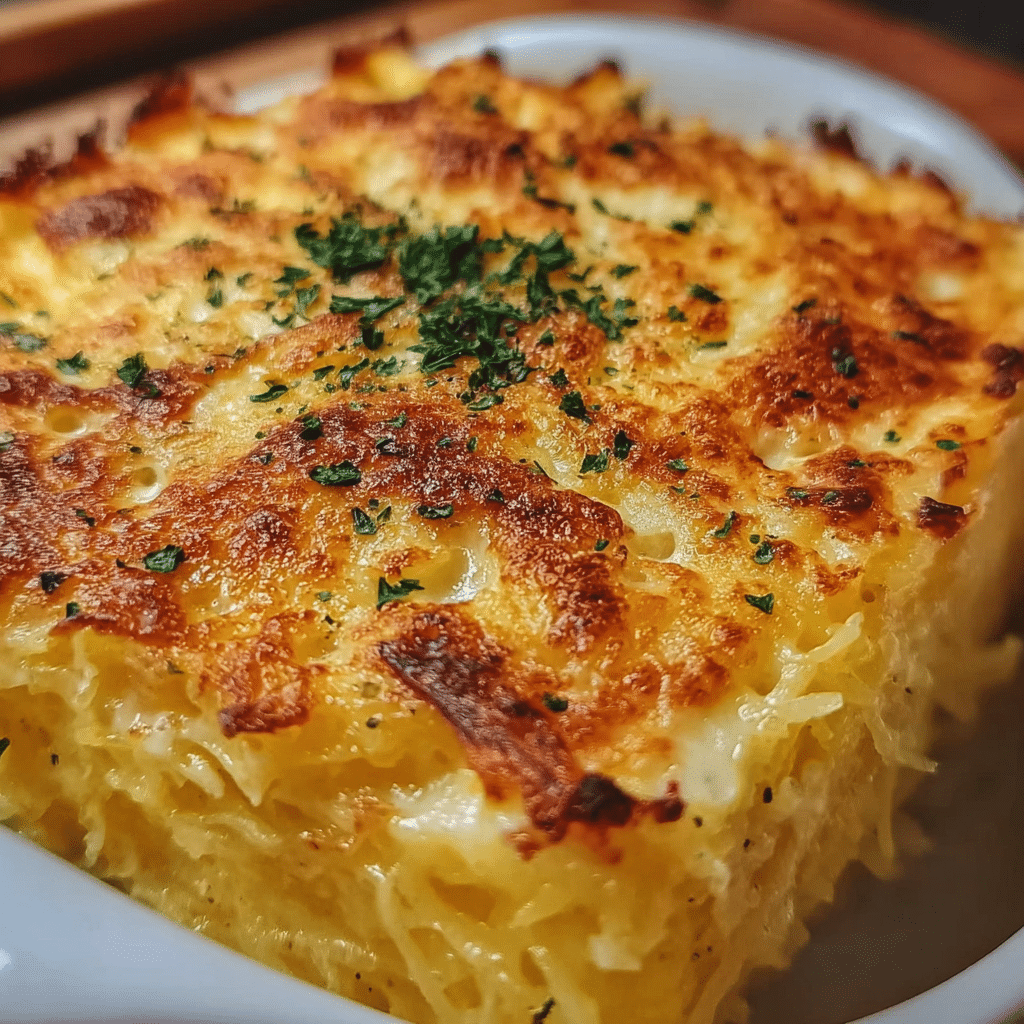
Let’s not forget about presentation! When it comes to serving a dish like healthy spaghetti squash au gratin, the visual appeal can make a big impact. Consider using a beautiful shallow baking dish that showcases the gratin’s golden-brown crust. You can also garnish with fresh herbs like parsley or basil for a pop of color. When plating, use a large spoon to serve generous portions, allowing the creamy, cheesy top to shine.
Pairing your dish with the right beverage can also enhance the dining experience. A crisp white wine, such as a Sauvignon Blanc, complements the earthy flavors of the squash beautifully. If you’re looking for a non-alcoholic option, a sparkling water with a slice of lemon can refresh the palate between bites.
Lastly, if you are looking to prepare your healthy spaghetti squash au gratin ahead of time, it’s easy! You can roast the squash and prepare the cheese sauce a day in advance. Simply store each component separately in the refrigerator, and when you’re ready to serve, combine and bake. This makes for a stress-free dinner party or family meal.
Creative Variations and Adaptations of healthy spaghetti squash
One of the best aspects of cooking with healthy spaghetti squash is its versatility. This dish can be modified and adapted to suit various tastes, dietary needs, and seasonal ingredients, making it a fantastic base for creativity in the kitchen.
Seasonal Variations
As the seasons change, so do the ingredients available to us. In the fall, consider adding roasted Brussels sprouts or butternut squash to your au gratin for a heartier dish. In the spring, toss in some fresh asparagus and peas for a bright, colorful twist. Summer brings a bounty of fresh herbs, tomatoes, and zucchini that can all be incorporated into your healthy spaghetti squash recipe.
Moreover, if you want to celebrate the holiday season, adding spices like nutmeg and cinnamon can create a warm, comforting flavor profile that pairs beautifully with winter vegetables.
Dietary Adaptations
For those following specific dietary lifestyles, healthy spaghetti squash is remarkably adaptable. If you’re aiming for a keto-friendly dish, opt for a lower-carb cheese like mozzarella and incorporate a creamy cauliflower sauce instead of traditional béchamel. Vegans can substitute cheese with nutritional yeast for a cheesy flavor or use a cashew cream sauce for richness. Gluten-free eaters can rest assured, as this dish naturally fits into their dietary restrictions.
When it comes to spice level adjustments, a simple way to enhance your dish is by adding crushed red pepper flakes or a splash of hot sauce to the cheese mixture for those who enjoy a bit of heat. Conversely, for those who prefer milder flavors, you can stick to aromatic herbs to provide depth without overwhelming the palate.
Creative Twists
Now, let’s explore some creative twists to give your healthy spaghetti squash au gratin a unique flair. Consider an international fusion by incorporating ingredients from different cuisines. For example, you could create a Mexican-inspired version by adding black beans, corn, and spices such as cumin and chili powder, topped with a blend of cheddar and pepper jack cheese.
If you’re feeling adventurous, try a Mediterranean twist with sun-dried tomatoes, olives, and feta cheese. The brine from the olives and the tang of the feta will add a delightful contrast to the sweet, nutty flavor of the squash.
As for leftover transformation, you have options galore! If you have any leftover healthy spaghetti squash au gratin, consider turning it into a frittata. Just whisk some eggs, mix in the leftover dish, and cook until set for a hearty breakfast. Alternatively, you can use it as a filling for stuffed peppers, adding more vegetables and protein for a complete meal.
In conclusion, the possibilities are endless with healthy spaghetti squash. Embrace the opportunity to experiment with flavors, textures, and ingredients to create a dish that not only nourishes but excites your palate!
Storage, Reheating, and Meal Prep for healthy spaghetti squash
When it comes to enjoying your delicious and healthy spaghetti squash au gratin, understanding the best methods for storage and reheating can make all the difference in maintaining its flavor and texture. As a food enthusiast who has navigated the ups and downs of meal prep, I can tell you that how you store your food can profoundly affect your culinary experience. Let’s dive into the best practices for storing, reheating, and preparing healthy spaghetti squash.
Short-term Storage
After preparing a batch of healthy spaghetti squash au gratin, it’s essential to store it properly to maintain its freshness. If you plan on enjoying your dish within a few days, the refrigerator is your best friend. Start by allowing the dish to cool to room temperature; this step is crucial as placing hot food in the refrigerator can raise the overall temperature and compromise the safety of other stored foods.
Next, transfer your healthy spaghetti squash to an airtight container. Glass containers are particularly useful because they do not absorb odors and are microwave-safe. If you’re using plastic containers, make sure they are BPA-free to avoid any health risks associated with chemicals leaching into your food. Label the container with the date so you can keep track of its freshness. Generally, healthy spaghetti squash au gratin can be stored in the refrigerator for up to three to five days.
Freezing and Long-term Storage
If you’ve made a larger batch or want to prepare meals ahead of time, freezing is a fantastic option. Healthy spaghetti squash au gratin can be frozen for up to three months without losing its quality. To freeze, first, allow the dish to cool completely. Portion it into individual servings to make it easier to thaw and reheat later. Use freezer-safe containers or heavy-duty freezer bags, ensuring you press out as much air as possible to prevent freezer burn.
When you’re ready to enjoy your frozen healthy spaghetti squash, transfer it from the freezer to the refrigerator a day before you plan to eat it. This gradual thawing process helps maintain the texture of the dish. If you’re in a hurry, you can also thaw it in the microwave using the defrost setting, but keep an eye on it to prevent cooking. Once thawed, you can reheat it right away or store it in the refrigerator for a day or two before eating.
Reheating Best Practices
To ensure your healthy spaghetti squash au gratin tastes just as good as the day you made it, reheating properly is key. The oven is the best method for reheating casseroles, including your healthy spaghetti squash. Preheat your oven to 350°F (175°C), cover the dish with aluminum foil to prevent it from drying out, and heat for about 20-30 minutes. Check the internal temperature to ensure it reaches at least 165°F (74°C) for safe consumption.
If you’re short on time, the microwave is a quick alternative. Place your portion in a microwave-safe dish and cover it with a microwave-safe lid or a damp paper towel to help retain moisture. Heat on medium power in 30-second intervals, stirring in between, until heated through. Just be cautious not to overheat, as this can lead to a mushy texture.
Meal prep is a wonderful way to enjoy healthy spaghetti squash au gratin throughout the week. By preparing several portions in advance, you’ll have quick and nutritious meals ready to go. Consider setting aside a specific day each week for meal prep; I often find it therapeutic to spend a few hours in the kitchen, chopping, mixing, and prepping. This practice not only saves time during the busy week but also ensures that you always have healthy options on hand.
Food safety is paramount when it comes to storing any leftovers. Always follow the “two-hour rule” — refrigerate or freeze leftovers within two hours of cooking to prevent bacteria growth. If you’re unsure about the freshness of your healthy spaghetti squash, it’s always better to err on the side of caution and discard it.
In terms of shelf life, when stored properly in the fridge, your healthy spaghetti squash au gratin can last for several days, but be sure to check for any signs of spoilage, such as off smells or discoloration before consuming. Portioning your healthy spaghetti squash into single servings not only makes reheating easier but can help with portion control, especially if you’re mindful of your dietary goals.
In conclusion, understanding the ins and outs of storage, freezing, and reheating healthy spaghetti squash au gratin can enhance your culinary experience. With a little planning and the right techniques, you can enjoy this delicious dish multiple times a week without losing its delightful flavors and textures.
Nutritional Benefits and Health Information
Healthy spaghetti squash au gratin isn’t just a delicious dish; it’s also packed with nutritional benefits that make it a fantastic addition to any meal plan. As someone who has explored various dietary lifestyles, I’ve learned to appreciate the balance of nutrition and enjoyment in food. Let’s take a closer look at the nutritional profile of healthy spaghetti squash and how it can fit into your dietary goals.
Nutritional Profile
The star ingredient of this dish, spaghetti squash, is a low-calorie vegetable that is rich in vitamins and minerals. One cup of cooked spaghetti squash contains approximately 42 calories, making it a great alternative to traditional pasta. It’s an excellent source of dietary fiber, which promotes digestive health and can help you feel fuller for longer. This is particularly beneficial when you’re trying to manage your weight.
In addition to fiber, spaghetti squash is loaded with essential nutrients. It is a good source of vitamins A and C, both of which are powerful antioxidants that support immune function and skin health. Furthermore, it contains potassium, which is vital for maintaining healthy blood pressure levels. When you combine spaghetti squash with other ingredients in your au gratin, such as cheeses and vegetables, the nutritional value only increases.
Health Benefits
The health benefits of healthy spaghetti squash au gratin extend beyond just its calorie content. For example, the dish often includes ingredients like garlic and onions, both of which have been shown to possess anti-inflammatory properties. Garlic contains allicin, which has been linked to reduced risk of chronic diseases, while onions are rich in quercetin, an antioxidant that can help combat oxidative stress.
Moreover, if you incorporate other vegetables into your healthy spaghetti squash au gratin, such as spinach or kale, you’ll be adding even more vitamins and minerals. Leafy greens are known for their high nutrient density and are excellent sources of iron, calcium, and magnesium. This combination not only enhances the flavor of the dish but also boosts its overall health benefits.
Dietary Considerations
When it comes to dietary considerations, healthy spaghetti squash au gratin is quite versatile. It can be easily adapted to fit various dietary needs, including gluten-free and vegetarian diets. Since spaghetti squash serves as a low-carb alternative to pasta, it’s also suitable for those following a ketogenic or low-carb lifestyle.
If you need to make it dairy-free, consider using plant-based cheeses or nutritional yeast to achieve that creamy texture and cheesy flavor without the lactose. Additionally, for those watching their sodium intake, opt for low-sodium vegetable broth and cheeses to keep the dish healthy and satisfying.
Comparatively, healthy spaghetti squash au gratin is a far better option than traditional macaroni and cheese, which is often laden with calories, unhealthy fats, and processed ingredients. Not only does spaghetti squash provide fewer calories, but it also offers a wealth of nutrients that macaroni lacks. This dish allows you to indulge in comfort food while still adhering to a health-conscious lifestyle.
As you can see, healthy spaghetti squash au gratin is more than just a tasty meal; it’s a powerhouse of nutrition that can support your health and wellness goals. Whether you’re looking to lose weight, maintain a balanced diet, or simply enjoy delicious food, this dish fits the bill. Its flexibility and nutritional benefits make it a perfect candidate for meal prep, ensuring you have a healthy option ready to go at any time.
In conclusion, the nutritional benefits of healthy spaghetti squash are hard to ignore. With its low-calorie count, high fiber content, and abundance of vitamins and minerals, it’s a fantastic choice for anyone looking to eat healthier without sacrificing flavor. Incorporating this dish into your meal plan can help you achieve your health goals while enjoying every bite.
Frequently Asked Questions About Healthy Spaghetti Squash
Healthy spaghetti squash au gratin vegetarian
To prepare a healthy vegetarian spaghetti squash au gratin, start by roasting the spaghetti squash until tender, which usually takes about 40 minutes at 400°F. Once cooked, scrape out the flesh and set it aside. For the au gratin layer, sauté onions, garlic, and your choice of vegetables like spinach or mushrooms, then mix in the spaghetti squash. To create a creamy texture without heavy cream, consider using a blend of low-fat milk and nutritional yeast for a cheesy flavor. Top it with a sprinkle of whole-grain breadcrumbs mixed with herbs for a crunchy finish and bake until golden brown.
Healthy spaghetti squash au gratin with cream cheese
For a rich and creamy spaghetti squash au gratin using cream cheese, begin by baking the squash until it’s fork-tender. After scraping out the strands, mix the spaghetti squash with softened cream cheese, a splash of almond milk, and seasonings like garlic powder and black pepper for added flavor. Spread this mixture into a baking dish and top with a sprinkle of parmesan or a light layer of mozzarella cheese for extra creaminess. Bake at 375°F until bubbly and golden on top, about 20-25 minutes. This dish can be a comforting yet healthy alternative to traditional gratin recipes.
Spaghetti squash healthy
Spaghetti squash is a nutritious alternative to traditional pasta, offering a low-calorie option that’s rich in vitamins and minerals. It is high in fiber, which aids digestion and helps keep you full longer, making it a great choice for weight management. Each serving contains antioxidants like beta-carotene and is a good source of vitamin C, which supports immune health. To maximize its benefits, incorporate a variety of vegetables and lean proteins in your spaghetti squash dishes, enhancing both flavor and nutrition.
Spaghetti squash cottage cheese casserole
Creating a spaghetti squash cottage cheese casserole is a delicious way to incorporate protein into your meal. Start by roasting the spaghetti squash and then mixing the scraped strands with cottage cheese, an egg for binding, and your favorite sautéed vegetables. Season with herbs like basil or oregano for added flavor and pour the mixture into a greased baking dish. Bake at 350°F for about 30 minutes until it’s set and slightly golden on top. This casserole is not only filling but also offers a healthy twist on classic comfort food.
Spaghetti squash Mexican casserole
A spaghetti squash Mexican casserole is a flavorful and healthy dish that can be prepared easily. After roasting the spaghetti squash, combine the strands with black beans, corn, diced tomatoes, and taco seasoning for a zesty filling. You can also add lean ground turkey or shredded chicken for extra protein. Place the mixture in a casserole dish, sprinkle with cheese (like cheddar or pepper jack), and bake until heated through and the cheese is bubbly. This dish is great for meal prep and packed with nutrients.
Spaghetti squash and potato Gratin
To make a spaghetti squash and potato gratin, start by thinly slicing both the spaghetti squash and potatoes for even cooking. Layer them in a baking dish, alternating between the two, and add in your favorite cheese sauce or a mixture of milk, garlic, and herbs to keep it lighter. Bake covered at 375°F for about 30 minutes, then uncover and bake for an additional 15-20 minutes until the top is golden and crispy. This dish combines the heartiness of potatoes with the unique texture of spaghetti squash for a comforting yet nutritious meal.
Spaghetti squash nutmeg
Nutmeg can be a delightful addition to spaghetti squash dishes, adding warmth and depth to the flavor profile. Consider incorporating a pinch of nutmeg when preparing creamy sauces or when mixing the squash with cheeses, as it complements dairy well. It can also enhance savory dishes that include spices and herbs, providing a cozy, aromatic touch. Just be cautious not to overdo it, as nutmeg is potent; a small dash is often enough to elevate your dish without overpowering it.
Is spaghetti squash sweet
Spaghetti squash has a subtle, mildly sweet flavor, especially when cooked. While it is not as sweet as some winter squashes like butternut or acorn, its natural sweetness shines through when roasted, making it a versatile base for both savory and slightly sweet dishes. When paired with ingredients like garlic, olive oil, or herbs, the sweetness is balanced, enhancing the overall flavor. To highlight its sweetness, consider serving it with toppings like sautéed onions or a light drizzle of maple syrup in certain recipes.