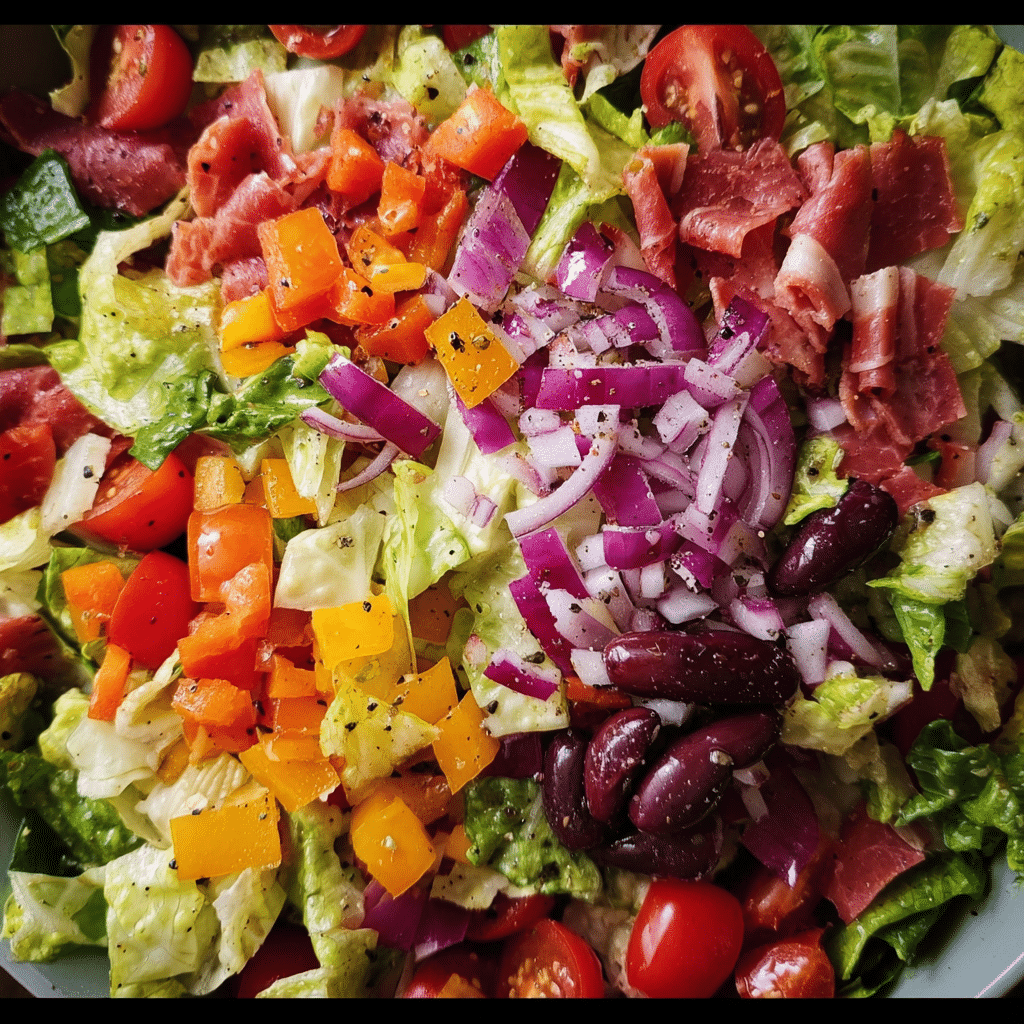
Italian chopped salad is more than just a combination of fresh ingredients tossed together; it’s a celebration of flavors, colors, and the very essence of Italian culinary tradition. I vividly remember the first time I tasted this vibrant salad. It was a sun-drenched summer afternoon, and my grandmother had invited the whole family over for a gathering in her lush backyard. As we set the table, the tantalizing aroma of grilled vegetables wafted through the air, mingling with the laughter and chatter of my cousins. But the star of the meal was undoubtedly her famous Italian chopped salad. Each ingredient was carefully chopped, creating a mosaic of colors that beckoned everyone to dig in. In that moment, I fell in love—not just with the salad itself, but with the stories and memories that it evoked.
The Story Behind This Recipe
That day, I discovered that the Italian chopped salad is truly a dish of love and heritage. My grandmother, born and raised in a small village in Italy, often spoke of how meals were a sacred time for families to come together. She would tell us how her mother used to make a similar salad using whatever fresh produce was available from their garden. As a child, I was fascinated by her tales, and I soon learned that the salad was more than just a dish; it was a reflection of their culture, a way to honor the earth’s bounty and the labor that went into growing it.
What makes this recipe special is its adaptability. While the traditional version features ingredients like tomatoes, cucumbers, olives, and salami, you can easily customize it based on what you have on hand. This flexibility allows busy families to create a nourishing meal without the stress of complicated recipes. Whether it’s a hot summer day or a chilly autumn evening, the Italian chopped salad can be enjoyed year-round, making it a staple in our household.
Why You’ll Love This Dish
For busy families, this salad is a lifesaver. It’s quick to prepare, and the ingredients can be prepped in advance, allowing for a stress-free mealtime. Often, I’ll set aside some time on Sunday to chop vegetables and prepare the dressing, which means when the week rolls around, dinner becomes a matter of tossing everything together. This salad is not only nutritious but also visually stunning, which is bound to please everyone at the table. The crispness of the vegetables combined with the savory notes of the dressing creates a symphony of flavors that dance on your palate.
Seasonally, the Italian chopped salad shines brightest in the warmer months, when fresh vegetables are abundant. However, I’ve found that it can be a comforting side dish even in winter by incorporating roasted vegetables or using pickled ingredients for an added zing. This versatility adds to its charm and makes it suitable for any season or occasion.
Every time I prepare this salad, I feel a deep emotional connection to my roots. It reminds me of family gatherings, the joy of sharing meals, and the love that goes into cooking. It’s a dish that tells a story—a story of tradition, love, and community. In this guide, you’ll learn the ins and outs of preparing an authentic Italian chopped salad, including tips on ingredient selection, preparation methods, and even some variations that can make it your own. Join me on this culinary journey, and let’s discover why this delightful dish deserves a place on your dining table!
The Rich History and Cultural Significance of italian chopped salad
The Italian chopped salad is not just a delightful mix of vegetables; it is a dish rich in history and cultural significance. Its origins can be traced back to the various regions of Italy, where fresh, seasonal ingredients have always been a hallmark of Italian cuisine. Traditionally, this salad is known as “Insalata Tricolore,” which reflects the colors of the Italian flag—green, white, and red. These colors are represented by leafy greens, creamy mozzarella, and ripe tomatoes, respectively.
Origins and History
Historically, the concept of a chopped salad in Italy dates back centuries, where families would use leftovers from previous meals—such as meats, cheeses, and vegetables—to create a new dish. This practice was not only economical but also a way to minimize food waste. The Italian chopped salad evolved as a way to celebrate the flavors of the Mediterranean, with each region adding its own twist. For instance, in the southern regions of Italy, you might find the inclusion of capers and anchovies, while northern regions may lean towards the use of cheeses and nuts.
As Italian immigrants made their way to America, they brought with them their culinary traditions. The American version of the Italian chopped salad began to take shape in the early 20th century, especially in cities like New York and Chicago, where Italian-American communities flourished. Restaurants would create their own interpretations, often adding ingredients like pepperoncini, chickpeas, or even pasta to cater to local tastes. This evolution reflects not only the adaptability of the dish but also the melding of cultures that is so characteristic of American cuisine.
Cultural Significance
In Italian culture, food is synonymous with family and celebration. The Italian chopped salad is often served at gatherings, family reunions, and festive occasions, embodying the spirit of sharing and togetherness. It is a dish that brings people together around the table, encouraging conversation and laughter. In many Italian households, making this salad is a communal activity, where family members come together to chop, mix, and taste. This collective effort deepens the connections between family members and enhances the emotional experience of sharing a meal.
Additionally, the salad is often prepared during special occasions, such as weddings or holidays, symbolizing the abundance and prosperity of the upcoming year. In these contexts, it serves as a reminder of the importance of community and the joy of gathering with loved ones.
Nutritional Benefits
Beyond its cultural significance, the Italian chopped salad is also packed with nutritional benefits. It’s a fantastic way to incorporate a variety of vegetables into your diet, providing essential vitamins and minerals. The primary ingredients—such as tomatoes, cucumbers, and bell peppers—are rich in antioxidants, which can help reduce inflammation and promote overall health. Additionally, the inclusion of proteins like salami or chickpeas helps to create a balanced meal that can keep you feeling full longer.
The healthy fats found in olives and olive oil contribute to heart health, while herbs like basil and parsley provide flavor and additional health benefits. This salad is not just a feast for the eyes; it’s also a nutritious option that supports a healthy lifestyle.
In conclusion, the Italian chopped salad is a dish that is steeped in history and culture. It reflects the principles of Italian cooking: simplicity, freshness, and community. By preparing this salad, you are not only enjoying a delicious meal but also participating in a tradition that has been passed down through generations. This vibrant dish is sure to become a cherished recipe in your household, just as it has in mine.
Essential Ingredients for Perfect italian chopped salad
When it comes to making the perfect italian chopped salad, the ingredients you choose can make all the difference. The beauty of this dish lies not only in its vibrant colors and textures but also in the quality and freshness of its components. In this section, we’ll dive deep into the essential ingredients that come together to create this delightful salad, understanding their roles, how to select them, and tips for substitutions and storage.
Essential Ingredients
- 1 lemon, juiced – This tart citrus fruit adds a refreshing brightness to the salad, balancing out the richness of the other ingredients.
- 1 tablespoon Dijon mustard – Adds a tangy depth to the dressing, enhancing the overall flavor profile of the italian chopped salad.
- 2 tablespoons red wine vinegar – A staple in Italian cooking, this vinegar provides acidity and complements the salad’s other flavors.
- 2 teaspoons sugar – A touch of sweetness helps to balance the tanginess of the vinegar and the saltiness of the salami.
- 1 teaspoon dried oregano – This classic Italian herb adds a fragrant, earthy note that ties the salad together.
- 1/2 cup olive oil – A good quality extra virgin olive oil is essential for the dressing, imparting richness and flavor.
- 1/4 teaspoon kosher salt – Enhances all the flavors in the salad. Kosher salt is preferred for its texture and ease of use.
- 1/4 teaspoon black pepper – Freshly ground black pepper adds a subtle heat and depth to the dressing.
- 2 heads romaine lettuce, chopped – The crispness of romaine serves as the foundation of the salad, providing crunch and a refreshing flavor.
- 1/2 red onion, chopped – Adds a sharp bite and a pop of color, balancing the salad’s flavors.
- 1 (15-ounce) can chickpeas, rinsed and drained – These legumes add protein and a creamy texture, making the salad more filling and nutritious.
- 1 pint cherry tomatoes, halved – Sweet and juicy, they bring vibrant color and freshness to the dish.
- 4 ounces Genoa salami, chopped – This cured meat adds a savory, salty element that is quintessential to an Italian salad.
- 8 ounces fresh mozzarella, chopped – Creamy and mild, mozzarella brings a delightful texture and richness to the salad.
- 1/2 cup sliced pepperoncini – These tangy peppers offer a zesty kick that contrasts beautifully with the other rich ingredients.
- 1/4 cup sliced roasted red peppers – Their sweetness and smoky flavor enhance the overall complexity of the salad.
- 10 fresh basil leaves, chopped – No Italian dish is complete without fresh basil, which adds a fragrant aroma and a burst of freshness.
Italian Chopped Salad
Ingredients
For the Italian vinaigrette
- 1 lemon, juiced
- 1 tablespoon Dijon mustard
- 2 tablespoons red wine vinegar
- 2 teaspoons sugar
- 1 teaspoon dried oregano
- 1/2 cup olive oil
- 1/4 teaspoon kosher salt
- 1/4 teaspoon black pepper
For the salad
- 2 heads romaine lettuce, chopped
- 1/2 red onion, chopped
- 1 (15-ounce) can chickpeas, rinsed and drained
- 1 pint cherry tomatoes, halved
- 4 ounces genoa salami, chopped
- 8 ounces fresh mozzarella, chopped
- 1/2 cup sliced pepperoncini
- 1/4 cup sliced roasted red peppers
- 10 fresh basil leaves, chopped
Instructions
In a jar with a lid add the lemon juice, mustard, vinegar, sugar, oregano, olive oil, kosher, salt, and black pepper. Add the lid and shake for 10 seconds until all of the ingredients are thoroughly combined. Taste and adjust seasonings to your liking.
Shopping Tips
When shopping for ingredients for your italian chopped salad, quality should be your top priority. Here are some tips:
- Lemon: Look for lemons that are heavy for their size and have a bright, smooth skin. This indicates juiciness and freshness.
- Mustard: Choose a Dijon mustard that has a robust flavor and minimal additives for the best results.
- Vinegar: Opt for high-quality red wine vinegar, preferably organic, for a more complex flavor.
- Olive oil: Select extra virgin olive oil for its superior taste and health benefits. Look for dark bottles to ensure freshness and check for harvest dates for the best quality.
- Greens: Fresh romaine lettuce should be crisp, vibrant, and free of browning edges. Choose heads that feel heavy and firm.
- Meats and cheeses: Look for salami that has a rich color and a pleasant aroma. For mozzarella, fresh is best; seek out balls in brine for optimal texture.
- Vegetables: Choose cherry tomatoes that are plump and firm, with a deep color. For the red onion, go for ones that feel heavy and have a smooth, unblemished skin.
Substitutions and Alternatives
While the ingredients listed are traditional, there are numerous substitutions you can make to accommodate dietary restrictions or personal preferences:
- Lettuce: If you prefer a different base, consider using kale or spinach for a nutrient boost.
- Chickpeas: For a low-carb option, you could use diced avocado or cooked quinoa instead.
- Salami: If you’re looking for a vegetarian alternative, try marinated artichoke hearts or olives.
- Cheese: For a dairy-free option, use a plant-based cheese or skip it entirely.
- Vegan version: Omit the salami and mozzarella, and consider adding nuts for protein.
Storing your ingredients properly is also crucial for maintaining freshness:

- Lettuce: Store in a perforated bag in the fridge to keep it crisp.
- Vegetables: Keep tomatoes at room temperature until ripe, then refrigerate if necessary.
- Cheeses: Store mozzarella in its liquid, and salami should be kept in the fridge sealed tightly.
Finally, consider the cost. Buying ingredients in bulk can save you money, especially with pantry staples like olive oil, vinegar, and canned goods. Organic options are great but can be pricier, so weigh the importance of organic vs. conventional based on your budget and preferences.
With these ingredients and tips, you’re well on your way to crafting a delicious italian chopped salad that not only pleases the palate but also offers a plethora of nutrients. Let’s move on to the preparation and cooking methods that will bring your salad to life!
Detailed Step-by-Step italian chopped salad Cooking Instructions
Crafting the ultimate italian chopped salad is both an art and a science. With the right ingredients and a step-by-step approach, you can create a dish that’s not just a salad but a celebration of flavors and textures. In this section, we’ll go through the preparation and cooking process in detail, ensuring that you have all the tools and knowledge to achieve the perfect salad.
Preparation Steps
- Gather Your Ingredients: Start by assembling all your ingredients. This not only helps in organization but also makes the process smoother. Make sure everything is fresh and ready to use.
- Wash and Prep Your Vegetables: Rinse the romaine lettuce thoroughly under cold water to remove any grit or dirt. Dry it completely using a salad spinner or by patting it down with kitchen towels. Chop the lettuce into bite-sized pieces and place it in a large mixing bowl.
- Chop the Red Onion: Peel and chop the red onion into small, even pieces. If you’re sensitive to the strong flavor, soak the chopped onion in cold water for about 10 minutes to mellow its taste.
- Prepare the Tomatoes and Chickpeas: Halve the cherry tomatoes and rinse the chickpeas in a colander under cold water. Make sure to drain them well to avoid excess moisture in the salad.
- Chop the Meats and Cheese: Dice the Genoa salami and fresh mozzarella into bite-sized pieces. This ensures that each forkful of your italian chopped salad gets a bit of everything!
- Slice the Peppers: Slice the roasted red peppers and pepperoncini into strips. You can adjust the quantity based on your preference for spice and flavor.
- Chop the Fresh Herbs: Lastly, chop the fresh basil leaves. The aroma of fresh basil will elevate the salad to another level, so don’t skip this step!
Cooking Process
- Make the Dressing: In a small bowl, whisk together the lemon juice, Dijon mustard, red wine vinegar, sugar, dried oregano, kosher salt, and black pepper. Once combined, slowly drizzle in the olive oil while continuing to whisk. This emulsifies the dressing, creating a creamy texture that will coat your salad beautifully.
- Taste and Adjust: Always taste your dressing before adding it to the salad. You may want to adjust the seasoning with a little more salt, pepper, or sugar depending on your taste.
- Combine Ingredients: In the large mixing bowl with the chopped romaine, add the red onion, chickpeas, cherry tomatoes, salami, mozzarella, pepperoncini, roasted red peppers, and basil. Toss gently to combine without bruising the lettuce.
- Dress the Salad: Pour the dressing over the salad mixture and toss gently until all ingredients are evenly coated. Be careful not to overmix, as this can cause the lettuce to wilt.
- Let it Sit: For the best flavor, let the salad sit for about 10-15 minutes before serving. This resting period allows the flavors to meld together and the lettuce to absorb some of the dressing.
Final Assembly
- Plate the Salad: Using tongs or a large spoon, transfer the salad to a serving platter or individual plates. This not only makes for an appealing presentation but also keeps the salad looking fresh.
- Garnish: If desired, garnish with a few extra basil leaves on top or a sprinkle of freshly grated Parmesan cheese for added flavor.
- Serve: Present your italian chopped salad alongside grilled meats, crusty bread, or as a standalone dish. It’s perfect for any occasion, from a casual family dinner to a festive gathering.
- Store Leftovers: If you have leftovers, store them in an airtight container in the refrigerator. Keep the dressing separate if possible to maintain the crispness of the lettuce. Consume within 24 hours for the best taste.
Cooking this italian chopped salad should take about 30 minutes from start to finish, making it an ideal dish for a weeknight dinner or meal prep. Remember, the key to a delicious salad lies in the freshness of your ingredients and the balance of flavors in your dressing. Enjoy the vibrant colors and tastes as you savor each bite of this delightful dish!
Professional Tips and Techniques for italian chopped salad
When it comes to preparing an italian chopped salad, there are a multitude of techniques and tips that can elevate your dish from simple to sensational. This salad, with its vibrant colors and fresh ingredients, is not just a side dish; it’s a celebration of flavors and textures. Let’s dive into some professional tips and insider secrets that will help you master this Italian classic.
Professional Techniques
To create a truly remarkable italian chopped salad, attention to detail is key. Start with the freshest ingredients you can find. Visit local farmers’ markets or grocery stores that prioritize fresh produce. When chopping your salad ingredients, use a sharp knife to ensure clean cuts. This not only improves the salad’s appearance but also helps maintain the integrity of the vegetables, allowing them to hold their crunch longer.
Another insider secret is to chop your ingredients uniformly. This not only makes for a more aesthetically pleasing dish but also ensures that each bite is balanced in flavor and texture. Aim for a combination of crunchy vegetables like cucumbers, bell peppers, and radishes, paired with softer elements such as ripe tomatoes and creamy cheese. The contrast will enhance the overall eating experience.
For dressing your italian chopped salad, a homemade vinaigrette is a game-changer. Combine high-quality olive oil, balsamic vinegar, a touch of Dijon mustard, and a sprinkle of salt and pepper. Emulsify the dressing by whisking it vigorously or shaking it in a jar. This will not only add flavor but also allow the colors and textures of your chopped salad to shine.
Troubleshooting Guide
Every cook encounters challenges in the kitchen, and preparing an italian chopped salad is no different. One common issue is wilted or soggy greens. To prevent this, wash your greens thoroughly and dry them using a salad spinner. If you are making the salad in advance, consider adding the dressing just before serving to keep everything crisp.
Another common problem is imbalanced flavors. If your salad tastes flat, try adding a splash of lemon juice or an extra pinch of salt to brighten the flavors. Conversely, if it’s too salty, adding more vegetables or some diced avocado can help mellow it out.
Presentation Tips
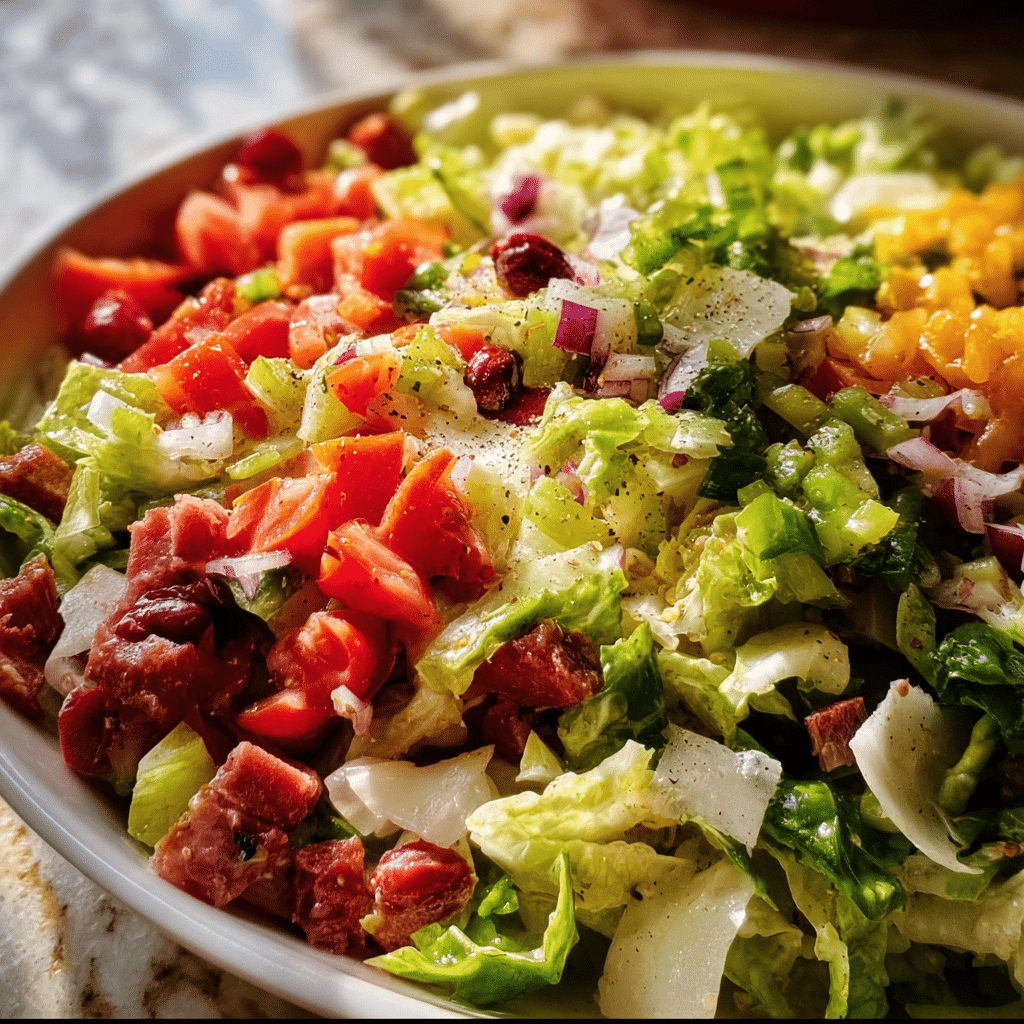
When it comes to the italian chopped salad, presentation is everything. Use a large, shallow serving bowl to display the vibrant colors of your ingredients. A beautiful salad is often a feast for the eyes first, so consider layering your ingredients instead of mixing them all at once. This not only looks impressive but also allows guests to see the variety of textures and colors in the salad.
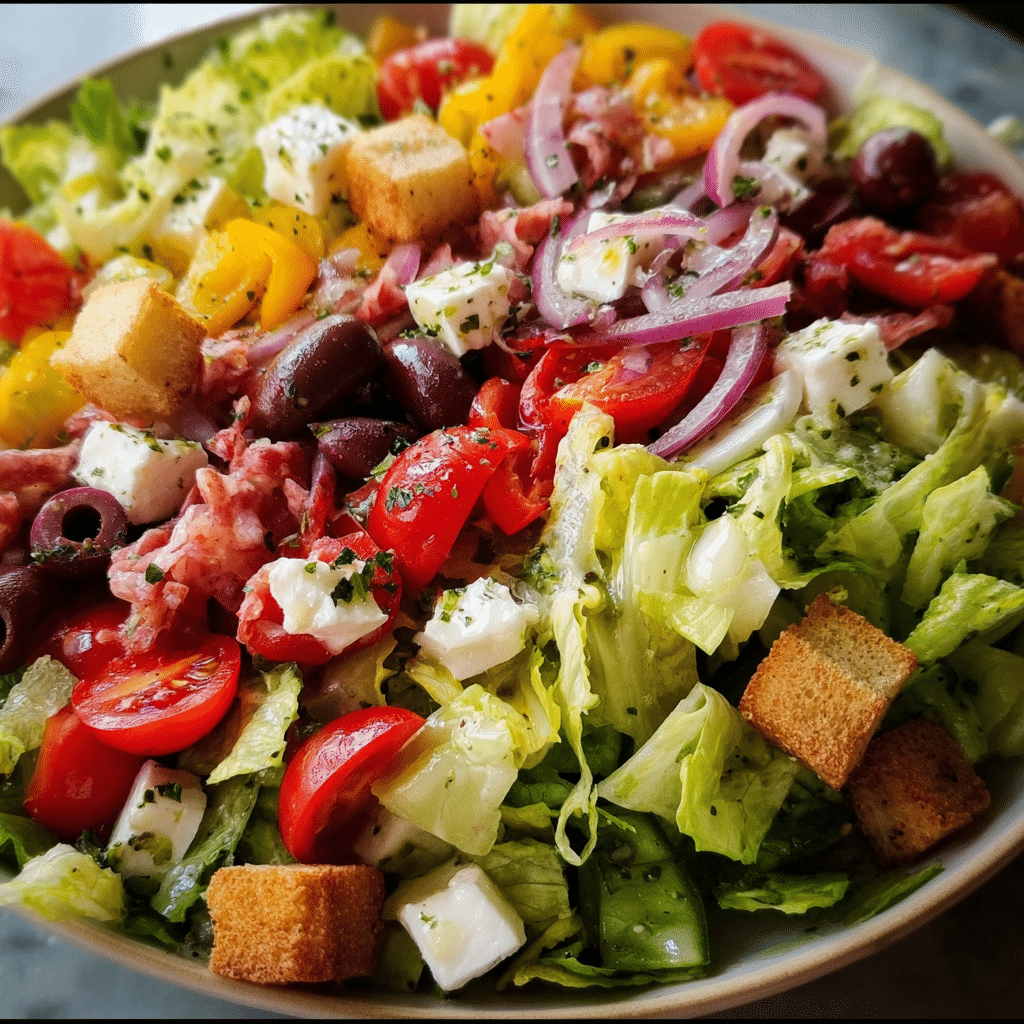
To elevate your presentation, consider garnishing with fresh herbs like basil or parsley. A sprinkle of freshly grated Parmesan cheese or a few olives on top can add a finishing touch that enhances both flavor and visual appeal. For a touch of elegance, serve individual portions in small glass bowls or jars, allowing guests to see the layers of your italian chopped salad.
Make-Ahead and Meal Prep Strategies
One of the best aspects of an italian chopped salad is that it lends itself well to meal prep. You can prepare individual components ahead of time. Chop your vegetables, store them in airtight containers in the fridge, and mix them before serving. This way, you can enjoy fresh salads throughout the week with minimal effort.
Also, consider creating a salad bar at home. Prepare a variety of chopped vegetables, proteins, and toppings, and let each family member build their own salad. This not only caters to individual preferences but also makes mealtime a fun and interactive experience.
Wine and Beverage Pairings
Pairing beverages with your italian chopped salad can enhance the dining experience. A crisp white wine, such as Pinot Grigio or Verdicchio, complements the freshness of the salad perfectly. If you prefer something non-alcoholic, consider sparkling water with a slice of lemon or a homemade iced tea infused with herbs like mint or basil.
For those who enjoy a bit of fizz, a light Italian Prosecco can also be an excellent pairing, as its bubbles and acidity can cut through the richness of any added cheeses or dressings. The key is to choose something that refreshes the palate and complements the bright flavors of the italian chopped salad.
In conclusion, mastering the art of the italian chopped salad requires a blend of technique, creativity, and a personal touch. With these tips, you can confidently tackle any salad-making challenge and impress your family and friends with a dish that’s as delicious as it is beautiful.
Creative Variations and Adaptations of italian chopped salad
The beauty of an italian chopped salad lies in its versatility. It serves as a blank canvas waiting for your creativity and personal taste to shine through. Let’s explore some exciting variations and adaptations that can cater to different palates, dietary needs, and seasonal ingredient availability.
Seasonal Variations
One of the most enjoyable aspects of cooking is adapting recipes to the seasons. In the summer months, consider adding juicy peaches or nectarines to your italian chopped salad. Their sweetness pairs beautifully with the savory elements of the salad. Alternatively, in the fall, roasted butternut squash can add a warm, comforting touch, turning your salad into a hearty meal.
Spring brings a bounty of fresh herbs and greens. Incorporate tender asparagus, snap peas, or even radishes for a crunch that’s reminiscent of the season. In winter, consider using roasted root vegetables like carrots and beets. The warm flavors of roasted veggies can create a comforting, yet refreshing salad that is perfect for colder months.
Dietary Adaptations
As our understanding of diet evolves, so too does our approach to cooking. The italian chopped salad is easily adaptable for various dietary preferences. For those following a keto diet, focus on low-carb vegetables like cucumbers, bell peppers, and leafy greens. You can also add high-fat ingredients like avocados and olives to keep the meal satisfying.
For vegan options, simply omit cheese and incorporate additional plant-based proteins, such as chickpeas or lentils. These not only enhance the nutritional profile but also add texture. Gluten-free eaters can enjoy the salad as is, but for a heartier meal, consider adding quinoa or farro, both of which are gluten-free grains.
Creative Twists
Don’t be afraid to think outside the box when it comes to your italian chopped salad. Consider adding international twists, such as incorporating Asian-inspired ingredients. Swap out the traditional vinaigrette for a sesame-ginger dressing, and include ingredients like edamame, shredded carrots, and sesame seeds for a delightful fusion salad.
Another creative idea is to transform your salad into a wrap. Use large lettuce leaves to wrap the chopped salad ingredients for a fun, hand-held meal. This is especially great for picnics or lunch on the go. You can also experiment with different cooking methods; consider grilling your vegetables for an added smoky flavor. Grilled corn, zucchini, or even a protein like chicken can add depth to your italian chopped salad.
Leftover transformations can also breathe new life into your salad. If you have leftover salad that’s beginning to wilt, consider turning it into a delicious pasta dish. Simply sauté the leftover salad ingredients with garlic and olive oil, then toss with cooked pasta, a sprinkle of cheese, and a dash of your favorite herbs.
In summary, the italian chopped salad is a fantastic dish that can easily be modified to suit your taste preferences and dietary needs. With a little creativity and an understanding of seasonal ingredients, you can create an endless variety of salads that are not only nutritious but also exciting and delicious!
Storage, Reheating, and Meal Prep for italian chopped salad
When it comes to enjoying a fresh and vibrant Italian chopped salad, understanding how to properly store it can make all the difference in maintaining its deliciousness and texture. Whether you’re preparing it for a meal prep session or simply have some leftovers, knowing the best practices for storage will ensure that your salad remains fresh and tasty.
Short-term Storage
For short-term storage of your Italian chopped salad, the refrigerator is your best friend. After preparing your salad, allow it to cool to room temperature, especially if you’ve included any warm ingredients like grilled chicken or roasted vegetables. Once cooled, transfer the salad into an airtight container. Glass containers are preferable because they do not retain odors and are easy to clean. However, BPA-free plastic containers work well too.
When storing your salad, it’s important to keep the dressing separate until you’re ready to serve. This prevents the salad from becoming soggy and losing its crispness. You can store the dressing in a small jar or a separate container. If you’ve already mixed the dressing in, try to eat the salad within 24 hours for the best quality.
In terms of shelf life, an un-dressed Italian chopped salad can typically last about 3 to 5 days in the refrigerator. However, if you notice any wilted greens or mushy vegetables, it’s best to discard the salad. Freshness is key, and while a little wilted lettuce might not harm you, it certainly won’t be appetizing!
Freezing and Long-term Storage
Freezing an Italian chopped salad is not usually recommended, particularly because many of the vegetables lose their texture and flavor once frozen. Ingredients like lettuce, cucumbers, and tomatoes can become mushy after thawing. However, if you find yourself with a large batch that you can’t finish, consider freezing the salad without the dressing and certain ingredients. For instance, you can freeze ingredients like bell peppers, carrots, and cooked proteins.
To freeze, chop the vegetables, and place them in a freezer-safe bag, removing as much air as possible. Label the bag with the date to ensure you use it within a few months. When you’re ready to enjoy the salad, simply transfer the frozen components to the refrigerator to thaw overnight before reassembling your salad with fresh ingredients and dressing.
Reheating Best Practices
If you’ve cooked any components of your Italian chopped salad, like grilled chicken or roasted vegetables, reheating them properly is essential to maintain quality. The best method for reheating is to use an oven or stovetop. For meats, place them in an oven preheated to 350°F (175°C) for about 10-15 minutes, or until heated through. For vegetables, a quick sauté in a pan with a little olive oil can help maintain their flavor and texture.
Keep in mind that you should never microwave your salad as a whole; this can lead to uneven heating and can make the greens wilt. Instead, heat only the components that require it, and serve them atop your fresh salad base to keep everything crisp and enjoyable.
Meal prepping can also be a great way to enjoy Italian chopped salad throughout the week. Consider preparing the salad in bulk, but store each component separately. For example, you can portion out the greens, chopped veggies, and proteins into different containers. When it’s time to eat, simply assemble your salad, add your desired dressing, and enjoy a fresh, homemade meal in minutes.
Food safety is paramount when it comes to salad storage. Always ensure your ingredients are fresh before preparation, and wash your produce thoroughly. Store your salad in the refrigerator as soon as possible to avoid any bacterial growth that can occur at room temperature. As a general rule, leftovers should be consumed within three days to ensure the best taste and safety.
In conclusion, whether you’re making an Italian chopped salad for a family gathering or meal prepping for the week, understanding the storage methods will help you savor every bite. From short-term refrigeration to careful considerations about freezing, following these guidelines will keep your salads fresh and delicious.
Nutritional Benefits and Health Information
The Italian chopped salad is not only a feast for the eyes but also a nutritional powerhouse. Packed with vibrant vegetables, healthy fats, and protein options, this salad can serve as a hearty meal or a refreshing side dish. Understanding the nutritional profile of the ingredients can help you appreciate the health benefits this salad brings to your table.
Nutritional Profile
At its core, an Italian chopped salad typically includes a variety of ingredients such as romaine lettuce, cherry tomatoes, cucumbers, bell peppers, red onions, olives, and various proteins like salami or grilled chicken. The base of romaine lettuce is low in calories, with only about 15 calories per cup, making it an excellent choice for anyone looking to maintain or lose weight.
Tomatoes are not just visually appealing; they bring significant health benefits as well. They are rich in vitamin C, potassium, and lycopene, an antioxidant known for its heart-health benefits. Cucumbers are hydrating and low in calories, providing a refreshing crunch to the salad, while bell peppers add color and are an excellent source of vitamins A and C. The inclusion of olives adds healthy fats to the mix, and if you choose to add cheese, the protein content increases, making the salad more filling.
Health Benefits
One of the standout features of the Italian chopped salad is its ability to promote overall health. The variety of vegetables included means a wide range of vitamins and minerals. For instance, the high fiber content from the vegetables aids in digestion and helps maintain a healthy gut. Additionally, the antioxidants present in the tomatoes and bell peppers can combat oxidative stress in the body, potentially lowering the risk of chronic diseases.
The inclusion of healthy fats from olives or avocado also contributes to cardiovascular health. These fats help in the absorption of fat-soluble vitamins such as A, D, E, and K. Moreover, they can help improve cholesterol levels when consumed in moderation.
Dietary Considerations
For those with specific dietary restrictions, the Italian chopped salad can be easily modified. For a gluten-free version, simply ensure that all ingredients, especially any processed items like dressings or meats, are certified gluten-free. For vegans, you can replace any animal proteins with chickpeas or tofu, and skip the cheese or use a dairy-free alternative.
The calorie content can vary significantly based on the ingredients and portions used. A basic version of the salad without dressing might range from 150 to 250 calories per serving. Adding proteins and cheeses can increase this number, but it also enhances satiety, making it a more complete meal.
Vitamins and minerals are abundant in this salad, with key nutrients including vitamin K (essential for blood health), vitamin C (important for immune function), and potassium (beneficial for heart health). The combination of fiber-rich vegetables also plays a key role in maintaining a healthy weight and reducing the risk of various diseases.
In terms of modifications, consider adding nuts or seeds for extra protein and crunch, or incorporating seasonal vegetables to keep the salad fresh and interesting. You might also experiment with different dressings, such as a balsamic vinaigrette or a creamy Italian dressing, to switch up the flavors while still keeping the health benefits intact.
In conclusion, the Italian chopped salad is a delightful blend of flavors and nutrients that can fit into various dietary plans. Whether you’re looking for a light lunch, a side dish for dinner, or a way to increase your vegetable intake, this salad is versatile and nutritious. Embrace the health benefits of its key ingredients, and don’t hesitate to make it your own with your favorite toppings and dressings!
Conclusion: Mastering the Perfect italian chopped salad
Creating the perfect italian chopped salad is more than just following a recipe—it’s about understanding the techniques, ingredients, and cultural significance behind this beloved dish. Throughout this comprehensive guide, we’ve explored everything from the historical origins to modern variations, ensuring you have all the knowledge needed to make this recipe your own.
Whether you’re a beginner cook or an experienced chef, the techniques and tips we’ve shared will help you create a italian chopped salad that’s not only delicious but also meaningful. Remember that cooking is a journey of discovery, and each time you make this dish, you’ll learn something new.
We encourage you to experiment with the variations we’ve discussed, adapt the recipe to your dietary needs, and most importantly, share it with the people you love. Food has the incredible power to bring people together, and ITALIAN CHOPPED SALAD is the perfect dish to create lasting memories around your dinner table.
Don’t forget to share your cooking adventures with us on social media, and feel free to ask questions in the comments below. Happy cooking!
Share this recipe and let us know how it turned out! Tag us on social media for a chance to be featured.