Keto turkey meatballs have become a staple in my kitchen, transforming my dinners into flavorful, wholesome experiences that cater to my family’s dietary needs. The first time I made these meatballs, I was frantically searching for a quick meal that wouldn’t derail my keto lifestyle. With a busy schedule filled with work, kids, and endless errands, I needed something that could be whipped up in no time but still feel special. As I mixed the ground turkey with herbs, spices, and a creamy sauce, I sensed that I was onto something delightful.
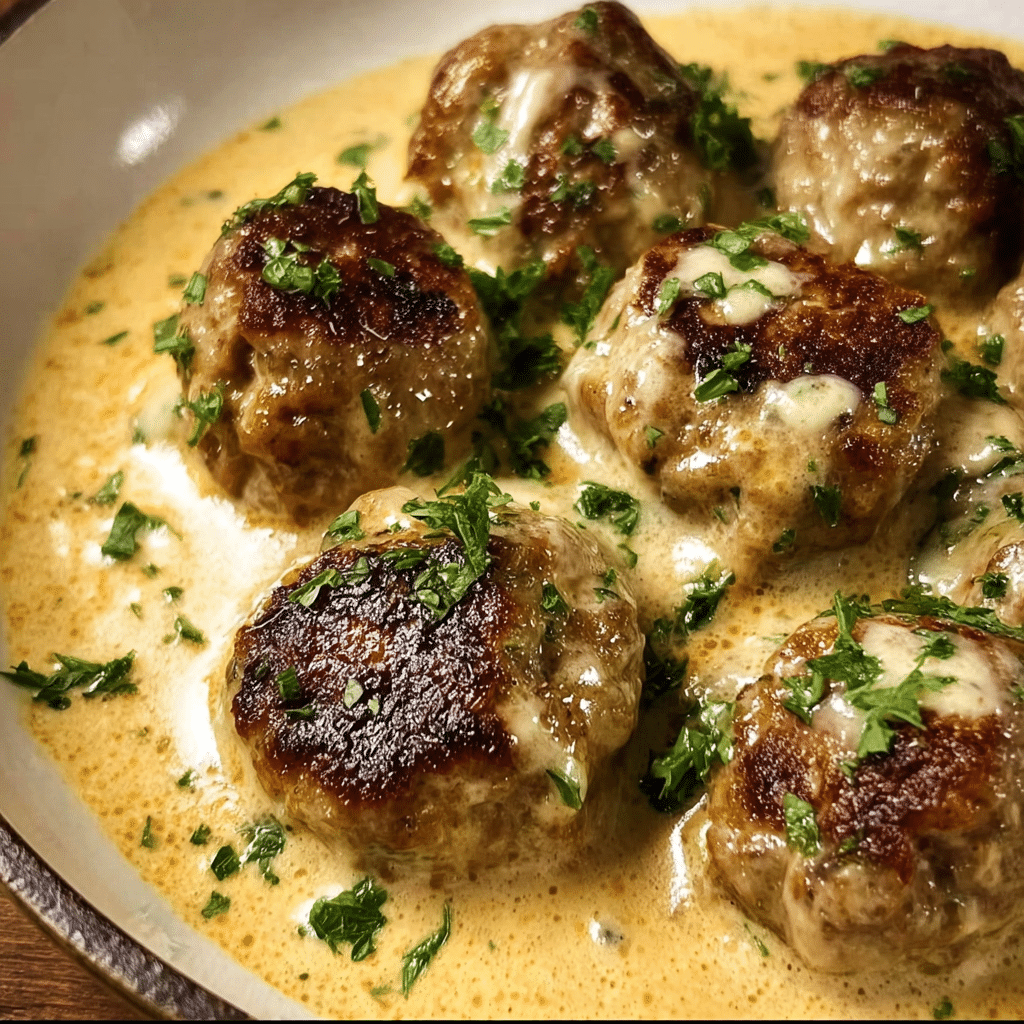
It all started on a chilly evening last fall. The leaves were turning golden brown, and there was an unmistakable crispness in the air. I had just come home from a long day at the office, and my kids were already asking, “What’s for dinner?” Feeling the weight of their anticipation, I rummaged through the fridge and spotted a pound of ground turkey. It was then that I decided to create a comforting dish that would not only satisfy their hunger but also align with my keto goals. As the aroma of keto turkey meatballs wafted through the house, I was reminded of the hearty meals my grandmother used to make, though she never knew the word “keto.”
The Story Behind This Recipe
The history of meatballs spans across many cultures—each with its variations and secrets. From the classic Italian polpette to Swedish köttbullar, the concept of ground meat formed into balls has been a universal comfort food for centuries. What sets my keto turkey meatballs apart is the use of ground turkey instead of traditional beef or pork, making them a leaner option that is lower in calories and saturated fat. This is particularly important for those of us watching our waistlines while still trying to enjoy the foods we love.
Another reason why this recipe is special is the creamy sauce that envelops the meatballs. It’s a simple combination of cream cheese, garlic, and chicken broth that elevates the dish and adds a richness that is often lacking in low-carb meals. As I plated the first batch, I couldn’t help but feel a swell of pride and nostalgia—it was as if I had captured a piece of my childhood and modernized it for today’s dietary needs.
Why You’ll Love This Dish
For busy families, keto turkey meatballs are the perfect solution for a quick yet satisfying dinner. They can be prepared in about 30 minutes, making them an ideal choice for weeknight meals. Plus, they are incredibly versatile; you can serve them over zoodles, cauliflower rice, or even on their own with a side of steamed vegetables. This adaptability means you can easily customize the dish to suit your family’s preferences while keeping it keto-friendly.
Seasonally, these meatballs shine during the fall and winter months when hearty, comforting meals are most appreciated. However, they can be enjoyed year-round, especially when you want to bring a touch of warmth to your dining table. The emotional connection to this dish runs deep for me, as it reminds me of family gatherings, laughter, and the joy of sharing meals together. I envision my children growing up with these flavors, just as I did, creating their own memories around the dinner table.
In this article, you will learn everything you need to know to make the perfect keto turkey meatballs. From the ingredients you’ll need to the step-by-step process of crafting this delicious dish, I promise you’ll find not just a recipe but a guide to creating flavorful moments with your loved ones. So, let’s dive in and make some magic happen in the kitchen!
The Rich History and Cultural Significance of keto turkey meatballs
The origins of keto turkey meatballs can be traced back to the ancient practice of mixing various meats with spices and herbs, a culinary tradition that spans across cultures and centuries. Meatballs, in their many forms, have been a staple in kitchens around the world. The Italian version, known as polpette, has roots in rustic cooking, where families would utilize leftovers and stretch their ingredients to feed large gatherings. This practice of resourcefulness is mirrored in the way we can adapt traditional recipes to fit modern dietary needs.
Origins and History
Turkey itself has a rich history. Native to North America, it was first domesticated by the indigenous peoples long before European settlers arrived. Its lean quality and versatility quickly made it a popular choice for many diets, especially in the context of health-conscious cooking. In recent years, with the rise of the keto diet, ground turkey has emerged as a favored substitute for higher-fat meats. The evolution of keto turkey meatballs reflects this trend, melding traditional comfort food with contemporary health ideals.
Over the decades, meatballs have evolved beyond their humble beginnings. Regional variations have emerged, with each culture adding its twist—like the addition of spices in Moroccan kefta or the use of breadcrumbs and cheese in Italian recipes. This adaptability is what makes meatballs such a beloved dish; they can be a canvas upon which flavors and ingredients are layered, appealing to both traditionalists and modern food enthusiasts alike.
Cultural Significance
Culturally, meatballs are often associated with family gatherings and celebrations. In Italy, they are a staple at Sunday dinners, where families come together to enjoy a hearty meal. Similarly, in Sweden, the köttbullar are traditionally served during festive occasions, symbolizing warmth and hospitality. The act of making meatballs can be communal, a time for family members to gather in the kitchen, share stories, and bond over the process of cooking together. Keto turkey meatballs can carry this same significance, fostering connections and creating lasting memories.
Nutritional Benefits
From a health perspective, keto turkey meatballs offer several benefits. Ground turkey is a lean protein that is lower in fat compared to traditional meatball options. This makes it an excellent choice for those aiming for weight loss or maintaining a healthy lifestyle. Additionally, using low-carb ingredients like almond flour or coconut flour instead of breadcrumbs keeps the dish compliant with keto guidelines.
Moreover, the incorporation of herbs and spices not only enhances the flavor but also adds nutritional value. Ingredients like garlic and parsley are known for their health benefits, including anti-inflammatory properties and immune support. By making keto turkey meatballs, you not only indulge in a delicious dish but also provide your family with a nutritious meal that supports their overall well-being.
In conclusion, the humble meatball has a rich and diverse history, and adapting it into keto turkey meatballs allows us to honor that tradition while embracing healthier eating habits. This dish not only serves as a delicious meal but also as a bridge connecting our past with our present dining practices. So as you embark on this culinary journey, remember that you’re not just cooking; you’re participating in a long-standing tradition that has brought families together for generations.
Essential Ingredients for Perfect keto turkey meatballs
When it comes to cooking, especially in the world of keto-friendly meals, the right ingredients can make or break your dish. Today, we will be diving into the essential ingredients for creating delicious keto turkey meatballs that are not only packed with flavor but also easy to prepare. Each ingredient plays a pivotal role in the overall taste, texture, and nutritional value of the dish. Let’s explore what you’ll need!
Essential Ingredients
- 1/2 cup almond meal (not almond flour): Almond meal is a fantastic low-carb alternative to breadcrumbs, providing a nutty flavor and a moist texture to the keto turkey meatballs. It’s important to select almond meal over almond flour, as almond meal retains some of the almond skin, adding fiber and texture.
- 1/4 cup grated Parmesan cheese: This hard cheese adds a savory depth to the meatballs. It helps bind the ingredients together while contributing a delightful umami flavor. Always opt for freshly grated Parmesan for the best taste and quality.
- 2 eggs, beaten: Eggs are crucial for binding the ingredients in meatballs. They add moisture and prevent the meatballs from falling apart during cooking.
- 1/3 cup finely chopped parsley: Fresh parsley not only brightens the flavor profile but also adds a beautiful pop of color. It’s also a great source of vitamins A, C, and K.
- 1/2 small onion, finely chopped: Onions bring sweetness and depth to the dish. They caramelize beautifully, resulting in a rich flavor that complements the turkey.
- 4 garlic cloves, minced: Garlic is a key ingredient in many savory dishes, including our keto turkey meatballs. Its pungent and aromatic qualities enhance the dish immeasurably.
- 1 teaspoon salt and pepper: These two staples are essential for seasoning your meatballs. Salt enhances all the flavors, while pepper adds a pleasant heat.
- 1 pound lean ground turkey (use 93% lean or lower): Turkey is a fantastic source of protein and a great base for our meatballs. The fat content in lean turkey helps keep the meatballs moist and flavorful.
- 2 tablespoons olive oil: Olive oil adds richness and helps with browning the meatballs. It’s also a healthy fat option that fits perfectly in a keto diet.
- 16 ounces cremini mushrooms, cleaned and thinly sliced: These mushrooms add a meaty texture and earthy flavor, enhancing the creamy sauce that accompanies the meatballs.
- 6 cloves garlic, minced: This additional garlic in the sauce adds a robust flavor that complements the meatballs beautifully.
- 2 cups chicken stock (more if needed to thin the sauce): Chicken stock serves as the base for our sauce, contributing depth and richness. Homemade stock is always preferred, but store-bought works just fine.
- 2 tablespoons Worcestershire sauce (use Lea & Perrins brand for gluten free): This sauce adds a complex flavor with its blend of sweetness and tang, enhancing the overall taste of the dish.
- 1 teaspoon onion powder: Onion powder is a great way to deepen the flavor, especially if you’re looking for a quick and easy flavor boost.
- 8 ounces cream cheese, softened: Cream cheese creates a luscious, creamy texture in the sauce, making every bite of the keto turkey meatballs feel indulgent.
- 1/2 cup grated Parmesan cheese: Adding more Parmesan to the sauce not only thickens it but also elevates the cheesy flavor profile.
- 2 tablespoons fresh parsley, chopped: For garnish, fresh parsley not only looks appealing but also adds a fresh note to the dish.
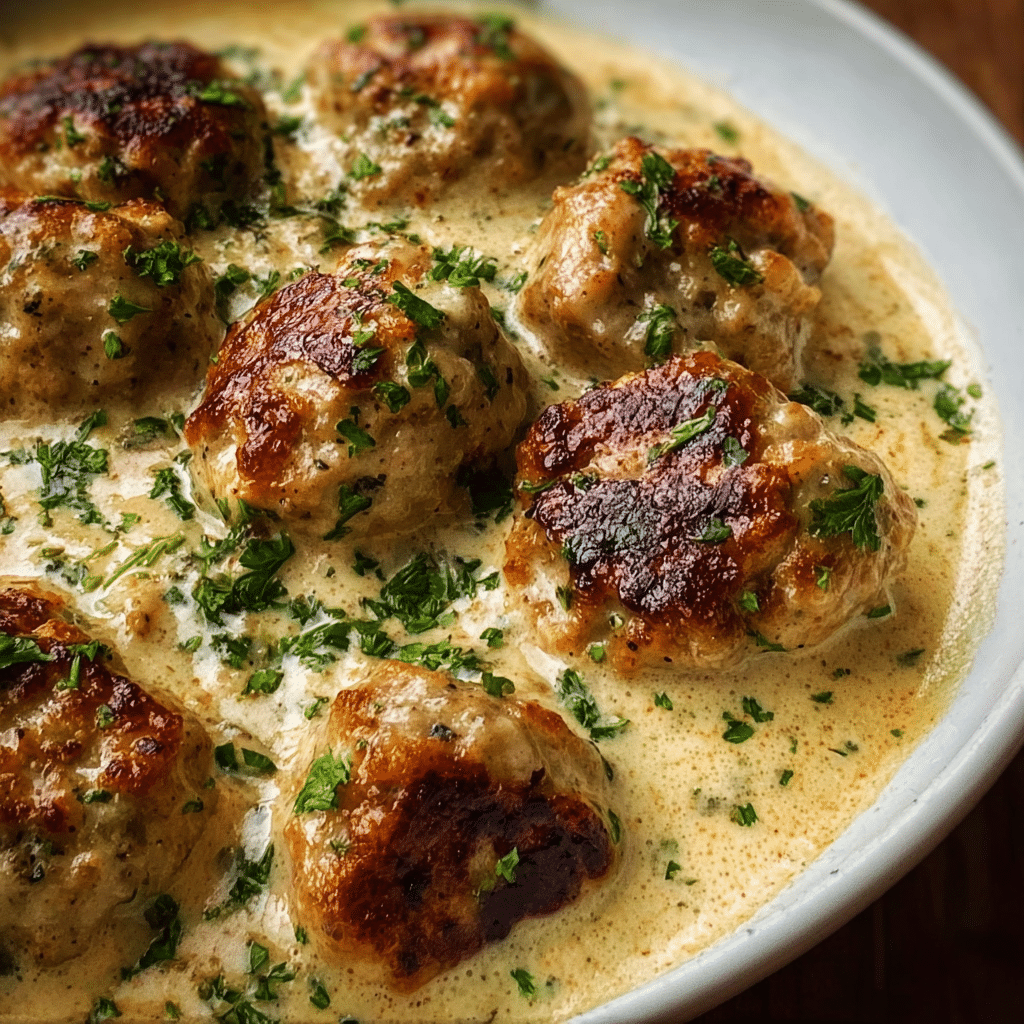
Keto Turkey Meatballs In A Creamy Sauce
Ingredients
For The Meatballs:
- 1/2 cup almond meal (not almond flour)
- 1/4 cup grated Parmesan cheese
- 2 eggs, beaten
- 1/3 cup finely chopped parsley
- 1/2 small onion, finely chopped
- 4 garlic cloves, minced
- 1 teaspoon salt and pepper
- 1 pound lean ground turkey (use 93% lean or lower)
For The Creamy Parmesan Sauce:
- 2 tablespoons olive oil
- 16 ounces cremini mushrooms, cleaned and thinly sliced
- 6 cloves garlic, minced
- 2 cups chicken stock (more if needed to thin the sauce)
- 2 tablespoons Worcestershire sauce (use Lea & Perrins brand for gluten free)
- 1 teaspoon onion powder
- 8 ounces cream cheese, softened
- 1/2 cup grated Parmesan cheese
- 2 tablespoons fresh parsley, chopped
Instructions
For The Meatballs:
- Preheat oven to 400F, and line a baking sheet with parchment paper.
- Add the almond meal, Parmesan cheese, eggs, parsley, onion, garlic, salt, and pepper to a large mixing bowl and stir together.
- Add the ground turkey and mix together until everything is evenly combined.
- Use a 1 1/2-inch scoop to spoon the meatballs (be sure the meat mixture is firmly pressed into the scoop) then space them evenly on the parchment-lined sheet pan. (You can also use some water or cooking spray on your hands and roll them if you prefer. It takes a little longer so I don’t bother.)
- Bake at 400 degrees for 13-15 minutes. You can broil them for 1-2 minutes at the end if you want to give them more color.
For The Sauce:
- While the meatballs are baking, sauté the sliced mushrooms in a tablespoon of olive oil for 6-8 minutes, flipping to brown both sides, then set aside.
- Add another tablespoon of olive oil and the minced garlic, then sauté for 1-2 minutes on medium heat. Pour in the chicken stock and de-glaze the pan (just heat up the stock a bit, and use a spatula to loosen any of the cooked residue on the bottom of the pan).
- Stir in the Worcestershire sauce and onion powder. Whisk in the cream cheese and Parmesan cheese until it creates a creamy sauce. If the sauce is too thick add a little more chicken stock and if it’s too thin simmer a bit longer.
- Add the parsley, cooked mushrooms, and the meatballs into the pan, combine and cook for 2-3 more minutes… then enjoy!
Shopping Tips
When shopping for these ingredients, quality is key. For almond meal, look for brands that offer a coarse grind, as this will provide the best texture in your meatballs. Fresh herbs should be vibrant and fragrant; wilted parsley will not impart the same flavor. For the ground turkey, check the label for lean percentages—93% lean is ideal, but if you can find a lower lean percentage, it adds more moisture. Always go for organic options when possible, especially for eggs and dairy, as they tend to have better flavor and nutritional profiles.
Substitutions and Alternatives
If you’re looking for substitutions due to dietary restrictions, there are plenty of options. For those who cannot consume nuts, you can use crushed pork rinds instead of almond meal for a similar texture without the carbs. If you are dairy-free, nutritional yeast can provide a cheesy flavor without the dairy. You can also substitute the ground turkey with ground chicken or even lean beef, depending on your preference. For a vegan option, try using lentils or a chickpea base, although the consistency will differ.
Storage tips are also important! Keep almond meal in the refrigerator to prevent it from going rancid. Fresh herbs should be stored in a damp paper towel inside a plastic bag to prolong freshness. Ground turkey should be used within a few days of purchasing or can be frozen for up to three months. Parmesan cheese should be kept in an airtight container in the fridge and can last for a few months.
By understanding the role of each ingredient and how to select the best ones, you set the stage for creating outstanding keto turkey meatballs that everyone will love!
Detailed Step-by-Step keto turkey meatballs Cooking Instructions
Now that we have all our ingredients lined up, it’s time to roll up our sleeves and get cooking. Making keto turkey meatballs in a creamy sauce is not only enjoyable but also a straightforward process. Let’s walk through the detailed instructions step-by-step to ensure your meatballs turn out perfectly every time.
Preparation Steps
- Gather all ingredients: Before you start cooking, it’s crucial to have all your ingredients ready. This is known as mise en place, a French term meaning “everything in its place.” Not only does this streamline the cooking process, but it also helps prevent forgetting any ingredients.
- Preheat your oven: Set your oven to 400°F (200°C). Preheating is essential as it ensures that your meatballs cook evenly and develop a nice crust.
- Prepare the meatball mixture: In a large mixing bowl, combine the almond meal, grated Parmesan cheese, beaten eggs, chopped parsley, finely chopped onion, minced garlic, salt, and pepper. Using your hands or a spatula, mix these ingredients thoroughly until they are well combined.
- Add ground turkey: Now, it’s time to incorporate the lean ground turkey into your mixture. Using clean hands, gently fold the turkey into the mixture. Be careful not to overwork it, as this can lead to tough meatballs.
- Shape the meatballs: With your hands, shape the mixture into meatballs about 1-1.5 inches in diameter. Place them on a baking sheet lined with parchment paper or a silicone mat. This step is crucial for even cooking and easy cleanup.
Cooking Process
- Cook the meatballs: Place the baking sheet in the preheated oven and bake the meatballs for 20 minutes. They should be golden brown and cooked through. To check for doneness, use a meat thermometer; the internal temperature should reach 165°F (74°C).
- Prepare the creamy sauce: While the meatballs are baking, heat the olive oil in a large skillet over medium heat. Add the sliced cremini mushrooms and sauté for about 5-7 minutes, or until they are browned and tender. Don’t rush this step; allowing the mushrooms to caramelize adds incredible flavor.
- Add garlic: Next, add the additional minced garlic to the skillet and cook for 1-2 minutes until fragrant. Be careful not to burn the garlic, as it can turn bitter.
- Incorporate chicken stock and Worcestershire sauce: Pour in the chicken stock and add the Worcestershire sauce. Stir everything together and let it simmer for about 5 minutes, allowing the flavors to meld.
- Thicken the sauce: Reduce the heat to low and add the softened cream cheese, stirring until it melts and blends smoothly into the sauce. If the sauce is too thick, you can add more chicken stock to reach your desired consistency.
Final Assembly
- Combine meatballs and sauce: Once the meatballs are done baking, carefully transfer them to the skillet with the creamy sauce. Gently toss the meatballs to coat them in the sauce, ensuring they are well covered.
- Simmer for flavor: Let the meatballs simmer in the sauce for an additional 5-10 minutes. This step allows the meatballs to absorb some of the sauce’s flavors, making them even more delicious.
- Serve and garnish: Once everything is combined and heated through, remove from heat. Serve the keto turkey meatballs on a plate and sprinkle with chopped fresh parsley for a burst of color and freshness.
- Enjoy! These meatballs are perfect served alone or over a bed of zucchini noodles for a complete meal. Pair with a side salad for a delicious, fulfilling dinner.
Throughout the cooking process, remember that timing is key. Multitasking—like preparing the sauce while meatballs bake—can save you time. And as you cook, trust your senses; if something smells amazing, it likely is! Cooking is all about feeling confident and experimenting. Enjoy the process, and soon you’ll be creating keto turkey meatballs that are sure to impress your family and friends!
Professional Tips and Techniques for keto turkey meatballs
When it comes to preparing keto turkey meatballs, achieving that perfect balance of flavor and texture can be quite the culinary adventure. As someone who has spent countless weekends experimenting in the kitchen, I’ve gathered some professional tips and techniques to ensure your turkey meatballs not only turn out tasty but also retain their keto-friendly status. Let’s dive into the art of creating these delicious morsels!
Professional Techniques
First and foremost, the foundation of any great meatball lies in the quality of the ingredients. For keto turkey meatballs, choose ground turkey that is at least 85% lean. This will provide enough fat to keep the meatballs moist without compromising your ketogenic goals. Another tip is to incorporate binders that are keto-approved, such as almond flour or crushed pork rinds, instead of breadcrumbs. These alternatives not only help with binding but also enhance the flavor profile.
When mixing your ingredients, whether by hand or using a stand mixer, avoid overworking the meat. This helps maintain a tender texture. Aim for a uniform mixture but don’t knead it like bread dough. You want the meatballs to be light and airy, not dense and tough.
Shaping your meatballs can be a little messy, but it can also be fun! Use a small ice cream scoop or your hands to form meatballs about 1 to 1.5 inches in diameter. This size is perfect for even cooking and makes for a delightful bite. If you find your hands getting sticky, wet them slightly; this will help prevent the meat from clinging to your fingers.
Troubleshooting Guide
Even the best cooks encounter challenges, so here are some common issues along with solutions. If your keto turkey meatballs turn out dry, it could be due to overcooking. Always use a meat thermometer to check for doneness; turkey should reach an internal temperature of 165°F. If you find your meatballs falling apart during cooking, consider adding an extra egg to the mixture for better binding. Alternatively, chilling the meatballs in the refrigerator for about 30 minutes before cooking can help them hold their shape.
Another issue could be bland flavor. Adding fresh herbs like parsley, basil, or oregano can elevate the dish significantly. Don’t be afraid to play with spices—garlic powder, onion powder, and a pinch of red pepper flakes can add depth and complexity.
Equipment Recommendations
Having the right tools can make a world of difference in your cooking experience. A good mixing bowl, a sturdy baking sheet lined with parchment paper, and a reliable meat thermometer are essential. If you prefer to sauté your keto turkey meatballs, a non-stick skillet can help prevent sticking and ensure even browning.
For those interested in meal prep, consider investing in a slow cooker or an Instant Pot. These appliances can easily accommodate large batches of meatballs, allowing you to cook them in sauces or broth for added flavor. Additionally, using a food processor can make quick work of chopping herbs and mixing ingredients, saving you time in the kitchen.
Make-Ahead and Meal Prep Strategies
Speaking of meal prep, keto turkey meatballs can be made ahead of time and stored in the refrigerator for up to three days or frozen for up to three months. To freeze, place uncooked meatballs on a baking sheet and freeze until solid, then transfer them to a freezer bag. This way, you can pull out as many as you need for a quick weeknight dinner!
Meal prepping can also be a fun family activity. Get the kids involved in shaping the meatballs or mixing the ingredients. This not only makes the task go faster but also creates wonderful family memories. Plus, you’ll teach them valuable cooking skills along the way!
Presentation Tips
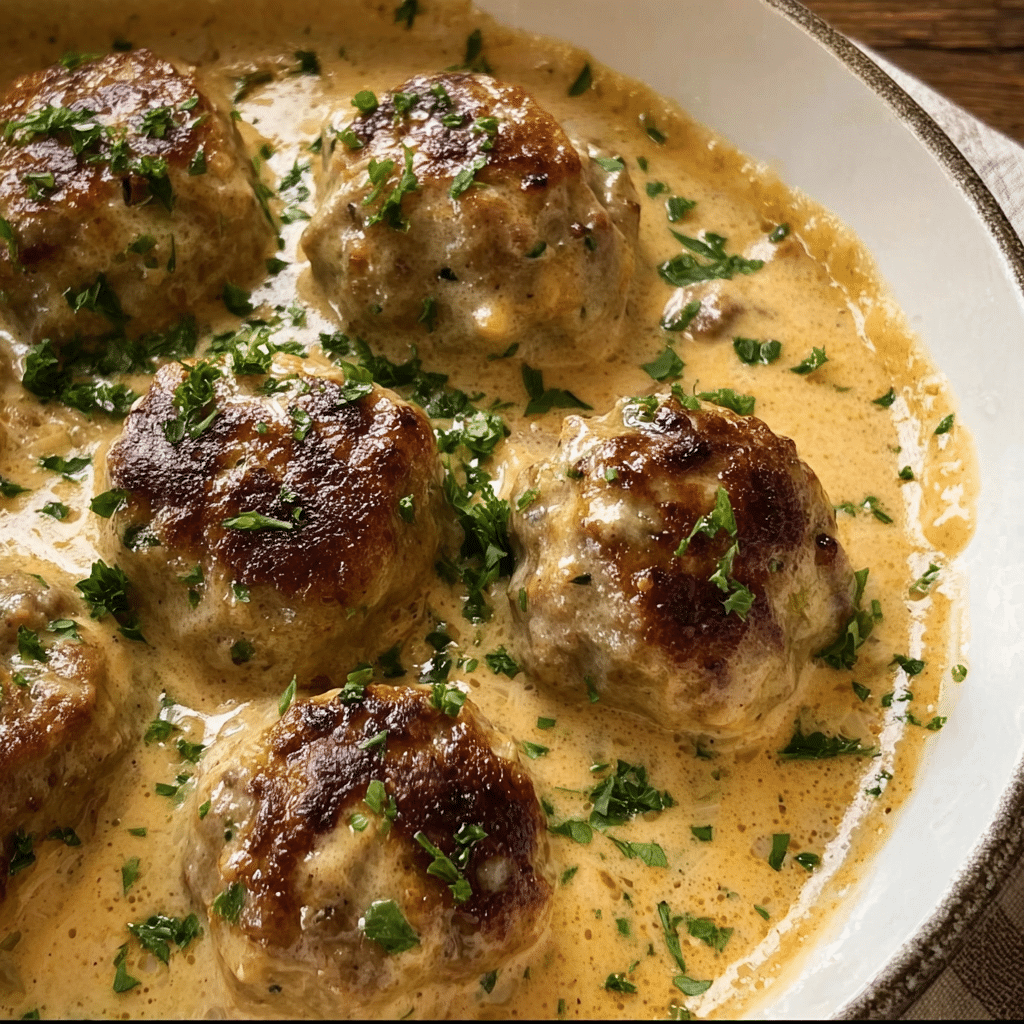
When it comes to plating your keto turkey meatballs, presentation is key. Serve them atop a bed of zoodles (zucchini noodles) or cauliflower rice for a beautiful, colorful dish. Drizzle with a creamy sauce and garnish with fresh herbs for that restaurant-quality look. A sprinkle of grated Parmesan cheese can also add a touch of elegance and flavor.
Wine and Beverage Pairings
Finally, let’s talk beverages! A light-bodied red wine, such as Pinot Noir, pairs wonderfully with turkey meatballs. If you prefer a non-alcoholic option, consider serving sparkling water with a slice of lemon or lime for a refreshing contrast. These pairings not only complement the flavors of your meal but also enhance the overall dining experience.
In conclusion, creating keto turkey meatballs can be a delightful culinary journey. By using quality ingredients, employing proper techniques, and adding your personal touch, you can build a dish that’s both satisfying and healthy. Now, roll up your sleeves and get ready to impress your friends and family with your culinary prowess!
Creative Variations and Adaptations of keto turkey meatballs
One of the most exciting aspects of cooking is the ability to adapt and create variations of beloved recipes. When it comes to keto turkey meatballs, the possibilities are endless. Whether you’re in the mood for something spicy, savory, or even international, let’s explore some creative variations and adaptations that will keep your taste buds dancing!
Seasonal Variations
As the seasons change, so do our cravings and the ingredients available to us. During fall, for instance, consider adding finely grated zucchini or pumpkin puree to your turkey meatball mixture for added moisture and a hint of sweetness. Spice it up with nutmeg or cinnamon for a comforting autumn flavor.
In the summer months, fresh herbs like basil and cilantro can be abundant. Incorporate these into your keto turkey meatballs for a burst of freshness. You could even create a Mediterranean twist by adding feta cheese and sun-dried tomatoes to the mix, serving them over a bed of Greek salad for a delightful summer meal.
Dietary Adaptations
Adapting your keto turkey meatballs to fit various dietary needs is easier than you might think. For a gluten-free version, simply ensure that any sauces you use are gluten-free and swap breadcrumbs for almond flour or coconut flour. If you’re cooking for someone who follows a vegan diet, try using lentils or chickpeas as the base, mixing in nutritional yeast for that umami flavor.
For those looking to spice things up, experimenting with different spices and herbs can cater to various spice levels. A dash of cayenne pepper or smoked paprika can elevate the dish, while sweet paprika lends a milder flavor. Adjust these to suit your palate—cooking should always be a reflection of your taste preferences!
Creative Twists
If you’re feeling adventurous, there’s no shortage of international fusion ideas for your keto turkey meatballs. For an Italian flair, mix in some Italian seasoning, garlic, and Parmesan cheese, then serve with a low-carb marinara sauce. Alternatively, for a Thai-inspired version, add minced lemongrass, ginger, and a splash of fish sauce, serving them with a side of cauliflower rice and a peanut sauce—delicious!
Different cooking methods can also provide a range of flavors and textures. While baking is a common method, try pan-frying your meatballs for a crispy exterior or using a slow cooker with a rich sauce for a tender and flavorful result. If you’re short on time, your air fryer can also yield wonderfully crispy meatballs without the extra oil.
Leftovers? No problem! Transform your keto turkey meatballs into a hearty soup by adding them to a low-carb broth with vegetables. Or, chop them up to create a filling for lettuce wraps or a keto-friendly taco night. The versatility of meatballs allows you to reinvent your meals throughout the week without feeling repetitive.
In summary, the world of keto turkey meatballs is ripe for exploration. With a little creativity and an open mind, you can take a simple recipe and turn it into something extraordinary. So go ahead, experiment with flavors, and make these meatballs your own!
Storage, Reheating, and Meal Prep for keto turkey meatballs
When it comes to preparing keto turkey meatballs, one of the most important aspects to consider is how to store, reheat, and meal prep them for maximum convenience and flavor. Whether you’ve made a big batch for the week or just a few for dinner, knowing the best ways to handle your meatballs can save you time and ensure that each bite is just as delicious as the first. Let’s dive into the nitty-gritty of storage and meal prep to make your keto cooking experience as seamless as possible!
Short-term Storage
After you’ve whipped up a batch of keto turkey meatballs, the first thing you might wonder is how to keep them fresh. For short-term storage, you’ll want to place your meatballs in an airtight container. This can be a glass or plastic container with a tight-fitting lid or a resealable bag. Make sure to let the meatballs cool to room temperature before sealing them to prevent moisture buildup, which can lead to sogginess. When stored properly, keto turkey meatballs can last in the refrigerator for up to 3-4 days.
One of my favorite tricks for short-term storage is to separate the meatballs with parchment paper. This prevents them from sticking together and allows you to grab a portion as needed without defrosting the whole batch. If you’re meal prepping, consider portioning out the meatballs into single-serving containers. This makes it incredibly easy to grab and go during a busy week.
Freezing and Long-term Storage
If you’ve made a large batch of keto turkey meatballs or want to prepare for future meals, freezing is your best bet. To freeze your meatballs, first, arrange them in a single layer on a baking sheet and place them in the freezer for about 1-2 hours. This initial freeze, known as flash freezing, helps to prevent them from sticking together when you transfer them to a freezer-safe container.
Once they’re firm, you can transfer the meatballs to a freezer-safe zip-top bag or an airtight container. Be sure to label the bag or container with the date and contents. When stored properly, frozen keto turkey meatballs can last for up to 3 months. Just remember to consume them within this time frame for the best flavor and texture!
Another great tip for long-term storage is to store the meatballs in sauce. If you have a favorite keto-friendly sauce, consider combining the meatballs and sauce before freezing. This not only keeps the meatballs moist but also makes for a quicker meal when you’re ready to eat. Simply reheat the meatballs in the sauce, and you’re good to go!
Reheating Best Practices
Reheating your keto turkey meatballs should be done carefully to preserve their flavor and texture. If you’ve frozen your meatballs, the best method is to thaw them overnight in the refrigerator before reheating. However, if you’re short on time, you can reheat them directly from the freezer. Just add a few extra minutes to your reheating time.
For stovetop reheating, place your meatballs in a skillet over medium heat. Add a splash of water or broth to prevent them from drying out, and cover with a lid. Stir occasionally until heated through, which should take about 10-15 minutes. Alternatively, you can reheat them in the oven at 350°F (175°C) for about 20-25 minutes, or until they reach an internal temperature of 165°F (74°C).
If you’re in a hurry, the microwave is an option too, but be cautious as it can sometimes make the meatballs rubbery. To microwave, place the meatballs in a microwave-safe dish with a damp paper towel over them to retain moisture, and heat in 30-second intervals until warmed through.
Finally, remember to prioritize food safety when reheating. Always ensure that your keto turkey meatballs are heated to a safe internal temperature and consumed within 3-4 days of cooking if stored in the refrigerator.
In summary, storing and reheating your keto turkey meatballs doesn’t have to be complicated. With proper techniques and a bit of planning, you can enjoy delicious meatballs at your convenience, whether you’re meal prepping for the week or just enjoying leftovers from a family dinner. Happy cooking!
Nutritional Benefits and Health Information
As we delve into the world of keto turkey meatballs, it’s essential to highlight the nutritional benefits and health information surrounding this delightful dish. Not only are these meatballs a fantastic source of protein, but they also align perfectly with ketogenic dietary principles, promoting a low-carb lifestyle that many find beneficial. Let’s explore the nutritional breakdown and the myriad health benefits that come with indulging in these tasty morsels.
Nutritional Profile
To truly appreciate the value of keto turkey meatballs, let’s look at a standard serving size, which typically includes about four meatballs. A serving usually contains approximately 200-250 calories, depending on the specific recipe and the ingredients used. The macronutrient distribution is where these meatballs shine, offering about 25 grams of protein, 15 grams of fat, and only 5 grams of carbohydrates.
Turkey, the star ingredient, is a lean source of protein that provides essential amino acids necessary for muscle repair and growth. When crafted with keto-friendly binders like almond flour or Parmesan cheese instead of breadcrumbs, the carb count remains low, making these meatballs suitable for low-carb diets. Additionally, a serving can provide around 15% of your daily value for iron and B vitamins, contributing to overall energy levels and metabolic health.
Health Benefits
The health benefits of keto turkey meatballs extend beyond just the macronutrient profile. The primary ingredient, turkey, is not only low in fat but also rich in vitamins and minerals, such as selenium and phosphorus. These nutrients play vital roles in cellular function and bone health. Furthermore, turkey is known for its high levels of tryptophan, an amino acid that can promote feelings of well-being and may aid in better sleep.
Incorporating healthy fats into your meatballs can enhance the overall health benefits as well. Using ingredients like olive oil or avocado oil not only boosts the flavor but also provides heart-healthy monounsaturated fats. These fats can help support cardiovascular health and offer anti-inflammatory properties, which is particularly beneficial for those following a keto diet.
Dietary Considerations
When preparing keto turkey meatballs, it’s important to consider dietary restrictions and allergen information. Turkey is generally a safe protein for most people; however, some individuals may have allergies or sensitivities. If you’re cooking for guests or family members, always ask about food allergies beforehand. Additionally, for those who are following a dairy-free diet, consider substituting the cheese with nutritional yeast or a dairy-free alternative.
Apart from allergies, these meatballs can fit into various diet plans. For those following a ketogenic diet, the low-carb nature of turkey meatballs makes them an ideal choice. They can easily be paired with a variety of keto-friendly sides like zoodles (zucchini noodles) or cauliflower rice, allowing for a satisfying meal that keeps carb counts in check.
For those who may need to modify the recipe to fit specific nutritional goals, consider adjusting the fat content by using leaner turkey breast or increasing the amount of healthy fats in the sauce. Adding vegetables like spinach or bell peppers into the meat mixture can also enhance the nutrient density without significantly impacting the carb count.
In comparison to similar dishes, such as traditional meatballs made with beef and breadcrumbs, keto turkey meatballs provide a lighter alternative that still delivers on flavor and satisfaction. By focusing on quality ingredients and mindful preparation, these meatballs can easily become a staple in your meal rotation.
In conclusion, keto turkey meatballs aren’t just a delicious meal option; they’re packed with nutritional benefits that support a healthy lifestyle. With their high protein content, low carb count, and versatility in dietary plans, these meatballs can be a delightful addition to any table. So, the next time you whip up a batch, remember all the goodness packed inside each bite!