Another technique to enhance your quick potsticker stir is to ensure your pan is hot enough before adding the potstickers. A hot pan will help to sear the bottoms, creating that irresistible texture. A cast-iron skillet works wonders for this, but any heavy-bottomed pan will do. Preheat your skillet over medium-high heat for a few minutes before adding a splash of oil. You’ll know it’s ready when the oil shimmers and flows easily across the surface.
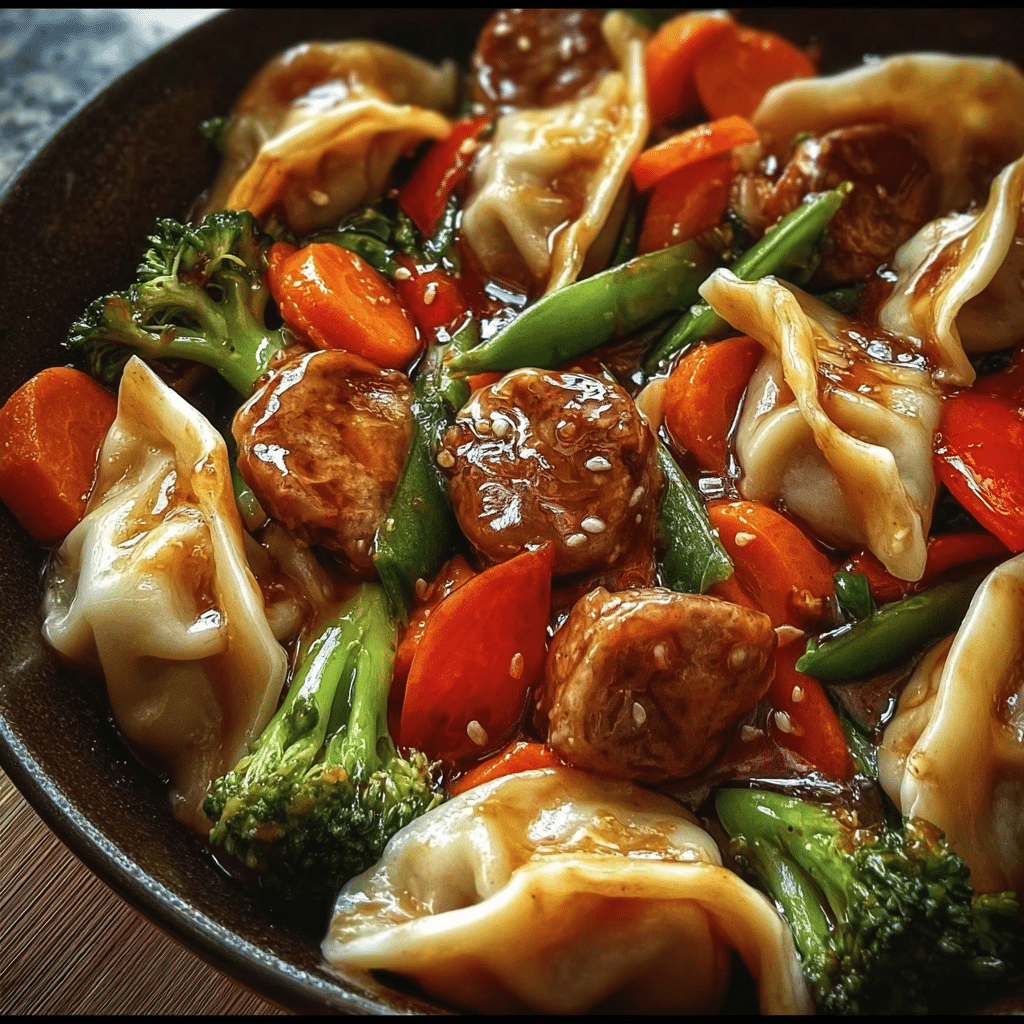
For the stir-fry itself, think about adding a mix of colorful vegetables. Bell peppers, snap peas, and carrots not only add flavor and nutrition but also make the dish visually appealing. The key is to cut your vegetables uniformly so that they cook evenly. Add the harder vegetables first (like carrots) and follow with softer ones (like bell peppers) to ensure everything is perfectly tender.
Print
Quick Potsticker Stir Fry
Ingredients
For the sauce:
- 2 tablespoons rice vinegar or 3 tablespoons Chinese black vinegar
- 2 tablespoons soy sauce
- 2 tablespoons water
- 1 teaspoon cornstarch
- 1 teaspoon granulated sugar
- 1/2 teaspoon Asian sesame seed oil
For the stir-fry:
- 12 frozen pot stickers or 16 frozen gyoza (do not thaw, about 12 ounces total)
- 2 tablespoons plus 2 teaspoons vegetable oil, divided
- 1/4 cup water
- 8 ounces cremini mushrooms, sliced 1/4-inch thick
-
Kosher salt
- 8 ounces asparagus (about 1/2 bunch), cut into 1-inch pieces
- 1 medium carrot, peeled and cut on the diagonal into 1/4-inch-thick ovals
- 1 tablespoon finely chopped peeled fresh ginger
- 2 medium scallions, thinly sliced
Instructions
Make the sauce:
-
Whisk all the ingredients together in a small bowl until the cornstarch is dissolved; set aside.
Make the stir-fry:
-
Heat 2 tablespoons of the oil in a large nonstick frying pan over medium-high heat until shimmering. Place the potstickers or gyoza pleat-side up in a single layer. Fry undisturbed until the bottoms are light golden-brown, about 3 minutes.
-
Carefully add the water (be careful because the oil may spatter). Cover and cook for 3 minutes. Uncover and, using tongs, turn the dumplings onto their unpleated sides. Continue cooking uncovered until all the water has evaporated, the filling is cooked through, and the unpleated sides are golden-brown, about 3 minutes more. Transfer to a large plate.
-
Drizzle 1 teaspoon of oil into the pan, add the mushrooms and season with salt. Stir-fry until the mushrooms are browned and softened, 2 to 3 minutes, then transfer to the plate with the dumplings.
-
Drizzle 1 teaspoon of oil into the pan, add the asparagus and carrot, and season with salt. Stir-fry until the crisp-tender, about 2 minutes. Add the ginger and stir-fry for 30 seconds.
-
Return the reserved potstickers, mushrooms, and any juices back to the pan and toss gently to combine. Whisk the sauce again to recombine and dissolve the cornstarch, then add to the pan. Stir-fry until the sauce thickens and coats everything in the pan, about 30 seconds. Transfer to a serving dish and sprinkle with the scallions. Serve immediately.
Troubleshooting Guide
Even the best cooks face challenges, and when preparing a quick potsticker stir, it’s no different. One common issue is the potstickers sticking to the pan. If this happens, it might be due to insufficient oil or not allowing them enough time to sear. Make sure to use enough oil when cooking, and avoid moving the potstickers around too soon. They’ll naturally release from the skillet when they’re properly cooked.
Another potential hiccup is overcooking the vegetables. To avoid this, have all your ingredients prepped and ready before you start cooking. This way, you can add each ingredient in quick succession, ensuring everything cooks just right. If you notice your stir-fry is becoming too soggy, try removing the lid (if you’re using one) to let some moisture escape.
Presentation Tips
Presentation can transform a simple meal into a feast for the eyes. For your quick potsticker stir, consider plating it in a large, shallow bowl or a colorful platter. Arrange the potstickers neatly and don’t shy away from garnishing with fresh herbs or sesame seeds. A sprinkle of chopped green onions or cilantro can add a fresh touch that elevates the dish.
As for beverages, pairing your stir fry with the right drink can enhance the overall dining experience. A crisp white wine, like a Sauvignon Blanc, complements the flavors well, while a sparkling water with lime can refresh the palate. For a non-alcoholic option, a chilled ginger ale adds a hint of spice that pairs beautifully with the dish.
For meal prep, consider doubling the recipe. Potsticker stir fry keeps well in the fridge for a couple of days, making it a perfect candidate for leftovers. If you want to make-ahead, prepare your vegetables and sauce in advance, storing them separately until you’re ready to cook. This way, you can whip up a quick dinner on a busy night with barely any effort!
Whether you’re a novice cook or an experienced chef, these tips will help you master the art of the quick potsticker stir. With the right techniques and a dash of creativity, your kitchen will feel like a bustling Asian bistro in no time!
Creative Variations and Adaptations of quick potsticker stir
One of the most delightful aspects of cooking is the ability to customize recipes to suit your taste and dietary needs. The quick potsticker stir is a versatile dish that lends itself to a myriad of variations. Whether you’re looking to impress guests or simply want to mix things up for dinner, let’s explore some creative adaptations that will take your stir fry to the next level.
Seasonal Variations
Seasonality plays a significant role in the flavors of any dish. For a spring twist on your quick potsticker stir, consider incorporating asparagus, peas, and radishes. These vegetables are at their peak during spring and add a fresh, crisp flavor profile to your stir fry. In summer, swap in zucchini, corn, and cherry tomatoes for a light and vibrant dish that celebrates the season’s bounty.
As we transition into fall, think about adding roasted butternut squash or sweet potatoes. These heartier ingredients can add depth and sweetness to your stir fry, balancing the savory notes of the potstickers. Finally, during winter, you might opt for root vegetables like carrots and parsnips, which hold up well during cooking and add warmth to your meal.
Dietary Adaptations
With an increasing number of people embracing dietary preferences, let’s discuss how you can modify the quick potsticker stir to fit different lifestyles. For those on a keto diet, consider using cauliflower rice as a base instead of traditional rice. This not only lowers the carb count but adds a nice texture to the dish. You can also opt for low-carb vegetables like bell peppers and zucchini, which are both satisfying and nutritious.
If you’re cooking for vegans, there are plenty of options to keep everyone happy. Replace the meat in your potstickers with a mix of tofu and mushrooms for a hearty filling. Additionally, using vegetable broth in your stir fry sauce and loading up on veggies makes for a delicious and filling meal that even non-vegans will appreciate.
Creative Twists
For those looking to experiment further, why not try international fusion variations? A Mexican-inspired quick potsticker stir could feature potstickers filled with spiced black beans and corn, served with a zesty lime and cilantro dressing. Alternatively, an Italian version could include potstickers filled with ricotta and spinach, tossed in a light marinara sauce.
Adjusting spice levels can also add a fun twist to your stir fry. If you enjoy heat, consider adding sliced jalapeños or a drizzle of sriracha to your sauce. Conversely, if you prefer milder flavors, keep the heat minimal and focus on enhancing the umami taste with soy sauce or hoisin sauce.
Lastly, don’t forget about leftover potstickers! If you find yourself with some after dinner, turn them into a breakfast delight by frying them up with eggs and green onions for a savory scramble. Or, chop them up and mix them into a soup for a warm, comforting meal.
With these variations, your quick potsticker stir can always feel fresh and exciting. Embrace the creativity cooking offers, and don’t hesitate to try new ingredients and techniques. After all, the kitchen is a playground for experimentation, and every dish is an opportunity to explore your culinary creativity!
Storage, Reheating, and Meal Prep for quick potsticker stir
When it comes to making a delightful quick potsticker stir, one of the most frequently asked questions revolves around storage: how do you keep those delicious dumplings fresh, and what is the best way to reheat them? As someone who has spent years experimenting with various meals and their longevity, I have pieced together a comprehensive guide that addresses all your storage needs. Whether you’re preparing for a weeknight dinner or meal prepping for the workweek ahead, understanding the ins and outs of storage can make all the difference.
Short-term Storage
After preparing your quick potsticker stir, if you find yourself with leftovers (which is often the case in my kitchen), the first step is proper short-term storage. The best way to store leftover potstickers is to allow them to cool completely before placing them in the refrigerator. This prevents condensation from forming inside the container, which can lead to sogginess.
For short-term storage, I recommend using airtight containers. Glass containers are my personal favorite because they are easy to clean, don’t absorb odors, and can be used in the microwave. Plastic containers are also acceptable, but ensure they are labeled as microwave-safe if you plan to reheat your meal later. Place your potstickers in a single layer if possible, or separate layers with parchment paper to avoid sticking.
In the refrigerator, your quick potsticker stir can last for about 3-4 days. However, if you notice any changes in smell or appearance, it’s best to err on the side of caution and dispose of them.
Freezing and Long-term Storage
For those who like to prepare meals in advance or simply want to save some potstickers for another day, freezing is an excellent option. Freezing can extend the life of your quick potsticker stir for up to three months, allowing you to enjoy your culinary creation whenever the craving strikes.
To freeze potstickers, it’s crucial to follow a specific process to maintain texture and flavor. Start by laying the cooled potstickers on a baking sheet in a single layer, making sure they don’t touch each other. This prevents them from sticking together. Place the baking sheet in the freezer for about an hour until the potstickers are frozen solid. Once they are firm, transfer them to a freezer-safe bag or container. Be sure to remove as much air as possible from the bag to prevent freezer burn.
When it comes to thawing, the best method is to transfer the frozen potstickers to the refrigerator for several hours or overnight before you plan to cook them. This slow thawing helps retain moisture and flavor. If you’re in a hurry, you can also cook them directly from frozen, just be prepared to adjust your cooking time accordingly.
Reheating Best Practices
Reheating your quick potsticker stir properly is key to enjoying the delicious flavors and textures just as you did when they were fresh. There are several methods to reheat, and each offers a slightly different result.
The microwave is the quickest method, but it can lead to a soggier texture. To microwave, place the potstickers on a microwave-safe plate, cover them with a damp paper towel, and heat in 30-second intervals until warmed through. However, if you prefer a crispy texture, I recommend using a skillet. Heat a small amount of oil in a non-stick skillet over medium heat, add the potstickers, and sauté them for a few minutes until they are heated through and crispy on the outside.
Another option is to steam the potstickers. Place them in a steamer basket over boiling water for about 5-7 minutes. This method keeps the potstickers moist and tender, making them almost as good as freshly made.
Food safety is essential when it comes to reheating and storing your quick potsticker stir. Always ensure that leftovers are stored at a temperature below 40°F (4°C) and reheated to at least 165°F (74°C) to eliminate any potential foodborne pathogens.
In summary, taking the time to store your potstickers correctly not only preserves their quality but also makes meal prep a breeze. With proper storage containers, freezing techniques, and reheating methods, you can enjoy your delicious potstickers anytime!
Nutritional Benefits and Health Information
Understanding the nutritional benefits of your favorite dishes can transform the way you enjoy them, and this certainly applies to the quick potsticker stir. Whether you’re concerned with calorie counting, seeking to enhance your nutritional intake, or simply trying to incorporate healthier options into your diet, this section is for you. Let’s break down the nutritional profile and explore the health benefits of the key ingredients that make up this delightful meal.
Nutritional Profile
At its core, a quick potsticker stir typically comprises dumplings filled with various ingredients, often including ground meat (such as pork or chicken), vegetables, and seasonings, all served alongside a stir-fry of fresh vegetables. The calorie content can vary based on the ingredients used, but a serving of potstickers generally contains around 200-300 calories. This includes a healthy mix of macronutrients: proteins, fats, and carbohydrates.
For instance, one serving may offer about 15-20 grams of protein, which is essential for muscle repair and growth. The fat content can range from 8-15 grams, depending on whether you use lean meats or add additional oils during cooking. Carbohydrates typically come from the dumpling wrappers, providing about 30-40 grams per serving, which can be a good source of energy.
In terms of vitamins and minerals, potstickers are often packed with nutrients from the vegetables included in the stir fry. Leafy greens, bell peppers, and other colorful vegetables contribute vitamins A, C, and K, as well as various B vitamins that support energy metabolism.
Health Benefits
The health benefits of a quick potsticker stir can be significant, especially when you load it with a variety of vegetables. For example, incorporating broccoli or bok choy provides fiber, which aids in digestion and helps maintain a healthy gut. Additionally, these vegetables are low in calories but high in nutrients, making them a fantastic choice for those looking to manage their weight.
Furthermore, using lean protein sources like chicken or tofu can support muscle health and provide essential amino acids necessary for various bodily functions. The incorporation of ginger and garlic in the stir-fry not only adds flavor but also offers anti-inflammatory properties. These ingredients are known to boost the immune system and may help in reducing the risk of chronic diseases.
Dietary Considerations
When it comes to dietary considerations, the beauty of a quick potsticker stir is its versatility. It can easily be tailored to accommodate various dietary needs. For those following a gluten-free diet, there are gluten-free dumpling wrappers available on the market, and you can also make your own using rice flour or other gluten-free alternatives.
Vegetarians and vegans can enjoy a hearty potsticker stir by opting for vegetable fillings and using plant-based proteins such as tofu or tempeh. Additionally, swapping out traditional soy sauce for a low-sodium or gluten-free version can help accommodate different dietary preferences without sacrificing flavor.
In conclusion, a quick potsticker stir is not only a convenient and delicious meal option but also a nutritionally balanced one. By understanding its nutritional profile and health benefits, you can enjoy this dish guilt-free while making informed choices that align with your dietary needs. With a bit of creativity in ingredient selection, potstickers can fit seamlessly into any healthy eating plan.
Conclusion: Mastering the Perfect quick potsticker stir
Creating the perfect quick potsticker stir is more than just following a recipe—it’s about understanding the techniques, ingredients, and cultural significance behind this beloved dish. Throughout this comprehensive guide, we’ve explored everything from the historical origins to modern variations, ensuring you have all the knowledge needed to make this recipe your own.
Whether you’re a beginner cook or an experienced chef, the techniques and tips we’ve shared will help you create a quick potsticker stir that’s not only delicious but also meaningful. Remember that cooking is a journey of discovery, and each time you make this dish, you’ll learn something new.
We encourage you to experiment with the variations we’ve discussed, adapt the recipe to your dietary needs, and most importantly, share it with the people you love. Food has the incredible power to bring people together, and Quick Potsticker Stir Fry is the perfect dish to create lasting memories around your dinner table.
Don’t forget to share your cooking adventures with us on social media, and feel free to ask questions in the comments below. Happy cooking!
Share this recipe and let us know how it turned out! Tag us on social media for a chance to be featured.