Shepherd’s pie soup is more than just a dish; it’s a warm embrace on a chilly evening, a nostalgic nod to family dinners past, and a delightful twist on a classic recipe. I remember the first time I encountered this comforting soup—it was a rainy Sunday afternoon, and the aroma wafting from my kitchen reminded me of my grandmother’s kitchen, where she would create magic with simple ingredients. That day, I decided to give shepherd’s pie soup a try, inspired by the traditional dish I loved as a child.

As I stirred the pot, the vibrant colors of the vegetables mixed with the savory broth brought back memories of family gatherings and hearty meals shared around the table. The first spoonful was transformative; it was as if I had taken a bite out of my childhood. This soup was not just a meal, but a comforting hug that wrapped around my soul. It reminded me of the importance of family, tradition, and the joy of sharing food with loved ones. Shepherd’s pie soup became a staple in my home, a recipe that I could whip up quickly even on the busiest of weeknights, and it quickly became a favorite among my family and friends.
The Story Behind This Recipe
Shepherd’s pie itself has a rich history dating back to the 18th century in the United Kingdom. Originally, it was a way to use leftover meat and vegetables, topped with a creamy layer of mashed potatoes. The beauty of shepherd’s pie soup is that it takes all those beloved flavors and transforms them into a dish that’s just as satisfying but far simpler to prepare. This soup serves as a reminder that some of the best meals come from necessity and creativity in the kitchen. My own version of shepherd’s pie soup incorporates ground lamb or beef, a medley of vegetables, and of course, a hint of that creamy potato goodness—but in a way that’s easier for busy families to enjoy.
This recipe is particularly special because it caters to the modern family’s need for quick and nutritious meals. In today’s fast-paced world, it’s essential to have recipes that not only taste good but can also be prepared in under an hour. Shepherd’s pie soup fits the bill perfectly; it can be made in one pot, minimizes cleanup, and allows for flexibility with ingredients based on what you have on hand. You can easily swap out vegetables or proteins, making this dish adaptable for various dietary preferences.
Seasonally, shepherd’s pie soup is perfect for fall and winter when comfort foods reign supreme. Imagine cozying up with a bowl of this hearty soup while the leaves fall outside or snowflakes dance through the air. It’s the kind of dish that warms you from the inside out, making it the ideal choice for chilly nights when all you want is to feel cozy and satisfied.
There’s also an emotional connection to shepherd’s pie soup that goes beyond just its ingredients. It’s a dish that often brings back memories of home, family, and traditions. Whether it’s a family recipe passed down through generations or a new twist on a classic, each bowl serves as a reminder of the love and care that goes into making food for those we cherish. It’s a way to connect with our roots while also embracing the present.
In this guide, readers will learn everything they need to know to create their own version of shepherd’s pie soup, from selecting the right ingredients to tips for perfecting the flavors. You’ll discover variations that can accommodate different taste preferences and dietary requirements, as well as how to make this dish your own. With each spoonful, you can create new memories while embracing the rich history and comfort that this dish offers.
The Rich History and Cultural Significance of shepherd’s pie soup
The rich history and cultural significance of shepherd’s pie soup is intertwined with the traditional shepherd’s pie itself. This dish has deep roots in the British Isles, where it originated as a practical solution for using up leftover meat and vegetables. The term “shepherd’s pie” was first documented in the early 1800s, and it typically referred to a pie made with lamb or mutton—hence the name. In contrast, “cottage pie” refers to the same concept but is made with beef. Over time, shepherd’s pie evolved into a beloved comfort food, symbolizing resourcefulness and culinary ingenuity.
Origins and History
The origins of shepherd’s pie can be traced back to the late 18th century, when potatoes became widely available in Ireland and England. The working-class population began to use these versatile tubers to create a hearty topping for leftover meat dishes. This ingenuity led to the creation of a dish that not only filled hungry bellies but also offered a satisfying blend of flavors and textures. The idea of shepherd’s pie soup is a natural evolution of this classic recipe, allowing for a more accessible and quicker way to enjoy the same comforting flavors.
As the recipe spread across different regions, variations emerged that reflected local ingredients and culinary traditions. For example, in Scotland, you might find a version with neeps (turnips), while in Ireland, the addition of Guinness to the meat mixture is not uncommon. Each iteration brings its own unique twist, making the dish a canvas for creativity.
Cultural Significance
Shepherd’s pie soup holds a special place in many cultures, especially in the UK and Ireland. It is often associated with family gatherings, holiday meals, and celebrations. The communal nature of sharing a pot of soup brings people together, and it’s common to find this dish served during festive occasions or cozy family dinners. The soup version, with its comforting warmth and hearty ingredients, makes it an ideal dish for gatherings, providing not only nourishment but also a sense of connection and belonging.
Furthermore, shepherd’s pie soup has gained popularity beyond its traditional roots, making its way into modern cuisine. Chefs and home cooks alike have begun experimenting with the dish, introducing global flavors and ingredients to create unique interpretations. This cultural exchange enriches the recipe’s legacy, allowing it to evolve while still honoring its origins.
Nutritional Benefits
When it comes to nutritional benefits, shepherd’s pie soup is a powerhouse. Packed with protein from the meat, fiber from the vegetables, and carbohydrates from the potatoes, this dish provides a well-rounded meal that can fuel your day. The inclusion of vegetables like carrots, peas, and onions not only adds flavor but also contributes essential vitamins and minerals, making it a wholesome choice for families.
Moreover, shepherd’s pie soup can be easily adapted to fit various dietary needs. For those looking for a vegetarian or vegan option, substituting the meat with lentils or mushrooms can still deliver that hearty texture and rich flavor profile. Additionally, using sweet potatoes in place of regular potatoes can enhance the nutritional value, adding more fiber and vitamins. This adaptability ensures that everyone can enjoy a bowl of shepherd’s pie soup, regardless of dietary preferences.
In conclusion, shepherd’s pie soup is a dish steeped in history and cultural significance. Its origins tell a story of resourcefulness and creativity, and its evolution reflects the changing tastes of society. Embracing both tradition and modernity, this soup continues to warm hearts and fill bellies, making it a beloved dish for generations to come. As you dive deeper into this recipe, you’ll discover not only how to make it but also how to appreciate the rich tapestry of history and culture that surrounds it.
Essential Ingredients for Perfect shepherd’s pie soup
When I think about the comfort food that warms both the body and the soul, shepherd’s pie soup immediately comes to mind. It’s a delightful fusion of hearty ingredients that come together to create a dish that’s both satisfying and delicious. As we delve into the essential ingredients for this scrumptious soup, let’s explore why each component is vital to achieving that perfect balance of flavor and texture.
Essential Ingredients
- 4 large russet potatoes, equal to 2 lbs.
- ¾ teaspoon salt
- ¾ cup sour cream
- 1 lb. Ground Beef, 85% lean
- 1 yellow onion, diced
- 3 cloves garlic, minced
- 3 tablespoons salted butter, divided
- ¼ cup flour
- 4 cups chicken broth
- 2 cups half and half
- ¾ teaspoon Worcestershire sauce
- 2 teaspoons Italian seasoning
- ½ teaspoon mustard powder
- ¼ teaspoon ground sage
- 2 cups shredded cheddar cheese
- 1 ½ cups mixed frozen vegetables
- Salt/Pepper, to taste

Shepherd’s Pie Soup
Ingredients
- 4 large russet potatoes, equal to 2 lbs.
- ¾ teaspoon salt
- ¾ cup sour cream
- 1 lb. Ground Beef, 85% lean
- 1 yellow onion, diced
- 3 cloves garlic, minced
- 3 tablespoons salted butter, divided
- ¼ cup flour
- 4 cups Chicken broth
- 2 cups half and half
- 3/4 teaspoon Worcestershire sauce
- 2 teaspoons Italian seasoning
- 1/2 teaspoon mustard powder
- 1/4 teaspoon ground sage
- 2 cups shredded cheddar cheese
- 1 ½ cups mixed frozen vegetables
- Salt/Pepper, to taste
Instructions
- Prep Work: Shred the cheese from a block, measure out the sour cream and half and half. Let them all sit out at room temperature.
- Cook the Beef: Cook and crumble the ground beef over medium-high heat until cooked through. Drain grease. Remove the ground beef from the pot and set aside.
- Boil & Mashed Potatoes: While the meat cooks, peel the potatoes and cut them into thirds. Add to a stock pot and cover the potatoes with 1 inch of water. Add the salt and boil gently for 10-15 minutes or until very fork tender. Drain, then gently mash. Add the sour cream and 1 tablespoon of the butter. Set aside.
- Prepare the broth: Melt 2 Tablespoons of butter over medium heat. Add the onions and cook until softened, about 5 minutes. Add the garlic and cook for 1 more minute.
- Whisk in flour, use a silicone spatula to stir as the flour cooks for 1 full minute to remove the raw flour taste.
- Add the chicken broth in splashes, stirring continuously. Use a silicone spatula to loosen any beef remnants from the bottom of the pot, this will add flavor.
- Add the Worcestershire sauce, Italian seasoning, mustard powder, and sage. Slowly add the half and half. Bring to a boil, then reduce to a simmer.
- Stir in the potatoes until well-combined into the broth. If possible, use an immersion blender to blend until creamy. You can also transfer it to a blender in batches.
- Add the ground beef and frozen vegetables and allow them to heat through, about 5 minutes.
- Remove from heat. Gradually sprinkle with shredded cheese and stir until combined. Make sure the base of the soup isn’t too hot or the cheese won’t melt creamy and smooth. The soup will continue to thicken as it sits.
- Taste, season with salt/pepper if desired and serve!
Now, let’s break down the importance of each ingredient. The russet potatoes serve as the backbone of the dish, providing creaminess and a comforting texture. Their starchy nature helps thicken the soup while adding a deliciously rich flavor. When selecting potatoes, look for firm ones with no blemishes or sprouts. Freshness is key, so opt for organic when possible for the best taste.
Next, the salt enhances all the flavors in the soup, bringing out the natural sweetness of the vegetables and the richness of the beef. It’s essential to use the right amount, as too little can result in a bland dish while too much can overpower it.
The addition of sour cream adds a tangy and creamy element, elevating the overall flavor profile of the shepherd’s pie soup. When choosing sour cream, go for a full-fat version for the best texture and taste. It can be stored in the refrigerator for up to two weeks, making it a great ingredient to have on hand.
Ground beef is the star protein in this dish, and using 85% lean ensures a good balance of flavor without being overly greasy. When buying ground beef, look for bright red color and avoid any that appears brown or has a sour smell. If you’re looking for budget-friendly options, consider purchasing in bulk and freezing portions for later use.
The yellow onion and garlic are essential for building a flavor base. Sautéing them in butter releases their natural sweetness, which is key to creating a rich and savory broth. Opt for firm onions with dry, papery skin, and fresh garlic with tight cloves for the best results.
Salted butter adds richness to the soup, but you can also use unsalted butter if you prefer to control the salt levels. The flour is used to create a roux, which helps thicken the soup. Make sure to use all-purpose flour for the best outcome.
Chicken broth forms the base of the soup, providing depth and flavor. Homemade broth is always the best option, but store-bought varieties are convenient. Look for low-sodium options to control the salt content. The half and half adds creaminess and richness, making the soup indulgent and satisfying.
Worcestershire sauce introduces a complex umami flavor that enhances the meatiness of the beef, while the Italian seasoning, mustard powder, and ground sage provide aromatic notes that round out the dish beautifully.
Don’t forget the shredded cheddar cheese that adds a gooey, melty finish! When selecting cheese, opt for block cheese that you can shred yourself for better flavor and texture. The mixed frozen vegetables add color and nutrition while ensuring convenience—no chopping required! Choose a mix that includes peas, carrots, and corn for the best results.
Shopping Tips
When shopping for the ingredients of shepherd’s pie soup, consider visiting local farmers’ markets for fresh produce, especially during the harvest season. This not only supports local agriculture but also guarantees the freshest flavors. Always check the labels on packaged items, especially the chicken broth and Worcestershire sauce, to avoid any unwanted additives.
Substitutions and Alternatives
If you have dietary restrictions or preferences, there are numerous substitutions you can make without sacrificing flavor. For a vegetarian version, swap the ground beef for lentils or mushrooms, which provide a wonderful umami flavor. You can replace the half and half with a plant-based milk and use olive oil instead of butter to maintain a vegan-friendly recipe.
For those watching their carbs, you might consider using cauliflower instead of potatoes, which gives a similar texture while reducing the carb count. Always remember that cooking is an art, and you can adjust based on your taste and dietary needs.
Lastly, proper storage of these ingredients is crucial for maintaining freshness. Potatoes should be kept in a cool, dark place, while onions and garlic thrive in a dry environment. After preparing your shepherd’s pie soup, it can be stored in an airtight container in the fridge for up to 4 days or frozen for up to 3 months, making it a perfect meal-prep option.
Detailed Step-by-Step shepherd’s pie soup Cooking Instructions
Detailed Step-by-Step Shepherd’s Pie Soup Cooking Instructions
Now that we’ve gathered all our ingredients, it’s time to dive into the cooking process of shepherd’s pie soup. This dish is not only hearty and delicious but also fairly straightforward to make. With a bit of organization, you’ll have a warm and comforting bowl of soup ready in about 30 minutes!
Preparation Steps
- Mise en Place: Start by gathering all your ingredients and measuring them out. This makes the cooking process more efficient and enjoyable. Chop the yellow onion, mince the garlic, and set aside the frozen vegetables. If you’re using fresh potatoes, peel and dice them into uniform cubes for even cooking.
- Prep the Potatoes: Fill a large pot with water, add a pinch of salt, and bring it to a boil. Once boiling, add the diced russet potatoes. Cook them until tender, about 15-20 minutes. You’ll know they’re done when you can easily pierce them with a fork. Drain and set aside.
- Cook the Beef: In a large Dutch oven or heavy-bottom pot, melt 1 tablespoon of salted butter over medium heat. Add the ground beef and cook until browned, breaking it up with a wooden spoon as it cooks. This should take about 5-7 minutes. Make sure there’s no pink left in the meat. Season it with a pinch of salt and pepper.
- Build the Flavor Base: Once the beef is browned, add the diced yellow onion and minced garlic to the pot. Sauté for about 3-4 minutes until the onions are translucent and fragrant. This step is crucial, as it builds the flavor foundation of your soup.
Cooking Process
- Thicken the Soup: Sprinkle the flour over the beef and onions, stirring constantly for about 1 minute. This will help create a roux that thickens the soup. Gradually pour in the chicken broth while continuing to stir to avoid any lumps. The mixture should start to thicken slightly.
- Add the Creaminess: Once the broth is fully incorporated, add the half and half. Stir well, and let it simmer for about 5 minutes. This step gives the soup its luscious texture. Keep an eye on it to ensure it doesn’t boil over.
- Season Perfectly: Add Worcestershire sauce, Italian seasoning, mustard powder, and ground sage to the pot. Stir to combine. Taste the soup and adjust the seasoning with salt and pepper to your liking. This is your chance to personalize the flavors!
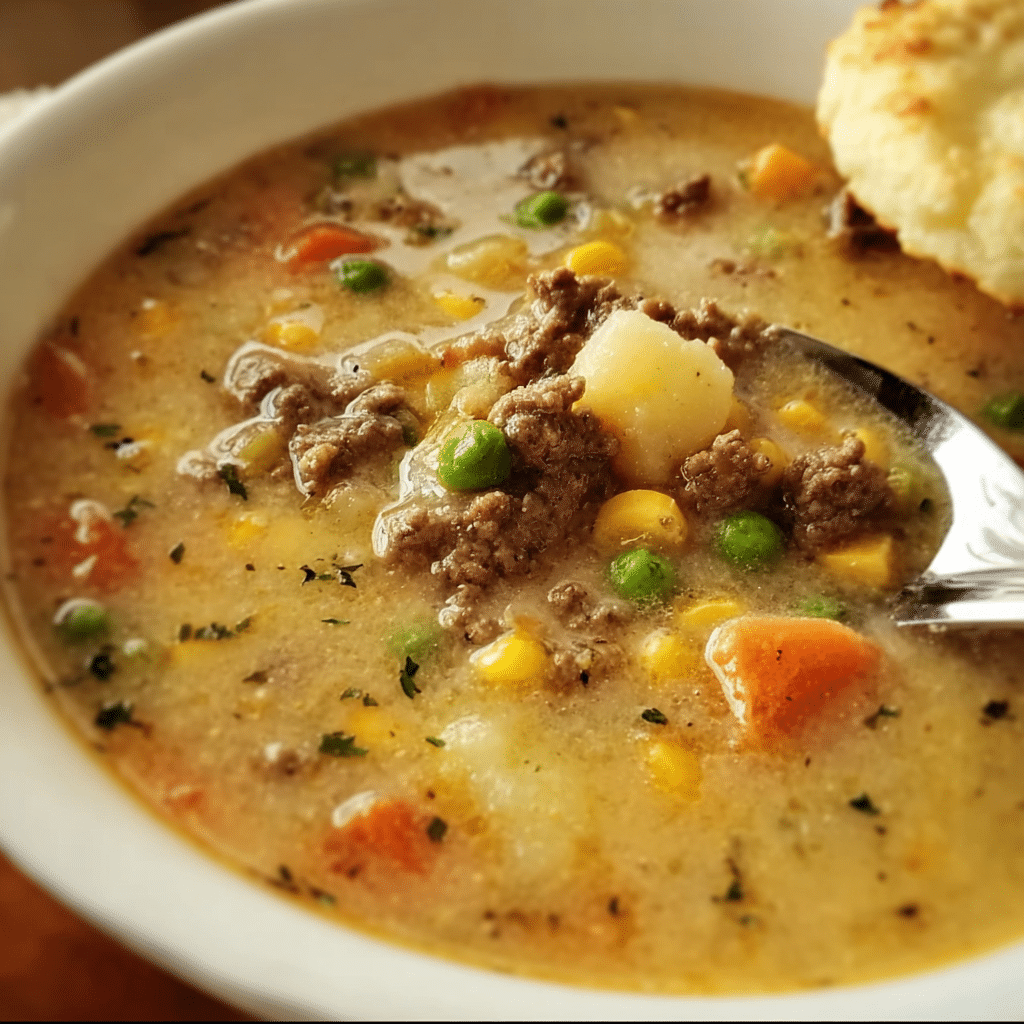
- Incorporate the Vegetables: Add the mixed frozen vegetables into the pot, letting them warm through for another 5 minutes. The vibrant colors will add a beautiful visual appeal to the dish.
Final Assembly
- Finish with Potatoes: Mash the cooked potatoes with the remaining salted butter and sour cream until smooth. This creamy mixture will be dolloped into your bowls of soup for a delightful finish. You can mix it directly into the soup or serve it on top as a garnish.
- Add the Cheese: Sprinkle the shredded cheddar cheese over the soup while it’s still hot, allowing it to melt beautifully. The cheesy goodness adds an extra layer of comfort.
- Serve and Enjoy: Ladle the shepherd’s pie soup into bowls and garnish with additional cheese or fresh herbs, if desired. Serve it with crusty bread for dipping, and prepare yourself for the warm embrace of this delightful dish.
As you cook, remember to savor the process. The aroma of the beef and vegetables cooking together is a sensory delight that will have your family flocking to the kitchen. Common mistakes to avoid include overcooking the vegetables or not seasoning enough; always taste as you go! And don’t worry if you make a mistake—cooking is all about experimentation and learning.
In conclusion, the journey of making shepherd’s pie soup is as rewarding as the final result. With this detailed guide, I hope you’re inspired to create a bowl of this comforting soup filled with love, flavor, and warmth. Happy cooking!
Professional Tips and Techniques for shepherd’s pie soup
When it comes to crafting the perfect shepherd’s pie soup, a delightful dish that marries the heartiness of a classic shepherd’s pie with the comforting essence of a warm soup, there are numerous tips and techniques to elevate your cooking game. As a passionate home cook who has spent countless evenings experimenting with this dish, I can assure you that understanding the nuances of preparation can make all the difference in creating a soul-satisfying bowl of shepherd’s pie soup.
Professional Techniques
To begin with, let’s talk about some professional cooking techniques that can enhance the flavor profile of your shepherd’s pie soup. One of the most important steps is to develop a flavor base. Start by sautéing aromatic vegetables like onions, carrots, and celery in a bit of olive oil or butter. This technique, known as mirepoix, not only adds depth to your soup but also fills your kitchen with an irresistible aroma that will have everyone eagerly anticipating dinner.
Another insider secret lies in the meat preparation. If you’re using ground beef or lamb, consider browning it in batches. This allows for better caramelization, which results in a richer flavor. After browning, deglaze the pan with a splash of red wine or broth to lift all those flavorful bits stuck to the bottom, incorporating them into your soup.
For an added layer of complexity, think about incorporating some fresh herbs like thyme or rosemary. Adding them at different stages of cooking can impact the flavor; for instance, adding woody herbs early on allows their flavors to permeate the dish, while adding delicate herbs just before serving preserves their freshness.
Troubleshooting Guide
Even the most seasoned cooks can run into problems when preparing shepherd’s pie soup. One common issue is achieving the right consistency. If your soup turns out too thick, simply add more broth or water until it reaches your desired consistency. On the other hand, if it’s too thin, consider making a slurry with cornstarch and water, or incorporate mashed potatoes to thicken it naturally.
Another challenge you might face is balancing flavors, especially if your soup turns out too salty or bland. If it’s too salty, a splash of vinegar or a bit of sugar can help balance the flavors. Conversely, if it’s lacking flavor, try adding more seasonings or a dash of Worcestershire sauce for that umami kick.
Presentation Tips
Presentation is key when it comes to soup, especially a dish as comforting as shepherd’s pie soup. A simple way to elevate your plating is to serve the soup in rustic bowls topped with a dollop of creamy mashed potatoes. Using a piping bag to pipe the potatoes can create a visually appealing presentation. For a gourmet touch, sprinkle freshly chopped herbs or a drizzle of olive oil on top just before serving. This not only adds color but also enhances the flavor.
As for wine pairings, a medium-bodied red wine like a Merlot or a Cabernet Sauvignon complements the flavors of shepherd’s pie soup beautifully. The richness of the soup pairs perfectly with the tannins in the wine, making for a delightful dining experience. If you prefer non-alcoholic options, consider serving the soup with a refreshing sparkling water infused with lemon or cucumber for a bright contrast.
In terms of kitchen tools, a sturdy Dutch oven is my go-to for soups and stews. Its ability to retain heat and distribute it evenly makes it perfect for simmering your shepherd’s pie soup. A good quality immersion blender can also be handy if you prefer a creamier texture.
Lastly, if you’re planning to make shepherd’s pie soup ahead of time, it freezes wonderfully. Portion it out into airtight containers, and it can last for up to three months in the freezer. When reheating, do so slowly on the stovetop to maintain the best texture and flavor.
Creative Variations and Adaptations of shepherd’s pie soup
Shepherd’s pie soup is a wonderfully versatile dish, and the beauty of it lies in its adaptability to various tastes and dietary needs. As someone who enjoys experimenting in the kitchen, I’ve discovered that variations of shepherd’s pie soup can be a fun way to keep things fresh and exciting. Whether you’re looking to incorporate seasonal ingredients or adapt the recipe for specific dietary requirements, the possibilities are endless!
Seasonal Variations
Embracing seasonal ingredients can transform your shepherd’s pie soup from a comforting staple into a dish that reflects the time of year. In the fall, consider adding roasted butternut squash or sweet potatoes to the mix. These ingredients not only enhance the flavor but also add a touch of sweetness that pairs beautifully with the savory components of the soup.
In the spring, fresh peas and asparagus can brighten the dish and provide a pop of color. Simply toss them in towards the end of cooking to retain their vibrant texture and flavor. Summer lends itself well to fresh herbs like basil or cilantro, which can be added to the soup as a finishing touch, giving it a refreshing quality.
Dietary Adaptations
For those with dietary restrictions, shepherd’s pie soup can easily be modified. If you’re following a keto diet, substitute traditional flour-thickened broth with a low-carb alternative like xanthan gum or pureed cauliflower to achieve that creamy texture without the carbs. For a vegan version, replace the meat with lentils or mushrooms and use vegetable broth instead of beef or chicken broth. With a few simple substitutions, you can create a comforting vegan shepherd’s pie soup that satisfies without sacrificing flavor.
If gluten is a concern, ensure that your broth is gluten-free and consider using cornstarch or gluten-free flour for thickening. This way, everyone can enjoy this hearty soup without worry!
Creative Twists
Taking inspiration from international cuisines can also breathe new life into shepherd’s pie soup. For a Mexican twist, try adding black beans, corn, and spices like cumin and chili powder for a zesty variation. Alternatively, a Mediterranean version could incorporate chickpeas, sun-dried tomatoes, and olives, bringing in a delightful contrast of flavors.
Experimenting with different cooking methods can also yield unique results. While the traditional stovetop method works wonderfully, you might also try making your shepherd’s pie soup in a slow cooker. This method allows flavors to meld beautifully over a low and slow cook, resulting in a rich and hearty soup. Just throw in your ingredients in the morning, and by dinner time, you’ll have a warm, comforting meal waiting for you.
Leftovers can be transformed into a completely new dish as well. Consider using your shepherd’s pie soup as a filling for pot pies or even as a base for shepherd’s pie itself, topping it with a layer of creamy mashed potatoes and baking it until golden brown. The versatility of this dish means that it can easily adapt to whatever you have on hand!
In conclusion, whether you’re seeking to make a comforting bowl of shepherd’s pie soup for your family or impressing guests with a gourmet twist, the variations and adaptations are endless. Each iteration tells a story, reflecting the seasons, your personal preferences, and the diverse culinary landscape we all navigate as home cooks. So go ahead, explore the possibilities, and have fun creating your unique version of this beloved dish!
Storage, Reheating, and Meal Prep for shepherd’s pie soup
When it comes to making shepherd’s pie soup, one of the most delightful aspects is not just enjoying it fresh, but also how well it stores and reheats for future meals. Whether you have leftovers from a cozy dinner or you’re batch cooking for the week, understanding how to properly store this comforting dish can enhance your culinary experience. In this section, we’ll cover everything you need to know about storage, reheating, and meal prep for shepherd’s pie soup.
Short-term Storage
Once you’ve prepared your shepherd’s pie soup, the first thing you’ll want to do is store it correctly if you don’t plan to eat it all in one sitting. For short-term storage, the refrigerator is your best friend. Ideally, you want to transfer the soup into airtight containers. Glass containers with snap-on lids are fantastic because they help prevent any unwanted odors from the fridge from seeping into your soup. If you don’t have glass containers, BPA-free plastic containers will work just fine.
It’s essential to let the soup cool down to room temperature before sealing it up. Placing hot food directly into the fridge can raise the temperature inside, which can lead to bacteria growth. Once cooled, the shepherd’s pie soup can be stored in the refrigerator for up to 3-4 days. When you’re ready to enjoy it again, just give it a good stir before reheating, as some ingredients may settle at the bottom.
Freezing and Long-term Storage
If you’re looking at meal prep or simply want to make a big batch of shepherd’s pie soup for later, freezing is an excellent option. When done correctly, freezing can extend the shelf life of your soup for up to 3 months. To freeze your soup, ensure it has completely cooled, then ladle it into freezer-safe bags or containers. If you’re using bags, try to squeeze out as much air as possible before sealing to prevent freezer burn.

Label your containers with the date and contents. This simple step can save you from the dreaded mystery meal later on! When you’re ready to enjoy your frozen shepherd’s pie soup, the best way to thaw it is by placing it in the refrigerator overnight. If you’re short on time, you can also use the microwave or stovetop to reheat it from frozen. Just be cautious and ensure it’s heated all the way through.
Reheating Best Practices
Reheating your shepherd’s pie soup is a breeze, but there are a few tips to keep in mind to maintain its quality. If you’ve stored it in the fridge, simply pour the desired amount into a pot and heat it over medium-low heat. Stir occasionally to ensure even heating. If you find the soup is too thick after refrigeration, don’t hesitate to add a splash of broth or water to loosen it up.
For those who have frozen their soup, the microwave is a quick option. Transfer the soup to a microwave-safe bowl, cover it loosely to avoid splatters, and heat at 50% power in 2-minute intervals, stirring in between, until it reaches your desired temperature. If you prefer the stovetop, you can place it in a pot over low heat, stirring frequently. Just remember to keep an eye on it to prevent scorching.
Food safety is paramount when reheating any leftovers. Always ensure that your shepherd’s pie soup is heated to an internal temperature of 165°F (74°C) before consuming. This not only ensures that any bacteria present are eliminated but also guarantees a safe and delicious meal.
It’s worth noting that while reheating can still deliver a delicious experience, the texture of certain ingredients—like potatoes—might alter a bit over time. The flavors, however, often meld together beautifully, sometimes making the soup even more flavorful than when it was freshly made!
To sum it up, whether you’re enjoying shepherd’s pie soup fresh or savoring it later, understanding the nuances of storage, freezing, and reheating can significantly improve your overall experience. With these tips, you’ll be well-equipped to enjoy every spoonful, whether it’s a quick lunch at home or a cozy dinner on a chilly evening.
Nutritional Benefits and Health Information
Shepherd’s pie soup is not only a warm and comforting dish, but it also boasts a variety of nutritional benefits that can cater to different dietary needs. In this section, we’ll explore the nutritional profile of this soup, highlight the health benefits of its key ingredients, and offer suggestions for healthy modifications.
Nutritional Profile
The beauty of shepherd’s pie soup lies in its hearty ingredients. The base typically consists of ground meat—commonly lamb or beef—alongside vegetables like carrots, peas, and onions, all swimming in a savory broth. A standard serving of shepherd’s pie soup (about 1 cup) can range from 250 to 400 calories, depending on the proportions of meat, vegetables, and any added starches like potatoes or corn.
In terms of macronutrients, you can expect a balanced distribution. A typical serving may contain around 15-25 grams of protein, which comes primarily from the meat, making it a great option for those looking to build or maintain muscle. The fiber content, derived from the vegetables, usually hovers around 4-6 grams per serving. This fiber aids in digestion and helps keep you feeling full, which is especially beneficial for those managing their weight.
Health Benefits
Now let’s dive into the health benefits of some key ingredients in shepherd’s pie soup. Ground meat, particularly lean cuts, offers a rich source of iron and vitamin B12. Iron is crucial for healthy blood production and energy levels, while vitamin B12 supports nerve function and the formation of red blood cells.
The vegetables in shepherd’s pie soup contribute a wealth of vitamins and minerals. For instance, carrots are packed with beta-carotene, an antioxidant that supports eye health and immune function. Peas add protein, fiber, and a variety of vitamins, including vitamin K, which plays a role in bone health. Onions, often overlooked, have anti-inflammatory properties and can help regulate blood sugar levels.
Moreover, if you opt for a whole grain or cauliflower mash instead of traditional mashed potatoes, you can significantly increase the fiber content while lowering the glycemic index of the dish, making it a heart-healthy option.
Dietary Considerations
Shepherd’s pie soup can be quite versatile, accommodating various dietary restrictions with a little creativity. For those who are gluten-sensitive or following a gluten-free diet, ensure that the broth is gluten-free and consider using cornmeal or quinoa instead of traditional flour-thickened options. If you’re vegetarian or vegan, you can substitute the meat with lentils or a plant-based protein, maintaining the heartiness of the dish without compromising on flavor.
Allergen considerations should also be kept in mind. Common allergens such as dairy can be easily avoided by using plant-based milk for any creamy elements in the soup. Additionally, make sure to check labels on store-bought broths and sauces to avoid hidden allergens.
In terms of calorie content, shepherd’s pie soup can be adjusted to fit various diet plans, whether you’re following a low-carb, paleo, or Mediterranean diet. By modifying the ingredients—like swapping out potatoes for sweet potatoes or adding more greens—you can tailor the soup to meet your health goals while still enjoying the rich, comforting flavors.
In conclusion, shepherd’s pie soup is not only a delightful dish but also offers a myriad of nutritional benefits. With the right ingredients and modifications, you can enjoy a hearty, flavorful meal that supports your health and satisfies your taste buds. Whether you’re looking for comfort food or a nourishing meal, shepherd’s pie soup has got you covered!