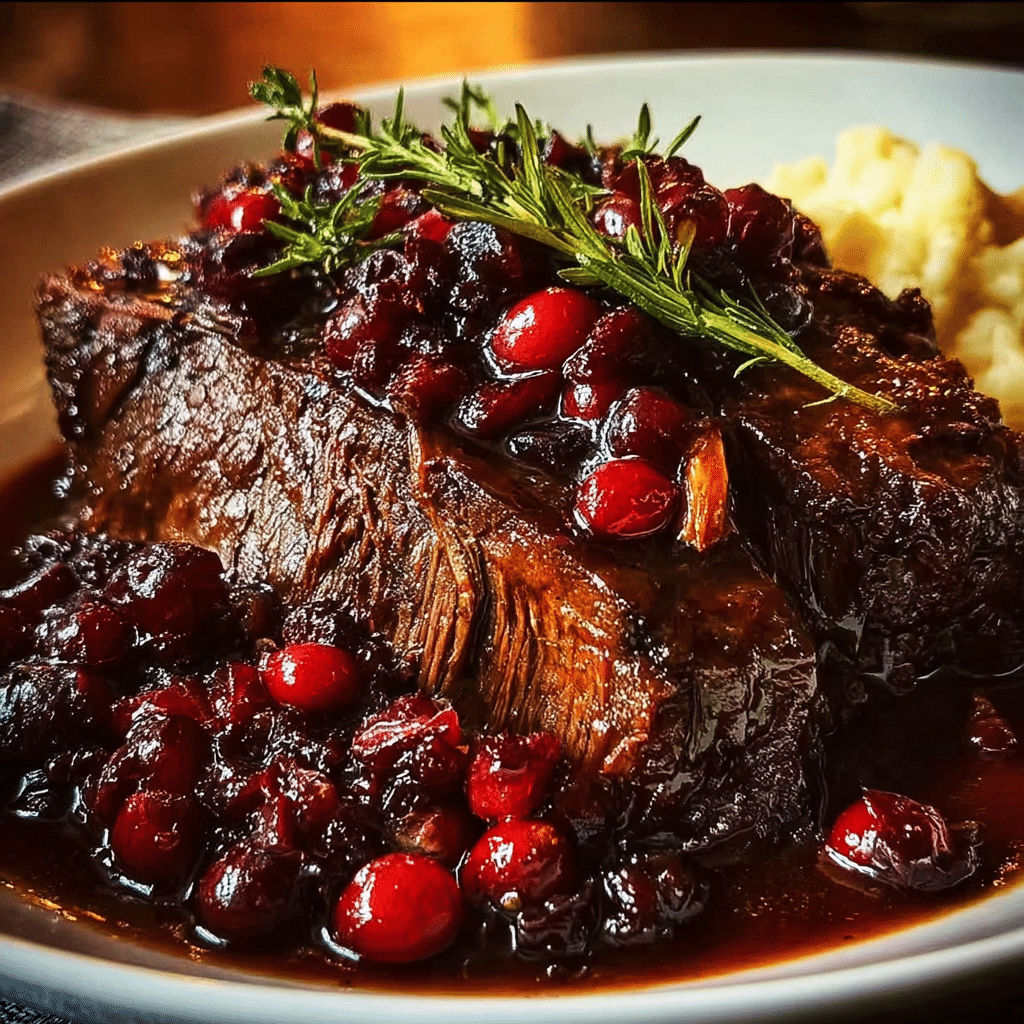
Slow-braised beef roast has a way of warming not just the belly but also the heart. I fondly remember the first time I encountered this dish during a chilly winter evening at my grandmother’s house. The aroma of tender beef simmering in a rich, tangy glaze filled the air, mingling with the faint scent of pine from the nearby Christmas tree. I still can’t believe how such a simple recipe could evoke such strong feelings of nostalgia and comfort. Little did I know, this dish would become a staple in my own home, especially during the busy holiday season.
As the years went by, I learned to master the art of slow-braising. I recall one particular Sunday afternoon, the kind where the sun barely breaks through the clouds, I decided to try my hand at recreating that cherished family recipe. The ingredients were straightforward—succulent beef roast, fresh cranberries, balsamic vinegar, and a handful of herbs. Yet, what really set it apart was the love and care that went into its preparation. This isn’t just a recipe; it’s a tradition, a way to bring family together, and a canvas to showcase culinary creativity.
The Story Behind This Recipe
The origins of slow-braised beef roast trace back centuries, with roots in various cuisines around the world. In many cultures, slow cooking was a necessity, a way to make tougher cuts of meat tender and flavorful. Various versions of braised beef can be found across Europe, from the French “Boeuf Bourguignon” to Italian “Brasato.” The slow-braising technique allows the meat to absorb the flavors of the accompanying ingredients while breaking down connective tissues, resulting in a melt-in-the-mouth experience.
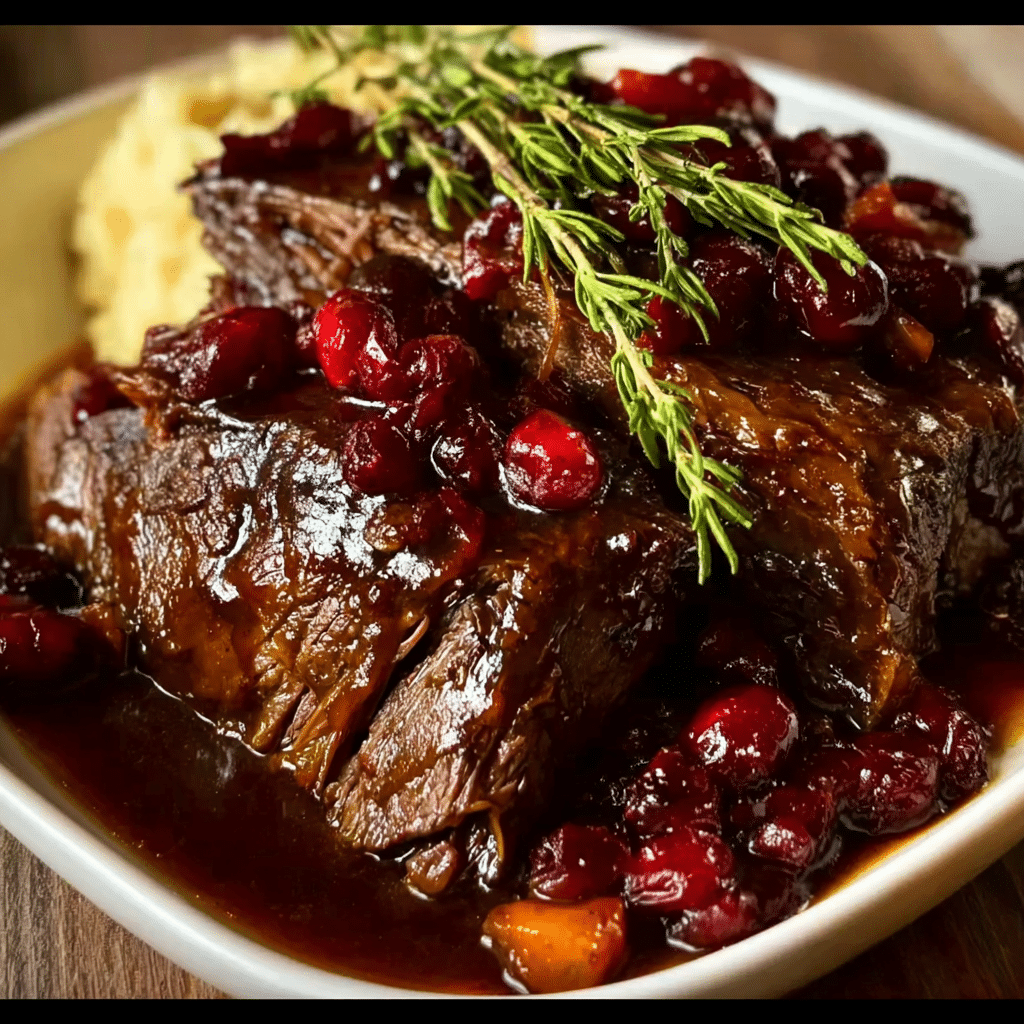
What makes this particular slow-braised beef roast special is not just the ingredients, but the unexpected twist of using cranberry and balsamic glaze. This unique combination infuses the dish with a bright acidity that cuts through the richness of the beef, elevating it to an entirely new level. I’ve served it at family gatherings, potlucks, and even holiday dinners, and it never fails to impress. The vibrant color of the glaze and the tender meat create a dish that looks as good as it tastes, making it perfect for special occasions.
Why You’ll Love This Dish
For busy families, finding a quick dinner solution can often feel like a daunting task. The beauty of a slow-braised beef roast is that it’s incredibly simple to prepare yet yields impressive results. Once you toss the ingredients into the pot, you can let it simmer away while you attend to the chaos of everyday life—helping with homework, running errands, or just enjoying a cozy evening at home. The slow cooking process allows the flavors to develop and deepen, resulting in a dish that feels gourmet without requiring constant attention.
Seasonally, this dish shines brightest during the cooler months, when hearty meals are both comforting and satisfying. The festive flavors of cranberry and balsamic vinegar make it an excellent choice for Thanksgiving or Christmas dinner, and it can easily be adapted for a cozy family meal any night of the week. As the seasons change and the temperature drops, I find myself reaching for this recipe time and time again, reminded of the warmth and joy it brings to my family’s table.
Emotionally, slow-braised beef roast is more than just a meal; it’s a celebration of togetherness. Each bite carries with it a piece of my family’s history, a reminder of love shared around the dinner table. It’s about creating memories, whether it’s the laughter of children, the stories exchanged among relatives, or the quiet moments of reflection as we savor the flavors. This dish has a way of turning an ordinary evening into something extraordinary.
In this guide, you’ll learn everything you need to know about making the perfect slow-braised beef roast, from selecting the right cut of meat to mastering the art of the glaze. I’ll share tips, tricks, and personal anecdotes that will not only help you cook this dish but also inspire you to create your own family traditions. Whether you’re a seasoned cook or a beginner, I promise you’ll find joy and satisfaction in this timeless recipe.
The Rich History and Cultural Significance of slow-braised beef roast
The rich history and cultural significance of slow-braised beef roast is a tapestry woven through centuries and across continents. This cooking method has been a staple in many cultures, primarily due to its effectiveness in transforming tougher cuts of meat into tender, flavorful delights. The earliest records of braising date back to the medieval ages when cooking methods were simple yet ingenious, often involving long, slow cooking over an open fire. In this section, we will explore the origins, regional variations, and the evolution of this beloved dish.
Origins and History
The slow-braised beef roast, in its various forms, can be traced back to different parts of the world. In ancient times, when food preservation was crucial, the braising technique allowed cooks to make the most of inexpensive, tougher cuts of meat. In France, the dish known as “Boeuf Bourguignon” has been celebrated for its rich flavors and tender beef, showcasing the essence of slow cooking. Meanwhile, in Italy, the tradition of “Brasato” involves cooking beef in red wine, combining regional ingredients with the fundamental principles of braising.
As time progressed, the technique spread across borders, adapting to local tastes and available ingredients. In the United States, the slow-braised beef roast found its way into homes as a comforting Sunday dinner, often served with seasonal vegetables and potatoes. It became a symbol of family bonding, a dish that was shared during significant occasions like holidays and family reunions. The slow-braising method not only added flavor but also created an opportunity for families to gather around the table, sharing stories and laughter.
Cultural Significance
Slow-braised beef roast is more than just a meal; it represents cultural heritage and the importance of communal dining. In many cultures, the act of cooking and sharing meals is a sacred ritual that fosters relationships and strengthens bonds. For instance, in Latin American countries, pot roasts are often a centerpiece at family gatherings, symbolizing unity and tradition. Similarly, in Europe, slow-cooked dishes are often associated with feasting and celebration, marking special occasions with flavors that evoke fond memories.
As the dish’s popularity grew, renowned chefs began to experiment with it, elevating it to fine dining status. Restaurants around the world have put their unique spins on slow-braised beef, incorporating local flavors to create innovative variations. The dish has transitioned from humble beginnings to a gourmet experience, featured on menus in upscale establishments, yet it remains accessible to home cooks.
Nutritional Benefits
When prepared thoughtfully, slow-braised beef roast can also be a nutritious option. Using lean cuts of beef provides a good source of protein, iron, and essential vitamins. Pairing it with seasonal vegetables not only enhances the flavor but also increases the nutritional value of the dish. Root vegetables like carrots, potatoes, and parsnips can be added during cooking, absorbing the rich flavors of the broth while providing fiber and nutrients.
Moreover, the slow cooking process allows for the breakdown of collagen in the meat, making it easier to digest while enriching the broth with gelatin—a natural source of amino acids. This can be particularly beneficial for gut health and joint support. When accompanied by a side salad or whole grains, slow-braised beef roast becomes a well-rounded meal that nourishes both the body and soul.
In conclusion, the slow-braised beef roast is not just a dish; it’s a story of cultural significance, nutritional benefits, and a celebration of togetherness. Whether you are preparing it for a special occasion or a weeknight family dinner, this timeless recipe continues to bring people together, fostering connections and creating lasting memories.
Essential Ingredients for Perfect slow-braised beef roast
When it comes to crafting the perfect slow-braised beef roast, the foundation lies in the ingredients. Each component plays a critical role in building flavor, texture, and aroma, creating a dish that transforms the humble roast into something extraordinary. Let’s dive into the essential ingredients that you will need to create this mouthwatering dish, along with tips on selection, storage, and possible substitutions.
Essential Ingredients
- 3 to 5 pounds ribeye roast: This cut is rich in marbling, which means it will stay juicy and tender during the slow-braising process. Look for a roast with a good balance of fat and meat, as the fat will melt down and infuse flavor into the roast.
- 1/2 cup Balsamic vinegar: This ingredient adds a rich, tangy sweetness to the glaze. Opt for high-quality aged balsamic vinegar for the best flavor. It should be thick and syrupy, indicating it’s been aged properly.
- 2 garlic cloves, minced: Garlic adds depth and a savory punch to the dish. Fresh garlic is always preferable; look for firm cloves with tight skin.
- 1/4 cup cranberry sauce: This brings a lovely tartness and sweetness that balances the richness of the beef. Homemade cranberry sauce is ideal, but store-bought works well too. Just ensure it has minimal added sugars.
- 2 tablespoons brown sugar: The brown sugar complements the balsamic vinegar and cranberry sauce, enhancing the overall sweetness of the glaze. Use light or dark brown sugar based on your preference; dark will impart a more robust flavor.
- 1 teaspoon red pepper flakes: A pinch of heat brightens up the flavor profile. Adjust the amount based on your spice tolerance, or omit entirely if you prefer a milder dish.
- Salt to taste: Essential for bringing out the flavors of the dish. Kosher salt is preferred in cooking due to its larger grains and ease of use.
- 2 tablespoons olive oil: This is used for searing the roast before braising, adding a layer of flavor. A high-quality extra virgin olive oil can elevate your dish significantly.
- 2 tablespoons vegetable oil: This has a higher smoke point than olive oil and is perfect for the initial searing of your slow-braised beef roast.
- 1/2 cup beef broth: This serves as the braising liquid, infusing moisture and flavor into the roast. Use low-sodium broth to control the saltiness of the final dish.
- 2 cups cranberries: Fresh cranberries add a touch of tartness and texture. They should be plump and firm, with a deep red color. In the off-season, frozen cranberries can be used as a substitute.
- 6 sprigs thyme: Fresh thyme imparts an earthy aroma and flavor that complements the beef beautifully. Look for vibrant green sprigs without wilting leaves.
Slow-Braised Beef Roast with Cranberry Balsamic Glaze
Ingredients
- 3 to 5 pounds ribeye roast
- 1/2 cup Balsamic vinegar
- 2 garlic cloves, minced
- 1/4 cup cranberry sauce
- 2 tablespoons brown sugar
- 1 teaspoon red pepper flakes
- Salt to taste
- 2 tablespoons olive oil
- 2 tablespoons vegetable oil
- 1/2 cup beef broth
- 2 cups cranberries
- 6 sprigs thyme
Instructions
- Combine the balsamic vinegar, garlic, cranberry sauce, brown sugar, red pepper flakes, salt and olive oil in a large, re-sealable food storage bag (large enough to hold the beef roast). Reserve.
- Pierce the roast all over with a knife and place it in the bag. Close the bag and massage the roast with the marinade. Refrigerate overnight, turning the bag occasionally.
- Preheat oven to 350F degrees.
- Remove the roast from the marinade and wipe it with a paper towel to remove excess marinade.
- Heat the vegetable oil in a large cast iron pan, over medium heat. Place beef in hot pan and sear until deep golden brown on all sides.
- Add the marinade to the pan along with 1/2 cup beef broth and mix to combine. Add the cranberries and thyme and transfer the pan into the oven.
- Roast for about 20 min per pound of meat OR until a thermometer reads 140F degrees for medium rare.
- Remove from the oven and let rest for 15 minutes before carving and serving with the pan sauce.
Shopping Tips
When shopping for the ingredients, it’s beneficial to visit local farmers’ markets or specialty grocery stores. These venues often carry fresher produce and high-quality meats. For the ribeye roast, inquire at the butcher counter for the best cuts—they can also provide insights into sourcing organic versus conventional options. When choosing cranberries, whether fresh or frozen, ensure they are free from blemishes and mold. The balsamic vinegar should have a rich flavor; consider tasting a few brands to find the one that you enjoy the most.
Substitutions and Alternatives
For those with dietary restrictions or preferences, there are several substitutions available. If you are looking for a leaner cut, consider using a chuck roast or brisket, but remember that the cooking time may vary. For a gluten-free option, ensure that the balsamic vinegar and any broth used are certified gluten-free. If you need to avoid sugar, you can replace the brown sugar with a natural sweetener like honey or maple syrup, adjusting to taste. Fresh thyme can be substituted with dried thyme, using about one-third the amount, as dried herbs are more concentrated.
Storage tips are equally important; keep your fresh ingredients in the refrigerator and use them within a week for the best quality. The ribeye roast can be frozen if you’re not planning to use it right away. Ensure it’s well-wrapped to prevent freezer burn. Balsamic vinegar and cranberry sauce can be stored in a cool, dark place, while oils should be kept in a dark cabinet. Fresh cranberries can last a few weeks in the fridge, so stock up when they’re in season!
As you gather these essential ingredients for your slow-braised beef roast, remember that the quality of your ingredients will directly impact the final result. Taking the time to select the best options will lead to a dish that is not only delicious but also showcases the love and care you put into the cooking process.
Detailed Step-by-Step slow-braised beef roast Cooking Instructions
Creating a stunning slow-braised beef roast is not just about the ingredients; the process is equally important. The art of slow-braising requires patience and attention, but it yields a dish that is bursting with flavor and tenderness. Below, I will guide you through detailed step-by-step instructions to help you master this comforting dish.
Preparation Steps
- Gather your ingredients: Before you start, make sure all your ingredients are prepped and within reach. This is known as mise en place and will make the cooking process much smoother.
- Preheat your oven: Set your oven to 325°F (163°C). This is the ideal temperature for slow-braising, ensuring that the beef becomes tender without drying out.
- Season the roast: Generously sprinkle salt on all sides of the ribeye roast. This not only enhances the flavor but also helps to create a delicious crust when seared.
- Prepare the glaze: In a mixing bowl, combine the balsamic vinegar, minced garlic, cranberry sauce, brown sugar, and red pepper flakes. Stir well to create a smooth glaze. This mixture will later coat the roast and provide a beautiful flavor profile.
Cooking Process
- Heat the oils: In a large, oven-safe pot or Dutch oven, heat the olive oil and vegetable oil over medium-high heat. The mix of oils gives a good balance for searing.
- Sear the roast: Once the oil is hot and shimmering, carefully add the ribeye roast. Sear each side for about 4-5 minutes until a deep brown crust forms. This step is crucial for flavor development, so don’t rush it!
- Add aromatics: After searing, remove the roast and set it aside. In the same pot, add a splash of beef broth to deglaze, scraping up any browned bits from the bottom. These bits are packed with flavor!
- Combine the ingredients: Return the roast to the pot and pour the prepared glaze over it. Add the remaining beef broth and cranberries, and tuck the thyme sprigs around the roast.
- Braise in the oven: Cover the pot with a lid and transfer it to the preheated oven. Allow it to braise for about 3-4 hours, or until the meat is fork-tender. This low and slow method is what makes the slow-braised beef roast so delicious.
Final Assembly
- Check for doneness: About 30 minutes before the roast is done, check the internal temperature using a meat thermometer. It should read at least 190°F (88°C) for optimal tenderness.
- Rest the meat: Once done, remove the pot from the oven and let the beef rest for 15-20 minutes. This allows the juices to redistribute, ensuring a moist roast.
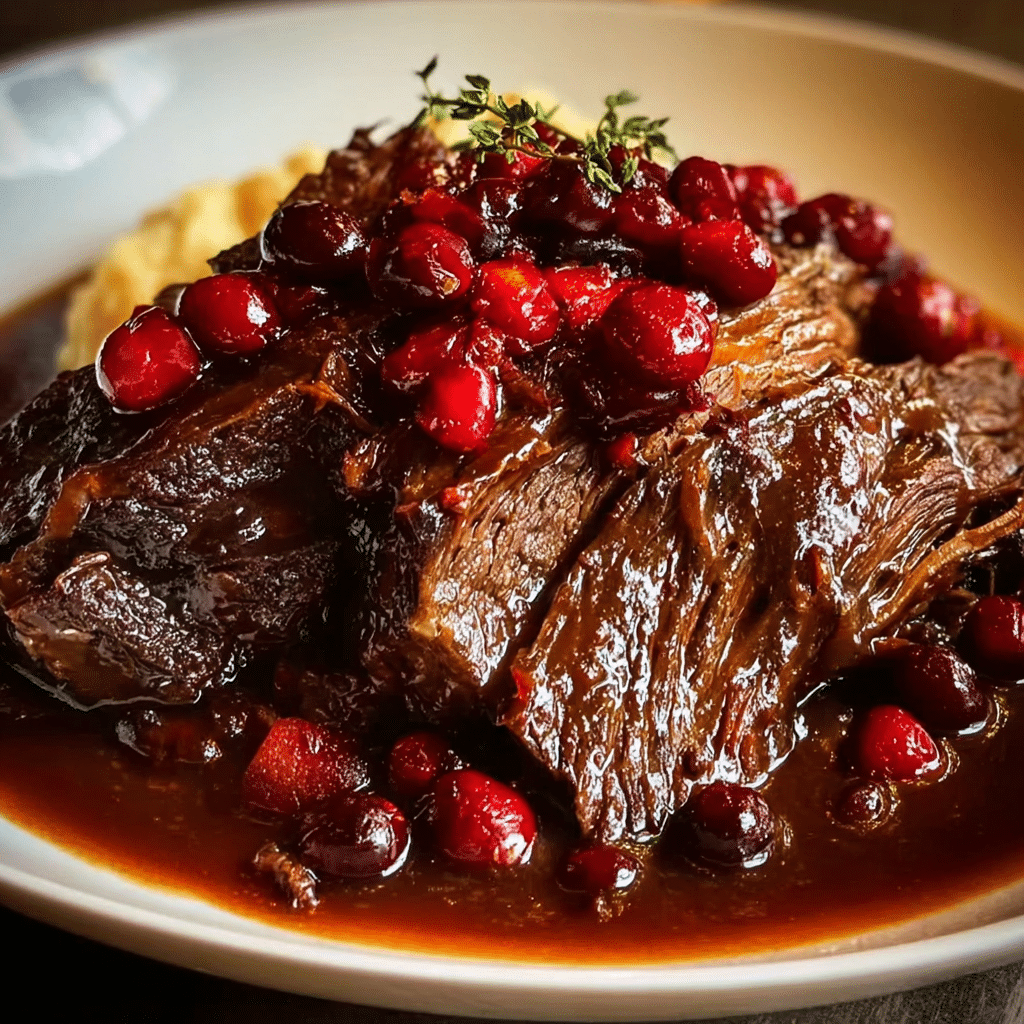
- Slice and serve: Carefully slice the roast against the grain for maximum tenderness. Serve with the pan juices and cranberries drizzled over the top. This dish pairs beautifully with creamy mashed potatoes or roasted vegetables.
As you embark on this culinary journey, remember that the beauty of a slow-braised beef roast lies in the process. Each step builds upon the last, leading to a dish that is not only a feast for the eyes but also a warm embrace for the soul. Enjoy the aromas filling your kitchen and the anticipation of sharing this delightful meal with loved ones.
Professional Tips and Techniques for slow-braised beef roast
When it comes to preparing a mouthwatering slow-braised beef roast, a few professional tips and techniques can elevate your dish from good to unforgettable. These insights, gathered from years of cooking and experimenting in the kitchen, will help you master the art of slow-braising, ensuring that your beef is tender, flavorful, and perfectly cooked every time.
Professional Techniques
First, let’s talk about the cut of meat. Selecting the right cut is essential for a successful slow-braised beef roast. Cuts like chuck roast, brisket, or round roast are ideal due to their marbling and connective tissue, which break down during the slow cooking process, resulting in a succulent and tender dish. When shopping, look for a well-marbled piece of meat; this fat will melt during cooking, adding flavor and moisture.
Next, searing the beef before braising is a step you shouldn’t skip. This process caramelizes the surface of the meat, creating a depth of flavor that is simply irresistible. Heat a heavy-bottomed pan or Dutch oven over medium-high heat, add a little oil, and then sear each side of the roast until it’s beautifully browned. This step might take a bit of time, but trust me, it’s worth it.
Once your beef is seared, it’s time to add the braising liquid. For a slow-braised beef roast, consider using a combination of stock, wine, and acidic components like balsamic vinegar or tomatoes. The acidity helps to break down the meat fibers, making your roast even more tender. Don’t forget to scrape up any browned bits from the bottom of the pan; these bits are packed with flavor and will enrich your dish.
Another crucial technique is to maintain a low and slow cooking temperature. Aim for a cooking temperature of around 300°F (150°C). This allows the collagen in the meat to break down gently without drying it out. The cooking time will vary depending on the size of your roast, but you should plan for at least 3-4 hours, or even longer for larger cuts. The low temperature ensures that the beef becomes meltingly tender and flavorful.
Troubleshooting Guide
Even the best cooks encounter issues from time to time. Here are some common problems and how to fix them when preparing a slow-braised beef roast.
If your roast is tough, it might not have cooked long enough. Remember, the key to tender beef is patience. If you’ve followed the cooking times but it’s still chewy, simply return it to the oven and let it braise a bit longer. Conversely, if your roast has turned out too dry, it may have cooked at too high a temperature. Always monitor the heat and check for doneness using an instant-read thermometer; the internal temperature should be around 195°F (90°C) for perfectly tender beef.
Another issue could be the flavor of the broth. If it tastes bland, consider adding more seasoning or herbs. Fresh herbs like thyme, rosemary, or bay leaves can enhance the flavor profile significantly. Taste the liquid as it cooks, and adjust the seasonings accordingly.
Presentation Tips
slow-braised beef roast beautifully. Start by allowing the roast to rest for at least 15-20 minutes after cooking; this helps redistribute the juices within the meat. When it’s time to slice, use a sharp knife and cut against the grain for the most tender pieces.
For presentation, consider serving the roast on a large platter with a rich sauce drizzled over the top. Surround it with seasonal vegetables or a bed of creamy mashed potatoes for a rustic touch. Garnish with fresh herbs or a sprinkle of sea salt to add a pop of color.
When it comes to wine pairings, a robust red wine such as a Cabernet Sauvignon or a Malbec complements the flavors of a slow-braised beef roast perfectly. If you’re feeling adventurous, you could even use the same wine for cooking the roast to tie the flavors together.
In conclusion, mastering the art of the slow-braised beef roast requires a combination of the right techniques, troubleshooting strategies, and creative presentation ideas. With these tips in hand, you’ll be well on your way to creating a delicious and impressive dish that will be the star of any dinner table.
Creative Variations and Adaptations of slow-braised beef roast
As a passionate home cook, I love experimenting with traditional recipes, and the slow-braised beef roast is no exception. There are countless creative variations and adaptations that can breathe new life into this classic dish, making it suitable for different tastes, dietary preferences, and seasonal ingredients. Let’s dive into some innovative ways to enhance this beloved recipe.
Seasonal Variations
One of the easiest ways to adapt your slow-braised beef roast is by incorporating seasonal ingredients. In the fall, consider adding root vegetables like carrots, parsnips, and turnips. Their natural sweetness pairs beautifully with the rich flavors of the beef. Simply chop them into large chunks and add them to the pot during the final hour of cooking.
In winter, you can switch things up by using hearty greens like kale or collard greens. Braise them along with the beef to add a nutritional boost and a vibrant splash of color to your plate. You could also infuse your broth with warming spices like cinnamon or nutmeg to create a cozy atmosphere on chilly evenings.
Spring offers a bounty of fresh herbs and lighter vegetables. Try using asparagus or peas in your braise, adding them towards the end of cooking to retain their bright color and crispness. A splash of lemon juice can brighten the flavors, making your roast feel fresh and vibrant. In summer, experiment with tomatoes and zucchini, creating a Mediterranean twist on the classic dish.
Dietary Adaptations
While beef roasts are traditionally rich and hearty, you can easily adapt this recipe to accommodate various dietary needs. For those following a keto diet, consider using a low-carb vegetable base like cauliflower instead of starchy potatoes. Cauliflower mash pairs wonderfully with the beef and can be prepared in a similar fashion as mashed potatoes.
If you’re catering to a vegan audience, there’s a way to create a delicious plant-based version. Substitute the beef with a hearty option like jackfruit or mushrooms, both of which can stand up to the slow-braising process. Use vegetable broth and add umami-rich ingredients like soy sauce or miso paste to mimic the savory depth of a traditional roast.
For gluten-free diners, ensure that any sauces or broths used are certified gluten-free. You can also thicken your braising liquid with cornstarch or arrowroot powder instead of flour for a gluten-free option.
Creative Twists
Taking a step into international cuisine can also bring exciting new flavors to your slow-braised beef roast. For instance, you can prepare an Asian-inspired version by incorporating ingredients like soy sauce, ginger, and star anise into your braising liquid. Serve with steamed rice and a side of stir-fried vegetables for a fusion meal.
Alternatively, infuse Mexican flavors by adding chipotle peppers and cumin to your braise. Shred the cooked beef and serve it in tacos with fresh cilantro, diced onions, and a squeeze of lime for a delicious twist on traditional flavors.
Don’t forget about the cooking methods when exploring variations! While the oven is a classic choice, you can achieve fantastic results using a slow cooker or an Instant Pot. Both options allow for hands-off cooking, making it easier to enjoy a slow-braised beef roast without spending all day in the kitchen. If using a slow cooker, sear the beef first on the stovetop, then transfer it to the slow cooker with the braising liquid for a perfectly tender result.
Lastly, let’s not overlook the potential of leftovers. Once you’ve enjoyed your slow-braised beef roast, consider transforming the remaining meat into a hearty beef stew, or shred it for sandwiches. Pair it with barbecue sauce for a delicious pulled beef sandwich or toss it into a salad for a protein-packed meal. The possibilities are truly endless!
In summary, the slow-braised beef roast is a versatile dish that can be adapted to suit various tastes, seasons, and dietary preferences. With a little creativity and experimentation, you can create a dish that feels both familiar and exciting, perfect for any occasion.
Storage, Reheating, and Meal Prep for slow-braised beef roast
When it comes to preparing a slow-braised beef roast, one often wonders not just about the cooking process, but also about how to properly store the delicious results. After all, a well-cooked beef roast can be a centerpiece for meals throughout the week. Understanding the nuances of storage, reheating, and meal prep can elevate your culinary experience, ensuring that every bite remains as delightful as the first.
Short-term Storage
Once your slow-braised beef roast is cooked to perfection, you’ll want to store it correctly to maintain its flavor and texture. The first step is to let it cool down at room temperature for no more than two hours. This is crucial because allowing food to sit out too long can encourage bacterial growth, which is a no-go in any kitchen. After it has cooled, slice the roast into portions, which not only makes for easier reheating but also helps it cool faster.
For short-term storage, use airtight containers or heavy-duty aluminum foil to wrap the beef roast tightly. Glass containers are an excellent choice since they are non-porous and won’t absorb any odors. If you’re using plastic containers, ensure they are BPA-free and designed for food storage. Stored properly, your slow-braised beef roast can last in the refrigerator for about 3 to 4 days. For best results, label your containers with the date so you can keep track of freshness.
Freezing and Long-term Storage
If you’re not planning to consume your slow-braised beef roast within a few days, freezing is your best option. Freezing locks in the flavors and prevents spoilage. However, some techniques can make a significant difference in maintaining quality. First, ensure that the roast is cooled completely before freezing. You can use freezer-safe bags or containers; just make sure to expel as much air as possible to prevent freezer burn.
When wrapping in freezer bags, lay the roast flat to save space, and consider portioning it out beforehand if you know you’ll be eating it in stages. This way, you can defrost only what you need without having to thaw the whole roast. For the best quality, consume your frozen slow-braised beef roast within 3 to 6 months. It will still be safe to eat beyond that, but the texture and flavor may degrade.
Reheating Best Practices
Reheating a slow-braised beef roast can be a delicate process. The goal is to warm it through without drying it out or overcooking it. If you’ve frozen your roast, thaw it in the refrigerator overnight for an even reheating process. For reheating, consider using the oven. Preheat your oven to 300°F (150°C), place the roast in an oven-safe dish, cover it with foil to retain moisture, and heat for about 20-30 minutes, or until warmed through.
Alternatively, you can reheat it in a slow cooker on low for 1-2 hours. This method not only heats the roast evenly but also maintains its tenderness. If you’re in a hurry, you can use the microwave, but be cautious. Use a lower power setting and heat in short intervals, checking frequently to avoid drying it out. A splash of broth or gravy can help keep it moist in the microwave.
Meal prep can be a game-changer when it comes to making the most out of your slow-braised beef roast. By slicing the roast into individual portions, you make it easier to grab a meal on the go or pack a lunch for work. Consider pairing the beef with various sides—like mashed potatoes, roasted vegetables, or a fresh salad—to diversify your meals throughout the week. This not only helps in portion control but also makes meal planning more efficient.
Food safety is paramount in all stages of cooking and storage. Always ensure that your cooked beef reaches an internal temperature of at least 145°F (63°C) for safety. When reheating leftovers, aim for an internal temperature of 165°F (74°C). Regularly check your refrigerator’s temperature, ensuring it stays at or below 40°F (4°C) to inhibit bacterial growth.
In conclusion, knowing how to properly store, freeze, and reheat your slow-braised beef roast can make all the difference in your cooking endeavors. Not only does it help in meal prep, but it also ensures that you can enjoy the tender, flavorful roast days after its initial preparation. With careful storage techniques, you can savor every delicious bite of your culinary masterpiece.
Nutritional Benefits and Health Information
As we delve into the world of culinary delights, the slow-braised beef roast stands out not only for its rich flavor but also for its impressive nutritional profile. Understanding the health benefits and nutritional aspects of this dish can enhance your appreciation for it and help you incorporate it into a balanced diet.
Nutritional Profile
A typical serving of slow-braised beef roast (about 3 ounces) contains approximately 250-300 calories, depending on the cut of beef used and any added ingredients like sauces or vegetables. The macronutrient breakdown is typically around 20-25 grams of protein, 15-20 grams of fat, and minimal carbohydrates, making it a protein-rich choice for those looking to build or maintain muscle.
Protein is essential for muscle repair and growth, making the slow-braised beef roast an excellent option for athletes or anyone engaged in regular physical activity. Additionally, beef is rich in several vital nutrients, including iron, zinc, and B vitamins, which play crucial roles in energy production, immune function, and red blood cell formation.
Health Benefits
One of the standout benefits of consuming beef, particularly from a slow-braised beef roast, is its iron content. Iron is critical for transporting oxygen in the blood and can be particularly beneficial for individuals with iron deficiency anemia. The heme iron found in beef is more readily absorbed by the body than the non-heme iron found in plant sources, making it an excellent dietary choice for improving iron levels.
Moreover, the zinc in beef supports a healthy immune system and aids in wound healing. B vitamins, particularly B12, are essential for brain health and the production of neurotransmitters. These nutrients work synergistically to support overall health, making the slow-braised beef roast not just a comforting meal but also a nourishing one.
Dietary Considerations
When considering dietary restrictions, it’s essential to note that beef is a red meat, and some individuals may choose to limit their intake due to health concerns such as heart disease or cholesterol levels. While lean cuts of beef can be an excellent addition to a balanced diet, moderation is key. For those following a low-carb or ketogenic diet, a slow-braised beef roast fits perfectly, providing high protein and low carbohydrates.
For those who are gluten-sensitive or allergic, rest assured that a basic beef roast recipe is naturally gluten-free. However, if you’re using pre-packaged sauces or marinades, double-check the labels to avoid gluten-containing ingredients. It’s easy to adapt the recipe to fit various dietary needs, whether you’re looking for low-sodium options or a dairy-free version.
In terms of healthy modifications, consider using grass-fed beef, which tends to have a better fat profile, containing higher omega-3 fatty acids and conjugated linoleic acid (CLA). Additionally, incorporating more vegetables into your braising liquid not only adds flavor but also increases the nutritional content of the dish.
When comparing slow-braised beef roast to similar dishes, such as pot roast or beef stew, it’s important to note that the cooking method can affect the final nutritional profile. While both dishes can be hearty and satisfying, pot roast often includes higher amounts of added fats and sugars, especially if cooked with rich gravies. On the other hand, a slow-braised beef roast can be prepared with minimal additives, allowing the natural flavors of the beef to shine through.
In conclusion, the slow-braised beef roast is not just a delicious, comforting dish but also a powerhouse of nutrition. Its rich protein content, essential vitamins, and minerals make it a valuable addition to many meal plans. Whether you’re preparing it for a cozy family dinner or meal prepping for the week, understanding its nutritional benefits can enhance your cooking experience and promote a healthier lifestyle.
Frequently Asked Questions About Slow-Braised Beef Roast
Slow cooker beef roast with cranberry balsamic glaze
To make a slow cooker beef roast with cranberry balsamic glaze, start by searing your beef roast in a hot pan to lock in flavors. Then, combine cranberry sauce, balsamic vinegar, and your choice of spices in a bowl to create the glaze. Place the seared roast in the slow cooker and pour the glaze over it, ensuring it’s well-coated. Cook on low for 6-8 hours, allowing the flavors to meld perfectly and the meat to become tender. For an added touch, consider adding vegetables like carrots and potatoes to the slow cooker for a complete meal.
Beef roast with cranberry balsamic glaze slow cook
When preparing a beef roast with cranberry balsamic glaze in a slow cooker, it’s vital to choose the right cut of beef. Cuts like chuck roast or brisket work exceptionally well due to their marbling, which contributes to tenderness during the slow cooking process. After seasoning the roast, add it to the slow cooker with a mixture of cranberry sauce, balsamic vinegar, and any additional herbs or spices you prefer. Cooking on low for 8 hours will allow the meat to absorb the flavors, so resist the temptation to open the lid frequently, as this releases heat and extends cooking time.
Cranberry balsamic roast beef slow cooker
For a delicious cranberry balsamic roast beef in the slow cooker, begin by preparing the glaze with equal parts cranberry sauce and balsamic vinegar. You can enhance the flavor by adding garlic, onion powder, and pepper to the mixture. After placing the beef in the slow cooker, pour the cranberry balsamic glaze over it and cover. Remember to check the internal temperature of the beef as it cooks; aim for around 190°F for pull-apart tenderness while ensuring it doesn’t dry out. Serve with the drippings poured over the meat for an extra burst of flavor.
Cranberry balsamic glaze recipe
To create a simple yet flavorful cranberry balsamic glaze, combine 1 cup of cranberry sauce with 1/2 cup of balsamic vinegar in a saucepan. Heat over medium heat, stirring occasionally, until the mixture begins to simmer. Allow it to reduce for about 10-15 minutes until it thickens slightly, stirring to prevent burning. You can tweak the sweetness or tartness by adding honey or a pinch of salt, respectively. This versatile glaze can be used not only for beef but also drizzled over chicken, pork, or even vegetables.
Beef with cranberry sauce
Beef with cranberry sauce is a delightful combination, especially for festive occasions. To prepare this dish, first, season and sear your beef to enhance its flavor, then let it rest. The cranberry sauce can be made from scratch or store-bought; if making your own, consider adding spices like cinnamon and cloves for a warm profile. Serve the beef sliced, topped with a generous spoonful of cranberry sauce for an elegant presentation. Pair it with sides such as mashed potatoes or roasted vegetables to create a well-rounded meal.
Balsamic Glazed roast beef
For a balsamic glazed roast beef, start by marinating your beef in a mixture of balsamic vinegar, olive oil, garlic, and your favorite herbs for at least an hour or overnight for deeper flavor. After marinating, sear the roast in a hot skillet to create a nice crust. Then, roast it in the oven or slow cooker, basting occasionally with the leftover marinade to enhance the glaze. A cooking temperature of 325°F is ideal, and using a meat thermometer will help you reach your desired doneness, typically between 135°F to 145°F for medium-rare.
Cranberry Balsamic glazed ribeye roast
To make a cranberry balsamic glazed ribeye roast, start by preparing a glaze using cranberry sauce, balsamic vinegar, and a bit of brown sugar for sweetness. Rub the ribeye roast with salt and pepper, then sear it in a hot skillet to develop a crust. After searing, brush the glaze generously over the roast and roast it in the oven at 350°F until it reaches your desired doneness. Allow the meat to rest before slicing, which will keep it juicy, and serve with additional glaze drizzled over the slices for an impressive presentation.
Roast cranberry sauce
Roast cranberry sauce is an excellent accompaniment to various meats, particularly during the holiday season. To make it, combine fresh cranberries, sugar, and orange juice in a roasting pan and roast in the oven at 375°F until the cranberries burst and the mixture thickens. For added depth, consider mixing in spices like cinnamon or a splash of balsamic vinegar. This sauce can be made ahead of time and reheated, making it a convenient option for meal prep, and it pairs wonderfully with turkey, pork, or beef dishes.