Spaghetti & spinach have always held a special place in my heart. It was a rainy Tuesday evening when I first stumbled upon a recipe that would soon become a staple in my household. The aroma of garlic sizzling in olive oil wafted through the kitchen, dancing with the earthy scent of sun-dried tomatoes. I remember standing next to my mother, who was flipping through an old recipe book, her brows furrowed in concentration. When she stumbled upon a recipe for spaghetti & spinach with sun-dried tomato cream sauce, it felt as if the heavens had opened up. As a child, I was always a picky eater, but there was something about this dish that caught my attention and held it—a vibrant mix of colors, textures, and flavors that seemed to promise a delightful culinary adventure.
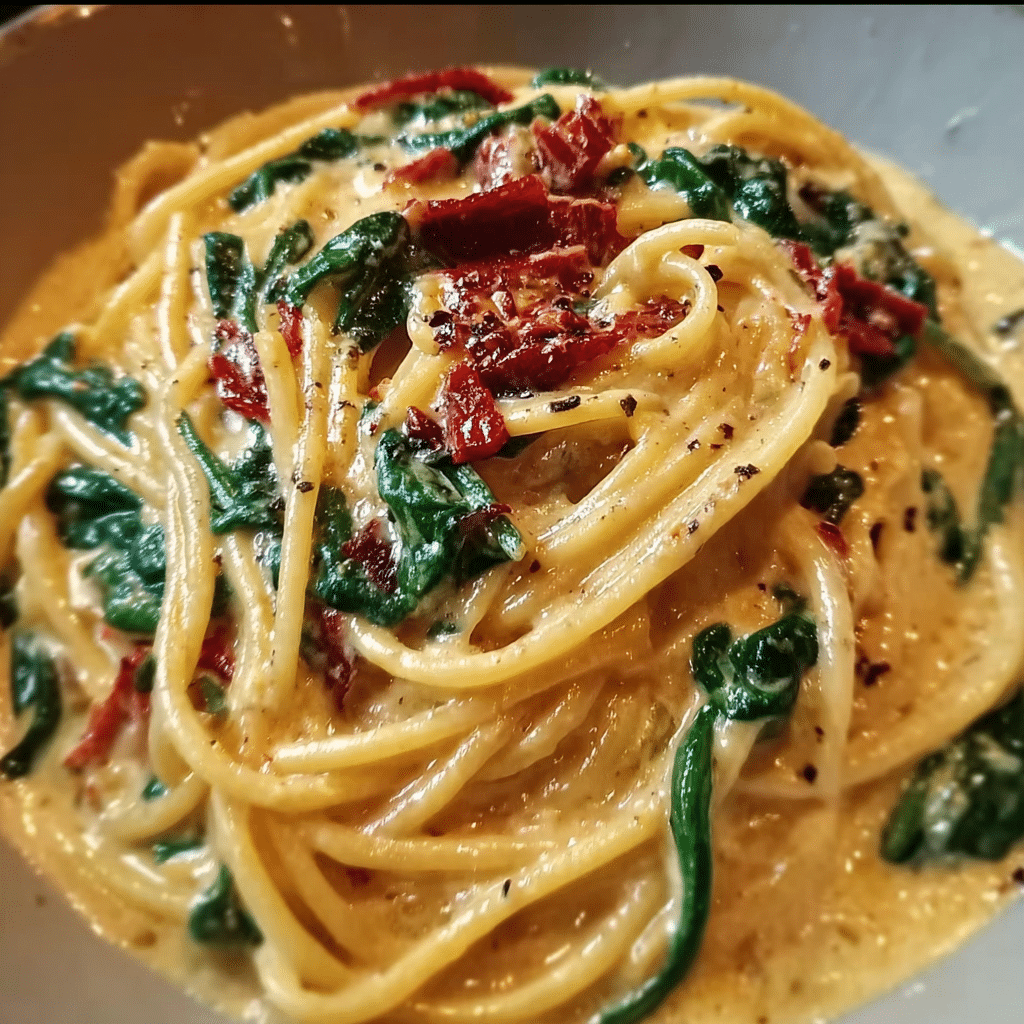
As we cooked together, my mother shared stories of her own childhood, where meals were an event rather than a chore. She spoke of her grandmother’s garden, filled with lush spinach and ripe tomatoes, and how those fresh ingredients inspired the family’s meals. This wasn’t just a recipe; it was a tapestry woven from generations of love, tradition, and creativity. That evening, we not only created a delicious meal but also strengthened our bond, sharing laughter and stories over a bubbling pot of cream sauce. The first bite of spaghetti & spinach transported me to a world where food was more than sustenance—it was a celebration of life and family.
The Story Behind This Recipe
Over the years, as I transitioned into adulthood and began to build my own family, the recipe for spaghetti & spinach with sun-dried tomato cream sauce remained a constant in my kitchen. It became my go-to dish for busy weeknights and special occasions alike. There’s something incredibly satisfying about tossing together a handful of ingredients to create a meal that feels both luxurious and comforting. As I juggled work, parenting, and everything else life threw my way, this dish became a beacon of hope and a reminder that delicious food doesn’t have to be complicated. In under thirty minutes, I could serve my family a meal that was not only delicious but also visually stunning, thanks to the vibrant colors of the spinach and the rich, sun-kissed hues of the tomatoes.
What makes this recipe stand out from other pasta dishes is its unique blend of flavors and textures. While many people might think of spaghetti as being paired with a classic red sauce or a simple olive oil dressing, the creamy sun-dried tomato sauce adds an unexpected twist that elevates the dish to gourmet status. The spinach contributes a refreshing, slightly bitter element that balances the richness of the cream. This dish is perfect for busy families looking for quick dinner solutions because it checks all the boxes: it’s quick, nutritious, and utterly satisfying. Plus, it’s versatile enough to accommodate different dietary preferences—whether you want to add grilled chicken, swap in whole wheat pasta, or make it vegan by using cashew cream.
Why You’ll Love This Dish
Seasonally, spaghetti & spinach with sun-dried tomato cream sauce shines brightly in the spring and summer months when fresh spinach is abundant. However, it’s a dish that can be enjoyed year-round, thanks to the availability of sun-dried tomatoes and fresh spinach at most grocery stores. As I prepare this dish, I am reminded of sunny days spent in the garden, harvesting fresh vegetables and herbs. The emotional connection to this dish is profound; it tells the story of my family, our traditions, and our love for food. Each time I prepare it, I can almost hear my mother’s laughter echoing in the kitchen, a reminder that cooking is about more than just the end result—it’s about the journey we take together.
In this ultimate guide to spaghetti & spinach, you’ll learn not just how to recreate this beloved dish but also delve into its rich history and cultural significance. You will discover tips and tricks to elevate your culinary skills, making this dish your own while also mastering the art of balancing flavors and textures. You’ll find inspiration to experiment and create variations that suit your family’s tastes and dietary needs. So grab your apron, and let’s dive into the wonderful world of spaghetti & spinach!
The Rich History and Cultural Significance of spaghetti & spinach
Spaghetti & spinach is a dish that carries with it a rich history and cultural significance, echoing the traditions of generations past. The origins of spaghetti can be traced back to Italy, where pasta has been a staple for centuries. Initially, pasta was made from simple ingredients: flour and water, often hand-rolled and cut into various shapes. The process of making pasta evolved over time, particularly with the introduction of durum wheat, which allowed for the creation of the long, thin strands we know as spaghetti today. Meanwhile, spinach has its own storied history, believed to have originated in Persia before making its way to Europe in the Middle Ages. The combination of spaghetti and spinach in a creamy dish is a delightful melding of these two culinary traditions.
Origins and History
Historically, spinach was celebrated for its nutritional benefits, often referred to as a “superfood” long before the term ever existed. It was cultivated in gardens across Europe and became a popular ingredient in many dishes. The incorporation of spinach into pasta dishes likely comes from the Italian tradition of adding greens to enrich meals. The sun-dried tomato, a staple in Mediterranean cooking, adds a unique depth of flavor and a touch of sweetness that complements the spinach beautifully. This melding of flavors is reflective of the Italian culinary philosophy, which emphasizes the use of fresh, high-quality ingredients to create simple yet delectable meals.
As the dish traveled beyond Italy, various adaptations emerged. For example, in some regions of the United States, spaghetti & spinach has been modified to include various proteins like chicken or shrimp, or even transformed into a baked casserole. Each variation tells a story of the local cuisine and the preferences of those who prepare it. The beauty of spaghetti & spinach lies in its versatility, allowing cooks to experiment while still paying homage to its Italian roots.
Cultural Significance
This dish is often served during family gatherings, holidays, and celebrations, embodying the Italian notion of “la dolce vita,” or the sweet life. It’s often enjoyed during Sunday dinners, where families come together to share stories and laughter over a hearty meal. In many Italian households, cooking is a communal activity, and spaghetti & spinach serves as a perfect centerpiece, inviting everyone to gather around the table. The act of cooking this dish is as much about the ingredients as it is about the connections made over shared meals. It nurtures relationships and creates lasting memories, as I have experienced myself with my family.
Nutritional Benefits
In addition to its cultural significance, spaghetti & spinach holds several nutritional benefits. Spinach is packed with vitamins A and C, iron, and folate, making it an excellent choice for a health-conscious meal. Coupled with whole grain spaghetti, this dish not only satisfies the palate but also provides essential nutrients to fuel our busy lives. The cream sauce, while rich, can be adjusted to be lighter by using alternatives like Greek yogurt or cashew cream, making it suitable for various dietary needs. Furthermore, sun-dried tomatoes are rich in antioxidants, adding a health boost to this delightful dish.
As we explore the background of spaghetti & spinach, it becomes clear that this dish is not merely a meal but a celebration of culture, history, and family. It invites us to gather, to create, and to savor the moments that matter most. Whether you are preparing it for a special occasion or a simple weeknight dinner, spaghetti & spinach with sun-dried tomato cream sauce promises to be a beloved addition to your culinary repertoire.
Essential Ingredients for Perfect spaghetti & spinach
When embarking on the culinary adventure of preparing a delightful dish of spaghetti & spinach with sun-dried tomato cream sauce, the selection of ingredients becomes paramount. Each component contributes not just flavor but texture, nutrition, and a symphony of aromas that will fill your kitchen with delightful anticipation. Let’s explore the essential ingredients that will elevate your dish and how to choose the best for your culinary creation.
Essential Ingredients
- 5 ounces baby spinach, coarsely chopped – Spinach is a powerhouse of nutrients packed with vitamins A, C, and K, as well as iron and magnesium. The baby spinach provides a tender texture and a mild flavor that beautifully complements the richness of the sun-dried tomato cream sauce. When selecting spinach, look for bright green leaves without any yellowing or wilting.
- 8 ounces whole-wheat spaghetti – This variety of pasta not only adds a nutty flavor but also increases the fiber content, making it a healthier choice than traditional pasta. Opt for pasta that is made from 100% whole wheat for the best nutritional value. When cooking, remember to salt your water generously to enhance the pasta’s flavor.
- 1 tablespoon oil from sun-dried tomato jar – The oil from the sun-dried tomatoes is a flavor booster, rich with herbs and spices that infuse the dish with depth. This oil is often overlooked but using it adds a wonderful, savory note to the sauce. When purchasing sun-dried tomatoes, choose those packed in oil for the best flavor.
- ½ cup slivered oil-packed sun-dried tomatoes – These tomatoes bring a concentrated sweetness and a chewy texture that contrast perfectly with the creaminess of the sauce. Look for sun-dried tomatoes that are vibrant in color and not overly dry or hard, as quality matters in achieving the best flavor.
- ½ cup halved and thinly sliced onion – Onions are a foundational ingredient in many dishes, providing sweetness and depth. Opt for yellow onions for a balanced flavor that mellows when cooked. A fresh onion should be firm and have a strong aroma.
- 3 cloves garlic, minced – Garlic adds a punch of flavor that is essential in this dish. Fresh garlic is always preferable to pre-minced varieties. Choose firm cloves that have a papery skin and a strong smell.
- ¼ teaspoon crushed red pepper – This ingredient adds a hint of heat and complexity. Use more or less depending on your heat tolerance. Look for bright red flakes that aren’t faded or stale to ensure maximum flavor.
- ¼ teaspoon salt – Salt is crucial for enhancing the flavors of the other ingredients. Always use kosher or sea salt for the best results, as they dissolve well and provide a cleaner taste.
- ¼ teaspoon ground pepper – Freshly ground black pepper adds an aromatic spiciness that elevates the dish. Using whole peppercorns and grinding them fresh will yield the best flavor.
- 1 cup low-sodium vegetable or chicken broth – This broth serves as the base for your sauce, adding moisture and flavor without overpowering the dish. Opt for low-sodium varieties to control salt levels. Homemade broth is always a treat if you have the time.
- ½ cup sour cream – This ingredient provides creaminess and a tangy flavor that balances the richness of the sauce. Full-fat sour cream will give the best texture. Be sure to check the expiration date and choose a product with minimal additives.
- ¼ cup grated Parmesan cheese – Parmesan cheese adds a nutty and savory flavor that enriches the dish. Freshly grated is always better than pre-packaged. Look for cheese with a hard texture and a strong aroma.
- 1 tablespoon unsalted butter – Butter rounds out the sauce, adding a luxurious creaminess. Unsalted butter gives you control over the saltiness of the final dish. Choose high-quality butter for the best flavor experience.
Spaghetti & Spinach with Sun-Dried Tomato Cream Sauce
Ingredients
- 5 ounces baby spinach, coarsely chopped
- 8 ounces whole-wheat spaghetti
- 1 tablespoon oil from sun-dried tomato jar
- ½ cup slivered oil-packed sun-dried tomatoes
- ½ cup halved and thinly sliced onion
- 3 cloves garlic, minced
- ¼ teaspoon crushed red pepper
- ¼ teaspoon salt
- ¼ teaspoon ground pepper
- 1 cup low-sodium vegetable or chicken broth
- ½ cup sour cream
- ¼ cup grated Parmesan cheese
- 1 tablespoon unsalted butter
Instructions
- Place 5 ounces spinach in a large colander in the sink. Bring a large saucepan of water to a boil over high heat. Add 8 ounces spaghetti and cook according to package directions. Drain the pasta over the spinach; toss to wilt the spinach.
- Meanwhile, heat ½ cup sun-dried tomatoes along with 1 tablespoon of the oil in a large skillet over medium heat. Add ½ cup onion and sun-dried tomatoes; cook, stirring, until softened, about 3 minutes. Add garlic, ¼ teaspoon crushed red pepper, ¼ teaspoon salt and ¼ teaspoon pepper; cook, stirring, for 1 minute. Increase heat to medium-high and add 1 cup broth; cook, stirring, until reduced by about half, about 2 minutes. Stir in ½ cup sour cream, ¼ cup Parmesan and 1 tablespoon butter. Add the spaghetti and spinach; toss to coat well.
Shopping Tips
When shopping for ingredients for your spaghetti & spinach dish, aim for seasonal and local produce wherever possible. Visiting farmers’ markets can yield fresh spinach and fragrant garlic while supporting local agriculture. For pantry staples like sun-dried tomatoes and pasta, consider buying in bulk to save money and reduce packaging waste.
Quality indicators are key: fresh vegetables should look vibrant and firm, while canned or jarred items should have no signs of damage. If you’re opting for organic ingredients, be aware that they often have more robust flavors, particularly for produce. However, conventional options can still be of excellent quality if chosen carefully.
Substitutions and Alternatives
For those with dietary restrictions or preferences, there are plenty of substitutions available. If you’re looking for a gluten-free option, consider using gluten-free pasta alternatives made from rice or quinoa. For a vegan version, swap the sour cream for a plant-based alternative, such as cashew cream or coconut yogurt, and omit the cheese or use a vegan cheese substitute.
When it comes to spinach, you can substitute it with kale or Swiss chard, but be sure to chop them finely and sauté them longer to soften the texture. If you’re sensitive to sodium, you can make your own broth at home using vegetable scraps and herbs, allowing you to control the seasoning completely.
As for storage, fresh spinach should be consumed within a few days of purchase for optimal taste and nutrition. Store it loosely in the fridge wrapped in a paper towel and inside a perforated bag. Sun-dried tomatoes can be stored in their oil in the refrigerator for several months, while dry pasta has a long shelf life if kept in a cool, dry place.
Creating the perfect spaghetti & spinach dish takes more than just following a recipe; it’s about understanding the role each ingredient plays and selecting the best options available. The love and care put into ingredient selection will shine through in the final dish, making it not just a meal but an experience.
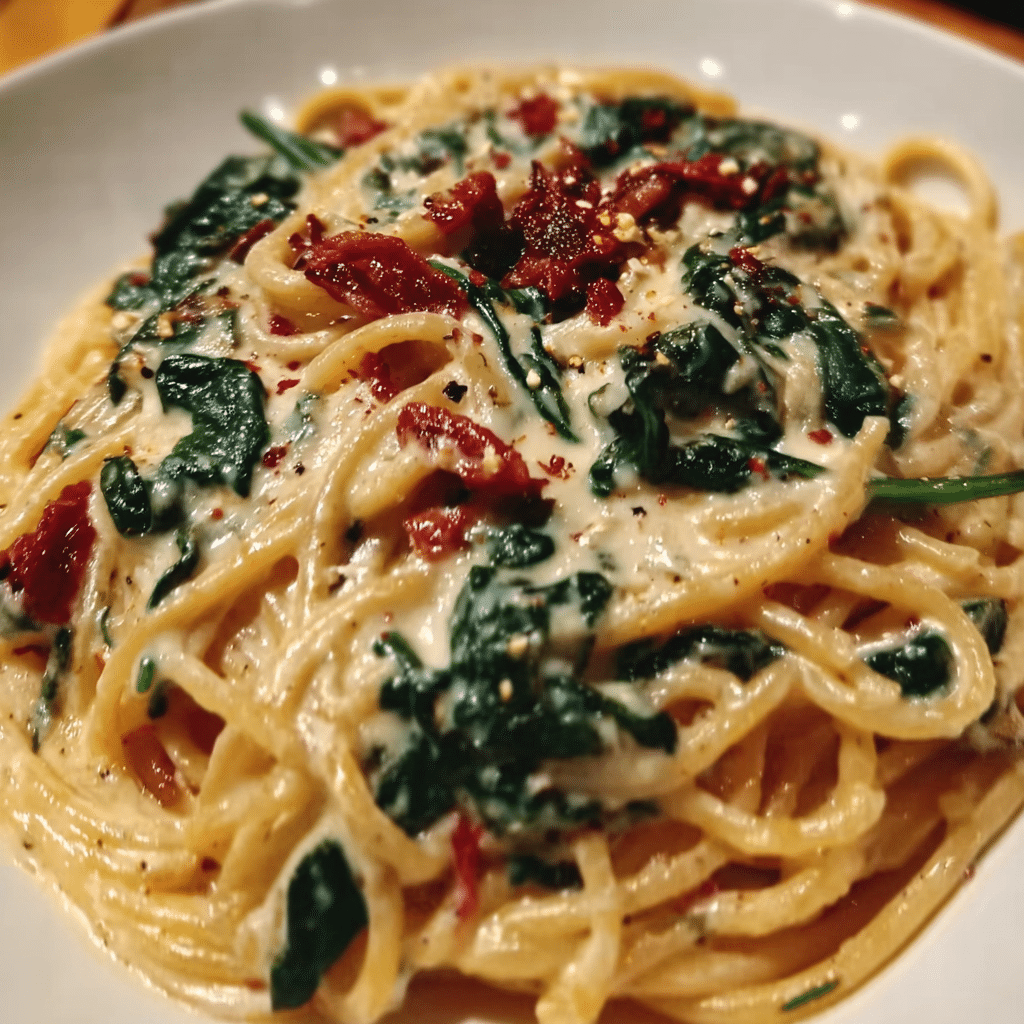
Detailed Step-by-Step spaghetti & spinach Cooking Instructions
Cooking a delightful dish of spaghetti & spinach with sun-dried tomato cream sauce is not just about the ingredients; it’s also about the process. With a few simple steps and some attention to detail, you can create a meal that is not only delicious but also visually stunning. Here’s a comprehensive guide to help you through each stage of the cooking process.
Preparation Steps
- Mise en Place: Start by gathering all your ingredients. Having everything prepped and ready to go will make your cooking experience smoother and more enjoyable. Chop the spinach, slice the onions, and mince the garlic. Measure out your sun-dried tomatoes and have your broth at the ready. This step is crucial for maintaining an organized cooking environment.
- Cook the Pasta: In a large pot, bring salted water to a boil. Add the whole-wheat spaghetti and cook according to the package instructions until al dente, usually about 8-10 minutes. Stir occasionally to prevent sticking. Once cooked, reserve a cup of pasta water, drain the rest, and set the spaghetti aside. This reserved water will help adjust your sauce’s consistency later.
- Prepare the Vegetables: While the pasta is cooking, heat the sun-dried tomato oil in a large skillet over medium heat. Add the sliced onions and sauté for about 5-7 minutes, or until they become translucent. This step not only softens the onions but also develops their natural sweetness.
- Add Garlic and Spices: Next, stir in the minced garlic and crushed red pepper, cooking for another minute until fragrant. Be careful not to burn the garlic, as it can turn bitter. This is where your kitchen will start to smell divine!
- Incorporate Sun-Dried Tomatoes: Toss in the slivered sun-dried tomatoes and continue to sauté for another 2-3 minutes, allowing them to soften and mingle with the other flavors.
Cooking Process
- Create the Sauce: Pour in the low-sodium broth, bringing it to a gentle simmer. This will form the base of your cream sauce. Allow it to simmer for about 5 minutes, letting the flavors meld together.
- Mix in the Cream and Cheese: Reduce the heat to low and stir in the sour cream and grated Parmesan cheese. Stir gently until the cheese has melted and the sauce is creamy and well combined. If the sauce seems too thick, add a bit of the reserved pasta water until you reach the desired consistency.
- Add Spinach: Gently fold in the coarsely chopped spinach. The residual heat will wilt the spinach in just a few minutes, bringing a fresh, vibrant element to the dish. Season with salt and pepper to taste.
- Toss the Pasta: Finally, add the cooked spaghetti to the sauce. Toss everything together, ensuring that the pasta is well-coated in the creamy sauce. If needed, add more pasta water to help everything combine seamlessly.
Final Assembly
- Plate and Serve: Serve the spaghetti & spinach immediately, garnished with additional grated Parmesan and a sprinkle of crushed red pepper for those who enjoy a bit more heat. A drizzle of good olive oil on top can also elevate the dish.
- Common Mistakes to Avoid: One common mistake is overcooking the pasta; aim for al dente for the best texture. Also, don’t skip reserving pasta water, as it can save a sauce that’s too thick. Lastly, ensure you taste your sauce before serving—adjusting seasoning can make all the difference.
- Chef Secrets: For an extra depth of flavor, consider adding a splash of white wine to the broth while it simmers. This can enhance the overall profile of your sauce. Additionally, a squeeze of fresh lemon juice just before serving can brighten the dish beautifully.
- Timing and Multitasking: While the pasta cooks, you can prepare the sauce simultaneously, making the most of your time. Just keep an eye on the pasta to ensure it doesn’t overcook. Timing is key in the kitchen, and multitasking efficiently will lead to a seamless cooking experience.
- Food Safety Tips: Ensure that all your ingredients are fresh, and be mindful when handling raw vegetables. Always wash your spinach thoroughly to remove any grit or dirt. If you have leftovers, store them in an airtight container in the refrigerator and consume within 2-3 days.
Your journey through making this spaghetti & spinach dish is a testament to how simple ingredients can come together to create something spectacular. Enjoy the process, share it with loved ones, and savor every delicious bite!
Professional Tips and Techniques for spaghetti & spinach
When it comes to creating a dish that sings with flavor, spaghetti & spinach with sun-dried tomato cream sauce is an undeniable winner. But how do you elevate this dish from everyday fare to something truly special? In this section, we’ll explore professional tips and techniques that will help you master the art of cooking spaghetti and spinach, ensuring you impress your family and friends at the dinner table.
Professional Techniques
To kick things off, let’s delve into some professional cooking techniques that can make a noticeable difference in your spaghetti & spinach dish. First and foremost, consider the quality of your ingredients. Fresh, organic spinach will not only taste better but also provide more nutrients. When selecting your spaghetti, opt for high-quality durum wheat pasta for a better texture and flavor.
Timing is crucial when cooking pasta. Always bring a large pot of salted water to a rolling boil before adding your spaghetti. The salt enhances the flavor and helps the pasta to cook evenly. Remember to stir the pasta occasionally to prevent it from sticking together.
Another insider secret is to reserve a cup of pasta water before draining. This starchy water can be a game-changer for your sauce, adding creaminess and helping to bind the sauce to the pasta. When you combine your sun-dried tomato cream sauce with the spaghetti, gradually add the reserved pasta water until you reach your desired consistency.
Troubleshooting Guide
Even the best chefs face challenges in the kitchen. Here are some troubleshooting tips for common problems you might encounter while preparing your spaghetti & spinach dish:
- Problem: Overcooked Pasta – If your spaghetti is mushy, it’s likely overcooked. Always check for ‘al dente’ by tasting the pasta a minute or two before the package instructions suggest.
- Problem: Sauce Too Thick – If your sun-dried tomato cream sauce is too thick, simply add a splash of reserved pasta water or some cream to loosen it up.
- Problem: Spinach Not Wilted Properly – Make sure to sauté your spinach quickly in a hot pan with olive oil. If it doesn’t wilt, your pan might not have been hot enough.
With these professional techniques and troubleshooting tips in your culinary arsenal, you’ll be well on your way to mastering the art of spaghetti & spinach.
Presentation Tips
In the world of food, presentation is everything. To make your spaghetti & spinach visually appealing, consider these plating suggestions:
- Use a Large Shallow Bowl: Serve your pasta in a large, shallow bowl to give it a restaurant-style presentation.
- Garnish with Fresh Herbs: A sprinkle of fresh basil or parsley adds a pop of color and freshness.
- Parmesan Cheese: Shave or grate fresh parmesan cheese over the top for an elegant finishing touch.
Don’t forget about wine pairings! A crisp, chilled Sauvignon Blanc complements the creaminess of your sun-dried tomato sauce beautifully. Alternatively, if you prefer red, a light Pinot Noir would work well without overpowering the dish.
By utilizing these professional tips, troubleshooting techniques, and presentation suggestions, you’ll create a stunning plate of spaghetti & spinach that not only tastes incredible but also looks like it was crafted in a gourmet kitchen. Enjoy the process, and happy cooking!
Creative Variations and Adaptations of spaghetti & spinach
One of the most delightful aspects of cooking is the ability to experiment and adapt recipes to suit your personal taste. In this section, we will explore creative variations and adaptations of spaghetti & spinach that can add an exciting twist to your meal. Whether you’re looking to cater to specific dietary needs or simply want to switch things up, there’s a world of possibilities awaiting you!
Seasonal Variations
Seasonal ingredients can breathe new life into your spaghetti & spinach dish. In the spring, consider adding fresh peas or asparagus for a vibrant touch. As summer rolls around, ripe cherry tomatoes can enhance the flavor profile, providing a juicy burst in every bite. In the fall, roasted butternut squash can add a touch of sweetness and earthiness, creating a delightful contrast to the creamy sun-dried tomato sauce.
In winter, think about incorporating hearty greens like kale or Swiss chard alongside your spinach. Not only do they add nutritional value, but they also bring a lovely color contrast to the dish. These seasonal swaps ensure that your spaghetti & spinach remains fresh and relevant throughout the year, allowing you to enjoy a variety of flavors and textures.
Dietary Adaptations
In today’s culinary landscape, accommodating various dietary preferences is essential. For those following a keto lifestyle, consider using zucchini noodles or spaghetti squash as a base instead of traditional pasta. This not only reduces the carb load but also adds a unique texture to the dish.
If you’re preparing a vegan version of spaghetti & spinach, simply replace the cream with a cashew cream or coconut milk to maintain that luscious texture. Nutritional yeast can be sprinkled on top to give a cheesy flavor without the dairy.
For gluten-free diets, many brands offer gluten-free pasta made from rice, quinoa, or chickpeas. These options provide excellent alternatives while still allowing the dish to shine.
Creative Twists
Beyond dietary adaptations, there are numerous creative twists you can incorporate into your spaghetti & spinach. How about adding protein? Grilled chicken, shrimp, or even sautéed mushrooms can elevate your dish into a hearty meal. For a spicy kick, consider adding red pepper flakes or a splash of sriracha to the sauce.
Perhaps you want to infuse international flavors into your spaghetti & spinach? A dash of curry powder can transform the dish into an intriguing fusion meal, or you could incorporate a hint of lemon zest for a refreshing Mediterranean flair.
Leftover transformations are another fun aspect of cooking. If you find yourself with leftover spaghetti & spinach, consider turning it into a frittata the next day. Simply beat some eggs, add the leftovers, and cook until set for a delicious and hearty breakfast option.
With these variations and adaptations, the possibilities for your spaghetti & spinach dish are endless. Embrace your creativity in the kitchen and enjoy the journey of culinary exploration!
Storage, Reheating, and Meal Prep for spaghetti & spinach
When it comes to enjoying a delicious dish of spaghetti & spinach with sun-dried tomato cream sauce, knowing how to properly store, reheat, and prep this dish can elevate your culinary experience. Whether you’re meal prepping for a busy week or simply looking to enjoy leftovers, understanding storage techniques can help maintain the flavor and texture of your beloved pasta dish. Let’s delve into the details of storing, reheating, and preparing spaghetti & spinach for the best results.
Short-term Storage
After whipping up a delightful serving of spaghetti & spinach, it’s important to store it correctly to maintain its freshness. If you plan to eat the dish within the next three to four days, the refrigerator is your best friend. First and foremost, allow your pasta to cool down to room temperature before storing it. This step is crucial, as placing hot food directly in the refrigerator can raise the internal temperature, potentially leading to bacterial growth.
For short-term storage, use airtight containers that are specifically designed for food storage. Glass containers with lids are an excellent choice, as they won’t retain odors and are safe for reheating. If you prefer plastic, ensure it is BPA-free and microwave-safe. Portion the spaghetti & spinach into individual servings to make reheating easier and to avoid repeatedly opening the main container, which can affect the dish’s quality over time.
Label each container with the date it was prepared to keep track of freshness. The spaghetti & spinach can safely be stored in the refrigerator for up to four days. If you notice any signs of spoilage, such as an off smell or unusual texture, it’s best to err on the side of caution and discard the leftovers.
Freezing and Long-term Storage
If you want to keep your spaghetti & spinach for a longer period, freezing is a fantastic option. This method can extend the life of your dish for up to three months. To freeze, ensure the dish has cooled completely before transferring it to freezer-safe containers or bags. If you’re using bags, try to remove as much air as possible before sealing to prevent freezer burn.
When freezing, consider portioning the dish into smaller servings. This will not only make it easier to thaw only what you need but also help maintain the dish’s integrity. You can also freeze the spaghetti & spinach and sauce separately. This allows for more versatility when meal planning—mix and match with other pasta dishes or sauces as your cravings dictate.
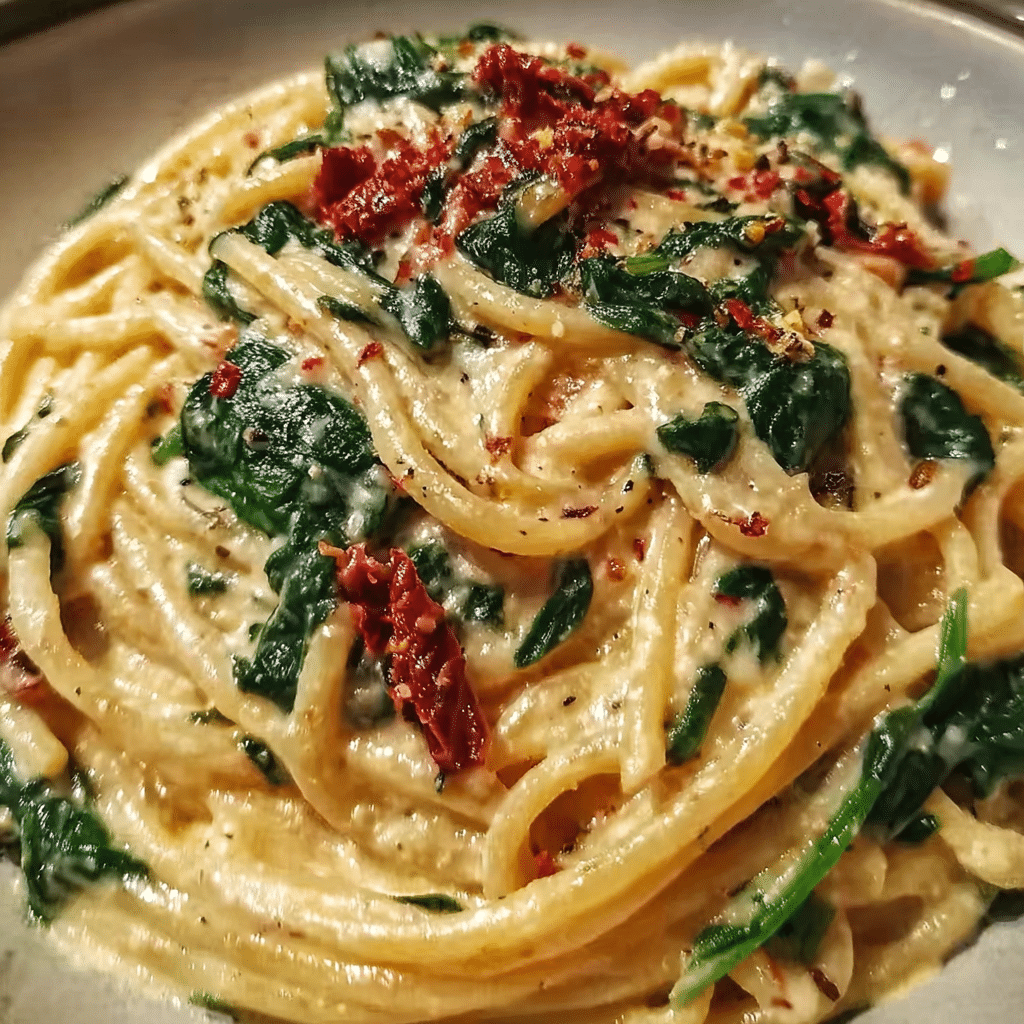
Before freezing, think about adding a bit more sauce than you usually would, as pasta tends to absorb moisture during the freezing and thawing process, and this can lead to a drier dish. When you’re ready to enjoy your frozen spaghetti & spinach, simply transfer it to the refrigerator to thaw overnight or use the defrost setting on your microwave. Once thawed, you can reheat it on the stove or in the microwave with a splash of water or extra cream sauce to restore its original texture.
Reheating Best Practices
Reheating is where many people may falter, leading to dry or overcooked pasta. To retain the creamy texture of your spaghetti & spinach, it’s essential to reheat gently. If you’re using the stove, place the pasta in a skillet over low heat with a splash of water or broth. This will help steam the pasta and keep it moist. Stir occasionally, and once heated through, add a bit more cream sauce if desired.
If you choose the microwave, transfer your portion to a microwave-safe dish and cover it with a damp paper towel. This will create steam and help keep the pasta from drying out. Heat in short intervals, stirring in between to ensure even warming.
When it comes to meal prep, consider making a big batch of spaghetti & spinach at the beginning of the week. This way, you have a comforting meal ready to go for those busy nights. Just remember to follow the storage and reheating guidelines to keep everything fresh and delicious.
Food safety is paramount when storing and reheating any dish. Always check the temperature of reheated food; it should reach at least 165°F (74°C) to ensure it’s safe to eat. Additionally, avoid leaving cooked pasta at room temperature for more than two hours, as this can lead to foodborne illness.
In conclusion, mastering the art of storing, freezing, and reheating spaghetti & spinach will not only help you enjoy it longer but also allow you to savor every bite as if it were freshly made. With a few simple techniques and careful planning, you can make this delightful dish a staple in your meal rotation.
Nutritional Benefits and Health Information
When it comes to enjoying a bowl of delicious spaghetti & spinach with sun-dried tomato cream sauce, it’s hard not to appreciate not just the flavors but also the nutritional benefits packed within this dish. Understanding the nutritional components of your food can help you make informed dietary choices while still enjoying your favorite meals. Let’s take a deep dive into the nutritional profile of spaghetti & spinach, exploring its health benefits, dietary considerations, and ways to make it even healthier.
Nutritional Profile
The primary ingredients in spaghetti & spinach include spaghetti, spinach, sun-dried tomatoes, and cream. Each contributes to a well-rounded dish bursting with flavors and nutrients. A typical serving of this dish can contain approximately 400-600 calories, depending on the proportions of each ingredient and any additional toppings you might add.
Carbohydrates are the main macronutrient in traditional spaghetti, providing energy for your body. A standard serving of spaghetti contains around 40-50 grams of carbohydrates, making it a good source of fuel, especially for active individuals. However, for those watching their carb intake, consider using whole grain or gluten-free spaghetti alternatives. These options can offer more fiber, which is beneficial for digestive health.
Spinach, one of the stars of this dish, is incredibly nutrient-dense. Just one cup of cooked spinach contains vitamins A, C, and K, as well as minerals like iron and calcium. These nutrients play vital roles in maintaining healthy vision, supporting your immune system, and promoting bone health. The sun-dried tomatoes add a punch of flavor while also contributing antioxidants, particularly lycopene, which has been associated with various health benefits, including reduced risk of chronic diseases.
Health Benefits
The combination of spaghetti & spinach not only tantalizes the taste buds but also offers a range of health benefits. The fiber content in both spinach and whole grain pasta can aid in digestion, promote satiety, and help maintain healthy blood sugar levels. Incorporating fiber-rich foods into your diet is a great way to support overall gut health.
Spinach is also known for its high antioxidant content, which helps combat oxidative stress in the body. Antioxidants play an essential role in reducing inflammation and preventing chronic diseases such as heart disease and cancer. Plus, the presence of vitamin K in spinach is crucial for blood clotting and maintaining strong bones.
Furthermore, the cream sauce, while rich and indulgent, can be made healthier by using alternatives like Greek yogurt or plant-based cream. This way, you can still enjoy the creamy texture without the extra calories and saturated fat. Additionally, if you’re looking to increase protein content, consider adding grilled chicken or chickpeas to your spaghetti & spinach dish.
Dietary Considerations
When preparing spaghetti & spinach with sun-dried tomato cream sauce, it’s essential to consider various dietary restrictions and preferences. For those with gluten intolerance or celiac disease, gluten-free pasta options are widely available and can easily substitute traditional spaghetti. Furthermore, vegans can replace the cream with non-dairy alternatives, ensuring everyone can enjoy this delectable dish.
For individuals monitoring their caloric intake, portion control is key. Serving sizes can vary, so be mindful of how much you serve yourself. Pairing spaghetti & spinach with a side salad or some roasted vegetables can help create a balanced meal without overindulging.
In comparison to similar dishes, spaghetti & spinach stands out for its combination of vegetables and pasta, making it a healthier option than many cream-heavy pasta dishes. By understanding the nutritional content, you can appreciate not just the flavors but also the health benefits that come with each bite.
In conclusion, spaghetti & spinach with sun-dried tomato cream sauce is not only a delight to the senses but also a nutritious option that can fit into various dietary plans. With a few simple modifications, you can enhance its health benefits while still enjoying a comforting and satisfying meal. So the next time you indulge in this dish, you can do so with the confidence that it’s not just a treat for your taste buds, but also a boon for your body.