Split pea soup is more than just a comforting dish; it’s a warm embrace on a chilly day, a reminder of childhood kitchens filled with savory aromas, and a delightful compromise between health and flavor. My journey with split pea soup began on a particularly stormy evening when I was a new mother, juggling the demands of a fussy baby and a busy household. As I rummaged through my pantry, I stumbled upon a bag of split peas, and in a moment of culinary inspiration—perhaps fueled by desperation—I decided to whip up a pot of this humble soup. The end result was a thick, velvety bowl of goodness that not only nourished my family but also rekindled my love for cooking.
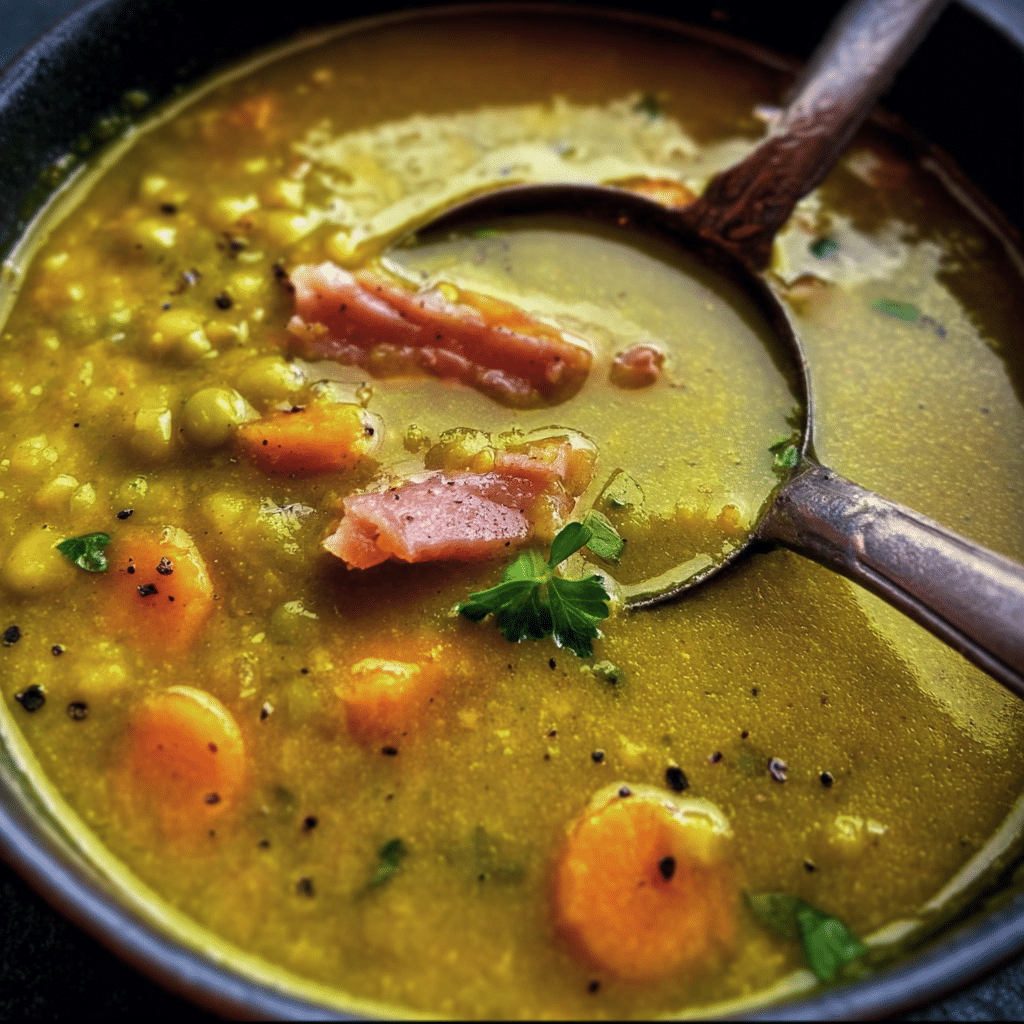
What I discovered that night was not merely a recipe but a dish steeped in history and cultural significance. Split pea soup has roots that stretch back thousands of years, with its origins anchored in ancient civilizations. In fact, peas have been cultivated since the dawn of agriculture, and various forms of pea soups have graced the tables of cultures across Europe, Asia, and beyond. The earliest recorded recipes date back to the Romans, who were known to enjoy a variation of this dish. It’s fascinating to think about how such a simple combination of ingredients has endured over the centuries, adapting to local tastes and available resources while still retaining its essence as a nourishing staple.
The Story Behind This Recipe
As I ladled the steaming soup into bowls that first evening, I felt an overwhelming sense of connection to generations of cooks who had come before me. Split pea soup is unique in its ability to transform ordinary ingredients—split peas, water, and perhaps a few vegetables—into something extraordinary. This recipe is special because it allows for creativity; you can add smoked ham, bacon, herbs, or even a splash of vinegar to brighten the flavors. Each pot becomes a canvas for personal expression, reflecting not just your taste but also your family’s history and traditions.
For busy families, split pea soup is a lifesaver. It’s quick to prepare, requires minimal supervision, and can simmer on the stove while you tackle other household duties. The beauty of this dish lies in its versatility: it can be made in large batches and frozen for later use, which is a game-changer for those hectic weeknights. Plus, it’s an excellent way to sneak in some greens, making it a nutritious option that kids often love, especially when served with a slice of crusty bread.
Seasonally, split pea soup shines during the cooler months, making it an ideal choice for fall and winter. However, I find that its heartiness makes it a comforting choice year-round, especially when you need a quick pick-me-up on a rainy day. There’s something inherently cozy about curling up with a bowl of this soup, a blanket, and a good book. It evokes memories of family gatherings and hearty dinners, creating an emotional connection that transcends mere nourishment.
In this ultimate guide to split pea soup, you’ll learn everything from the history and cultural significance of this dish to practical tips on how to make the perfect pot. I’ll share my favorite variations and secrets that elevate this simple recipe into something extraordinary. Whether you’re a seasoned cook or just starting, this guide will inspire you to embrace the magic of split pea soup, turning a basic recipe into a cherished family tradition.
The Rich History and Cultural Significance of split pea soup
The rich history of split pea soup is a testament to its status as a beloved dish across various cultures. Its origins can be traced back to the earliest agricultural societies, where peas were among the first cultivated crops. The ancient Greeks and Romans enjoyed versions of pea soup, often seasoned with herbs and spices available in their regions. These early iterations laid the groundwork for what would evolve into the split pea soup we know today. The split peas themselves, which are dried green or yellow peas that have been split in half, are not only economical but also have a long shelf life, making them an ideal staple in many households.
Origins and History
Throughout history, split pea soup has been adapted in various ways depending on local ingredients and culinary traditions. In Europe, especially in countries like France and the Netherlands, recipes evolved to include smoked meats, such as ham hocks or bacon, which added depth and richness to the dish. In fact, French cuisine boasts a famous version called “soupe de pois cassés,” which is often enriched with herbs like thyme and bay leaf, creating a fragrant and robust flavor profile. On the other hand, in Scandinavian countries, split pea soup is traditionally served on Thursdays, often accompanied by pancakes, showcasing a unique culinary custom that has persisted through generations.
The evolution of split pea soup didn’t stop there; it became a staple in American cuisine, especially during the Great Depression, when it was heralded for its affordability and nutritional value. Many families turned to split pea soup as a filling meal that could feed a crowd without breaking the bank. Even today, it remains a popular choice among families seeking comfort food that is both satisfying and economical.
Cultural Significance
Split pea soup holds a special place in many cultures, often associated with home-cooked meals and family gatherings. In Jewish culture, for instance, it is not uncommon to find variations of split pea soup served on Shabbat, symbolizing warmth and sustenance. Across various cultures, this dish is often made in large batches for communal gatherings, reinforcing the idea that food brings people together. Even in modern times, it continues to be a favorite at potlucks and family gatherings, where everyone can share in the comfort it provides.
There are also famous chefs and restaurants that have put their unique spins on this traditional dish. For example, renowned chef Thomas Keller has been known to serve an elegant version of split pea soup at his fine dining establishments, elevating this humble dish to gourmet status. His approach has inspired many home cooks to experiment with flavors and presentations, proving that split pea soup can be both comforting and sophisticated.
Nutritional Benefits
Beyond its historical and cultural significance, split pea soup is packed with nutritional benefits that make it a wise choice for any meal. Split peas are high in protein and fiber, making them an excellent option for vegetarians and those looking to increase their dietary fiber intake. They are also rich in vitamins and minerals, including folate, iron, and potassium, contributing to a balanced diet. In addition, the low glycemic index of split peas means they can help regulate blood sugar levels, making them a smart choice for those managing diabetes.
In conclusion, the history and cultural significance of split pea soup is as rich as the flavors it offers. From its ancient origins to its place in modern kitchens around the world, this dish has stood the test of time, evolving with each generation while maintaining its essence as a nourishing and comforting meal. Whether you’re serving it for a family dinner or enjoying it on a cozy night in, split pea soup is a dish that connects us all—past, present, and future.
Essential Ingredients for Perfect split pea soup
When it comes to crafting the perfect bowl of split pea soup, the ingredients you choose play a pivotal role in defining the soup’s flavor, texture, and overall appeal. This hearty dish has roots steeped in tradition, often found in homes all over the world, especially during the colder months. Let’s delve into the essential ingredients that make this dish a beloved staple.
Essential Ingredients
- Split Peas: The star of the show, split peas are dried peas that have been split in half. They are high in protein and fiber, making split pea soup a nutritious option. Available in green or yellow varieties, they can affect the soup’s color and taste. Green peas tend to be a bit sweeter, while yellow peas have a more earthy flavor.
- Broth: Whether you opt for chicken, beef, or vegetable broth, the stock adds a depth of flavor to your soup. Homemade broth is always preferable as it is rich in nutrients and flavor. Look for low-sodium versions if you’re watching your salt intake.
- Aromatics: This includes onions, garlic, and carrots. These ingredients build the flavor base of your split pea soup. Onions should be translucent, while garlic should be fragrant but not browned, as burnt garlic can introduce bitterness.
- Herbs and Spices: Common choices include bay leaves, thyme, and black pepper. Fresh herbs can elevate the dish, while dried herbs provide convenience. Remember to remove bay leaves before serving, as they are not edible.
- Meat (Optional): Many recipes include ham, bacon, or smoked sausage for an added layer of flavor. The smoky notes from these meats complement the earthiness of the peas beautifully.
- Vegetables: Besides the standard onion and carrots, adding celery or potatoes can enhance the soup’s texture and flavor. Celery contributes a fresh crunch, while potatoes can provide creaminess when cooked down.
- Salt and Pepper: Essential for seasoning, these can be adjusted to taste. Always remember to taste your soup before adding too much salt, especially if you’re using a salted broth.
Split Pea Soup
Ingredients
- 2 tablespoons butter
- 2 ribs celery, diced
- ½ onion, diced
- 3 cloves garlic, sliced
- 1 pound dried split peas, rinsed
- 1 pound cooked ham, diced
- 1 bay leaf
- 1 quart chicken stock
- 2 ½ cups water
- salt and ground black pepper to taste
Instructions
- 2 tablespoons butter
- 2 ribs celery, diced
- ½ onion, diced
- 3 cloves garlic, sliced
- 1 pound dried split peas, rinsed
- 1 pound cooked ham, diced
- 1 bay leaf
- 1 quart chicken stock
- 2 ½ cups water
- salt and ground black pepper to taste
Each ingredient in your split pea soup has its own role, contributing to the overall harmony of flavors. Split peas thicken the soup, while the broth provides the liquid base. Aromatics are essential for flavor, and the addition of meat can create a hearty, filling dish.
Shopping Tips
When shopping for ingredients, freshness is key. For split peas, check for a vibrant color and avoid any that look dull or have a lot of debris. For vegetables, choose firm, brightly colored options. In the case of herbs, opt for fresh over dried whenever possible, as they offer a more robust flavor.
For your broth, if you’re buying pre-packaged, look for brands that offer low-sodium varieties, so you can control the saltiness of your split pea soup. If you’re feeling adventurous, making homemade broth can be a fun project, allowing you to customize flavors based on the ingredients you have on hand.
Substitutions and Alternatives
Dietary restrictions? No problem! If you prefer a vegetarian or vegan option, simply substitute vegetable broth for chicken or beef broth and omit any meat. For a creamy texture without dairy, consider adding coconut milk or puréed beans.
Those who are gluten-free can rest easy; split pea soup is naturally gluten-free. Just ensure any broth or additional ingredients are certified gluten-free. If you’re looking for a leaner recipe, turkey bacon or lean ham can replace traditional pork options.
Storage is also an important factor to consider. Split peas can be stored in a cool, dry place for up to a year, while fresh vegetables are best used within a week. Cooked split pea soup can be refrigerated for 3-5 days or frozen for up to 3 months. Just be aware that the texture may change slightly upon reheating, so add a little water or broth to maintain creaminess.
Lastly, consider the cost. Dried split peas are generally inexpensive and provide a great return in terms of nutrition and servings. Buying in bulk can also save you money in the long run. Overall, with a little planning, making your own split pea soup can be a budget-friendly and wholesome choice.
Detailed Step-by-Step split pea soup Cooking Instructions
Cooking the perfect bowl of split pea soup is not only about using the right ingredients; it’s also about mastering the cooking process. Let’s break down the steps to ensure your soup comes out delicious and satisfying every time.
Preparation Steps
- Gather Your Ingredients: Start by assembling all necessary ingredients. This includes split peas, broth, aromatics, herbs, and any optional meats or additional vegetables. Having everything ready ensures a smoother cooking process.
- Rinse the Split Peas: Place the dried split peas in a colander and rinse under cold water. Inspect them for any debris, stones, or bad peas. This step is crucial as it helps remove any impurities.
- Chop Your Vegetables: Dice the onions, carrots, and any other vegetables you’re using. Aim for uniform sizes so they cook evenly. If you’re using garlic, mince it finely to release its flavors.
- Prep Any Meat: If you’re adding bacon or ham, chop it into bite-sized pieces. If using a smoked sausage, slice it into rounds. This will ensure that the meat flavors meld beautifully into the soup.
- Measure Broth and Seasonings: Measure out your broth and have your herbs and spices ready. This will help you stay organized as you move through the cooking process.
Cooking Process
- Heat Your Pot: In a large pot or Dutch oven, heat a tablespoon of oil over medium heat. This is where you’ll sauté your aromatics.
- Sauté Aromatics: Add the onions, carrots, and celery (if using) to the pot. Sauté for about 5-7 minutes until the onions are translucent. This step builds the foundation of flavor for your split pea soup.
- Add Garlic: Stir in the minced garlic and cook for an additional minute until fragrant. Be careful not to let it brown.
- Add Split Peas and Broth: Next, add the rinsed split peas to the pot along with the broth. Stir well to combine all the ingredients.
- Season: Toss in your bay leaves, thyme, salt, and pepper. If using meat, add it now as well. Bring the mixture to a boil.
- Simmer: Once boiling, reduce the heat to low and cover the pot. Let it simmer for about 30 minutes, stirring occasionally. The split peas will soften and begin to break down, thickening the soup.
- Check for Doneness: After 30 minutes, check the peas. They should be soft and creamy. If they aren’t, continue cooking for another 5-10 minutes until they reach your desired consistency.
Final Assembly
- Taste and Adjust: This is your moment to taste your split pea soup and adjust the seasonings. Depending on your broth, you may want to add more salt or pepper.
- Remove Bay Leaves: Before serving, don’t forget to fish out the bay leaves. They add flavor during cooking but are not meant to be eaten.
- Serve Hot: Ladle the soup into bowls and garnish with fresh herbs or a drizzle of olive oil, if desired. Pair it with crusty bread for a comforting meal.
- Storing Leftovers: If you have any leftovers, allow the soup to cool completely before transferring it to airtight containers. It can be refrigerated for 3-5 days or frozen for future meals.
Cooking split pea soup is not just about following a recipe; it’s about engaging with the ingredients and enjoying the process. Whether you’re cooking for yourself, your family, or hosting friends, the aroma of this soup simmering on the stove will create a warm and inviting atmosphere. So grab your apron, follow these steps, and enjoy a heartwarming bowl of homemade split pea soup.
Professional Tips and Techniques for split pea soup
When it comes to crafting a hearty and delicious bowl of split pea soup, there are several professional tips and techniques that can elevate your dish from good to extraordinary. Whether you’re a novice cook or a seasoned chef, understanding the nuances of preparation and presentation can make all the difference in your soup-making journey.
Professional Techniques
First and foremost, choosing the right type of split peas is crucial. Green and yellow split peas are the most common, each offering a unique flavor profile. Green peas tend to be slightly sweeter and hold their shape better, while yellow peas provide a more earthy taste and can create a creamier texture. Always rinse your peas before cooking to remove any debris or dust.
Soaking split peas is a topic of debate among chefs. While some argue that soaking can reduce cooking time and help with digestibility, others suggest that it’s not necessary. Personally, I prefer to soak mine for a few hours—this not only makes them cook faster but also ensures a softer texture, which is perfect for that velvety split pea soup consistency.
When it comes to flavor building, start with a solid base. Sautéing onions, garlic, and carrots in a bit of olive oil or butter before adding your peas creates a depth of flavor that enhances your soup significantly. Don’t rush this step; let the vegetables sweat and soften to release their natural sweetness. Adding a bay leaf or fresh herbs—like thyme or rosemary—during cooking can also infuse your soup with aromatic notes.
For a creamier texture, consider using an immersion blender to purée a portion of the soup after it’s cooked. This allows you to maintain some whole peas for texture while achieving that smooth consistency that makes split pea soup so comforting. If you don’t own an immersion blender, carefully transferring the soup to a regular blender in batches works just as well, but be cautious of hot splashes!
Troubleshooting Guide
Even the most experienced cooks encounter hurdles when making split pea soup. One common problem is the soup becoming too thick during cooking. If you find your soup is thicker than desired, simply add additional broth or water until you reach your preferred consistency. Conversely, if your soup is too thin, let it simmer uncovered to reduce and thicken. Adding a slurry of cornstarch and water can also help thicken it without compromising flavor.
Another issue is undercooked peas. If they remain hard after the typical cooking time, they may be old. Always check the expiration date on your dried peas, as older peas take longer to cook and may not soften properly. In this case, simply allow more time for simmering. A bit of patience goes a long way!
Presentation Tips
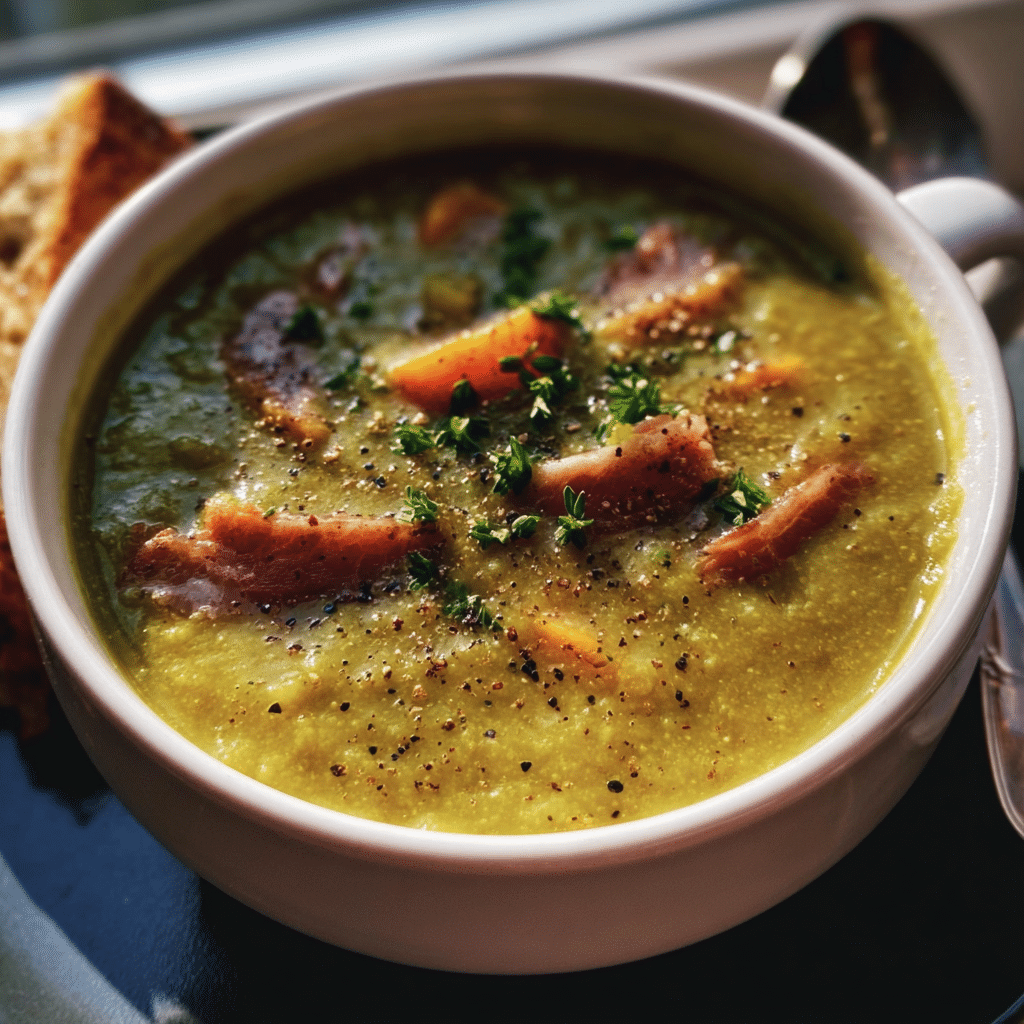
Presentation is key when serving split pea soup. A simple bowl can be transformed into a culinary masterpiece with a few thoughtful touches. Garnish your soup with a drizzle of high-quality olive oil or a dollop of crème fraîche for a rich contrast. Freshly cracked pepper and a sprinkle of chopped parsley or chives add a pop of color and freshness that elevates the dish visually.
Consider serving your soup in rustic bread bowls for a charming, hearty meal. Not only does this add an element of fun, but the bread also absorbs the flavors of the soup, making for a delightful pairing. Pair your split pea soup with crusty artisan bread or a light salad for a complete dining experience.
Make-Ahead and Meal Prep Strategies
One of the best things about split pea soup is that it can be made ahead of time. In fact, the flavors deepen and improve after sitting for a day. After cooling, store the soup in an airtight container in the fridge for up to five days, or freeze it for up to three months. When reheating, you may need to add a splash of water or broth to regain its desired consistency.
For meal prep, consider portioning your soup into individual servings before freezing. This makes it easy to grab a quick and comforting meal on busy days. Label your containers with the date and contents to keep track of your frozen treasures.
Wine and Beverage Pairings
Pairing wine with soup can be tricky, but with split pea soup, you have some delightful options. A light, crisp white wine such as Sauvignon Blanc complements the earthy flavors of the peas, while a light-bodied red like Pinot Noir can work well, especially if you’ve added smoky ingredients like ham or bacon. For a non-alcoholic option, a sparkling water with a slice of lemon or a refreshing herbal iced tea can cleanse the palate beautifully.
In conclusion, mastering split pea soup requires understanding the ingredients and techniques involved. With the right tips, troubleshooting strategies, and creative presentation ideas, you can create a comforting bowl of soup that not only warms the soul but also impresses your guests. So roll up your sleeves, gather your ingredients, and embark on this nourishing culinary adventure!
Creative Variations and Adaptations of split pea soup
While classic split pea soup is a beloved comfort food, the beauty of this dish lies in its versatility. With a few creative variations and adaptations, you can transform this humble soup into numerous exciting dishes. Let’s explore some innovative twists that cater to a variety of tastes, dietary needs, and seasonal ingredients.
Seasonal Variations
One of the joys of cooking is adapting your recipes to reflect the changing seasons. In spring, consider incorporating fresh asparagus or peas into your split pea soup for a bright, vibrant flavor. Simply add chopped asparagus during the last few minutes of cooking to maintain its crunch. In summer, why not blend in some zucchini or fresh herbs like basil for a refreshing twist?
As fall approaches, embrace the earthiness of seasonal root vegetables. Carrots, sweet potatoes, and even roasted butternut squash can be added to your soup, enhancing its sweetness and providing a wonderful texture. Finally, in winter, a touch of spice can warm you up; a pinch of smoked paprika or a dash of cayenne pepper can add a delightful kick that wakes up your palate.
Dietary Adaptations
With the rise of various dietary preferences, adapting split pea soup to suit different needs is easier than ever. For a vegan version, simply omit any meat and use vegetable broth instead of chicken broth. You can also add nutritional yeast to provide a cheesy flavor without the dairy. If you’re aiming for a low-carb option, consider reducing the amount of peas and adding more leafy greens like spinach or kale, which will still provide that satisfying texture and flavor.
For those following a gluten-free diet, rest assured that split peas are naturally gluten-free! Just ensure any additional ingredients, like broth or spices, are also gluten-free. If you want to increase protein content, consider adding some cooked lentils or beans, which blend beautifully with split peas.
Creative Twists
Don’t be afraid to get adventurous with split pea soup! Fusion cuisine can breathe new life into this traditional dish. For an Asian-inspired twist, consider adding coconut milk, ginger, and a splash of lime juice. This will impart a creamy texture and a refreshing zest that’s perfect for a warm day. Garnish with cilantro for a pop of flavor.
For a Mediterranean flair, incorporate ingredients like diced tomatoes, olives, and a touch of cumin. This not only adds complexity to the flavor profile but also makes for a hearty meal that’s rich in nutrients. Another option is to make a spicy version by adding chorizo or other spicy sausages. The smokiness of the sausage pairs beautifully with the earthiness of the split peas, creating a dish that’s both comforting and exciting.
Different Cooking Methods
While stovetop cooking is the most common method for making split pea soup, don’t hesitate to explore other options. A slow cooker is an excellent alternative, allowing you to set it and forget it. Simply throw your ingredients into the slow cooker in the morning, and by dinner time, you’ll have a flavorful soup waiting for you. Cooking on low for 6-8 hours yields a deep, rich flavor that’s hard to replicate.
If you’re in a hurry, consider using a pressure cooker or Instant Pot. This method drastically reduces cooking time while still providing a deliciously creamy soup. Just be mindful of the cooking time—split peas cook quickly under pressure, so keep an eye on them to avoid overcooking.
Leftover Transformation Ideas
Leftovers are a hallmark of split pea soup, and transforming them into new meals can be a fun culinary challenge. One of my favorite ways to use leftover soup is by turning it into a filling for savory crepes or pancakes. Just thin the soup with a little extra broth and fill your crepes for a unique dish that surprises and delights.
Another option is to use leftover soup as a base for a casserole. Mix it with cooked grains like quinoa or rice, add some cheese and veggies, and bake until bubbly for a comforting meal that feels entirely new. You can also incorporate leftover soup into a pasta dish—simply toss it with cooked pasta and fresh vegetables for a quick and nutritious dinner.
In summary, the creative potential of split pea soup is vast and delicious. With seasonal ingredient swaps, dietary modifications, and inventive cooking methods, you can enjoy this classic dish in countless exciting ways. So don’t be afraid to experiment and make this soup your own, ensuring that every bowl is not just a meal but a celebration of flavor and creativity!
Storage, Reheating, and Meal Prep for split pea soup
When it comes to split pea soup, having proper storage techniques can make all the difference in maintaining flavor and texture. Whether you’ve made a big batch for a cozy family gathering or just whipped up a single serving for yourself, knowing how to store, reheat, and meal prep this hearty dish is essential. Let’s dive into all the nitty-gritty details to ensure your split pea soup remains delicious for as long as possible!
Short-term Storage
After you’ve enjoyed a warm bowl of split pea soup, you may find yourself with leftovers. Storing them correctly in the refrigerator can preserve their freshness and flavor. First, allow the soup to cool to room temperature. This is crucial because placing hot food directly into the refrigerator can raise the overall temperature inside, potentially leading to food safety issues.
For short-term storage, transfer your cooled split pea soup into airtight containers. Glass containers are an excellent choice as they’re non-reactive and won’t absorb odors, making them perfect for soups. Alternatively, BPA-free plastic containers can also work well. Make sure to leave a little space at the top of the container, as soups can expand slightly when frozen or even when reheated. Seal tightly and store in the refrigerator, where it can last for about 3 to 5 days.
One of my favorite tricks when storing split pea soup is to portion it into smaller containers before refrigerating. This way, I can grab just what I need for a quick lunch or dinner without having to reheat the entire batch. Plus, it helps maintain the quality of the soup, as opening and closing a larger container repeatedly can expose the soup to air and other contaminants.
Freezing and Long-term Storage
If you have a massive pot of split pea soup that you won’t consume within a week, freezing is a fantastic option. Freezing not only extends the life of your soup but also locks in flavors. To freeze split pea soup, follow the same cooling process as before. Once cooled, ladle the soup into freezer-safe containers or resealable freezer bags. I prefer using the bags as they take up less space, but ensure you lay them flat in the freezer until frozen solid for easy stacking.
When using freezer bags, squeeze out as much air as possible before sealing. This reduces the chance of freezer burn, which can impact the taste and texture of your soup. Label each bag with the date and contents, so you know exactly what you have on hand. Properly stored, your split pea soup can last up to 3 months in the freezer.
It’s important to note that while freezing soup is safe, the texture may change slightly upon reheating, particularly if there are vegetables or other ingredients that can become mushy. However, the flavor remains rich and comforting. I always find that a touch of fresh herbs or a squeeze of lemon juice added after reheating can revive the flavors beautifully!
Reheating Best Practices
When it comes time to enjoy your frozen or refrigerated split pea soup, reheating it properly is crucial. If you’ve frozen the soup, it’s best to thaw it overnight in the refrigerator. This slow thaw helps maintain the integrity of the ingredients. You can also use the defrost setting on your microwave if you’re in a hurry, but be mindful not to cook it in the microwave—this can lead to uneven heating.
To reheat on the stove, simply pour the soup into a saucepan over medium heat. Stir occasionally to prevent sticking and ensure even heating. If the soup appears too thick after thawing, feel free to add a splash of broth or water to reach your desired consistency. This is also a great time to taste and adjust the seasoning, as flavors can mellow during storage.
Microwaving is another option for reheating split pea soup. Transfer the soup into a microwave-safe bowl, cover it loosely with a microwave-safe lid or a paper towel to prevent splatters, and heat in short intervals of 1-2 minutes, stirring in between, until hot. Just be cautious of hot spots, as microwaves can heat unevenly.
In terms of food safety, it’s important to reheat your split pea soup to an internal temperature of 165°F (74°C) to ensure it’s safe to consume. If you have any doubts about the soup’s freshness after storage, trust your instincts—when in doubt, throw it out!
Meal prepping is also a great strategy if you want to enjoy split pea soup throughout the week. Consider making a large batch on a Sunday and portioning it out for easy lunches or dinners. Having nutritious meals on hand not only saves time but also encourages healthy eating habits. With a little planning, you can enjoy this comforting soup not just once but several times, savoring its flavors and warmth!
In conclusion, mastering the art of storing, freezing, and reheating split pea soup will ensure that you can enjoy this nutritious dish for weeks to come. With the right techniques, you’ll not only maintain its delicious taste but also make meal times a breeze!
Nutritional Benefits and Health Information
When you think about comfort food, split pea soup often comes to mind with its warm, hearty goodness. But beyond its delightful taste and comforting texture, this dish is a powerhouse of nutrition. Understanding the nutritional benefits of split pea soup can enhance your cooking experience and help you make informed dietary choices. Let’s explore the nutritional profile, health benefits, and dietary considerations associated with this timeless dish.
Nutritional Profile
At its core, split pea soup is made primarily from split peas, which are a fantastic source of protein, fiber, and essential nutrients. A typical serving of split pea soup (about one cup) contains approximately 200-250 calories, depending on the specific recipe and added ingredients like ham or vegetables. It is rich in macronutrients, providing around 15-20 grams of protein and 15-20 grams of dietary fiber, which is essential for digestive health.
Split peas are low in fat, making them an excellent choice for those looking to maintain a healthy weight. They also offer a good balance of carbohydrates, primarily complex carbohydrates, which provide sustained energy. This makes split pea soup an ideal meal option for anyone from busy professionals to active families, fueling the body without the crash that often follows high-sugar meals.
In addition to macronutrients, split pea soup is packed with vitamins and minerals. It contains significant amounts of B vitamins like folate, which is crucial for cellular function and tissue growth, especially important for pregnant women. Moreover, split peas are rich in potassium, magnesium, and iron, contributing to heart health, muscle function, and overall well-being.
Health Benefits
One of the standout features of split pea soup is its high fiber content. Fiber plays a significant role in digestive health by promoting regular bowel movements and preventing constipation. Moreover, a high-fiber diet can help lower cholesterol levels, thereby reducing the risk of heart disease. The soluble fiber found in split peas can also assist in stabilizing blood sugar levels, making it a great option for those managing diabetes.
In addition to heart health, the protein content in split pea soup supports muscle maintenance and repair. This makes it a particularly beneficial dish for vegetarians and vegans who may need alternative protein sources. The plant-based protein found in split peas is also easier for the body to digest compared to animal proteins, reducing the risk of digestive discomfort.
Furthermore, the antioxidants present in split peas help combat oxidative stress in the body. Antioxidants play a crucial role in neutralizing free radicals, which can lead to chronic diseases if left unchecked. By incorporating split pea soup into your diet, you’re not just enjoying a comforting meal; you’re also providing your body with protective nutrients that can enhance overall health.
Dietary Considerations
When it comes to dietary considerations, split pea soup can be a versatile dish suitable for various eating plans. It’s naturally gluten-free, making it an excellent option for those with gluten sensitivities or celiac disease. For individuals watching their sodium intake, it’s advisable to prepare the soup from scratch, allowing you to control the amount of salt added. Many canned versions of split pea soup can be high in sodium, so reading labels is key.
For those following a plant-based diet, split pea soup is a fabulous option that can be made entirely vegan by omitting any meat or dairy products. You can enhance the flavor with herbs, spices, and even a splash of lemon juice for acidity without compromising on taste. If you’re looking to lower the calorie content, consider reducing the amount of added fats or using low-calorie vegetables to bulk up your soup.
In comparison to similar dishes, such as lentil soup or bean soup, split pea soup stands out for its unique flavor profile and nutritional benefits. While lentils and beans also offer excellent nutrition, split peas are particularly high in fiber and have a smoother texture when cooked, making them a favorite for soups.
In conclusion, incorporating split pea soup into your meal planning is not just a way to enjoy a delicious dish; it’s also a step towards better health. With its rich nutritional profile, numerous health benefits, and versatility in dietary considerations, split pea soup deserves a prominent place on your table. So, the next time you’re looking for a healthy and hearty meal, remember the humble split pea and the wonderful soup it can create!
Conclusion: Mastering the Perfect split pea soup
Creating the perfect split pea soup is more than just following a recipe—it’s about understanding the techniques, ingredients, and cultural significance behind this beloved dish. Throughout this comprehensive guide, we’ve explored everything from the historical origins to modern variations, ensuring you have all the knowledge needed to make this recipe your own.
Whether you’re a beginner cook or an experienced chef, the techniques and tips we’ve shared will help you create a split pea soup that’s not only delicious but also meaningful. Remember that cooking is a journey of discovery, and each time you make this dish, you’ll learn something new.
We encourage you to experiment with the variations we’ve discussed, adapt the recipe to your dietary needs, and most importantly, share it with the people you love. Food has the incredible power to bring people together, and Split Pea Soup is the perfect dish to create lasting memories around your dinner table.
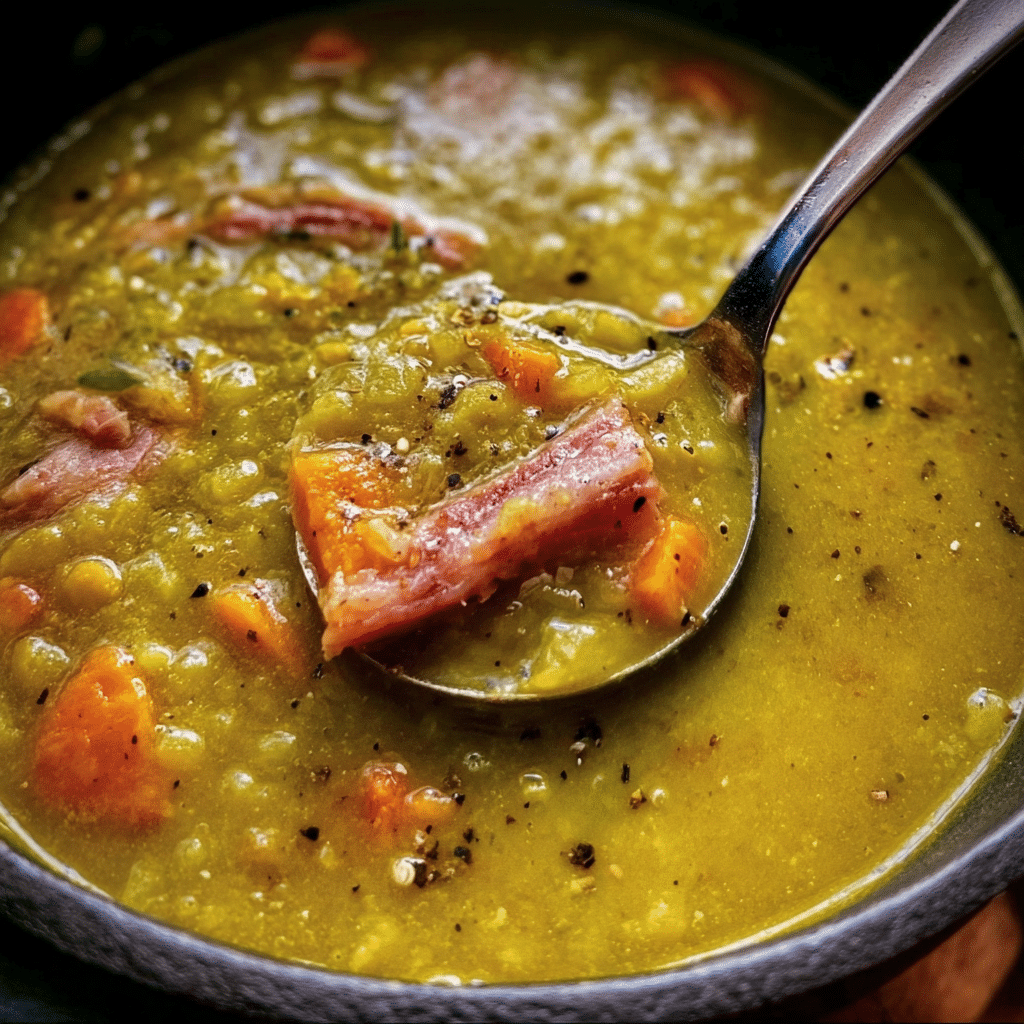
Don’t forget to share your cooking adventures with us on social media, and feel free to ask questions in the comments below. Happy cooking!
Share this recipe and let us know how it turned out! Tag us on social media for a chance to be featured.