Spring roll salad is a delightful fusion dish that captures the essence of fresh, vibrant ingredients wrapped in a colorful and nutritious medley. My journey into the world of spring roll salads began during a particularly busy week when I was juggling work commitments and family obligations. I longed for something quick, yet nutritious and satisfying. That’s when I stumbled upon a recipe that transformed my weeknight dinners forever. The moment I took my first bite, I was transported to a bustling street market in Southeast Asia, where vendors artfully crafted spring rolls filled with fresh vegetables and aromatic herbs.
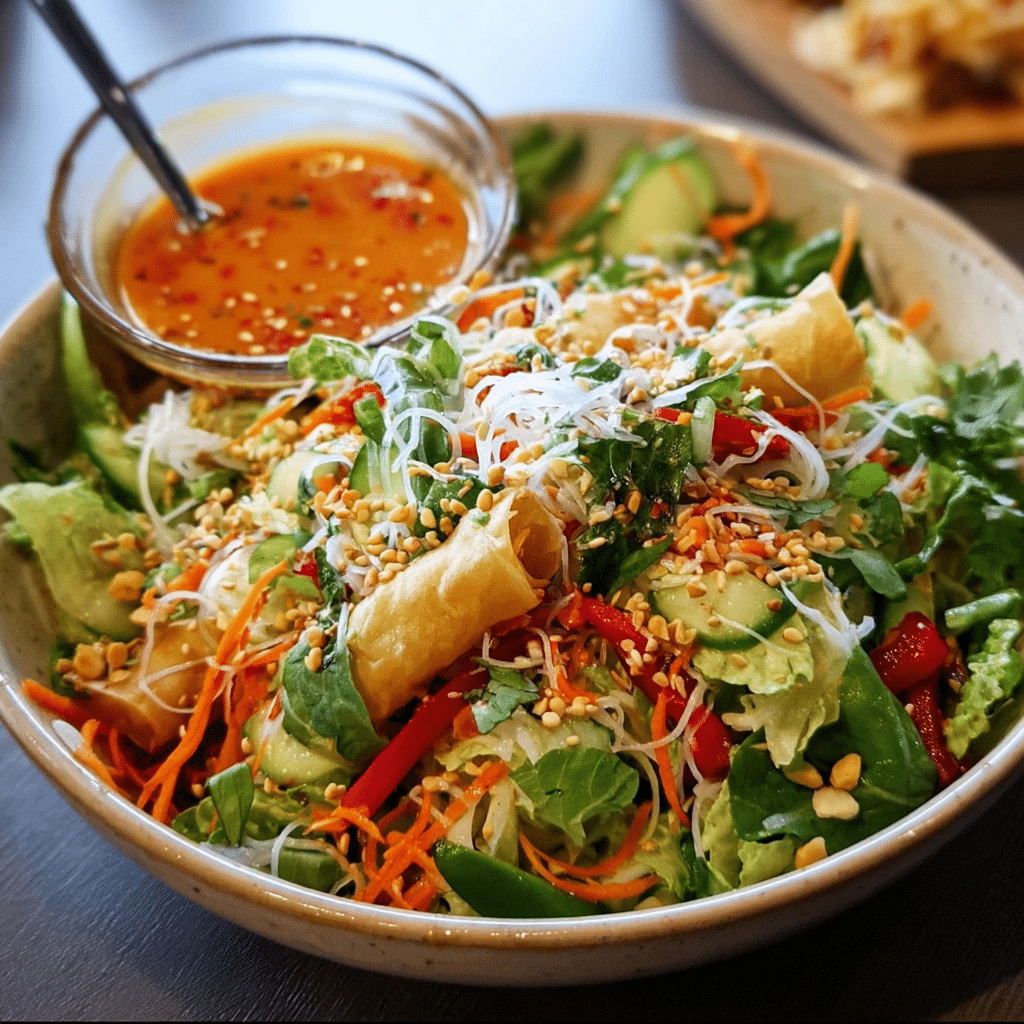
As I assembled my first spring roll salad, I was reminded of my travels through Vietnam, where I had tasted a variety of these delightful rolls. Each bite was a burst of flavor; the crunch of fresh vegetables, the creaminess of avocados, and the zing of a homemade spicy ginger dressing created a symphony of tastes that danced on my palate. It was not just a meal; it was an experience, a story told through the ingredients that came together to form a wholesome dish. This recipe is special because it embodies the spirit of spring rolls in a salad format, allowing for the same freshness and flavor while being incredibly easy to prepare.
The Story Behind This Recipe
The evolution of spring roll salad is rooted in the traditional spring rolls that date back centuries in Asian cuisine. Typically, these rolls are made with rice paper that encases a filling of vegetables, proteins, and herbs. The salad version takes this concept and presents it in a way that is not only visually appealing but also practical for busy families. No more rolling and frying; this dish allows you to enjoy all the vibrant flavors of spring rolls in a quick, nutritious, and easy-to-eat format. The spring roll salad is a celebration of the ingredients—crisp lettuce, shredded carrots, bell peppers, and fresh herbs—all tossed together with a zesty dressing that ties the dish together.
What makes this recipe perfect for busy families is its versatility. You can customize it based on what you have on hand, making it an ideal way to utilize seasonal produce. Whether it’s a warm summer evening or a chilly fall day, spring roll salad can be enjoyed year-round. Toss in some grilled chicken or shrimp for added protein, or keep it vegetarian with tofu. The possibilities are endless, and the preparation is straightforward, allowing you to spend more time with your loved ones and less time in the kitchen.
Why You’ll Love This Dish
Emotionally, this dish resonates with me as a reminder of family gatherings. I recall a time when my children and I spent an afternoon preparing a colorful spread of ingredients for our spring roll salad. We laughed over the cutting board, shared stories about our day, and created a dish that was not only delicious but also brought us closer together. Cooking together has always been a way for us to connect, and this recipe became a cherished family tradition.
In this article, I promise to share not just the recipe for spring roll salad, but also tips on how to make it your own, the cultural significance behind it, and the nutritional benefits of incorporating this dish into your meals. By the end of this guide, you’ll be equipped to whip up your own spring roll salad that your family will love, bringing a taste of Southeast Asia to your dinner table in no time!
The Rich History and Cultural Significance of spring roll salad
The rich history and cultural significance of spring roll salad speak to the heart of Asian culinary traditions. This dish is a modern twist on the beloved spring roll, which has its origins in various Asian countries, particularly in China and Vietnam. The spring roll itself has been enjoyed for centuries, with early references dating back to the 5th century during the Tang Dynasty in China, where it was a seasonal dish enjoyed during the spring festival. Traditionally, these rolls were filled with fresh vegetables, symbolizing prosperity, growth, and renewal as the winter thaw gave way to spring.
Origins and History
As I dug deeper into the history of spring rolls, I discovered their evolution from a humble street food to a gourmet dish served in high-end restaurants around the world. Each region has its unique spin on the spring roll. In Vietnam, for example, the classic “Gỏi cuốn” (fresh spring rolls) are served cold with a variety of fresh herbs and meats, typically accompanied by a peanut or hoisin dipping sauce. In contrast, the Chinese version often involves frying the rolls, resulting in a crispy exterior filled with savory ingredients. Over time, these variations inspired the creation of the spring roll salad, allowing for an easier-to-prepare and shareable option.
Cultural Significance
The cultural significance of spring rolls cannot be understated. In many Asian cultures, spring rolls are considered a symbol of good luck, particularly during the Lunar New Year festivities. Families gather to prepare and enjoy them together, reinforcing bonds and traditions. The spring roll salad, as a contemporary adaptation, maintains this communal spirit by encouraging families to come together to create a colorful and nutritious meal. It’s a way to honor the past while embracing modern cooking practices that cater to today’s busy lifestyles.
As this dish has gained popularity, many renowned chefs have put their own spin on it, incorporating local ingredients and innovative presentation methods. Restaurants specializing in Asian fusion cuisine often feature spring roll salad on their menus, showcasing the dish’s versatility. These chefs highlight the importance of fresh, high-quality ingredients, emphasizing the use of seasonal produce to bring out the best flavors.
Nutritional Benefits
One of the most appealing aspects of spring roll salad is its nutritional benefits. This dish is packed with vitamins, minerals, and antioxidants thanks to the array of colorful vegetables. From crunchy bell peppers to leafy greens, each ingredient contributes essential nutrients that support overall health. The inclusion of fresh herbs like cilantro and mint not only elevates the flavor but also adds additional health benefits, such as aiding digestion and providing anti-inflammatory properties.
Moreover, the spring roll salad can easily be customized to fit various dietary preferences. Whether you’re vegetarian, vegan, or looking for a protein boost, this dish can accommodate your needs. With the option to add lean proteins such as grilled chicken, shrimp, or tofu, you can create a balanced meal that is both satisfying and nutritious.
In conclusion, the spring roll salad is not just a dish; it is a celebration of culture, history, and family. Its roots in traditional spring rolls, combined with its modern adaptations, make it a perfect choice for those looking for a delicious and healthy meal. As you explore this recipe further, you’ll appreciate the rich tapestry of flavors and stories that come together in each vibrant bowl of spring roll salad.
Essential Ingredients for Perfect spring roll salad
Creating a delicious spring roll salad begins with sourcing the right ingredients. Each component plays a vital role in achieving the optimal flavor and texture that defines this vibrant dish. Below, I’ve compiled a comprehensive list of each ingredient you’ll need, along with insights into their importance, quality indicators, and tips for selecting the best options.
Essential Ingredients
- 3 tablespoons minced fresh ginger – Ginger adds a zesty warmth and a hint of spice that elevates the entire salad. Fresh ginger is best for its potent flavor; look for firm, smooth pieces without any wrinkles.
- 2 medium cloves garlic, minced – Garlic brings a rich, aromatic depth to the dressing. Choose firm cloves with tight skins for maximum freshness.
- 2 tablespoons soy sauce – This umami-rich sauce ties the flavors together. Opt for low-sodium soy sauce if you’re watching your salt intake.
- 1 tablespoon agave nectar – A natural sweetener that balances the savory elements. Agave has a mild flavor, making it an excellent choice for this salad dressing.
- 1/4 cup rice wine vinegar – This ingredient introduces a tangy brightness that cuts through the richness of the oils. Look for unseasoned rice vinegar for the best results.
- 1 tablespoon sesame oil – This oil adds a nutty depth to the dressing. Purchase toasted sesame oil for an intensified flavor.
- 2 tablespoons canola oil or vegetable oil – A neutral oil helps to balance the dressing without overpowering other flavors.
- 1/2-1 teaspoon red pepper flakes – The heat from the red pepper flakes can be adjusted according to your spice preference, adding a kick to the salad.
- Salt and pepper to taste – Essential for enhancing the overall flavor profile of the dish.
- 8 oz rice noodles – These noodles serve as the base of the salad, providing a chewy texture. Look for a brand that uses high-quality rice for the best results.
- 1-1/2 cups shredded green or purple cabbage – Cabbage adds crunch and a slight sweetness. Purple cabbage will lend a beautiful color to your dish.
- 1 small cucumber, julienned – Cucumbers introduce a refreshing crunch. Choose English cucumbers for their thin skin and minimal seeds.
- 2 small carrots, julienned – Carrots add vibrant color and sweetness. Fresh, firm carrots will provide the best texture.
- 1 medium sweet pepper, julienned – Bell peppers contribute a juicy sweetness. Opt for red or yellow peppers for their sweetness and color.
- 1/4 cup firmly-packed minced cilantro – Cilantro adds a fresh, herbaceous note that brightens the salad.
- 1/4 cup firmly-packed minced mint – Mint complements the flavors beautifully with its coolness.
- 1/4 cup chopped roasted peanuts – These nuts provide crunch and a rich, nutty flavor. Always choose unsalted to control the saltiness of your dish.
- Additional cilantro and sesame seeds for topping – These toppings not only enhance the presentation but also add an extra burst of flavor.
Spring Roll Salad With Spicy Ginger Dressing
Ingredients
Spicy Ginger Dressing
- 3 tablespoons minced fresh ginger
- 2 medium cloves garlic, minced
- 2 tablespoons soy sauce
- 1 tablespoon agave nectar
- 1/4 cup rice wine vinegar
- 1 tablespoon sesame oil
- 2 tablespoons canola oil or vegetable oil
- 1/2–1 teaspoon red pepper flakes
- Salt and pepper to taste
Spring Roll Salad
- 8 oz rice noodles
- 1–1/2 cups shredded green or purple cabbage
- 1 small cucumber, julienned
- 2 small carrots, julienned
- 1 medium sweet pepper, julienned
- 1/4 cup firmly-packed minced cilantro
- 1/4 cup firmly-packed minced mint
- 1/4 cup chopped roasted peanuts
- Additional cilantro and sesame seeds for topping
Instructions
Spicy Ginger Dressing
- In a food processor or blender, combine ginger, garlic, soy sauce, agave, vinegar, sesame oil, canola oil, and red pepper flakes to taste. Blend dressing until smooth.
- Season dressing with salt and pepper to taste and refrigerate until ready to use.
Spring Roll Salad
- Cook rice noodles according to package instructions. Rinse noodles well with cold water until noodles are completely cooled. Drain noodles and transfer to a large serving bowl.
- Add cabbage, cucumber, carrot, sweet pepper, cilantro, and mint to rice noodles and toss to combine.
- When ready to serve, drizzle dressing over salad and toss well to evenly coat. Season salad with salt and pepper to taste if needed and garnish with peanuts, cilantro and sesame seeds. Enjoy!
Shopping Tips
When shopping for your spring roll salad ingredients, freshness is crucial. Visit local farmers’ markets for the freshest produce, particularly for herbs like cilantro and mint, which can lose flavor quickly. For spices like ginger and garlic, choose firm roots and bulbs; avoid any that are soft or sprouting, as this indicates age and loss of flavor.
For the rice noodles, check the packaging for any additives; high-quality noodles should consist mostly of rice flour and water. If you’re unsure about a product, don’t hesitate to ask a store employee for recommendations.
Substitutions and Alternatives
Dietary restrictions shouldn’t hinder your ability to enjoy a delicious spring roll salad. For gluten-free options, substitute soy sauce with tamari, and ensure your rice noodles are marked gluten-free. If you’re vegan, agave nectar is a great choice, but you could also use maple syrup as a substitute.
If you’re allergic to peanuts, consider using sunflower seeds or toasted pumpkin seeds for that desired crunch. For a low-carb version, spiralized zucchini or cabbage can replace rice noodles.
Storage is also key. Fresh ginger and garlic should be kept cool and dry, while chopped herbs should be stored in water in the fridge to keep them fresh longer. Cabbage can last for weeks in the fridge, making it a great ingredient to have on hand.
In terms of cost, buying in bulk can save you money, especially on items like rice noodles and peanuts. Organic produce might cost a bit more, but the flavor and lack of pesticides can be worth the investment if you prioritize these aspects in your cooking.
In summary, each ingredient in your spring roll salad is not just a mere component; it brings its unique personality to the dish. By selecting high-quality ingredients and understanding their roles, you can create a salad that is not only delicious but also a reflection of your culinary skills.
Detailed Step-by-Step spring roll salad Cooking Instructions
Now that you have gathered all your ingredients, it’s time to dive into the exciting process of making your spring roll salad. This dish is not only colorful and vibrant but also offers a delightful mix of textures and flavors. Below, I’ll outline the detailed step-by-step cooking instructions, ensuring you have all the tips and tricks to make this dish a success.
Preparation Steps
- Mise en Place – Begin by gathering and measuring all your ingredients. Having everything ready will streamline the cooking process and prevent any last-minute scrambling.
- Prepare the Rice Noodles – Bring a pot of water to a boil. Once boiling, remove it from heat and add the rice noodles. Let them soak for about 5-7 minutes, or until they are tender but still firm to the bite. Drain and rinse under cold water to stop the cooking process, then set aside.
- Chop the Vegetables – While the noodles soak, julienne the cucumber, carrots, and sweet pepper. You can use a mandoline for uniform slices if you have one. Shred the cabbage finely. Having uniform cuts will ensure even bites and a beautiful presentation.
- Minced Herbs – Finely chop the cilantro and mint. Set these aside; they’ll be added at the end for maximum freshness.
Cooking Process
- Make the Dressing – In a medium bowl, combine the minced ginger, minced garlic, soy sauce, agave nectar, rice wine vinegar, sesame oil, canola oil, and red pepper flakes. Whisk together until thoroughly combined. The dressing should have a harmonious balance of sweet, salty, and spicy notes.
- Taste and Adjust – This is a crucial step. Taste the dressing and adjust as needed. If it’s too salty, add more agave nectar; if it needs more zing, a splash of rice vinegar will do wonders.
- Combine Noodles and Vegetables – In a large mixing bowl, add the drained rice noodles, shredded cabbage, julienned cucumber, carrots, and sweet pepper. Pour the dressing over the top and toss gently to combine, ensuring everything is coated evenly.
Final Assembly
- Add Fresh Herbs and Peanuts – Once everything is mixed, gently fold in the minced cilantro and mint, along with the chopped roasted peanuts. The herbs should remain fresh and vibrant, adding a burst of flavor with each bite.
- Plate the Salad – Transfer the salad to a serving platter or individual bowls. For an appealing presentation, sprinkle additional cilantro and sesame seeds on top. This adds a lovely finishing touch and enhances the visual appeal.
- Serve Cold or at Room Temperature – The beauty of this spring roll salad is its versatility. You can serve it immediately, or you can refrigerate it for about 30 minutes to let the flavors meld together.
- Enjoy! – Dig in and enjoy your vibrant, fresh spring roll salad. The combination of flavors and textures will have you reaching for seconds!
Throughout this process, remember that cooking is as much about feeling as it is about precision. Pay attention to the aromas and colors; these sensory cues will guide you to a delicious outcome. The whole cooking experience should be enjoyable and fulfilling, so don’t hesitate to put your personal touch on the dish.

Common mistakes to avoid include overcooking the noodles, which can lead to a mushy texture, and not tasting the dressing before adding it to the salad. Remember, your palate is your best tool in the kitchen!
With the right techniques and careful attention, your spring roll salad will not only be a feast for the eyes but also a delightful experience for the taste buds. Happy cooking!
Professional Tips and Techniques for spring roll salad
When it comes to making a delicious spring roll salad, the right techniques and tips can elevate your dish from ordinary to extraordinary. This vibrant salad, packed with fresh vegetables, herbs, and proteins, has its roots in Southeast Asian cuisine, where fresh ingredients are key. Throughout my culinary journey, I’ve picked up a few professional tips and techniques that I believe will make your spring roll salad not just a meal, but an experience.
Professional Techniques
One of the first things to consider when preparing a spring roll salad is the quality of your ingredients. Freshness is paramount, so seek out local markets for the best produce. The crunch of fresh vegetables like lettuce, carrots, and cucumbers is what makes this dish sing. When selecting herbs, opt for Thai basil, mint, and cilantro, as they each contribute unique flavors that enhance the overall taste profile.

Preparation techniques play a vital role as well. For instance, julienning vegetables not only enhances their presentation but also ensures even distribution of flavors and textures throughout the salad. I remember the first time I attempted to julienne carrots; it took me a while to master the technique, but it was worth the effort. A sharp knife and a steady hand are essential. If you’re struggling, consider using a mandoline slicer for precision and speed.
Another professional tip is to prepare your proteins—be it shrimp, chicken, or tofu—using a quick marinade. A simple mix of soy sauce, lime juice, and minced garlic can infuse your protein with flavor. Marinate for at least 15 minutes, but if you have time, let it sit longer to deepen the taste. For those new to marinating, remember: the longer the protein sits in the marinade, the more flavorful it becomes.
Troubleshooting Guide
Even with the best intentions, sometimes things can go awry in the kitchen. One common issue when making a spring roll salad is sogginess. This often happens when the dressing is added too early. To avoid this, keep your dressing separate until you’re ready to serve. For make-ahead meals, consider packing the salad ingredients and dressing separately, then combine just before eating.
Another problem can arise with ingredient proportions. If you find your salad too salty or too sour, it’s usually a quick fix. Adding a touch of sweetness, like honey or agave syrup, can balance out overly salty or sour flavors. Taste as you go; this is the best way to ensure a harmonious mix of flavors in your spring roll salad.
Presentation Tips
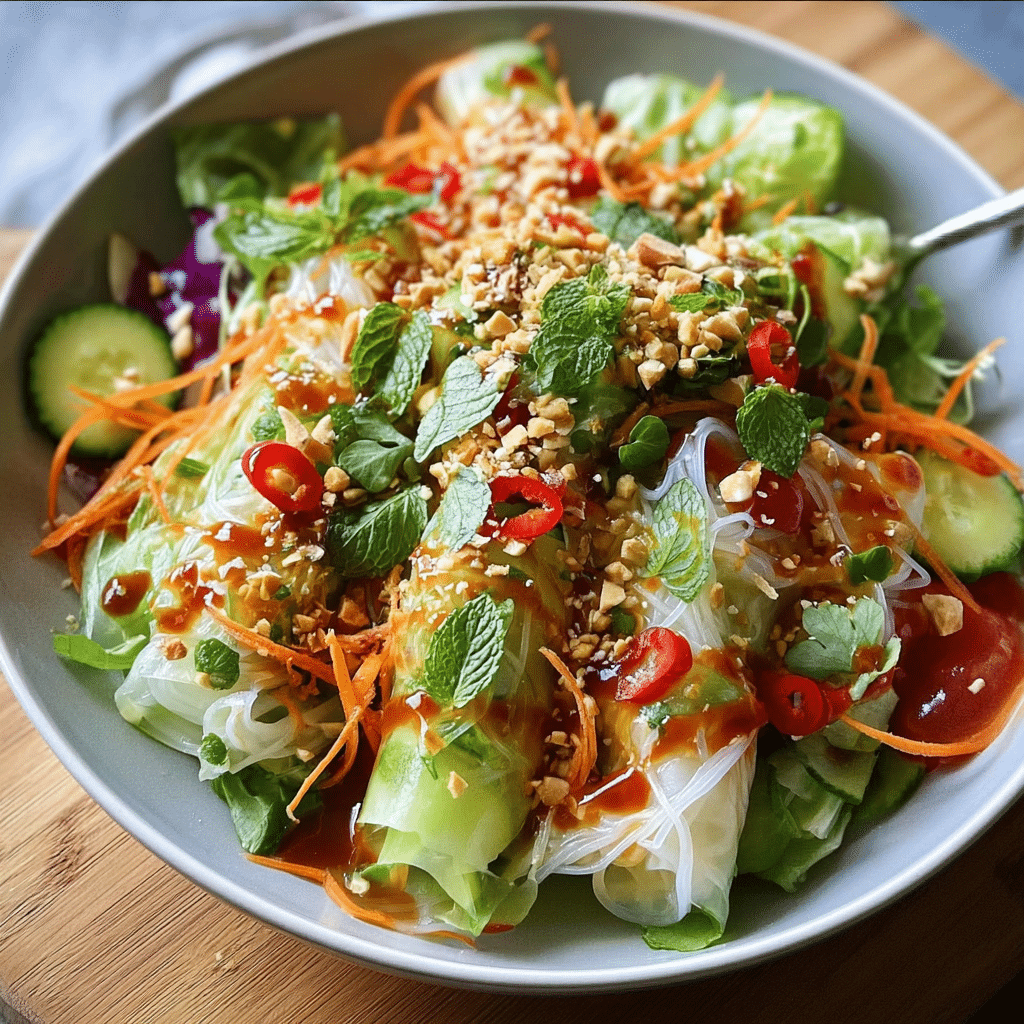
Presentation is key in making your spring roll salad visually appealing. A well-plated dish can turn a simple meal into a gourmet experience. Consider serving it in a large, shallow bowl to showcase the colorful ingredients. Layer the ingredients for visual appeal—start with greens at the bottom, followed by a rainbow of sliced vegetables and proteins on top.
Garnishing your salad with toasted sesame seeds or chopped peanuts adds texture and a touch of elegance. I love the crunch that these toppings provide, and they also make the dish feel more substantial. Another idea is to serve your salad with lime wedges on the side; not only do they add a pop of color, but they also give guests the option to adjust the acidity to their taste.
For those wondering about beverage pairings, a light, crisp white wine such as Sauvignon Blanc or a refreshing iced tea can beautifully complement the flavors of your spring roll salad. If you prefer non-alcoholic options, a homemade ginger lemonade is a fantastic choice that echoes the zing of the spicy ginger dressing.
In terms of equipment, having the right tools can make your prep easier. Invest in a good quality chef’s knife, cutting board, and a variety of mixing bowls. A salad spinner can also be a lifesaver for washing and drying greens efficiently. When preparing this salad, I often use a large mixing bowl to toss all the ingredients together, ensuring that every bite is evenly coated with the dressing.
Meal prep strategies can help you whip up your spring roll salad in no time. Consider washing and chopping your vegetables in advance and storing them in airtight containers in the fridge. This way, when you’re ready to make your salad, all you have to do is toss the ingredients together and add your dressing. This approach not only saves time but also ensures that your salad remains fresh and crisp.
Finally, if you find yourself needing to scale the recipe up or down, adjust the ingredient quantities accordingly while maintaining the balance of flavors. A good rule of thumb is to keep the ratio of vegetables to protein consistent, ensuring that your salad remains satisfying, regardless of the portion size.
Creative Variations and Adaptations of spring roll salad
One of the most exciting aspects of creating a spring roll salad is the endless possibilities for variations and adaptations. This dish is versatile enough to accommodate different tastes, dietary preferences, and seasonal ingredients, making it a favorite in my kitchen. Let’s explore some creative variations that can elevate your salad game.
Seasonal Variations
As the seasons change, so too can your spring roll salad. In the summer, take advantage of ripe tomatoes, sweet corn, and bell peppers for a refreshing twist. I love the way the sweetness of summer corn pairs with the crispy texture of fresh greens. In autumn, try adding roasted butternut squash or pumpkin seeds for a heartier version that embraces the season’s flavors.
Winter calls for a different approach; consider incorporating hearty root vegetables, such as shredded beets or grated carrots, which add color and earthy flavors. For a touch of warmth, a spicy ginger dressing can enhance the overall experience and make it feel cozy even in the colder months. You can also experiment with different herbs that are more abundant in certain seasons, incorporating them into your dressing or as garnishes.
Dietary Adaptations
Today, many people are exploring dietary modifications, and the spring roll salad lends itself beautifully to various diets. If you’re vegan, simply omit the protein or substitute it with marinated tofu or tempeh. For a gluten-free option, ensure your soy sauce is gluten-free, or replace it with tamari. You can also explore using quinoa or brown rice as a base for a gluten-free grain alternative.
Keto dieters can keep it simple by focusing on non-starchy vegetables and choosing proteins like shrimp or chicken without any added sugars in the dressing. For those looking to spice things up, feel free to adjust the heat level of your dressing. Adding more chili flakes or fresh diced chilies can transform your salad into a fiery delight.
Creative Twists
In addition to seasonal and dietary adaptations, there are endless creative twists you can take on the classic spring roll salad. For a fusion element, try incorporating Mediterranean ingredients such as olives, feta cheese, and chickpeas. The briny olives combined with the creamy feta can create a delightful contrast to the crisp veggies, making for a unique culinary experience.
If you have leftovers from your salad, don’t let them go to waste! Transform your spring roll salad into a delicious wrap by using rice paper or lettuce leaves to encase the ingredients, adding a different texture and presentation. Alternatively, consider blending the leftover salad into a refreshing soup by adding some vegetable broth and puréeing it until smooth.
For a fun twist, consider grilling your vegetables before adding them to the salad. Grilled bell peppers, zucchini, or asparagus offer a smoky flavor that can elevate the dish. I remember the first time I grilled vegetables for my salad; the charred edges added depth that I never expected. It’s a game-changer!
Lastly, don’t shy away from experimenting with different dressings. While a spicy ginger dressing is a classic choice, you could also try a peanut sauce, sesame oil vinaigrette, or a tangy citrus dressing to complement your spring roll salad in new ways. The key is to balance flavors and textures, as this is what makes each bite exciting.
In conclusion, the beauty of the spring roll salad lies in its adaptability. Whether you’re switching up ingredients based on the seasons or accommodating specific dietary needs, this dish can be transformed time and again, ensuring that it never gets boring. It’s a canvas for your creativity, and I hope these suggestions inspire you to make this dish your own.
Storage, Reheating, and Meal Prep for spring roll salad
When it comes to enjoying a delicious and vibrant spring roll salad, knowing how to store and prepare the dish for later enjoyment can make all the difference. Whether you’re making this fresh and crunchy salad for a family gathering, meal prepping for a busy week, or simply trying to avoid food waste, understanding the nuances of storage, reheating, and meal prep is essential.
Short-term Storage
After preparing your spring roll salad, you might find yourself with leftovers or want to make it ahead of time. The key to keeping it fresh lies in how you store it. To ensure maximum freshness, always use airtight containers. Glass containers are ideal as they don’t absorb odors, are easy to clean, and help maintain the crispness of your vegetables. If you’re using plastic containers, make sure they are BPA-free to avoid any harmful chemical leaching.
Before storing, it’s best to keep the dressing separate from the salad components. The vegetables, herbs, and noodles will remain crisp for longer if they aren’t coated in dressing, which can cause sogginess. Place the dry ingredients in one container and the dressing in another. When you’re ready to eat, simply toss everything together. This method will keep your spring roll salad crunchy and flavorful for about 3 to 5 days in the refrigerator.
If you’re making a large batch of salad, consider portioning it out into single servings. This not only makes it easier to grab and go but also helps maintain freshness. Use smaller containers for individual servings, and remember to label them with the date so you can keep track of how long they’ve been stored.
Freezing and Long-term Storage
While it’s not common to freeze a spring roll salad due to the delicate nature of fresh ingredients, there are ways to prepare components in advance for future meals. For instance, if you know you’ll have leftover vegetables, you can blanch and freeze items like bean sprouts, carrots, and bell peppers. However, keep in mind that freezing can alter the texture of these ingredients, making them softer once thawed.
For the best results, freeze vegetables individually on a baking sheet before transferring them to a freezer-safe bag. This prevents them from clumping together. When you’re ready to use them, you can simply add them to your salad right from the freezer—just be mindful that they may not provide the same crispness as fresh veggies.
Another component you can freeze is the dressing. Make a larger batch of your spicy ginger dressing, and pour it into ice cube trays to freeze. Once solidified, transfer the cubes to a freezer bag. This way, you can easily thaw just the amount you need when you’re ready to enjoy your spring roll salad.
Reheating Best Practices
If you find yourself with leftover spring roll salad that has been dressed, it’s best to eat it cold rather than reheating it. However, if you’ve stored the salad components separately, you can reheat any cooked ingredients like shrimp or tofu. To do this without compromising quality, use a skillet over low heat and add a splash of water or oil to help steam the ingredients gently.
Another option is to use a microwave. Place the cooked elements in a microwave-safe dish, cover with a damp paper towel to retain moisture, and heat in short intervals—30 seconds at a time—until warmed through. This method helps maintain the integrity of the ingredients while avoiding overcooking.
When it comes to meal prep, planning is crucial. If you’re making a spring roll salad for the week, consider prepping the ingredients on a Sunday. Chop your vegetables, prepare the dressing, and store them in separate containers. This way, you can quickly assemble your salad each day without compromising freshness. Also, consider adding protein sources like grilled chicken or shrimp at the time of serving to ensure they’re warm and fresh.
Lastly, always keep food safety in mind. Store your salad in the fridge within two hours of preparation to minimize the risk of bacterial growth. Make sure your refrigerator is set to below 40°F (4°C) to keep perishable items safe. And, if you notice any off smells or discoloration, it’s best to err on the side of caution and discard the salad.
With these storage and meal prep tips, your spring roll salad can be a convenient and healthy option throughout the week, allowing you to savor its vibrant flavors and textures any day.
Nutritional Benefits and Health Information
As more people turn to fresh and vibrant meals, the spring roll salad has gained popularity not only for its delightful flavors but also for its impressive nutritional profile. This dish is packed with a variety of ingredients, each contributing its own health benefits. Let’s take a closer look at what makes this salad so nutritious and how it can fit into various diet plans.
Nutritional Profile
The base of a typical spring roll salad usually includes a colorful mix of vegetables such as lettuce, carrots, cucumbers, and bell peppers, along with rice noodles and sometimes proteins like shrimp or tofu. The nutritional content will vary based on the specific ingredients and portion sizes, but on average, one serving can provide a well-rounded mix of macronutrients and micronutrients.
Here’s a breakdown of the typical components:
- Calories: A serving of spring roll salad generally contains between 200 to 400 calories, depending on the ingredients used.
- Protein: If you include shrimp or tofu, the protein content can range from 10 to 20 grams per serving, making it a great option for those looking to increase their protein intake.
- Carbohydrates: Rice noodles contribute to the carb count, with around 30 to 50 grams per serving, primarily from complex carbohydrates.
- Fats: The addition of dressing can add healthy fats, particularly if you include ingredients like sesame oil or avocado.
Health Benefits
Each ingredient in your spring roll salad brings its own set of health benefits. For instance, leafy greens like lettuce and spinach are rich in vitamins A, C, and K, which are essential for maintaining healthy eyesight, skin, and blood clotting. Carrots are an excellent source of beta-carotene, which the body converts into vitamin A, while cucumbers provide hydration due to their high water content and are low in calories.
Moreover, the inclusion of herbs such as mint and cilantro not only adds flavor but also offers antioxidant properties, which help combat oxidative stress in the body. The spicy ginger dressing, often made with fresh ginger, garlic, and lime juice, can aid digestion and boost your immune system. Ginger has anti-inflammatory properties, making it a fantastic addition to your diet.
Dietary Considerations
For those with dietary considerations, the spring roll salad is incredibly versatile. It can easily be adapted for various diets, including vegetarian, vegan, gluten-free, and low-carb options. To make it vegan, simply replace shrimp with tofu or tempeh and ensure that your dressing is free from fish sauce. For a gluten-free version, opt for rice noodles and a gluten-free soy sauce or tamari in the dressing.
Additionally, if you’re following a low-carb or ketogenic diet, you can skip the noodles altogether and focus on the veggies and protein. This modification keeps the salad low in carbs while still being filling and satisfying.
As for allergen information, be mindful of common allergens such as shellfish if using shrimp, or peanuts if your dressing contains peanut butter or oil. Always read labels and customize your ingredients based on your personal dietary needs.
In conclusion, the spring roll salad is not just a feast for the eyes but also a powerhouse of nutrition. With its array of colorful vegetables, flavorful proteins, and healthy fats, it’s a dish that can easily fit into any healthy eating plan. Whether you’re enjoying it as a light lunch, a side dish, or a main course, you can feel good about indulging in this fresh and vibrant salad.
Conclusion: Mastering the Perfect spring roll salad
Creating the perfect spring roll salad is more than just following a recipe—it’s about understanding the techniques, ingredients, and cultural significance behind this beloved dish. Throughout this comprehensive guide, we’ve explored everything from the historical origins to modern variations, ensuring you have all the knowledge needed to make this recipe your own.
Whether you’re a beginner cook or an experienced chef, the techniques and tips we’ve shared will help you create a spring roll salad that’s not only delicious but also meaningful. Remember that cooking is a journey of discovery, and each time you make this dish, you’ll learn something new.
We encourage you to experiment with the variations we’ve discussed, adapt the recipe to your dietary needs, and most importantly, share it with the people you love. Food has the incredible power to bring people together, and Spring Roll Salad with Spicy Ginger Dressing is the perfect dish to create lasting memories around your dinner table.
Don’t forget to share your cooking adventures with us on social media, and feel free to ask questions in the comments below. Happy cooking!
Share this recipe and let us know how it turned out! Tag us on social media for a chance to be featured.