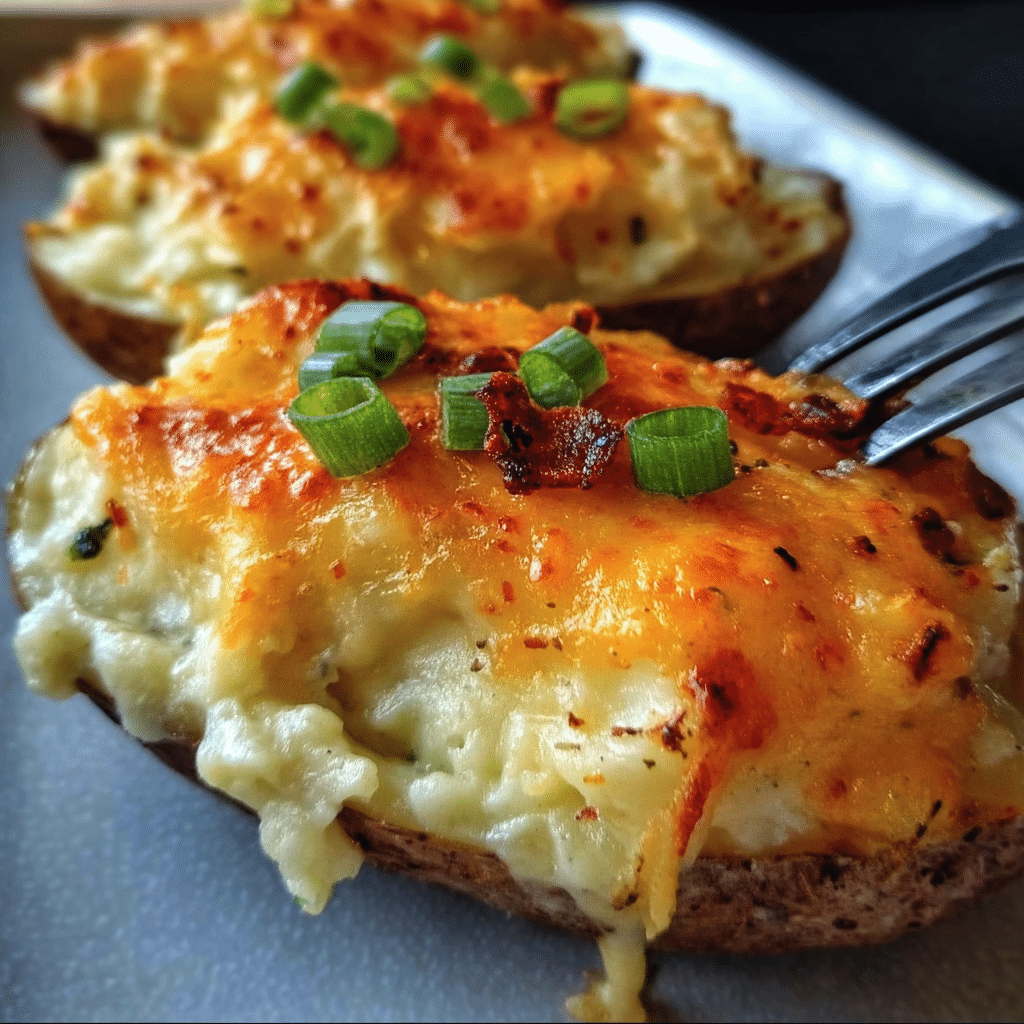
Twice baked potatoes are one of those comforting dishes that can turn any meal into a celebration. I remember the first time I tasted them at my grandmother’s house. She had a knack for transforming simple ingredients into something extraordinary, and twice baked potatoes were no exception. I was just a kid, sitting at her kitchen table, watching her work her magic as she scooped out the tender insides of baked potatoes and mixed them with creamy cheese and buttery goodness. The aroma wafting through the air was intoxicating, and I could hardly contain my excitement. That evening, as I savored every bite, I felt a connection not just to the food, but to the love and warmth that filled her home. It was a lesson in cooking that I would carry with me for years to come.
The Story Behind This Recipe
Twice baked potatoes have a rich history that has evolved over generations. While their exact origins are somewhat murky, the concept of baking potatoes twice dates back to the early 19th century. The idea was likely born from the desire to create a more flavorful and filling dish that could serve as a meal on its own. Traditionally, the first baking softens the potato, while the second baking allows for the melding of flavors from the fillings, creating a creamy, savory filling that is simply irresistible.
In my own kitchen, I have embraced this dish as a go-to recipe for family gatherings and weeknight dinners alike. It’s a recipe that invites creativity, allowing you to customize fillings based on your family’s preferences or what you have on hand. With a few basic ingredients, you can create a comforting meal that pleases everyone. Whether it’s a chilly autumn evening or a summer barbecue, twice baked potatoes fit right in, making them a versatile choice for any season.
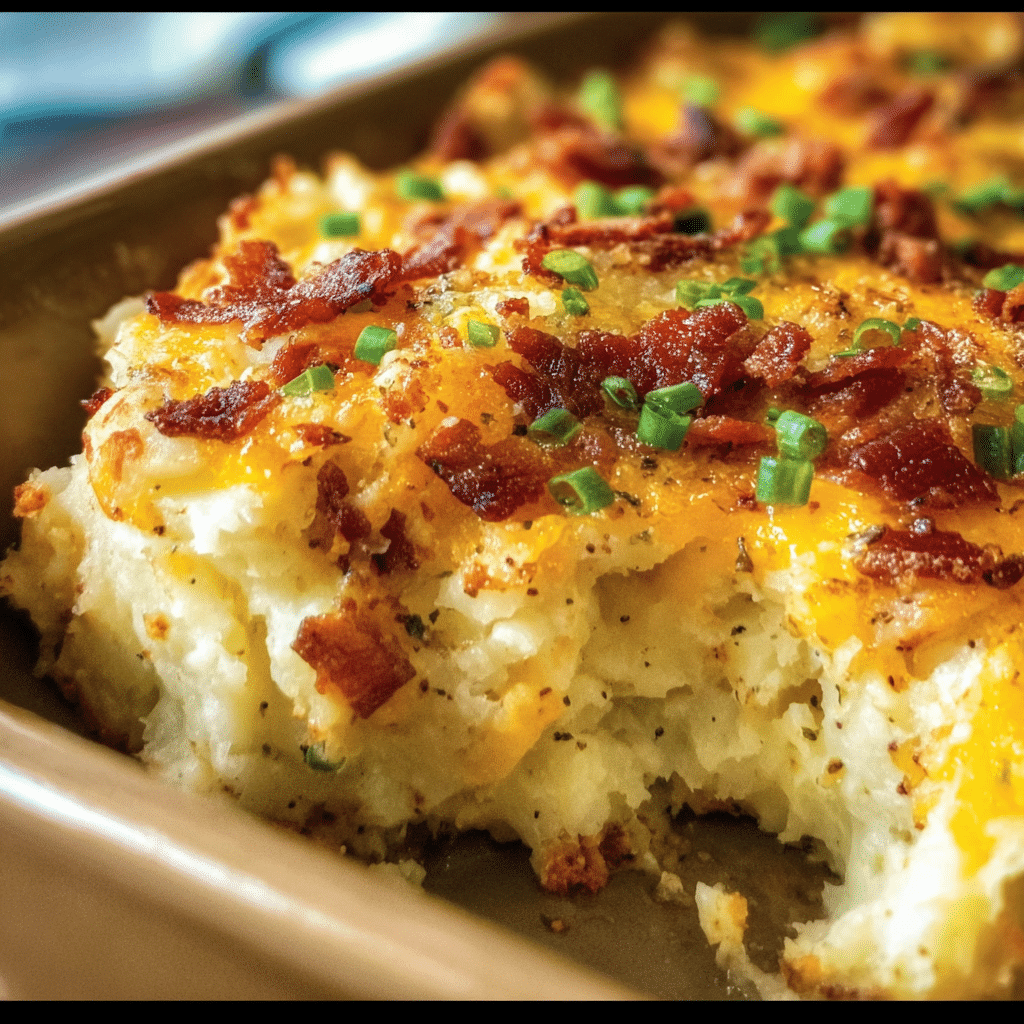
What truly sets twice baked potatoes apart from other potato dishes is their unique texture and flavor profile. The outer skin becomes crispy during the second bake while the inside is creamy and rich, often enhanced by the addition of cheeses, herbs, or even meats. This delightful contrast makes twice baked potatoes a special treat that feels indulgent without being overly complicated to prepare. For busy families looking for quick dinner solutions, they are a lifesaver. You can bake a batch ahead of time, refrigerate them, and simply pop them in the oven for a quick reheat that tastes like you just made them fresh.
Why You’ll Love This Dish
Emotionally, twice baked potatoes remind me of family gatherings and the joy of sharing meals with loved ones. They are a dish steeped in nostalgia, evoking memories of laughter, stories, and togetherness. Each time I prepare them, I am transported back to my grandmother’s kitchen, where the heart was as much a part of the recipe as the ingredients themselves. Cooking is about more than just food; it’s about the connections we forge and the memories we create.
In this guide, you will learn everything there is to know about twice baked potatoes—from the basics of preparation to tips for making them your own. We’ll delve into the history of the dish, explore variations that span different cultures, and even discuss the nutritional benefits of this beloved comfort food. So grab your apron and get ready to discover the magic of twice baked potatoes. You’re in for a treat!
The Rich History and Cultural Significance of twice baked potatoes
The rich history and cultural significance of twice baked potatoes provide a fascinating backdrop to this beloved dish. While many people relish them as a family favorite, few may know the journey that has led to their current popularity. The origins of twice baked potatoes can be traced back to various cultures and regions, each adding their unique twist to this versatile recipe.
Origins and History
The concept of baking potatoes twice likely originated out of necessity. In the early 1800s, potatoes became a staple food source for many, particularly in Europe and North America. As people sought ways to make this humble vegetable more exciting and filling, the idea of stuffing baked potatoes with flavorful ingredients emerged. The first recorded recipes for twice baked potatoes appeared in American cookbooks in the late 19th century, reflecting the trend of creating hearty, comforting food that could sustain families during tough economic times.
As culinary traditions have evolved, so too have the variations of twice baked potatoes. In the southern United States, for example, you might find them stuffed with collard greens or smoked meats. In other regions, they might be filled with sour cream, chives, or even crab meat. Each adaptation tells a story about the local ingredients available and the cultural influences that shape how we cook.
Cultural Significance
Twice baked potatoes have become a cherished dish across many cultures, often served during special occasions like holidays and family gatherings. In American cuisine, they are a staple at barbecues and potlucks, where they can be made ahead of time and served warm or at room temperature. In other cultures, baked potatoes with various fillings are often associated with cozy gatherings, echoing the sentiments of comfort and togetherness that food can evoke.
This dish also holds a place in the hearts of famous chefs and restaurants. Renowned culinary figures like Julia Child have showcased twice baked potatoes in their cookbooks, elevating them from a simple side dish to a gourmet experience. Many upscale restaurants now offer their own interpretations, incorporating gourmet ingredients like truffle oil or artisanal cheeses, reflecting the dish’s adaptability and enduring appeal.
Nutritional Benefits
Beyond their comforting flavor, twice baked potatoes also offer nutritional benefits. Potatoes themselves are a great source of vitamins, particularly vitamin C and B6, and they are rich in potassium, which is essential for heart health. When combined with ingredients like Greek yogurt or cottage cheese, you can enhance the protein content while keeping the dish lower in fat compared to traditional recipes that rely heavily on cream and butter.
Moreover, the versatility of twice baked potatoes allows you to tailor them to fit various dietary needs. Whether you are looking for a vegetarian option or seeking to incorporate lean proteins, the possibilities are endless. For families looking to balance flavor with nutrition, twice baked potatoes are an excellent choice that can please even the pickiest of eaters.
As you explore the rich history and cultural significance of twice baked potatoes, you will come to appreciate not only their delicious flavor but also the stories that have shaped them into the beloved dish they are today. With every bite, you are not just indulging in a meal; you are partaking in a culinary tradition that spans generations and cultures.
Essential Ingredients for Perfect twice baked potatoes
When it comes to creating the perfect twice baked potatoes, the foundation of your dish lies in the selection of high-quality ingredients. Each component plays a vital role in contributing flavor, texture, and overall satisfaction. So let’s dive deep into the essential ingredients that will elevate your twice baked potatoes to a whole new level.
Essential Ingredients
- Potatoes: 4 large russet potatoes
- Butter: 4 tablespoons, unsalted
- Sour Cream: 1 cup, full-fat preferred
- Cheddar Cheese: 1 cup, shredded
- Green Onions: 2, finely chopped
- Salt: to taste
- Pepper: to taste
- Bacon: 4 slices, cooked and crumbled (optional)
- Garlic Powder: 1 teaspoon
Twice Baked Potatoes
Ingredients
- 4 large baking potatoes
- 8 slices bacon
- 1 cup sour cream
- ½ cup milk
- 4 tablespoons butter
- ½ teaspoon salt
- ½ teaspoon pepper
- 1 cup shredded Cheddar cheese, divided
- 8 green onions, sliced, divided
Instructions
- 4 large baking potatoes
- 8 slices bacon
- 1 cup sour cream
- ½ cup milk
- 4 tablespoons butter
- ½ teaspoon salt
- ½ teaspoon pepper
- 1 cup shredded Cheddar cheese, divided
- 8 green onions, sliced, divided
Let’s explore the significance of each ingredient:
Potatoes are the star of the show. For twice baked potatoes, russet potatoes are often preferred due to their starchy texture, which creates a fluffy interior upon baking. When selecting potatoes, look for ones that are firm without any soft spots or blemishes. The skin should be smooth, and they should feel heavy for their size, indicating a high moisture content.
Butter adds richness and depth to the filling. Using unsalted butter allows you to control the saltiness of your dish. Always opt for high-quality butter, preferably organic, as it enhances the flavor of your twice baked potatoes. When cooking, it’s best to let the butter come to room temperature before mixing it with other ingredients.
Sour Cream contributes creaminess and tanginess, balancing the richness of the butter and cheese. Full-fat sour cream is recommended for the best texture and flavor. Look for sour cream that has a clean, fresh smell and a smooth consistency. If you want a lighter version, you could opt for Greek yogurt as a substitute.
Cheddar Cheese is essential for that gooey, melt-in-your-mouth experience. Sharp cheddar is often favored for its robust flavor, which stands up beautifully against the other rich ingredients. A good quality aged cheddar will have a more complex profile that enhances the dish. When shopping, check for cheese without additives or preservatives for the best taste.
Green Onions add a refreshing crunch and a hint of sharpness. Use both the green and white parts for a burst of flavor. Fresh green onions should be firm, bright green, and have no signs of wilting. They can be easily grown at home, making them an economical choice.
Salt and Pepper are basic seasonings that should not be overlooked. High-quality sea salt and freshly ground black pepper will elevate the flavors of your twice baked potatoes. Just remember that it’s easier to add more seasoning than to take it out, so start with small amounts and adjust to your taste.
Bacon is an optional but beloved addition. Adding crumbled bacon gives a delightful crunch and smoky flavor that complements the creamy filling. If you’re opting for bacon, look for thick-cut varieties for the best texture and taste. You can also choose turkey bacon or omit it entirely for a vegetarian option.
Garlic Powder is a great way to infuse that wonderful garlicky flavor without the hassle of chopping fresh garlic. It adds depth and can be adjusted according to preference. Choose a brand that uses pure garlic for the best flavor profile.
Shopping Tips
When shopping for ingredients, consider visiting local farmers’ markets for fresher produce and dairy products. Not only will you find seasonal ingredients, but you’ll also support local agriculture. For potatoes, the fall months are prime time as they are harvested, making them more flavorful and affordable. Look for sales on cheese and dairy products, as they often have promotions, especially around holidays.
Substitutions and Alternatives
Dietary restrictions should not hinder your culinary creativity! If you need to avoid dairy, consider using plant-based alternatives like vegan butter and cashew cream. For a gluten-free option, ensure that any processed ingredients like sour cream and cheese are certified gluten-free. For a lower-carb alternative, cauliflower can be used to create a similar fluffy texture in twice baked “potatoes.” Just steam and mash the cauliflower before mixing with your ingredients.
In conclusion, selecting the right ingredients for your twice baked potatoes is crucial for achieving that perfect balance of flavors and textures. By paying attention to quality, sourcing, and potential substitutions, you can create a dish that not only satisfies your taste buds but also caters to various dietary preferences. Happy cooking!
Detailed Step-by-Step twice baked potatoes Cooking Instructions
Now that we have gathered the essential ingredients for our twice baked potatoes, it’s time to roll up our sleeves and get cooking! The process of making these delicious treats involves several key steps, each crucial for achieving that perfect texture and flavor balance. Let’s dive into this detailed step-by-step guide that will take you from raw potatoes to a beautifully baked dish.
Preparation Steps
- Preheat Your Oven: Begin by preheating your oven to 400°F (200°C). This ensures that your potatoes will bake evenly and become tender.
- Wash the Potatoes: Rinse the russet potatoes under cold water to remove any dirt or debris. Pat them dry with a clean towel.
- Pierce the Potatoes: Using a fork, carefully pierce each potato several times. This step allows steam to escape during baking, preventing the potatoes from bursting in the oven.
- Wrap in Foil (Optional): For a softer skin, wrap each potato in aluminum foil. This step is optional; if you prefer a crispier skin, leave them unwrapped.
- Bake the Potatoes: Place the potatoes directly on the oven rack or on a baking sheet and bake for about 45-60 minutes, or until they are fork-tender. The exact time will depend on the size of your potatoes.
During this baking time, you can prepare your filling ingredients. The aroma of the potatoes baking in your kitchen is the perfect appetizer for the deliciousness that’s to come!
Cooking Process
- Let Potatoes Cool: Once baked, remove the potatoes from the oven and allow them to cool for about 10-15 minutes. This cooling period will make them easier to handle.
- Cut and Scoop: Using a sharp knife, carefully slice each potato in half lengthwise. Using a spoon, scoop out the insides into a mixing bowl, leaving about a ¼ inch of potato on the skin to maintain its structure.
- Add Filling Ingredients: To the potato flesh, add the butter, sour cream, half of the cheddar cheese, green onions, garlic powder, salt, and pepper. If you’re adding bacon, now’s the time to mix it in!
- Mix Well: Using a potato masher or a fork, mash and mix the ingredients until smooth and creamy. Taste and adjust the seasonings as necessary; this is your moment to shine!
- Refill the Potato Skins: Carefully spoon the potato mixture back into the hollowed-out skins, mounding it slightly above the edges. Ensure there’s a generous portion of stuffing to enjoy every bite!
Final Assembly
- Top with Cheese: Sprinkle the remaining cheddar cheese generously over the filled potatoes. This will create that gooey, melty layer that everyone loves.
- Bake Again: Place the stuffed potatoes back in the oven on a baking sheet and bake for an additional 15-20 minutes, or until the cheese is melted and bubbly, and the tops are golden brown.
- Garnish and Serve: Once out of the oven, let them cool for a few minutes. Garnish with extra green onions or a dollop of sour cream for an added touch. Serve warm and enjoy the deliciousness!
Throughout this process, keep an eye on the sensory indicators; the smell of melting cheese and the browning tops will guide you to that perfect finish. Common mistakes include overbaking the potatoes initially or under-seasoning the filling, so trust your instincts and taste along the way. Remember that cooking is both a science and an art, and every step is an opportunity to express your personal flair.
As you embark on your twice baked potatoes journey, don’t forget to have fun! This dish is not only a crowd-pleaser but also a canvas for your culinary creativity. Whether you choose to stick to the classic recipe or customize it with your favorite ingredients, the joy of cooking is in the experience just as much as it is in the end result. Happy baking!
Professional Tips and Techniques for twice baked potatoes
When it comes to making the perfect twice baked potatoes, there are some professional tips and techniques that can elevate your dish from good to spectacular. As a self-proclaimed potato aficionado, I have experimented with various methods over the years, learning a thing or two about how to make these delightful spuds shine on your dinner table. Whether you are a novice cook or a seasoned chef, these insights will ensure your twice baked potatoes are nothing short of a culinary masterpiece.
Professional Techniques
The foundation of any great dish begins with quality ingredients and proper technique. For twice baked potatoes, start with russet potatoes. These starchy tubers are ideal because they have a fluffy texture when baked, holding up well to the additional fillings. It’s crucial to wash the potatoes thoroughly to remove any dirt, then dry them completely. Poking holes with a fork allows steam to escape while baking, preventing them from bursting in the oven.
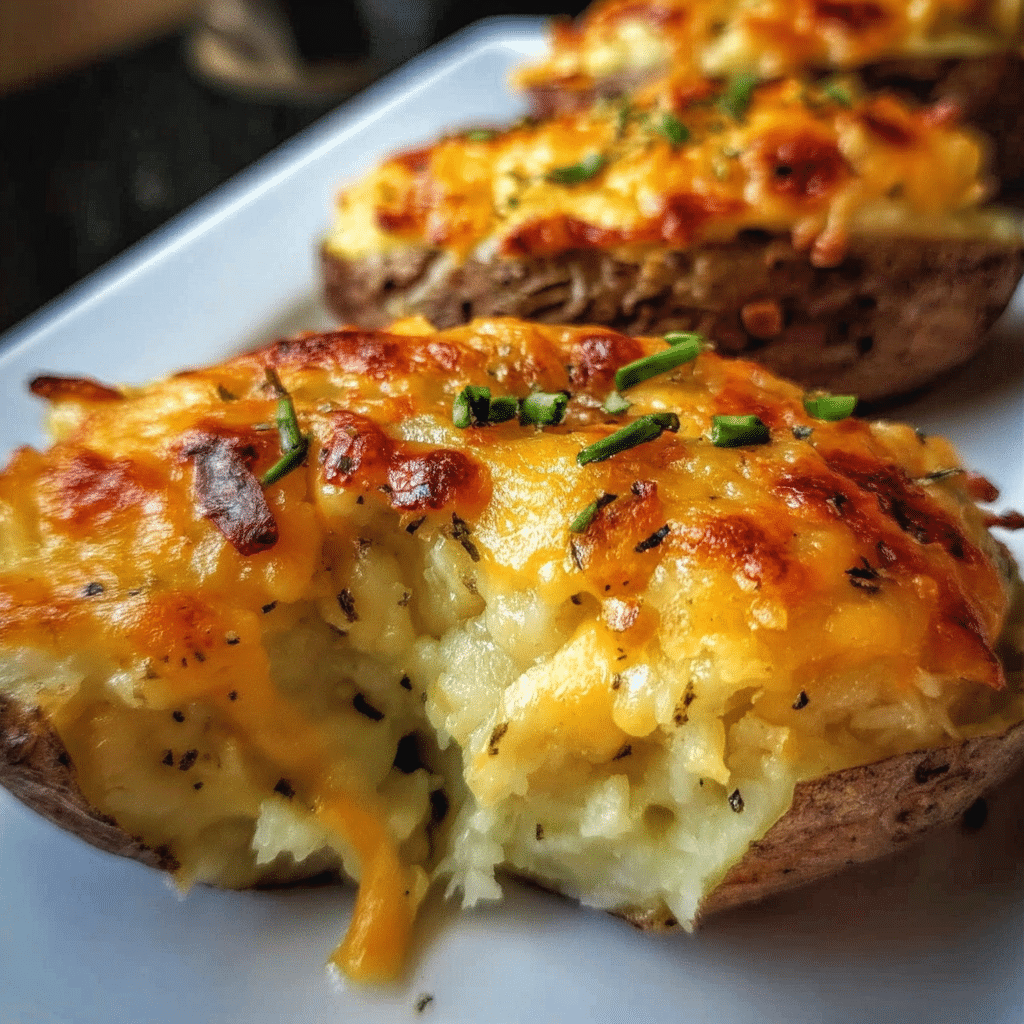
When baking, I recommend placing the potatoes directly on the oven rack rather than on a baking sheet. This method allows for more even heat distribution, which results in a beautifully cooked potato skin. Bake them at 400°F for about an hour, or until a fork easily penetrates the flesh. The secret to achieving the best flavor is to brush the skins with olive oil and sprinkle them with sea salt before baking. This creates a crispy, flavorful outer layer that’s hard to resist.
Once your potatoes are baked to perfection, let them cool for a few minutes. This is important because it makes them easier to handle and reduces the risk of burns. When you’re ready, carefully slice the tops off and scoop out the insides, leaving a thin layer of potato attached to the skin. The flesh can be mixed with your favorite ingredients—think sour cream, cheese, chives, or even bacon—to create a rich filling that will be baked again. The key here is to ensure that you don’t overmix the filling, which can lead to a gummy texture.
Troubleshooting Guide
Even the best cooks can run into issues when making twice baked potatoes. Here are some common problems and solutions to keep in mind:
- Problem: Potatoes are too dry.
- Solution: Ensure you’re adding enough butter, sour cream, or even a splash of milk to the filling. This will enhance the creaminess and moisture level.
- Problem: The filling is too bland.
- Solution: Always taste the filling mixture before stuffing it back into the skins. A sprinkle of salt, fresh herbs, or a dash of hot sauce can make all the difference.
- Problem: Skins are too soggy.
- Solution: Bake the potatoes for a little longer to ensure they crisp up. You can also place them under the broiler for a few minutes after filling them to achieve a golden finish.
Presentation Tips
Presentation is key when it comes to serving twice baked potatoes. While the taste is paramount, appealing to the eyes can make the meal even more enjoyable. Here are some ideas for plating:
- Garnish: Fresh herbs such as chives, parsley, or dill can add a pop of color and freshness.
- Cheese: A sprinkle of cheese on top before the final bake not only enhances flavor but also creates a delightful, gooey topping.
- Serving Style: Serve them on a large platter with a drizzle of balsamic reduction or a dollop of sour cream on the side for a sophisticated touch.
Pairing your twice baked potatoes with the right beverage can further elevate your meal. A crisp white wine, such as Sauvignon Blanc, works beautifully with the creamy and savory flavors of the dish. For a heartier option, a light-bodied red, like Pinot Noir, can complement the richness of the filling.
In conclusion, mastering the art of twice baked potatoes involves a mix of quality ingredients, attention to detail, and a little creativity. With these professional tips and techniques, you’ll be well on your way to impressing family and friends at your next gathering.
Creative Variations and Adaptations of twice baked potatoes
The beauty of twice baked potatoes lies in their versatility. You can easily adapt this classic dish to suit your tastes, dietary requirements, or seasonal ingredients. Over the years, I’ve experimented with various variations, each bringing a unique twist to this beloved recipe. Let’s dive into some creative adaptations that you can try at home!
Seasonal Variations
One of the joys of cooking is embracing seasonal ingredients. In the spring, consider adding fresh asparagus and lemon zest to your filling for a vibrant and zesty flavor profile. In the fall, roasted pumpkin or butternut squash can be mixed into the potato flesh to create a warm and comforting dish that celebrates the season. You can even sprinkle some cinnamon and nutmeg for an autumnal twist that adds depth and warmth.
During the summer months, why not incorporate fresh herbs and grilled vegetables? Chopped zucchini, bell peppers, and basil can add a delightful freshness, making your twice baked potatoes lighter and more fitting for warm weather. Pair these with a side salad, and you have a complete meal that feels refreshing and satisfying.
Dietary Adaptations
In today’s world, dietary restrictions are quite common, but that shouldn’t stop you from enjoying delicious twice baked potatoes. If you’re following a keto diet, you can substitute traditional potatoes with cauliflower. Simply steam the cauliflower until tender, then mash it with cream cheese, cheese, and bacon for a low-carb twist.
For those who are vegan, you can create a creamy filling using cashew cream or silken tofu blended with nutritional yeast and garlic for a cheesy flavor. Adding sautéed mushrooms or spinach can enhance the filling and pack in extra nutrients.
Gluten-free adaptations are also straightforward, as potatoes are naturally gluten-free. Just be sure to check any additional ingredients, such as certain cheeses or pre-packaged toppings. You can even create a delightful Mediterranean version by incorporating olives, sun-dried tomatoes, and feta cheese into your filling.
Creative Twists
If you’re feeling adventurous, why not experiment with international flavors? A Mexican-inspired twice baked potato can include taco seasoning, black beans, corn, and a sprinkle of queso fresco. Topped with fresh cilantro and a squeeze of lime, this variation transports you straight to a fiesta.
For an Italian flair, think of adding cooked sausage, sun-dried tomatoes, and mozzarella cheese to your filling. A drizzle of balsamic glaze before serving adds a sophisticated touch that contrasts beautifully with the richness of the potatoes.
Don’t forget about repurposing leftovers! If you have extra mashed potatoes from a previous meal, they can easily be transformed into twice baked potatoes. Just mix in your favorite additions—perhaps some cheese and herbs—and stuff them back into the skins for a quick and satisfying meal.
In conclusion, the possibilities for twice baked potatoes are virtually endless. Whether you’re embracing seasonal ingredients, accommodating dietary preferences, or experimenting with international flavors, this dish can easily be tailored to suit any palate. Get creative in the kitchen, and have fun bringing your unique twist to this classic comfort food!
Storage, Reheating, and Meal Prep for twice baked potatoes
When it comes to cooking, one of the most satisfying feelings is knowing that you have a delicious meal ready to go, especially when that meal is something as comforting and indulgent as twice baked potatoes. But what do you do when you have leftovers? Or maybe you want to prepare some in advance for a busy week ahead? This guide will provide you with all the details you need for storing, reheating, and meal prepping your beloved twice baked potatoes effectively.
Short-term Storage
If you find yourself with leftover twice baked potatoes, the first step is proper short-term storage. Place your potatoes in an airtight container. It’s crucial to let the potatoes cool down to room temperature before sealing them up; this prevents condensation that could lead to sogginess. I like to use glass containers with tight-fitting lids, as they don’t retain odors like plastic can. If you’re short on containers, wrapping the potatoes tightly in aluminum foil works too, though I recommend using a layer of parchment paper inside to keep the skin from getting too mushy.
Stored in the refrigerator, your twice baked potatoes will last for about 3 to 5 days. Make sure to label the container with the date they were made so you can keep track of freshness. If you’re anything like me, sometimes you make a dish and forget about it at the back of the fridge, only to find it a week later. Avoid that mishap by keeping your storage organized!
Freezing and Long-term Storage
For longer storage, freezing is your best option. Freezing twice baked potatoes can extend their shelf life to about 2-3 months. To do this, first, ensure your potatoes are completely cooled. Then, I recommend wrapping each potato individually in plastic wrap. This extra layer helps to prevent freezer burn. After wrapping, place them in a heavy-duty freezer bag or an airtight container. Label them with the date, and you’ll have a comforting meal waiting for you on a chilly night.
When it comes to thawing, simply transfer the frozen twice baked potatoes to the refrigerator the night before you plan to eat them. This slow thawing method helps maintain their texture. If you’re in a hurry, you can microwave them, but be cautious as this method can result in uneven heating, leading to a less satisfying texture. For batch cooking aficionados, preparing a large batch of twice baked potatoes and freezing them can be a game-changer. You can even mix and match fillings to keep things interesting!
Reheating Best Practices
Reheating your twice baked potatoes properly is essential to preserve their flavor and texture. The oven method is my favorite; preheat your oven to 350°F (175°C), place the potatoes on a baking sheet, and heat for about 20-30 minutes, or until heated through. This method ensures the skins stay crispy while the insides remain fluffy. If you’re in a hurry, you can microwave them on medium power for 3-5 minutes, checking periodically to avoid overheating.
Regardless of your reheating method, consider adding a small pat of butter or a sprinkle of cheese on top just before reheating. This can help revitalize the flavors and moisture in your twice baked potatoes. If you’re using the microwave, cover the potatoes with a damp paper towel; this creates steam, which helps keep them moist.
Food safety is also paramount. Always ensure that your twice baked potatoes are heated to an internal temperature of 165°F (74°C) to kill any potential bacteria. Using a food thermometer can take the guesswork out of this. And remember, never refreeze previously frozen food after it has been reheated!
Lastly, portioning your twice baked potatoes can be a great strategy for meal prep. If you’re making a big batch, consider freezing them in individual portions. This way, you can grab just what you need, avoiding waste and making your weeknight dinners a breeze.
Nutritional Benefits and Health Information
The delicious flavor of twice baked potatoes is just one reason they’re a beloved dish across many households. But what about their nutritional benefits? This section dives into the health aspects of this comfort food, breaking down the ingredients, their benefits, and how they fit into a balanced diet.
Nutritional Profile
At the heart of twice baked potatoes is the potato itself. A medium-sized russet potato (about 150 grams) contains approximately 130 calories, 2 grams of protein, 30 grams of carbohydrates, and less than 1 gram of fat. Potatoes are a good source of vitamins and minerals, including vitamin C, vitamin B6, potassium, and manganese. When you add ingredients like cheese, sour cream, or bacon, the nutritional profile changes, but so does the flavor!
For example, adding a half-cup of shredded cheddar cheese contributes around 170 calories, 14 grams of fat, and 10 grams of protein. If you’re watching your calorie intake, consider using reduced-fat cheese or Greek yogurt instead of sour cream, offering a creamy texture with fewer calories. The versatility of twice baked potatoes allows for myriad ingredient combinations, making it easy to adjust the recipe to fit your dietary needs.
Health Benefits
Potatoes often get a bad rap due to their carbohydrate content, but they’re rich in fiber, especially if you eat the skin. Fiber is essential for digestive health and can help you feel fuller longer, which is beneficial for weight management. Additionally, the high potassium content helps regulate blood pressure and can counteract sodium in your diet, promoting heart health.
When you add ingredients like broccoli or spinach to your twice baked potatoes, you’re boosting their nutritional value even further. These vegetables provide additional vitamins A and K, iron, calcium, and antioxidants, which are vital for overall health. The addition of these greens transforms your potatoes from a simple side dish into a well-rounded meal.
Dietary Considerations
For those with dietary restrictions, twice baked potatoes can be easily modified. If you’re gluten-free, simply ensure that all your added ingredients—like cheese and sour cream—are certified gluten-free. For a vegan option, swap out dairy ingredients for plant-based alternatives, such as cashew cheese or coconut yogurt, while still enjoying the creamy goodness.
If you’re following a low-carb diet, consider using cauliflower instead of potatoes. Cauliflower has become a popular substitute, mimicking the fluffy texture of potatoes while significantly reducing calories and carbs. The result is a deliciously satisfying dish that fits into a lower-carb lifestyle.
In summary, twice baked potatoes are not just a comforting dish; they also offer various nutritional benefits. By being mindful of your ingredient choices, you can enjoy this classic comfort food while maintaining a balanced and healthy diet. Whether you’re indulging in a loaded version or a healthier take, these potatoes can be a delightful addition to your dining table.
Conclusion: Mastering the Perfect twice baked potatoes
Creating the perfect twice baked potatoes is more than just following a recipe—it’s about understanding the techniques, ingredients, and cultural significance behind this beloved dish. Throughout this comprehensive guide, we’ve explored everything from the historical origins to modern variations, ensuring you have all the knowledge needed to make this recipe your own.
Whether you’re a beginner cook or an experienced chef, the techniques and tips we’ve shared will help you create a twice baked potatoes that’s not only delicious but also meaningful. Remember that cooking is a journey of discovery, and each time you make this dish, you’ll learn something new.
We encourage you to experiment with the variations we’ve discussed, adapt the recipe to your dietary needs, and most importantly, share it with the people you love. Food has the incredible power to bring people together, and Twice Baked Potatoes is the perfect dish to create lasting memories around your dinner table.
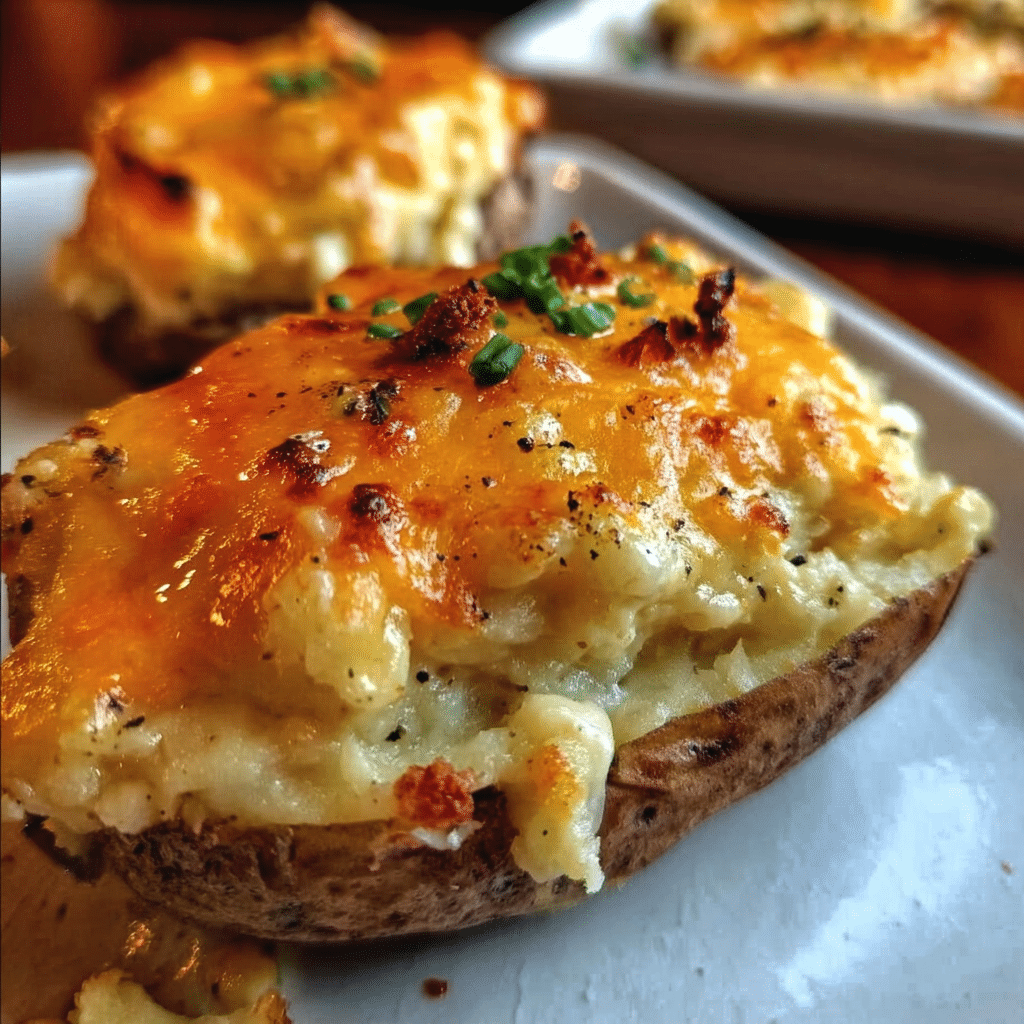
Don’t forget to share your cooking adventures with us on social media, and feel free to ask questions in the comments below. Happy cooking!
Share this recipe and let us know how it turned out! Tag us on social media for a chance to be featured.